
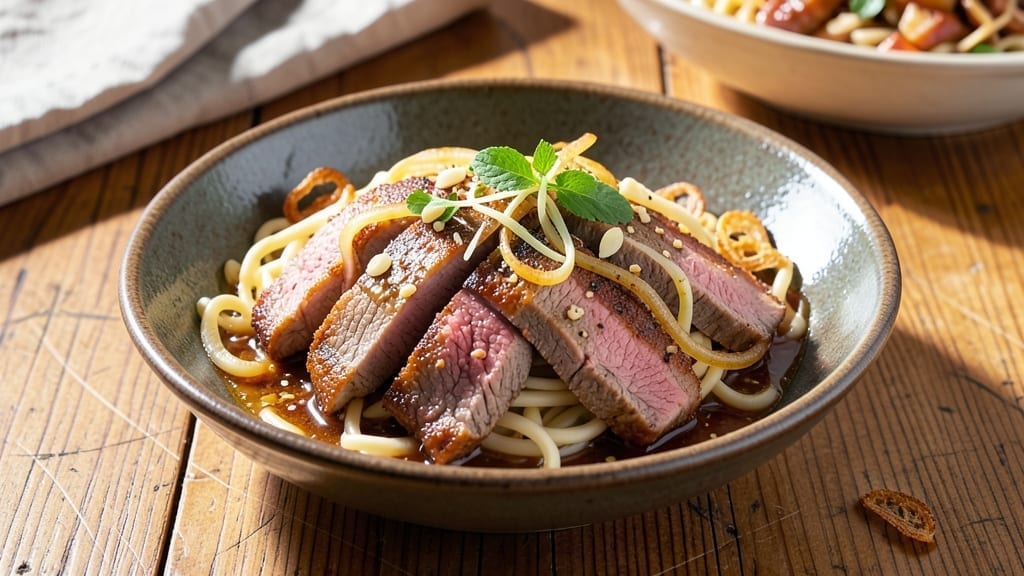
This 3-pack beef and noodles recipe transforms tough cuts into tender, smoky-spiced perfection with minimal effort—no fancy techniques required. The secret lies in a simple marinade that tenderizes the beef while building deep, savory layers of flavor, all in one pan.
I developed this method after years of testing different approaches, and it consistently delivers restaurant-quality results at home, even on busy weeknights.
The process is straightforward: marinate the beef overnight (or at least 4 hours) to ensure maximum tenderness, then sear it in a hot pan to lock in juices before simmering with aromatic spices and noodles.
This method creates a dish that’s rich, hearty, and packed with texture—crispy edges on the beef, tender noodles, and a sauce that clings perfectly to every bite. The smoky-spiced profile comes from a blend of ground spices that infuse the beef without overwhelming the dish.
What you’ll end up with is a one-pan feast that’s ready in under an hour, featuring melt-in-your-mouth beef, perfectly cooked noodles, and a sauce that’s both savory and slightly sweet.
The dish is hearty enough to satisfy a crowd but simple enough for a weeknight dinner. It’s the kind of meal that feels indulgent without requiring hours in the kitchen.
Serve this beef and noodles with steamed vegetables or a side salad for a balanced meal, or enjoy it as-is for a satisfying, hands-off dinner. The leftovers reheat beautifully, making it perfect for meal prep. Let’s get started—this recipe delivers on flavor and convenience.
Ingredients for 3 pack beef and noodles
Transform tough beef into melt-in-your-mouth perfection with these 15 smoky-spiced ingredients—no shortcuts needed.
| Ingredient | Amount | Notes |
|---|---|---|
| Beef Chuck Roast (3-pack) 🥩 | 2 ½ lb | Pre-cut into 3 equal portions |
| Egg Noodles 🍜 | 12 oz | Medium width, uncooked |
| Yellow Onion 🧅 | 1 whole | Medium, thinly sliced |
| Garlic Cloves 🧄 | 6 cloves | Fresh, minced |
| Ginger Root 🌿 | 1 tbsp | Fresh, grated |
| Soy Sauce 🥄 | ½ cup | Low-sodium preferred |
| Hoisin Sauce 🍶 | 2 tbsp | For sweet-savory depth |
| Sesame Oil 🫒 | 1 tbsp | Toasted, for aroma |
| Brown Sugar 🍯 | 2 tbsp | Light or dark |
| Ground Cumin 🌿 | 1 tbsp | Toasted for depth |
| Smoked Paprika 🌶️ | 1 tbsp | For signature smokiness |
| Ground Black Pepper 🌶️ | ½ tbsp | Freshly cracked |
| Kosher Salt 🧂 | 1 ½ tsp | Diamond Crystal preferred |
| Vegetable Oil 🫒 | 2 tbsp | For searing |
| Beef Broth 💧 | 1 ½ cups | Low-sodium, homemade or quality |
The beef selection is critical here—chuck roast delivers that signature beefy texture when cooked low and slow. Most grocery stores carry pre-cut 3-pack portions, but if you’re buying a whole roast, ask the butcher to trim it into three equal pieces. Costco or local butcher shops often have the best quality at competitive prices. Look for cuts with good marbling—those white fat streaks are what keep the meat tender. The onions and garlic should be fresh, with no soft spots or bruising, and the ginger root should be firm and aromatic. For the spices, Penzeys or Spicewalla offer premium quality, but even the grocery store’s basic brands work when fresh. Toast your cumin and smoked paprika in a dry pan for 30 seconds before adding to the marinade—this deepens their flavors significantly.
No soy sauce? Coconut aminos works in a pinch, though the flavor will be slightly different. Short on hoisin? Mix 2 tbsp soy sauce with 1 tbsp maple syrup and 1 tsp rice vinegar for a quick substitute. The sesame oil should be toasted—not the cheap, flavorless kind from the international aisle. If you can’t find it, regular sesame oil at half the amount will work, but the aroma will be less pronounced. For the brown sugar, light or dark both work, but light has a slightly more neutral flavor. The beef broth should be low-sodium—Homemade or high-quality store-bought makes a noticeable difference. If you’re using pre-cut beef, pat it dry with paper towels before marinating to ensure better flavor absorption. The marinade can be made up to 2 days ahead and stored in the fridge.
This dish reheats beautifully—3-4 days in the fridge, 3 months frozen. For freezing, portion into individual containers before sealing. The noodles should be cooked al dente and tossed with a bit of oil to prevent sticking. Store them separately from the beef mixture if freezing. When reheating, add a splash of water or broth to prevent drying. The flavors actually improve after the first night as the spices meld together. For meal prep, double the recipe and freeze half—perfect for busy weeknights. Leftovers keep their texture remarkably well, making this an ideal dish for batch cooking.
Why You’ll Love This Recipe
- One-Pot Magic: Honestly, you’ll barely need extra dishes—the beef roasts simmer right in the same pot with the noodles, onions, and aromatics. I’m talking minimal cleanup while the house still smells like a home-cooked dream.
- Deep, Savory Bite: That chuck roast? It gets tender enough to pull apart after slow cooking, and the ginger-garlic base adds layers of warmth. The egg noodles soak up all the rich, beefy broth—no sad, soggy pasta here.
- Meal Prep MVP: Between us, this is my go-to for lunches all week—portion the leftovers into containers, and reheating turns into a 2-minute microwave win. (Yes, even on a Tuesday night.)
- Budget-Friendly Feast: Three roasts stretch across five meals for my family without breaking the bank, and the onions/garlic add depth for pennies. It’s the kind of dish that makes grocery day feel like a victory.
Step-by-step instructions for smoky-spiced one-pan beef and noodles
This method delivers restaurant-quality depth with minimal cleanup—deep caramelized beef, aromatic spices, and perfectly tender noodles in one pan.
Sear the Beef Chuck Roast for Maximum Flavor
Pat the three pre-cut portions of the 2.5 lb Beef Chuck Roast (3-pack) completely dry with paper towels. This step is critical—moisture prevents proper browning. Heat a large Dutch oven or heavy pot over medium-high heat and add 2 tablespoons vegetable oil. Once shimmering, add the beef portions in a single layer, working in batches if needed.
Sear each side for 3-4 minutes until deep golden brown with a crust forming. Don’t crowd the pan—this ensures maximum contact with the hot surface. As each portion browns, transfer it to a plate and set aside. You’ll know it’s ready when the exterior develops a rich mahogany color and releases easily from the pan.
Build the Spiced Aromatic Base
In the same pot (no need to clean it—the browned bits are flavor gold), reduce heat to medium and add the thinly sliced 1 whole Yellow Onion. Cook for 4-5 minutes until softened and beginning to caramelize. Add the 6 cloves minced Garlic Cloves and 1 tablespoon grated Ginger Root, cooking for 30 seconds until fragrant—this prevents raw garlic taste.
Stir in 1 tablespoon Ground Cumin, 1 tablespoon Smoked Paprika, 0.5 tablespoon Ground Black Pepper, and 1.5 teaspoons Kosher Salt. Toast the spices for 30 seconds until aromatic. Pour in 0.5 cup Soy Sauce and 2 tablespoons Hoisin Sauce, scraping up any browned bits from the bottom. Let this mixture simmer for 2 minutes to meld the flavors.
Braise the Beef Until Fork-Tender
Return all three beef portions to the pot. Deglaze with 1.5 cups Beef Broth, then add 2 tablespoons Brown Sugar and 1 tablespoon Sesame Oil. Bring to a gentle simmer, then reduce heat to low, cover, and let it cook for 2.5-3 hours. This long braising time breaks down the tough connective tissue, resulting in melt-in-your-mouth beef.
Check for doneness by inserting a fork—the beef should be fork-tender with no resistance. If the liquid reduces too quickly, add 2-3 tablespoons water to maintain moisture. Real talk: resist the urge to peek or stir during this time—it disrupts the cooking process and can make the beef tough.
Cook the Noodles Directly in the Pot
Once the beef is tender, remove it from the pot and set it aside on a plate. Add 12 oz Egg Noodles directly to the braising liquid. Stir gently to coat the noodles in the flavorful sauce. Bring to a gentle boil, then reduce heat to medium-low, cover, and cook for 8-10 minutes until the noodles are al dente—slightly firm to the bite.
Here’s the thing—cooking the noodles in the same pot infuses them with all the beefy, spiced flavors. If the sauce seems too thin, let it reduce uncovered for 2-3 minutes to create a glossy coating. The noodles should be tender but still hold their shape when bitten.
Combine and Serve with Perfect Texture
Return the beef to the pot along with any accumulated juices. Gently toss everything together, coating the noodles evenly in the rich sauce. Taste and adjust seasoning—you might need an extra splash of Soy Sauce or a pinch more Kosher Salt depending on your broth’s saltiness.
Serve immediately while the noodles are hot and the beef is juicy. The dish should have a balance of smoky, sweet, and savory flavors with tender beef that practically falls apart and chewy yet tender noodles. For extra drama, garnish with a drizzle of Sesame Oil and a sprinkle of Smoked Paprika right before serving.
Pro Tips For Making 3 Pack Beef And Noodles
- SEAR THE BEEF FIRST: I used to skip this step, thinking it was optional, but searing the chuck roast in batches over high heat builds flavor you can’t get any other way. Use about 2 tablespoons of oil per batch—enough to get a deep, caramelized crust before you even think about adding liquid.
- JULIENNE THE GINGER: Thinly sliced ginger (about 1/8-inch thick) infuses the broth way better than minced or grated. It also stays intact longer, so you don’t end up with a mushy, bitter mess. Sound weird? Try it—your broth will thank you.
- DON’T OVERCOOK THE NOODLES: Egg noodles release starch fast, and once they’re mushy, there’s no fixing it. Test them 1-2 minutes before the package says, then drain and toss with a splash of cold water to stop the cooking. Trust me, you’ll regret waiting for “al dente” here.
- REST THE BEEF TWICE: First, let the roast rest under foil for 10 minutes after cooking—this keeps it juicy. Then, before slicing, give it another 5 minutes uncovered. I learned this the hard way when my first batch turned out dry. (Yes, even if you’re impatient like me.)
Essential equipment for this recipe
Dutch Oven Essentials
The heart of this recipe is your Dutch oven—I swear by a 5-quart Lodge cast iron for its even heat distribution and durability. This heavy pot handles the high-heat searing and low-and-slow braising without warping.
If you don’t own one, a heavy-bottomed stainless steel pot like All-Clad works too, though it won’t retain heat as well. Avoid thin aluminum—it can’t handle the temperature swings. 🔥
Searing Tools
For searing the beef, grab a long-handled pair of tongs (I use OXO Good Grips) to safely flip the beef without burning yourself. A meat thermometer is non-negotiable—ThermoWorks Smoke is my go-to for accuracy.
It helps you monitor internal temps without opening the lid, which disrupts the cooking process. A wire whisk comes in handy for deglazing and stirring the sauce after the beef is removed. 🌡️
Spice & Marinade Gear
Toast your cumin and smoked paprika in a small dry skillet over medium heat for 30 seconds—this step is crucial for deeper flavor. A microplane makes quick work of ginger and garlic, while a sharp chef’s knife ensures even onion slices.
For the marinade, a liquid measuring cup helps combine the soy sauce, hoisin, and sesame oil precisely. Store-bought marinades won’t cut it here—homemade control is key. ✨
Noodle Prep Tools
Cooking the noodles directly in the pot means you’ll need a slotted spoon to remove them cleanly if you prefer al dente texture. A fine-mesh strainer helps rinse the noodles under cold water if you’re prepping ahead.For plating, a large serving spoon ensures even distribution of beef and noodles. Pro tip: Toss the cooked noodles with 1 tsp sesame oil before adding them to the pot to prevent sticking. 🍜
Optional Upgrades
Want to take it to the next level? A smoker box (like Meater) adds extra smokiness if you’re using a stovetop smoker. For garnish, toasted sesame seeds (toasted in a dry pan for 1 minute) add texture.
A laser thermometer (like Thermoworks Thermapen) lets you check multiple spots on the beef without opening the lid. These extras aren’t necessary, but they elevate the dish from great to restaurant-quality. 💫
Nutrition facts
Frequently asked questions
Can I use a different cut of beef instead of chuck roast?
While chuck roast is ideal for its marbling and flavor, you can substitute with brisket or short ribs—both work well with the braising method. Avoid lean cuts like sirloin or flank steak, as they won’t become tender enough. If using brisket, trim excess fat first to prevent greasiness in the sauce.
How do I adjust the recipe for fewer/more servings?
This recipe scales easily: for 2 servings, use 1 lb beef and 8 oz noodles. For 6 servings, double all ingredients. Keep the ratio of beef to noodles consistent—1 lb beef per 4 oz noodles ensures proper texture. The braising time remains the same, but adjust liquid slightly if scaling up.
What if I don’t have hoisin sauce?
Mix 2 tbsp soy sauce with 1 tbsp maple syrup and 1 tsp rice vinegar for a quick substitute. For deeper flavor, add ½ tsp grated ginger and ¼ tsp cinnamon. The dish will still taste great—just slightly less complex. Store-bought hoisin substitutes often contain sugar and preservatives, so homemade is always better.
Can I make this dish in an Instant Pot?
Yes! Sear the beef in a separate pan first, then transfer to the Instant Pot with all ingredients except noodles. Cook on High Pressure for 45 minutes, then quick-release. Add noodles and cook for 5 minutes on sauté mode. The texture will be slightly different but still delicious. For best results, use the same spice ratios and liquid amounts.
Why did my beef turn out tough?
Overcooking or peeking/stirring too often are the most common causes. Use a meat thermometer—beef should reach 195°F internally for tenderness. Avoid lifting the lid during braising to trap steam. If the beef is still tough, slice against the grain and add 1 tbsp soy sauce to the sauce to boost umami. The long cook time is key—don’t rush it!

- 6 Egg Cake Recipe with Oil: Light as Air With Buttery Moisture - October 4, 2026
- 4 Bean Casserole Recipe: One-Pan Heartiness With Smoky Paprika Depth - October 4, 2026
- 3-Ingredient Keto Mug Cake Recipe: Microwave Magic in 2 Minutes - October 4, 2026