
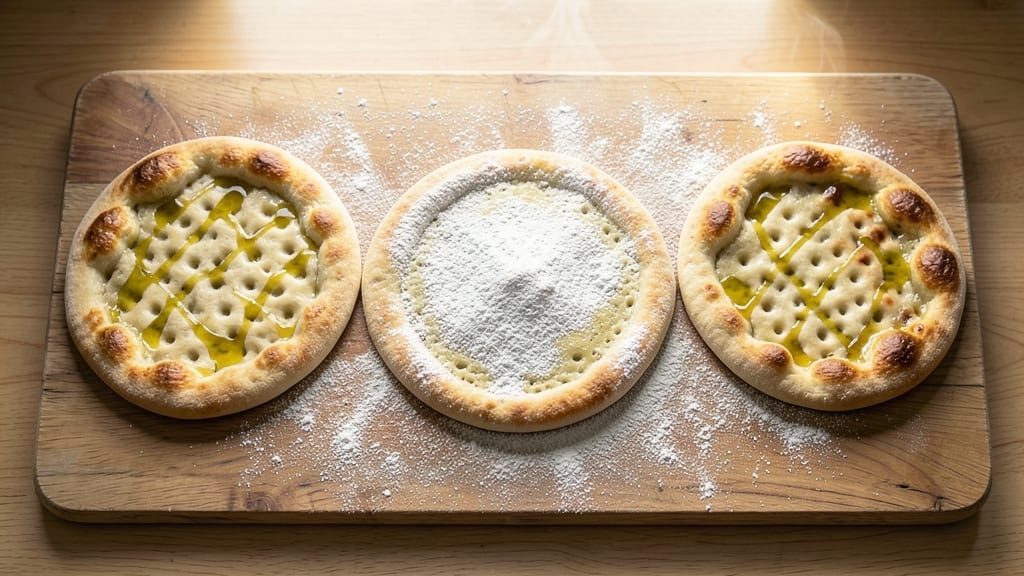
This 3 pizza dough recipe transforms your kitchen into a pizzeria with just five simple ingredients and 20 minutes of active time. The secret lies in a high-hydration dough that develops naturally without kneading, creating a crispy yet airy crust that rivals any restaurant.
I perfected this method after years of trial and error—no more tough, dense pizza crusts or waiting hours for proofing. What you’ll get is a foolproof dough that stretches effortlessly, browns beautifully, and delivers that perfect chewy-crisp texture in every bite.
The beauty of this recipe is its simplicity: no stand mixer, no yeast headaches, and no waiting overnight. We use bread flour for structure and olive oil for richness, while a touch of sugar helps activate the yeast quickly.
The dough comes together in minutes, then rests while you prep your toppings—no multitasking required. Whether you’re making three personal pizzas or one 12-inch masterpiece, this dough handles it all with ease.
The key is letting it rest at room temperature, which develops flavor and makes shaping a breeze.
By the time your dough is ready, you’ll have a golden, blistered crust with those coveted air pockets—no matter your skill level. The proofing process is foolproof, and the shaping technique is so simple even beginners will feel like pros.
This isn’t just pizza dough; it’s a game-changer for weeknight dinners, game days, or whenever you crave that perfect slice. The best part? You’ll have dough ready in 20 minutes, leaving you plenty of time to focus on the toppings.
Ready to make pizza night effortless? This recipe scales perfectly for three servings, and leftovers keep well for up to 48 hours in the fridge. Whether you’re feeding a family or treating yourself to a solo feast, this dough delivers restaurant-quality results every time.
Let’s get started—your first bite will have you hooked.
Ingredients for 3 pizza dough
Five ingredients transform your kitchen into a pizzeria in minutes—crispy, airy, and foolproof.
| Ingredient | Amount | Notes |
|---|---|---|
| Bread Flour 🌾 | 3 cups | High-protein for chewy crust |
| Active Dry Yeast 🍞 | ¼ tsp | Ensure yeast is fresh |
| Granulated Sugar 🍬 | 1 tsp | Feeds yeast for quick rise |
| Extra-Virgin Olive Oil 🫒 | 1 tbsp | High-quality for richness |
| Warm Water 💧 | 1 ¼ cups | 105-110°F (40-43°C) |
| Kosher Salt 🧂 | 1 ½ tsp | Diamond Crystal preferred |
| Semolina Flour 🌾 | ¼ cup | For dusting and rolling |
| Cornmeal 🌽 | ½ cup | For pizza peel prep |
The bread flour is non-negotiable here—its high protein gives that perfect chewy texture. King Arthur or Caputo are my go-tos, but any high-protein brand works. The yeast? Check the expiration date—old yeast means weak dough. Warm water is key: too hot kills yeast, too cold slows it down. I use a thermometer to hit 105-110°F every time. The extra-virgin olive oil should smell fruity and peppery—none of that cheap, rancid stuff. And the salt? Diamond Crystal dissolves better than table salt, so you get even flavor distribution.
No bread flour? All-purpose flour plus 1 tbsp vital wheat gluten gets you close. Yeast expired? Instant yeast works 1:1, but active dry is better for this recipe. Olive oil substitute? Avocado oil or melted coconut oil—just skip the fruity notes. Cornmeal can be swapped for more semolina if you’re rolling out dough frequently. The sugar is optional but helps the yeast activate faster—skip it if you’re avoiding sugar. For the water, tap is fine, but filtered tastes better. And if you’re making multiple pizzas, double the batch—this dough scales perfectly.
This dough is a game-changer because it doesn’t need kneading or long proofing. Shape it, let it rest 10-15 minutes, then bake. Leftovers? Wrap tightly in plastic and store in the fridge for up to 48 hours. To revive, let sit at room temp for 30 minutes before shaping. Freeze shaped dough balls for up to 3 months—thaw overnight in the fridge before baking. Pro tip: Semolina keeps dough from sticking like nothing else, and cornmeal prevents your pizza from burning on the peel.
Why You’ll Love This Recipe
- No-Fuss Mixing: I swear by this dough—just toss the bread flour, yeast, sugar, and olive oil in a bowl, then pour in warm water and stir. No stand mixer, no kneading, just a few minutes of hands-on time before it’s ready to rest.
- Chewy Gold Standard: That bread flour and olive oil combo? It delivers a chew you can’t get with all-purpose flour. The sugar kickstarts the yeast just right, so every bite has that perfect balance of airy and satisfying.
- Game for Any Night: Make a big batch on Sunday, then split it into three dough balls for pizza nights all week. Or freeze two for when you’re too tired to bake—just thaw and roll.
- Budget Stretch: Five ingredients, all pantry staples, and they last. I’ve made this dough for game nights, lazy Sundays, and even a last-minute garlic bread—no waste, just flavor.
Step-by-step instructions for no-knead pizza dough
This dough comes together faster than you’d expect—just 20 minutes to a perfect, chewy crust.
Activate the Yeast with Warm Water and Sugar
In a large mixing bowl, combine the 1.25 cups warm water (between 105-110°F) with the 1 tsp granulated sugar and 0.25 tsp active dry yeast. Let it sit for 5-7 minutes until frothy—this confirms the yeast is alive and ready to work. You’ll see small bubbles forming on the surface and a light, airy foam developing.
If the mixture doesn’t bubble after 7 minutes, your yeast may be inactive. In that case, start fresh with a new packet. This activation step is crucial for developing flavor and structure in your dough. The sugar feeds the yeast, kickstarting fermentation that gives your crust its signature chewiness.
Mix the Dough Ingredients
Add the 3 cups bread flour and 1.5 tsp kosher salt to the yeast mixture. Stir with a wooden spoon until a shaggy dough forms—it should pull away from the sides of the bowl but still be slightly sticky. Then add the 1 tbsp extra-virgin olive oil and mix until fully incorporated.
Here’s the thing—this dough doesn’t need kneading. The high-protein bread flour and proper hydration create gluten development through mixing alone. If the dough feels too dry, add 1 tablespoon warm water at a time until it reaches a soft, slightly tacky consistency. You want it to hold together when pressed but still feel slightly pliable.
Let the Dough Rest for Optimal Texture
Cover the bowl with a damp kitchen towel or plastic wrap and let the dough rest at room temperature for 15 minutes. This short rest allows the gluten to relax slightly, making it easier to handle later. During this time, the dough will puff up slightly as the yeast continues to work its magic.
Don’t skip this rest—it’s what transforms your dough from a simple mixture into something with proper structure. After 15 minutes, the dough should be noticeably more relaxed and easier to shape. If you’re in a hurry, you can proceed immediately, but the extra rest time improves texture and flavor.
Shape and Prepare for Baking
Lightly flour a clean surface with semolina flour (about 1 tablespoon) and turn out the dough. Gently pat it into a 12-inch circle, about ½-inch thick. Don’t worry about perfect edges—this dough forgives imperfections. If it feels too sticky, wet your hands slightly to prevent sticking.
Here’s where the cornmeal comes in: Sprinkle ½ cup cornmeal onto your pizza peel or baking sheet. This creates a non-stick surface that prevents the crust from tearing when you transfer it to the oven. Roll out the dough directly on the cornmeal-coated surface for easy transfer later.
Top and Bake to Perfection
Preheat your oven to 475°F with a pizza stone or baking sheet inside for at least 30 minutes. Once preheated, add your toppings to the dough and bake for 12-15 minutes until the crust is golden brown and the cheese is bubbly. The edges should be slightly puffed with charred spots in places.
Real talk: The first time you make this dough, you might be tempted to check it early. Don’t! The crust needs that full baking time to develop its signature chewiness. When you pull it out, the crust should feel firm to the touch but still spring back slightly when pressed. Let it cool for 2-3 minutes before slicing—this prevents a gummy crust.
Pro Tips For Making 3 Pizza Dough
- Test Yeast First: DESCRIPTION: Sprinkle that active dry yeast in warm water with a pinch of sugar—if it doesn’t foam in 5-10 minutes, toss it and grab fresh. I learned this the hard way after baking a flat, sad dough that tasted like cardboard.
- Measure Flour Right: DESCRIPTION: Use the spoon-and-sweep method (no packing!) for bread flour—your dough will be lighter and easier to stretch. I used to scoop straight from the bag, and my crusts always turned out dense and chewy.
- Oil the Bowl: DESCRIPTION: Coat your mixing bowl with olive oil before adding the dough—it prevents sticking and makes turning it out a breeze. Sounds simple, but I skipped this for years and always ended up with dough clinging like glue.
- Let It Rise Twice: DESCRIPTION: The second rise (after shaping) is where the magic happens—give it 1-2 hours at room temp for maximum flavor. I rushed it once, and my pizza tasted like a sad, underproofed pancake. Patience pays off.
Best sauces and condiments for this 3 pizza dough
Classic Marinara
This is my go-to sauce for that authentic Italian flavor—simmer 1 can (28 oz) San Marzano tomatoes with 3 garlic cloves, 1 tsp red pepper flakes, and 1 tbsp olive oil for 20 minutes.
Blend until smooth or leave chunky for texture. The key is letting it reduce naturally for a concentrated flavor. 🍅
Garlic-White Sauce
For a creamy alternative, melt 2 tbsp butter with 4 minced garlic cloves in a saucepan. Stir in 1 cup heavy cream and ½ cup grated Parmesan, then simmer for 5 minutes.
This sauce pairs perfectly with broccoli rabe or mushrooms. I add a pinch of nutmeg for depth—trust me, it makes a difference!
Pesto Variations
Skip the jarred stuff and make fresh pesto with 2 cups basil, ¼ cup pine nuts, ½ cup grated Pecorino Romano, and ½ cup olive oil.
Pulse in a food processor until smooth. For extra richness, add 1 tbsp butter at the end. This works beautifully with roasted veggies or prosciutto.
Spicy Arrabbiata
Blend 1 can (14 oz) diced tomatoes with 2 tbsp tomato paste, 1 tsp dried oregano, and ½ tsp crushed red pepper flakes.
Simmer for 15 minutes, then stir in 2 minced garlic cloves. The heat builds gradually, so adjust to taste. Perfect for spicy pepperoni lovers!
Olive Oil Finish
No matter your sauce, finish with a drizzle of high-quality olive oil—about 1 tbsp per pizza. This adds richness and helps distribute flavors evenly. I like to use California extra-virgin for its fruity notes.
A sprinkle of fresh basil or flaky sea salt right before serving elevates it to restaurant level. ✨
Condiment Pairings
Don’t forget the extras! A dollop of garlic aioli or balsamic glaze adds brightness, while hot honey adds sweet heat. For a tangy kick, try spicy brown butter—melt 2 tbsp butter with ½ tsp cayenne for 3 minutes** until nutty and fragrant. 💛
Nutrition facts
Frequently asked questions
Can I make this dough without bread flour?
Yes, but you’ll need to substitute 3 cups all-purpose flour plus 1 tbsp vital wheat gluten for the same chewy texture. The gluten gives that signature pizza bite, so don’t skip it if you want that authentic crust. For a lighter dough, you could also try half bread flour, half all-purpose, but expect slightly less chewiness.
How do I know when my dough is ready to shape?
After the 15-minute rest, your dough should feel soft, slightly tacky, and noticeably puffed up. Press it gently—if it springs back slowly (not instantly), it’s ready. Pro tip: If it feels too sticky, wet your hands slightly to prevent sticking while shaping. Over-proofed dough will feel spongy and won’t hold its shape well.
What’s the best way to store leftover dough?
Wrap shaped dough balls tightly in plastic wrap and store them in the fridge for up to 48 hours. For longer storage, freeze them for 3 months. To use frozen dough, thaw overnight in the fridge before shaping. Never refreeze thawed dough—it loses texture. The key is keeping it airtight to prevent drying out.
Why did my crust turn out dense instead of chewy?
This usually happens from overworking the dough (too much kneading) or underproofing. This recipe is designed to be no-knead—just mix and rest. If your oven wasn’t hot enough (475°F), the steam needed for that chewy texture won’t develop properly. Also check your yeast—if it was old or inactive, your dough won’t rise enough.

- 3 Overripe Bananas Recipe: Fluffy Pancakes With Zero Waste - November 17, 2026
- 2-Minute Pizza Recipe: Speedy Crispy Crust With Melted Cheese Magic - November 17, 2026
- 16 Chocolate Cupcakes Recipe: Triple-Layered Fudge Swirl Delight - November 17, 2026