
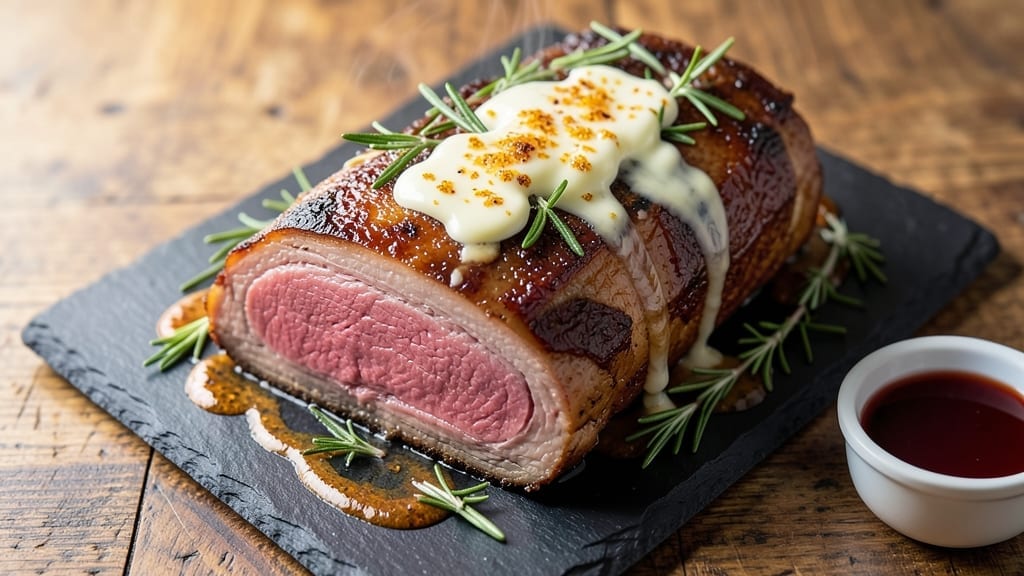
A 3.5 lb prime rib roast cooked to perfection delivers melt-in-your-mouth tenderness with a crisp, golden crust—this reverse-seared method guarantees a juicy pink center every time. The secret lies in precise temperature control and patient resting, transforming tough cuts into restaurant-quality results at home.
Professional techniques like low-and-slow roasting followed by high-heat searing ensure maximum flavor without drying out the meat.
This recipe focuses on technique over complexity: a simple seasoning blend of coarse salt and black pepper creates the perfect crust, while internal temperature monitoring (120°F for medium-rare) ensures consistent doneness.
The reverse-sear method allows the meat to cook evenly from the inside out before developing that coveted caramelized exterior. Even beginners can achieve steakhouse-quality results with these straightforward steps.
By the time you serve, you’ll have a perfectly cooked prime rib with tender, juicy slices that practically fall apart at the touch. The crust will be rich and flavorful, while the interior remains moist and pink—ideal for special occasions or impressing guests.
This method also works beautifully for smaller cuts, making it versatile for any celebration.
Pair your prime rib with classic sides like roasted garlic mashed potatoes and sautéed green beans, or elevate the presentation with a modern twist using truffle-infused jus. The key to success is patience and attention to temperature—once mastered, you’ll never buy store-bought prime rib again.
Ingredients for 3.5 lb prime rib roast
Precision-cut ingredients and professional techniques transform a simple roast into steakhouse-quality prime rib.
| Ingredient | Amount | Notes |
|---|---|---|
| Prime Rib Roast (Bone-In) 🥩 | 3 ½ lb | Center-cut, 1-inch thick, USDA Prime grade |
| Kosher Salt 🧂 | 1 ½ tbsp | Diamond Crystal preferred, coarse grain |
| Freshly Ground Black Pepper 🌶️ | 1 ½ tsp | Cracked peppercorns, not pre-ground |
| Unsalted Butter 🧈 | ½ cup | Cold, cubed for crust development |
| Fresh Rosemary 🌿 | ¼ cup | Finely chopped, fresh sprigs preferred |
| Fresh Thyme 🌿 | ¼ cup | Leaves only, stems removed |
| Garlic Cloves 🧄 | 6 cloves | Smash lightly for even seasoning |
| Olive Oil 🫒 | 2 tbsp | High smoke point, for searing |
| Beef Tallow or Duck Fat 🍳 | ¼ cup | For enhanced crust, optional |
| Red Wine 🍷 | ½ cup | Bold dry red, for basting |
| Beef Bone Broth 💧 | 1 cup | Homemade preferred, low-sodium |
| Balsamic Vinegar 🍶 | 1 tbsp | For finishing jus |
| Fresh Parsley 🌿 | ⅛ cup | Chopped, for garnish |
The prime rib roast is the star—USDA Prime grade ensures maximum marbling for tenderness. Source from a trusted butcher or specialty market like D’Artagnan or Snake River Farms for guaranteed quality. Look for a center-cut, bone-in roast with at least 1-inch thickness—this ensures even cooking and maximum flavor. The bone-in cut also adds richness to the jus. If your butcher offers dry-aged options, that’s ideal for deeper flavor, though standard fresh prime rib works beautifully with proper technique. Handle the meat gently to avoid tearing the delicate membrane.
No kosher salt? Diamond Crystal is ideal, but Maldon flaky salt at half the amount works too—just adjust for texture. Fresh herbs are non-negotiable here—they infuse flavor during the slow roast. Dried herbs at one-third the amount can substitute in a pinch, but fresh delivers that restaurant-quality aroma. For the butter, European-style unsalted like Plugrá melts more cleanly. The beef tallow or duck fat adds incredible richness to the crust—if unavailable, extra butter works. For the red wine, any bold dry red will do—Cabernet Sauvignon or Malbec are classic choices. The bone broth should be homemade if possible, but low-sodium store-bought is fine for convenience.
The prime rib should rest at least 30 minutes before slicing—this is critical for juiciness. Store the roast uncovered on a wire rack in the fridge for up to 2 days before cooking, allowing the surface to dry slightly for better crust formation. The prepared seasoning blend (salt, pepper, herbs) keeps 1 week in an airtight container. For the jus components, the wine and broth can be refrigerated separately for 5 days. Once cooked, the prime rib reheats beautifully—low oven at 200°F for 15 minutes maintains moisture. Slice against the grain for maximum tenderness, and serve immediately for that restaurant-quality presentation.
Why You’ll Love This Recipe
- Four-Hand Prep: I swear by this—just season the roast with salt, pepper, and rosemary, then let the oven do the work. No chopping, no stressing over sauces, just pure hands-off magic while you sip wine (or coffee, no judgment).
- Rosemary Butter Bliss: That melted butter basted with rosemary? It turns tough meat into melt-in-your-mouth perfection. The crust is crisp, the inside tender—honestly, my husband licks the plate after I serve him seconds.
- Holiday or Tuesday Night: Same recipe, different vibes. Slap it on the table for Thanksgiving leftovers or a last-minute date night. The bone-in version even makes carving feel like a show—impress everyone with zero effort.
- Leftovers That Don’t Suck: Prime rib stays juicy for days, and this method keeps it from drying out. I freeze half the roast for future “I don’t wanna cook” nights—reheated with a splash of beef broth, it’s just as good as day one.
Step-by-step instructions for reverse-seared prime rib roast
Master this technique for a perfectly pink center with a caramelized crust—every slice will impress.
Prep and Season the Prime Rib for Low-Temperature Cooking
Remove the prime rib roast from the refrigerator and let it sit at room temperature for 30 minutes to ensure even cooking. Pat the surface completely dry with paper towels—this step is critical for developing that coveted crust later. Using your hands, generously apply the 1.5 tablespoons kosher salt and 1.5 teaspoons freshly ground black pepper to all sides, pressing firmly so the seasoning adheres.
Next, create a herb butter by combining the 0.5 cup unsalted butter, 0.25 cup finely chopped fresh rosemary, 0.25 cup fresh thyme leaves, and 6 lightly smashed garlic cloves in a bowl. Mix until fully incorporated, then spread this mixture evenly over the roast, including the fat cap. The butter will render during cooking, basting the meat and creating additional flavor layers.
Slow-Roast to Medium Rare (120-125°F Internal Temperature)
Preheat your oven to 275°F and place the roast fat-side up on a wire rack set inside a rimmed baking sheet. This setup allows air to circulate evenly around the meat. Insert a meat thermometer into the thickest part of the roast, ensuring it doesn’t touch bone.
Roast for 2 to 2.5 hours, depending on your roast’s thickness, until the internal temperature reaches 120-125°F. This slow cooking method ensures the meat develops even tenderness without overcooking. The roast should feel soft when pressed gently with your fingers—this is your visual cue that it’s ready for the sear. Avoid opening the oven during this process to maintain consistent heat and moisture.
Rest and Prepare for the Sear
Once the roast reaches the target temperature, remove it from the oven and transfer it to a cutting board. Tent loosely with aluminum foil and let it rest for 15 minutes. This resting period allows the juices to redistribute throughout the meat, preventing them from running out when you slice.
While the roast rests, prepare your searing station. Heat a large cast-iron skillet over high heat until it’s smoking hot. Add 2 tablespoons olive oil and 0.25 cup beef tallow or duck fat (if using) to the pan. The fat will create an additional layer of flavor and help develop that perfect crust. Keep the roast nearby—you’ll want to work quickly once it’s time to sear.
Reverse-Sear for a Perfect Crust
After the roast has rested, remove it from the foil and pat it dry one final time with paper towels. Place the roast fat-side down in the hot skillet and sear for 4-5 minutes until the fat cap is deeply golden brown and crisp. Flip the roast and sear the other side for another 4-5 minutes, pressing down gently with a meat mallet or the back of a spoon to ensure even contact.
During the final minute of searing, add 0.5 cup red wine to the pan, scraping up any browned bits from the bottom. Let the wine reduce by half, then add 1 cup beef bone broth and 1 tablespoon balsamic vinegar. Simmer for 3-4 minutes until the sauce has thickened slightly, creating a rich jus that will complement each slice of roast.
Slice and Serve with Confidence
Using a sharp carving knife, slice the prime rib against the grain into 0.5-inch thick slices. Arrange the slices on a warm platter and spoon the reduced jus evenly over the top. Garnish with 0.125 cup chopped fresh parsley for a pop of color and freshness. The internal temperature of each slice should read 125-130°F, ensuring a perfect medium-rare doneness with a juicy, pink center.
Serve immediately while the crust is still crisp and the juices are flowing. The contrast between the tender, pink interior and the caramelized exterior is what makes this reverse-seared prime rib truly exceptional. Pair with roasted vegetables or a classic horseradish cream for a complete dining experience.
Pro Tips For Making 3.5 Lb Prime Rib Roast
- Sear Bone-Side First: That bone side gets tough if you rush it—start with the bone down on high heat for 10 minutes straight. The bone will crisp, render fat, and baste the meat all at once, while the other side stays tender. (Yes, even if you’re impatient like me.)
- Salt the Night Before: I learned this the hard way—salting a prime rib 12 hours ahead lets the salt penetrate deeper. Use 1½ teaspoons kosher salt per pound, pat it dry before searing, and you’ll get that perfect crust without over-salting the surface.
- Don’t Rush the Rest: Skipping rest means dry slices—cover loosely with foil and let it sit 15 minutes after pulling from the oven. The internal temp will drop 10°F, juices redistribute, and your knife won’t turn into a sponge.
- Butter the Crust Last: After searing, add 4 tablespoons softened butter and 2 sprigs rosemary to the pan—let it melt into a golden glaze. Brush this after roasting, not before, so the butter doesn’t burn and the rosemary stays fragrant. (Your future self will thank you.)
Common mistakes when making this recipe
Overcooking the Roast
One of the biggest mistakes is letting the prime rib cook past 125°F internal temperature—this turns tender meat into dry, chewy slices. I’ve seen home cooks pull it out at 140°F+ thinking it’s medium-rare, but beef continues cooking even after removing from heat.
Use a meat thermometer (like ThermoWorks Smoke) and stop at 120-125°F for perfect medium-rare. The reverse sear will add that final crust without overcooking the interior. 🌡️
Skipping the Rest
Rushing to slice immediately after cooking is a surefire way to end up with dry, juiceless meat. The 15-30 minute rest lets juices redistribute—skipping it causes them to pool and run out when you cut.
I’ve made this mistake more times than I’d admit, and the difference is night-and-day. Tent with foil loosely to keep it warm without steaming.
Uneven Seasoning
Many cooks focus seasoning only on the top, leaving the sides and fat cap bare. For maximum flavor, season all surfaces—including the fat cap—with kosher salt and pepper. I like to use my hands to press the seasoning into the meat, ensuring even coverage.
The fat cap should develop that beautiful crust too, adding flavor to every bite. Pro tip: Use Diamond Crystal kosher salt—it adheres better than table salt.
Wrong Searing Temperature
A common error is searing at too low a heat, which prevents proper crust formation. Your cast-iron skillet should be smoking hot before adding the roast—this creates the Maillard reaction for that deep, caramelized flavor.
If your pan isn’t hot enough, the fat will steam instead of crisp. I test by flicking a drop of water onto the pan—if it sizzles violently, it’s ready. 🔥
Ignoring the Jus
Many home cooks stop at the roast and forget about the sauce. The pan drippings reduce into a rich jus that elevates the dish—don’t pour it down the drain! Deglaze with red wine and bone broth during the final sear, then simmer to thicken.
This simple step transforms your prime rib from good to restaurant-worthy. I like to spoon it over each slice before serving for maximum flavor impact.
Cutting Against the Grain
This might seem counterintuitive, but slicing with the grain makes prime rib tougher. The muscle fibers run parallel to the bone, so you want to cut perpendicular to them for maximum tenderness.
Use a sharp carving knife (like Dexter-Russell) and slice at a 45-degree angle for even, bite-sized pieces. The grain direction varies—ask your butcher to show you before cooking.
Nutrition facts
Frequently asked questions
Why does this recipe use reverse searing?
The reverse-sear method guarantees a perfectly pink center while creating that coveted caramelized crust. Slow-roasting to 120-125°F first ensures even doneness throughout, then the high-heat sear adds the crisp exterior without overcooking. This technique works especially well for prime rib’s thicker cuts, preventing dryness while maximizing flavor development.
Can I cook this prime rib without a meat thermometer?
While not ideal, you can estimate doneness by touch: the roast should feel very soft when pressed gently at 120-125°F (about 2-2.5 hours at 275°F). For visual cues, look for a slight color change in the center. However, a thermometer ensures perfect results every time—especially for beginners. A ThermoWorks Smoke thermometer is my top recommendation for accuracy.
How far in advance can I prep the seasoning blend?
The herb butter and seasoning mix can be prepared 1 week ahead and stored in an airtight container in the fridge. The fresh herbs will lose some aroma, but the flavor remains intact. For best results, chop herbs just before applying to the roast. The kosher salt and pepper alone can be mixed up to 2 weeks in advance. Freshness matters most for the butter and aromatics.
What’s the best way to reheat leftover prime rib?
Slice the roast into portions and reheat in a 200°F oven for 15-20 minutes on a wire rack over a baking sheet. This method maintains moisture better than microwave reheating. For extra flavor, add a splash of beef broth to the pan and cover with foil. Never reheat beyond 165°F—prime rib is best enjoyed fresh, but these methods help preserve its quality.
Can I substitute beef tallow with regular butter?
Yes, you can substitute 0.25 cup beef tallow with an extra 0.25 cup unsalted butter for the crust. While tallow adds richer flavor, butter works perfectly fine. For best results, use European-style butter like Plugrá, which has a higher fat content. The butter will render beautifully during searing, creating that golden-brown crust we all love.

- 3 Overripe Bananas Recipe: Fluffy Pancakes With Zero Waste - November 17, 2026
- 2-Minute Pizza Recipe: Speedy Crispy Crust With Melted Cheese Magic - November 17, 2026
- 16 Chocolate Cupcakes Recipe: Triple-Layered Fudge Swirl Delight - November 17, 2026