
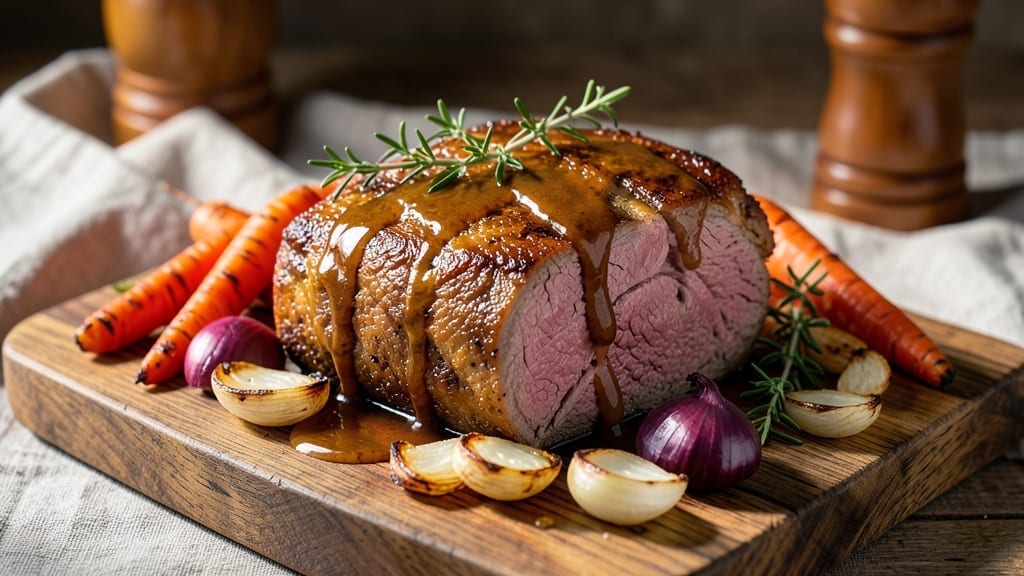
Transforming a tough 3lb eye round roast into fork-tender perfection requires patience and precision—but the results are worth every minute. This slow-braised method breaks down the meat’s connective tissue, delivering melt-in-your-mouth texture and deep, savory flavor that turns weeknight dinners into showstopping meals.
The key? Low-and-slow cooking with aromatic vegetables and herbs that infuse the meat until it practically falls apart.
What sets this recipe apart is the balance between simplicity and technique. You’ll need just six core ingredients—beyond the roast itself—and a few hours of hands-off time.
The secret lies in browning the meat first to develop rich crust, then slow-braising until the internal temperature reaches 203°F, where collagen dissolves into gelatin for that signature tenderness. No fancy equipment required, just a Dutch oven and a little time.
The result is a juicy, deeply flavorful roast that practically melts at the touch of a fork, with a surface glaze from reduced braising liquid. Serve it sliced thick over creamy mashed potatoes or alongside roasted root vegetables for a restaurant-quality meal that feels completely homemade.
The aroma alone will have everyone gathering at the table.
Best served immediately, but leftovers reheat beautifully for sandwiches the next day. This is the kind of recipe that transforms a simple cut of beef into something extraordinary—with minimal effort and maximum impact. Let’s get started on mastering this technique.
Ingredients for 3lb eye round roast
Six aromatic ingredients transform tough eye round into melt-in-your-mouth perfection through slow braising mastery.
| Ingredient | Amount | Notes |
|---|---|---|
| Beef Eye Round Roast 🥩 | 3 lb | Center-cut for even tenderness |
| Yellow Onion 🧅 | 1 whole | Cut into 1-inch chunks |
| Carrots 🥕 | 4 medium | Peeled, cut into 2-inch pieces |
| Garlic Cloves 🧄 | 6 cloves | Smashed, skin-on for flavor |
| Fresh Thyme Sprigs 🌿 | 4 whole | Or 1 tbsp dried thyme |
| Beef Broth 💧 | 4 cups | Low-sodium preferred |
| Red Wine 🍷 | 1 cup | Bold dry variety like Cabernet |
| Tomato Paste 🍅 | 2 tbsp | For depth of flavor |
| Olive Oil 🫒 | 2 tbsp | For searing meat |
| Kosher Salt 🧂 | 1 ½ tsp | Diamond Crystal preferred |
| Freshly Ground Black Pepper 🌶️ | 1 tsp | For seasoning |
| Fresh Rosemary 🌿 | 2 sprigs | For aromatic depth |
The beef eye round is the star—center-cut for even tenderness, not the outer edge. Whole Foods or your butcher will have it pre-trimmed, but if buying whole, trim excess fat. Look for good marbling, not lean cuts. Fresh thyme and rosemary should smell vibrant, not dusty. The red wine matters here—any bold, dry variety like Cabernet or Merlot works. Avoid sweet wines. For beef broth, low-sodium is critical to control seasoning. If using dried herbs, toast them briefly in a dry pan to deepen flavor.
No red wine? Substitute with additional beef broth plus 1 tbsp balsamic vinegar for acidity. Fresh thyme unavailable? Dried at one-third the amount works in a pinch. Carrots can be swapped for parsnips or celery root if preferred. The tomato paste is non-negotiable—it adds umami depth. Trader Joe’s sells it in convenient tubes, which last months. For extra richness, add 1 tbsp of Worcestershire sauce (ensure vegetarian if needed). The olive oil should be high-quality—California extra-virgin works best for searing.
This dish reheats beautifully—3-4 days in the fridge, 3 months frozen. For leftovers, slice against the grain and reheat in the braising liquid for 10 minutes. The roast freezes best in its braising liquid. Portion into individual servings before freezing for easy reheating. Store fresh herbs wrapped in damp paper towels for 5 days. The beef broth can be made ahead and kept for 6 months frozen. Always bring the roast to room temperature before cooking for even cooking.
Why You’ll Love This Recipe
- Thyme for Magic: That sprig of fresh thyme? It’s the secret weapon. The roast develops this deep, savory crust while staying tender inside, and the carrots caramelize into sweet, melt-in-your-mouth bites. Honestly, the smell alone makes my kitchen feel like a restaurant.
- Leftover Goldmine: Between us, this recipe begs for leftovers—and they’re just as good the second day. Slice the beef thin for sandwiches, shred it into tacos, or toss it with mashed potatoes for a lazy dinner. I’ve turned this into four meals without breaking a sweat.
- Budget-Friendly Feast: A 3lb roast stretches across multiple meals without costing a fortune, and the veggies (onion, carrots, garlic) are pantry staples. I’ll be real: my grocery bill stays low, but my dinner table stays full—and nobody complains about the taste.
Step-by-step instructions for slow-braised eye round roast
Transform tough cuts into melt-in-your-mouth perfection using this precise braising technique.
Sear the Roast for Maximum Flavor
Pat the 3 lb beef eye round roast dry with paper towels—this step is non-negotiable for crispy crust and even cooking. Heat the 2 tbsp olive oil in a heavy Dutch oven over medium-high heat until shimmering. Place the roast in the pan and sear on all sides for 3-4 minutes per side until developing a deep golden-brown crust. The reason we sear first is that this locked-in flavor becomes the foundation of your braise.
While the roast browns, prepare your vegetables: Cut the 1 whole yellow onion into 1-inch chunks and peel the 4 medium carrots, cutting them into 2-inch pieces. Add these to the Dutch oven along with the smashed 6 cloves garlic (skin-on for extra flavor) and the 2 sprigs fresh rosemary. Toss everything together for 2 minutes to coat the vegetables in the rendered beef fat. This creates a flavorful base before adding liquids.
Deglaze and Build the Braising Liquid
Remove the roast from the pot and set it aside. Pour in the 1 cup red wine, scraping up all the browned bits from the bottom with a wooden spoon—this deglazing step captures all that concentrated flavor. Let the wine simmer for 3-4 minutes until reduced by half. Add the 2 tbsp tomato paste and stir to create a rich base for your braise.
Next, add the 4 whole fresh thyme sprigs, 1.5 tsp kosher salt, and 1 tsp freshly ground black pepper. Pour in the 4 cups beef broth, stirring to combine. Return the roast to the pot, placing it upright with the vegetables surrounding it. Bring the liquid to a gentle simmer—you’re looking for small bubbles at the edges, not a rolling boil. This controlled simmer is what transforms tough meat into tender perfection.
Braise Until Fork-Tender
Cover the Dutch oven tightly with a lid and transfer it to a preheated 325°F oven. Braise for 2.5 to 3 hours until the beef is fork-tender. Here’s the test: Insert a fork into the thickest part of the roast—it should slide in with minimal resistance and the meat should pull apart easily. The liquid should have reduced significantly, creating a rich, concentrated sauce.
I recommend checking the meat after 2 hours—some ovens run hotter than others. If the meat isn’t quite tender, return it to the oven for another 30-minute increment. The key to success is patience; rushing this step results in tough, chewy meat. The low temperature and long cooking time break down collagen and connective tissue, transforming the eye round into melt-in-your-mouth tenderness.
Rest and Serve with Pan Sauce
Once the beef is perfectly tender, remove it from the pot and transfer to a cutting board. Tent loosely with aluminum foil and let it rest for 15 minutes. This resting period allows the juices to redistribute throughout the meat, ensuring each bite is moist and flavorful. During this time, skim any excess fat from the braising liquid and adjust the seasoning if needed.
Slice the beef against the grain into ¼-inch thick slices and arrange on a platter. Spoon the reduced braising sauce over the top and serve with the carrot and onion vegetables. The result should be juicy, fork-tender beef with a rich, flavorful sauce that coats every bite. This method delivers on the promise of transforming an affordable cut into a restaurant-quality centerpiece.
Pro Tips For Making 3lb Eye Round Roast
- Sear First, Roast Slow: After burning three batches of eye round trying to rush the crust, I learned this: hit the roast with a screaming-hot pan for 3-4 minutes per side until deep brown. Then, drop the heat to 275°F (135°C) and let it cook low and slow—this locks in flavor and keeps the meat tender, not chewy.
- Trim the Fat, Not the Flavor: Eye round is lean, so don’t strip it bare—leave a thin fat cap if it’s there. For the onions and carrots, cut them into even 1-inch chunks (no need for fancy shapes) and parboil them for 5 minutes first. This softens them faster without turning to mush later.
- Skip the Overcrowded Pan: If you’re roasting everything in one pan, resist the urge to pile the veggies and meat together. Spread the carrots and onions in a single layer first, then nestle the roast on top—this guarantees even browning and prevents steaming, which makes the meat dull.
- Use a Meat Thermometer: Guessing doneness with eye round is a fast track to dryness. Pull it at 130°F (54°C) for medium-rare—yes, it’ll rise to 135°F (57°C) while resting. I used to cut into it early, and the juices would run out like a sad water balloon.
Wine and beer pairings for this 3lb eye round roast
Classic Red Wine
The rich, deep flavors of your braised eye round roast call for a bold red wine with enough body to stand up to the beef. I always reach for a Cabernet Sauvignon or Merlot—both have the tannins and acidity to complement the dish beautifully.
A Napa Valley Cabernet with its dark fruit notes and smooth finish is my go-to, but any California or Bordeaux-style red will work. Chill slightly before serving to let the wine’s complexity shine alongside the tender meat. 🍷
Malbec for Bold Flavor
If you want to add a touch of spice and dark fruit to your meal, Argentinian Malbec is an excellent choice. The wine’s natural peppery notes pair wonderfully with the caramelized onions and thyme in the braising liquid.
Look for a Mendoza Malbec—it’s rich enough to stand up to the beef while adding a sophisticated twist. Serve slightly cooler than room temperature to balance its intensity with the dish’s savory depth.
Crisp Lager Pairing
For beer lovers, a German-style pilsner like Spaten Optimator or Warsteiner provides a refreshing contrast to the rich, slow-cooked beef. The crisp, clean maltiness cuts through the dish’s richness while complementing the caramelized onions and thyme.
If you prefer something with a bit more body, try a Belgian witbier like Hoegaarden—its citrusy notes and effervescence make it a delightful match. 🍺
Port Wine Reduction
For a truly luxurious touch, finish your meal with a Ruby Port reduction drizzled over the sliced roast. The wine’s sweetness and depth enhance the beef’s natural flavors while adding a touch of elegance.
To make it, simmer ½ cup Ruby Port with 1 tbsp brown sugar and 1 tsp fresh thyme until reduced by half. Strain and drizzle over the roast just before serving—this is a showstopper that elevates the dish to restaurant-quality.
Seasonal White Wine
If you’re serving this dish in warmer months, a Chardonnay with subtle oak notes can be a surprising yet delightful pairing. Look for a California Chardonnay with bright acidity and hints of vanilla—it balances the beef’s richness without overpowering it.
Alternatively, a dry Riesling from Germany offers a crisp, slightly tart contrast that refreshes the palate. Both wines work beautifully with the dish’s aromatic herbs and vegetables. 🍷
Nutrition facts
Frequently asked questions
Why does the recipe call for a 3lb eye round roast specifically?
The 3lb size is ideal because it’s large enough to feed 6 people with generous portions, yet small enough to cook evenly in a standard Dutch oven. Eye round is chosen for its balance of affordability and flavor—it’s leaner than chuck but develops incredible tenderness when slow-braised. Using a smaller cut (2 lbs) would cook too quickly, while a larger roast (> 4 lbs) risks uneven doneness.
Can I substitute beef broth with something else?
Yes! For a deeper flavor, use 1 cup beef broth + 1 cup red wine instead of the full 4 cups broth. Alternatively, swap for 4 cups water + 2 tbsp soy sauce (for umami) or 4 cups chicken broth + 1 tbsp balsamic vinegar. Avoid vegetable broth—it lacks the beefy depth needed to complement the roast. The key is maintaining the liquid-to-meat ratio for proper braising.
What’s the best way to check if the meat is done?
Use the fork test: Insert a fork into the thickest part—it should slide in with minimal resistance and the meat should pull apart easily (no pink center). The internal temperature should read 203°F at the thickest point. For extra confirmation, check the braising liquid: it should have reduced significantly and coat the back of a spoon thickly.
Can I make this recipe in a slow cooker?
Brown the roast first in a skillet, then transfer it to the slow cooker with all ingredients. Cook on LOW for 8-9 hours or HIGH for 5-6 hours. The liquid will be thinner, so reduce it on the stovetop after cooking. The slow cooker method works best with 2-inch thick slices of roast rather than a whole piece.
What are the best sides to serve with this roast?
Classic pairings include creamy mashed potatoes, roasted root vegetables (carrots, parsnips), or crusty bread to soak up the sauce. For a lighter option, try a fresh green salad with a tangy vinaigrette. The rich, savory flavors of the braised beef also complement buttery egg noodles or polenta.

- 3lb Prime Rib Roast Recipe: Juicy Pink Center Guaranteed in 3 Hours - October 31, 2026
- 5 Spice Cake Recipe: Warmly Spiced Layers With Crunchy Top - October 31, 2026
- 1950’s Macaroni and Cheese Recipe: Nostalgic Creamy Cheese Sauce with Buttery Noodles - October 31, 2026