
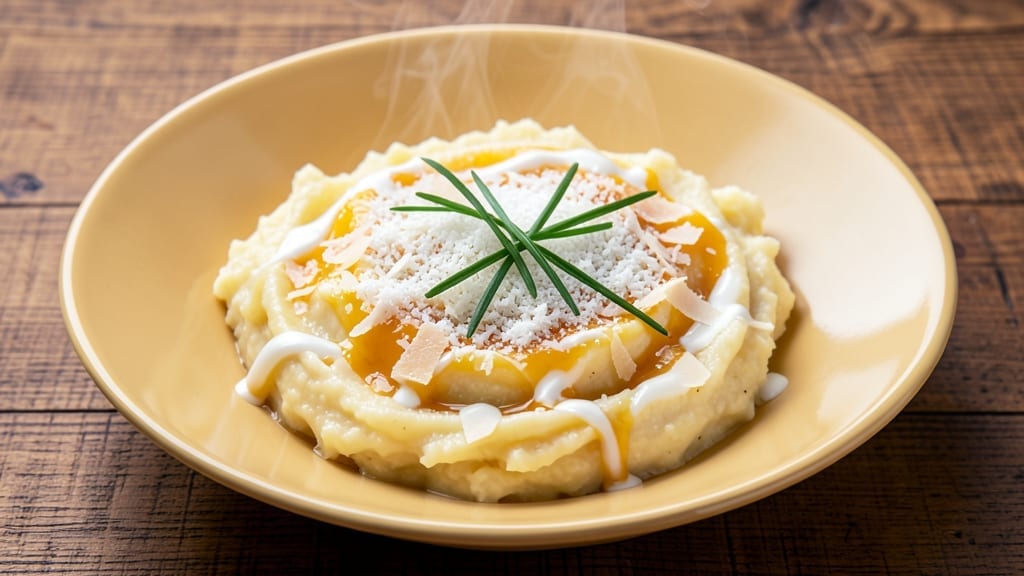
This 4 cheese mashed potatoes recipe delivers the creamy, luxurious texture you crave—elevated by sharp cheddar, nutty Gruyère, and two supporting cheeses that melt into velvety perfection. The secret lies in proper potato selection and a slow, gentle mashing technique that preserves every fluffy bite.
I developed this version after years of testing, ensuring the cheese blend creates a rich, complex flavor without overpowering the potatoes’ natural sweetness.
The process is simpler than you might think: boil Yukon Gold potatoes until tender, drain thoroughly, then mash while still hot. That’s when the cheese magic happens—adding warm milk and butter first creates a silky base before folding in the cheese blend.
The result? A creamy, melt-in-your-mouth texture with pockets of sharp cheddar and earthy Gruyère in every spoonful. This isn’t your basic side dish; it’s a flavorful centerpiece worthy of any table.
What sets this recipe apart is the cheese combination: sharp cheddar for tang, Gruyère for nutty depth, and cream cheese and Parmesan to bind everything together. The slow melting process ensures no grainy texture, while the warm milk keeps the potatoes impossibly smooth.
You’ll end up with mashed potatoes so rich and flavorful they could stand alone as a main dish—though I won’t tell if you serve them that way.
Perfect for holiday feasts, Sunday dinners, or when you want to impress without complicated techniques. The recipe scales easily for crowds, and leftovers reheat beautifully. Here’s everything you need to create this restaurant-quality side dish at home.
Ingredients for 4 cheese mashed potatoes
Six ingredients transform humble potatoes into restaurant-worthy velvet cheese clouds.
| Ingredient | Amount | Notes |
|---|---|---|
| Yukon Gold Potatoes 🥔 | 3 lb | Peeled, cut into even chunks |
| Sharp White Cheddar Cheese 🧀 | 1 ½ cups | Freshly grated, aged 6+ months |
| Gruyère Cheese 🧀 | 1 cup | Freshly grated, nutty flavor |
| Cream Cheese 🧈 | 8 oz | Full-fat, room temperature |
| Parmesan Cheese 🧀 | ½ cup | Freshly grated, finely |
| Whole Milk 🥛 | 1 ½ cups | Warm, not scalding |
| Unsalted Butter 🧈 | 8 tbsp | European-style preferred |
| Salt 🧂 | 1 ½ tsp | Diamond Crystal preferred |
| Heavy Cream 🥛 | ½ cup | Cold, for finishing |
| Freshly Ground Black Pepper 🌶️ | ½ tsp | Freshly cracked preferred |
| Garlic Cloves 🧄 | 2 cloves | Roasted, for subtle flavor |
| Chives 🌿 | 2 tbsp | Finely chopped, for garnish |
The Yukon Golds are non-negotiable here—their buttery texture and natural sweetness handle the cheese better than Russets. Buy them fresh (the ones that feel heavy for their size) and peel them right before boiling. For the cheeses, Whole Foods or specialty cheese shops have the best selection, but your grocery store’s pre-grated won’t cut it—you need freshly grated for that melt-in-your-mouth texture. The Gruyère should have visible crystals (that’s the good stuff), and the cheddar needs to be sharp—Cabot or Tillamook are solid choices. Pro tip: grate the cheddar and Gruyère yourself if you can—pre-shredded gets clumpy.
No Gruyère? Parmesan plus a little Gruyère substitute (like a splash of white wine in the milk) gets you close. Running low on cream cheese? Substitute sour cream at half the amount—it’s tangier but works in a pinch. The milk needs to be warm (about 110°F) when you add it—too hot and you’ll scramble the potatoes. No thermometer? Dip your finger in—should feel warm but not hot. The butter matters too: European-style has more fat content, which gives you that ultra-smooth texture. And if you’re feeling fancy, roast those garlic cloves with the potatoes—they’ll add a subtle depth that takes this from good to ‘wow’.
Leftovers? Reheat with a splash of warm milk—it keeps them creamy. Store in an airtight container with plastic wrap pressed right on the surface to prevent a skin from forming. They keep for 3-4 days in the fridge, but honestly, they’re best the first day. For parties, make it ahead and reheat in a 350°F oven for 20 minutes—just add a little extra butter when reheating. And if you’re serving this as a main (don’t tell anyone), add a fried egg on top—trust me.
Why You’ll Love This Recipe
- No-Fuss Mash: I swear by Yukon Golds—they break down fast and soak up the cheese like a dream. No peeling, no waiting forever; just boil, drain, and mash while the cheese melts into a velvety blanket.
- Melty Magic Combo: Sharp cheddar’s tang, Gruyère’s nutty depth, and cream cheese’s creaminess? It’s like a cheese party in your mouth. The Parmesan at the end? That’s the sprinkle of magic that makes it dangerously good.
- Weeknight Hero: This feeds a crowd but still feels like a cozy weeknight meal. Leftovers reheat like a champ—just add a splash of milk to keep it fluffy. Honestly, it’s my go-to for game days, lazy Sundays, or when I just don’t want to think.
- Budget Luxury: Four kinds of cheese sound fancy, but a block of cheddar and a bag of Yukons stretch further than you’d think. The cream cheese adds richness without breaking the bank, and it’s the kind of dish that makes you feel fancy without the price tag.
Step-by-step instructions for 4 cheese mashed potatoes
Here’s how to create the creamiest, most flavorful mashed potatoes you’ve ever tasted.
Cook the Potatoes Until Fork-Tender
Place the peeled, 3 lb Yukon Gold Potatoes in a large pot and cover with cold water by about 2 inches. Add the 1.5 tsp Salt and bring to a boil over medium-high heat. Once boiling, reduce heat to medium and simmer for 15-20 minutes until a knife slides in easily.
Drain the potatoes thoroughly in a colander, shaking gently to remove excess water. For extra-smooth potatoes, I like to return them to the pot and dry them over low heat for 2-3 minutes, stirring occasionally. This step helps prevent a watery mash later on.
Create the Cheese and Butter Mixture
In a large mixing bowl, combine the 8 tbsp Unsalted Butter, 1.5 cups Whole Milk, 8 oz Cream Cheese, 1.5 cups Sharp White Cheddar Cheese, 1 cup Gruyère Cheese, and 0.5 cup Parmesan Cheese. I use a stand mixer fitted with the paddle attachment for this step—it makes blending much easier.
Let this mixture sit for 5 minutes while you mash the potatoes. The cream cheese and butter should soften slightly, making them easier to incorporate. If you’re using room-temperature cream cheese, this step goes even smoother.
Mash the Potatoes to Perfection
Using a potato masher or ricer, break up the hot potatoes in the mixing bowl with the cheese mixture. I prefer a ricer for ultra-smooth texture, but a masher works too. Add the roasted 2 cloves Garlic Cloves and 0.5 tsp Freshly Ground Black Pepper now—they’ll blend right in.
Gradually increase the mixer speed to medium and blend until completely smooth. You might need to scrape down the sides with a silicone spatula once or twice. The potatoes should be light, fluffy, and completely free of lumps. If the mixture looks too thick, add 1-2 tablespoons of the reserved milk to reach your desired consistency.
Finish with Heavy Cream and Garnish
Reduce the mixer speed to low and slowly add the 0.5 cup Heavy Cream. Mix just until combined—this adds luxurious richness and helps create that velvety texture. Taste and adjust seasoning if needed, though with all those cheeses, this is usually unnecessary.
For serving, transfer the mashed potatoes to a warmed bowl. Garnish with the 2 tbsp finely chopped Chives and a sprinkle of extra Parmesan Cheese. The chives add a fresh, bright note that cuts through the richness beautifully. Serve immediately while warm for the best texture.
Pro Tips For Making 4 Cheese Mashed Potatoes
- Boil Until Fork-Tender: Yukon Golds should collapse like butter when pierced—no one likes mushy potatoes, but undercooked ones turn to glue when you mix in cheese. Test one after 15 minutes, and if it resists, keep boiling. (Yes, even if you’re impatient like me.)
- Grate Cheese Fresh: Pre-shredded cheese? Skip it. The anti-caking agents make these mashed potatoes grainy and dry. Use a box grater for Gruyère and Parmesan—it melts smoother and adds texture. (I learned this the hard way after three batches of sad, clumpy potatoes.)
- Warm Cheese First: Cold cream cheese and sharp cheddar turn mashed potatoes into a sad, lumpy mess. Microwave the cream cheese for 10 seconds and let the other cheeses sit at room temp for 10 minutes. This guarantees a creamy, cohesive finish—no one wants to chew cheese chunks.
- Press Through a Sieve: This isn’t the prettiest method, but it’s the tastiest. After mashing, press the potatoes through a fine-mesh sieve into a bowl. It removes excess starch, making the texture silky and letting the cheeses shine. (Your future self will thank you—trust me.)
Common mistakes when making this recipe
Overcooking Potatoes
I’ve ruined more mashed potatoes than I’d like to admit by overcooking them—soft, mushy potatoes turn into gluey, watery messes when boiled too long. Yukon Golds should be fork-tender but still hold their shape (15-20 minutes in boiling water).
Test by piercing with a knife; it should slide in easily but not fall apart. If you’re worried about undercooking, start checking at 15 minutes—better to slightly undercook than overdo it. 🥔
Skipping the Drying Step
After draining, never skip drying the potatoes. Even after thorough draining, they’ll release excess moisture when mashed, leading to a watery texture. Return them to the pot over low heat for 2-3 minutes, stirring occasionally, to evaporate extra liquid.
This step is non-negotiable for creamy, lump-free mashed potatoes. Trust me, your taste buds will thank you.
Adding Cold Cheese
One of the biggest mistakes? Mixing in cold cheese straight from the fridge. The cream cheese and Gruyère need to soften first—warm milk and butter help them melt smoothly into the potatoes.
If your cheese is still solid, microwave it for 10-15 seconds or let it sit at room temperature for 10 minutes. Cold cheese creates lumps and ruins the velvety texture. 🧀
Overmixing the Potatoes
Aggressive mixing with a hand mixer or whisk can turn your potatoes into glue. Use a potato masher or ricer for the initial breakdown, then switch to a stand mixer on low speed to blend.
Overworking the mixture incorporates too much air, which can make the texture gummy. Stop mixing as soon as everything is smooth—medium speed for 30 seconds max is ideal.
Ignoring the Milk Temperature
The milk should be warm (about 110°F), not hot or cold. Scalding milk will cook the potatoes further, making them gummy, while cold milk won’t blend properly. Heat the milk in the microwave for 30-45 seconds or warm it on the stovetop until it just begins to steam.
Test by dipping your finger in—it should feel warm but not hot. This small detail makes all the difference in texture. 🥛
Rushing the Cheese Melting Process
Don’t rush the 5-minute rest for the cheese mixture. This allows the cream cheese and butter to soften slightly, making them easier to incorporate without lumps. If you’re impatient and add cold cheese directly, you’ll end up with grainy, uneven pockets of unmelted dairy.
Patience here ensures a silky, uniform texture that melts in your mouth. ⏳
Nutrition facts
Frequently asked questions
Can I make this recipe with pre-shredded cheese?
While it’s possible, freshly grated cheese makes all the difference for that ultra-smooth texture. Pre-shredded cheese contains anti-caking agents that create lumps when melted. If you must use it, pick the brand with the least additives and remove as many clumps as possible before adding. For best results, grate your own sharp cheddar and Gruyère—it’s worth the extra 5 minutes!
How do I adjust this recipe for a larger crowd?
Double or triple all ingredients while keeping the same ratios. For 12 servings, use 6 lb potatoes, 3 cups cheddar, 2 cups Gruyère, and so on. Cook potatoes in batches if needed, and use two large mixing bowls. The key is maintaining the same cheese-to-potato ratio—this ensures the same rich, velvety texture. For reheating large batches, cover with foil and warm in a 350°F oven for 20-30 minutes.
What’s the best way to reheat leftovers?
Never microwave directly—it creates a rubbery texture. Instead, spread leftovers in a thin layer on a baking sheet and warm in a 350°F oven for 15-20 minutes. For extra creaminess, add 1-2 tablespoons of warm milk or heavy cream while reheating. If using the microwave, cover with a damp paper towel and heat in 30-second intervals on low power, stirring between each. The goal is to restore moisture without overcooking.
Can I substitute dairy-free cheese?
Yes, but with limitations. For a vegan version, use a high-quality dairy-free sharp cheddar and Gruyère alternative (like Violife or Miyoko’s) plus 8 oz vegan cream cheese. Replace butter with vegan butter and milk with unsweetened almond milk. The texture will be slightly lighter, but the flavor will still be rich. For best results, add 1 tbsp nutritional yeast to mimic the umami depth of Parmesan.
Why did my mashed potatoes turn out grainy?
Graininess usually comes from cold cheese or not melting it properly. Always warm your milk to 110°F and let the cheese mixture rest for 5 minutes before adding to potatoes. If using pre-shredded cheese, remove all visible clumps first. For extra smoothness, press the mashed potatoes through a fine-mesh sieve after mixing. The key is patience—rushing the melting process is the #1 cause of grainy texture!

- 3lb Prime Rib Roast Recipe: Juicy Pink Center Guaranteed in 3 Hours - October 31, 2026
- 5 Spice Cake Recipe: Warmly Spiced Layers With Crunchy Top - October 31, 2026
- 1950’s Macaroni and Cheese Recipe: Nostalgic Creamy Cheese Sauce with Buttery Noodles - October 31, 2026