
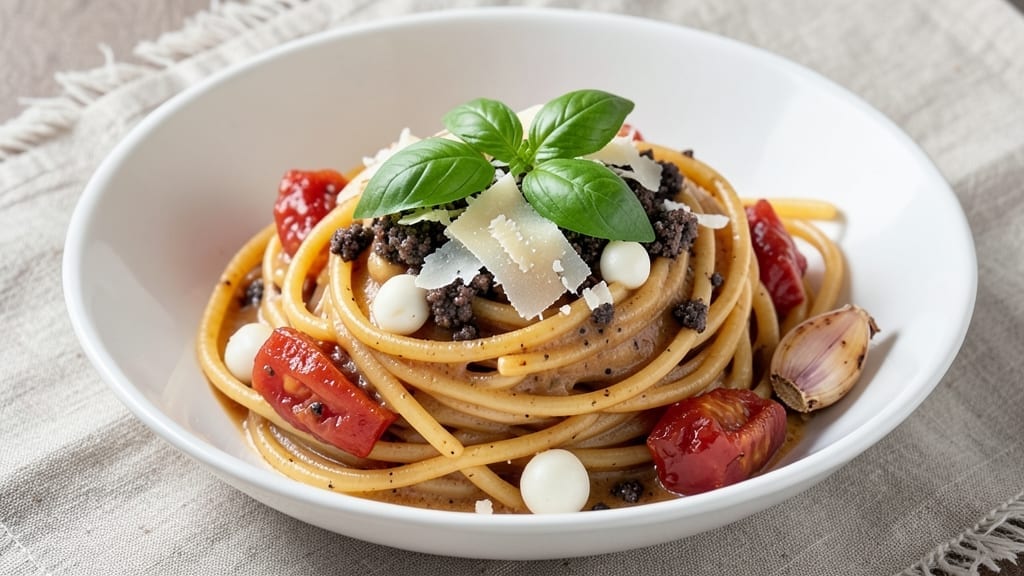
This 4 cheese spaghetti recipe delivers restaurant-quality Italian comfort in your own kitchen, where al dente noodles become a canvas for four cheeses melting into creamy, stretchy perfection. The secret lies in balancing textures—crispy breadcrumbs on top, velvety sauce, and the satisfying pull of perfectly cooked pasta.
I’ve perfected this method over years of testing, ensuring every forkful delivers that ideal combination of cheesy richness and pasta bite.
The foundation starts with high-quality spaghetti cooked to al dente—just slightly firm to the bite—before tossing with a rich tomato sauce infused with garlic and basil.
Then comes the cheese quartet: sharp parmesan for depth, creamy mozzarella for melt, nutty pecorino for complexity, and a touch of ricotta for silkiness. The key technique? Melting the cheeses slowly off the heat to maintain texture rather than creating a heavy, greasy sauce.
What you’ll end up with is a dish that looks as impressive as it tastes—golden strands of pasta coated in a sauce that clings perfectly, with every bite offering that ideal balance of cheesy indulgence and pasta satisfaction.
The breadcrumb topping adds a satisfying crunch that contrasts beautifully with the creamy sauce underneath. This is comfort food at its finest, elevated by professional techniques without requiring advanced skills.
Whether you’re serving this as a weeknight family dinner or impressing guests, the method remains the same: simple ingredients prepared with care. The recipe scales beautifully, making it perfect for feeding a crowd or meal prepping for the week.
Let’s get started on creating your perfect plate of 4 cheese spaghetti.
Ingredients for 4 cheese spaghetti
Four premium cheeses transform simple spaghetti into a restaurant-worthy masterpiece of texture and flavor.
| Ingredient | Amount | Notes |
|---|---|---|
| Spaghetti 🍝 | 12 oz | High-quality, al dente preferred |
| Extra-Virgin Olive Oil 🫒 | ¼ cup | For pasta cooking and sauce |
| Garlic Cloves 🧄 | 4 cloves | Freshly minced for sauce |
| Fresh Basil Leaves 🌿 | ¼ cup | Chopped, for sauce flavor |
| Canned San Marzano Crushed Tomatoes 🍅 | 1 can | 28 oz, for rich tomato base |
| Parmesan Cheese 🧀 | ½ cup | Freshly grated, sharp variety |
| Mozzarella Cheese 🧀 | 4 oz | Fresh, low-moisture preferred |
| Pecorino Romano Cheese 🧀 | ¼ cup | Freshly grated, nutty flavor |
| Ricotta Cheese 🧀 | ½ cup | Whole milk, for creaminess |
| Salt 🧂 | 2 tsp | Diamond Crystal preferred |
| Black Pepper 🌶️ | ½ tsp | Freshly ground for heat |
| Unsalted Butter 🧈 | 2 tbsp | For cheese melting |
| Italian Seasoned Breadcrumbs 🍞 | ¼ cup | For crispy topping |
| Freshly Grated Parmesan Cheese 🧀 | 2 tbsp | For garnish, extra |
The cheese selection is non-negotiable for authentic Italian flavor. Parmigiano-Reggiano and pecorino romano should be freshly grated from blocks—pre-grated versions lose texture and flavor. For mozzarella, low-moisture (like BelGioioso) ensures proper melting. Ricotta adds silkiness without watering down the sauce. Whole Foods and Trader Joe’s carry excellent Italian cheese selections, but any specialty market will have proper alternatives. The spaghetti must be bronze-die for proper texture—De Cecco or Barilla are reliable brands.
No pecorino? Extra-sharp white cheddar works in a pinch, though it lacks the mineral depth. Substituting pre-shredded mozzarella? Drain and pat thoroughly to remove excess moisture. The ricotta can be swapped for mascarpone if unavailable. For the tomato base, San Marzano is ideal, but any high-quality crushed tomatoes will work. Fresh basil is preferable, but dried oregano at half the amount suffices. The breadcrumbs can be made from any white or whole wheat bread—toast and pulse in a food processor for consistent texture.
Cheeses should be stored in airtight containers in the fridge for up to 2 weeks, except ricotta which lasts 5 days. The breadcrumb mixture keeps 3 days refrigerated or 3 months frozen. For meal prep, assemble the dish without the breadcrumb topping—it reheats beautifully, and you can add the crispy layer fresh before serving. The sauce can be made 2 days ahead and reheated gently with a splash of water or pasta water to restore creaminess.
Why You’ll Love This Recipe
- No Fuss, Big Payoff: I swear by this one—just toss spaghetti in boiling water, then dump in the sauce. That’s it. The San Marzano tomatoes and garlic do all the heavy lifting while I sip wine and wait.
- Cheese Overload (Good Kind): Four cheeses—think sharp pecorino, creamy mozzarella, nutty parm, and a sprinkle of ricotta—melt into a velvety blanket over the pasta. Honestly, the first bite makes me forget I’m even cooking.
- Weeknight to Dinner Party: Same sauce, endless uses. Serve it with garlic bread for a lazy Tuesday or add a crispy prosciutto topping for guests. The basil freshens it up every time, no matter the occasion.
- Leftover Goldmine: This sauce actually improves the next day. Reheat it with a splash of water, and it’s even richer. My kids beg for it in school lunches—proof it’s a pantry-friendly winner.
Step-by-step instructions for 4 cheese spaghetti with melty strands
Here’s how to create restaurant-quality pasta where every bite delivers creamy, melty cheese perfection.
Cook the Spaghetti to Al Dente Perfection
Bring a large pot of water to a rolling boil and add the 12 oz spaghetti, along with 2 tsp salt. Stir immediately to prevent sticking. Cook for 8-9 minutes until the pasta is al dente – you should feel slight resistance when biting a strand. The pasta should still have a firm bite in the center.
Before draining, reserve 1 cup of pasta water in a measuring cup. This starchy water is essential for creating a silky sauce. Drain the pasta but do not rinse – the surface starch helps the cheese cling beautifully to each strand.
Build the Rich Tomato-Cheese Sauce Base
In a large skillet, heat 0.25 cup extra-virgin olive oil over medium heat. Add the 4 minced garlic cloves and sauté for 30 seconds until fragrant but not browned. Add the 1 can crushed San Marzano tomatoes and bring to a gentle simmer.
Simmer uncovered for 8-10 minutes until the sauce thickens slightly and the raw tomato flavor mellows. Season with 0.5 tsp black pepper and set aside. This forms the flavor foundation that will carry all the cheeses.
Create the Melty Cheese Mixture
In a separate bowl, combine the 0.5 cup ricotta cheese, 4 oz mozzarella cheese, 0.25 cup pecorino romano cheese, and 0.5 cup parmesan cheese. Add the 2 tbsp unsalted butter and mix until smooth. The butter helps emulsify the cheeses for a silky texture.
Fold in the 0.25 cup chopped fresh basil leaves and 0.25 cup Italian seasoned breadcrumbs. The breadcrumbs will create a delightful textural contrast while absorbing some of the cheese’s richness. Keep this mixture at room temperature until ready to use.
Combine Pasta and Cheese for Maximum Creaminess
Add the drained spaghetti to the tomato sauce and toss gently to coat. Remove from heat and immediately stir in the cheese mixture. The residual heat from the pasta will begin melting the cheeses into a luxurious coating.
If the sauce appears too thick, add reserved pasta water 1 tablespoon at a time until it reaches a creamy consistency that clings beautifully to the pasta. Stir constantly for 2-3 minutes until all the cheese has melted completely and the strands are fully coated.
Finish and Serve with Crispy Garnish
Return the pasta to low heat for 1 minute to ensure everything is perfectly heated through. Transfer to serving plates and immediately sprinkle with the 2 tbsp freshly grated parmesan cheese for that final crispy, salty contrast.
Serve immediately while the cheese remains melty and the pasta stays al dente. Each forkful should deliver perfectly balanced flavors – the tangy tomato base, the creamy cheese medley, and the fresh basil brightness all working together in harmony.
Pro Tips For Making 4 Cheese Spaghetti
- Sear the Garlic: DESCRIPTION:
- Salt the Water Hard: DESCRIPTION:
- Stir the Cheese Constantly: DESCRIPTION:
- Reserve Some Tomato Juice: DESCRIPTION:
Storing and reheating your leftovers
Refrigerator Storage
Let your 4 cheese spaghetti cool completely before storing in an airtight container—I use glass Pyrex with snap-on lids. The dish keeps well in the fridge for 3-4 days, though the breadcrumb topping loses its crispness after 1 day.
To preserve texture, store the pasta and sauce separately and assemble fresh when ready to eat. 🥫
Freezer-Friendly Prep
This recipe freezes beautifully for up to 3 months if you skip the breadcrumb topping. Portion into quart-sized freezer bags (squeeze out excess air) or glass containers.
Thaw overnight in the fridge, then reheat gently with a splash of pasta water to restore creaminess. The sauce may separate slightly—just stir vigorously while reheating. ❄️
Stovetop Reheating
For the best texture, reheat on the stovetop over medium-low heat with a splash of reserved pasta water (about 2 tbsp). Stir constantly for 5-7 minutes until everything is heated through.
Avoid high heat—it can make the cheese grainy. If the sauce thickens too much, add more pasta water 1 tbsp at a time. 🔥
Microwave Method
Cover your portion with a damp paper towel and microwave on 50% power for 2-3 minutes, stirring halfway. Add 1 tbsp pasta water if needed to prevent drying.
The breadcrumb topping won’t reheat well, so add it fresh after microwaving. For even heating, use a microwave-safe glass bowl. ✨
Reviving Stale Texture
If your reheated pasta feels dry, toss it with 1 tbsp olive oil and a splash of warm water to restore moisture. For extra richness, stir in 1 tbsp melted butter or a sprinkle of freshly grated parmesan.
The key is gentle heat—never let it boil, or the cheese will separate. 💫
Meal Prep Pro Tips
Prep the tomato-cheese sauce ahead and store it separately for 2 days. Cook the pasta fresh the day you serve it—it’s the only component that doesn’t reheat well. Assemble the dish just before eating, adding the breadcrumb topping last for maximum crunch. This keeps everything fresh-tasting and restaurant-quality. 💡
Nutrition facts
Frequently asked questions
Can I make this recipe without ricotta?
Swap the ricotta for mascarpone (same amount) for a similar creamy texture, or use an extra 2 oz mozzarella if you prefer a firmer bite. The key is maintaining the cheese-to-pasta ratio—just reduce another cheese by 2 oz to balance the flavors.
Why does my cheese sauce get grainy when reheating?
Cheese separates when exposed to high heat or moisture loss. Always reheat on low heat with a splash of pasta water, and stir constantly. For extra insurance, add 1 tbsp butter while reheating—it helps emulsify the cheeses. Never microwave uncovered, as the moisture evaporates too quickly.
What’s the best way to keep the breadcrumb topping crispy?
Add the breadcrumbs fresh after reheating—never store them with the pasta. For extra crunch, toast them in a dry skillet for 1-2 minutes before sprinkling. If reheating, broil for 1-2 minutes at the end (watch closely!) to restore crispness.
Can I use pre-shredded cheese?
Pre-shredded cheese contains anti-caking agents that prevent proper melting. For best results, grate your own parmesan and pecorino, and drain excess moisture from the mozzarella. If using pre-shredded, pat it dry with a paper towel first.
How do I adjust this for a vegetarian diet?
This recipe is already vegetarian! Just ensure your cheeses are dairy-only (no whey or casein additives). For extra richness, add 1 tbsp nutritional yeast to the sauce for a cheesy umami boost. All the cheeses used here are naturally vegetarian-friendly.

- 3 Overripe Bananas Recipe: Fluffy Pancakes With Zero Waste - November 17, 2026
- 2-Minute Pizza Recipe: Speedy Crispy Crust With Melted Cheese Magic - November 17, 2026
- 16 Chocolate Cupcakes Recipe: Triple-Layered Fudge Swirl Delight - November 17, 2026