
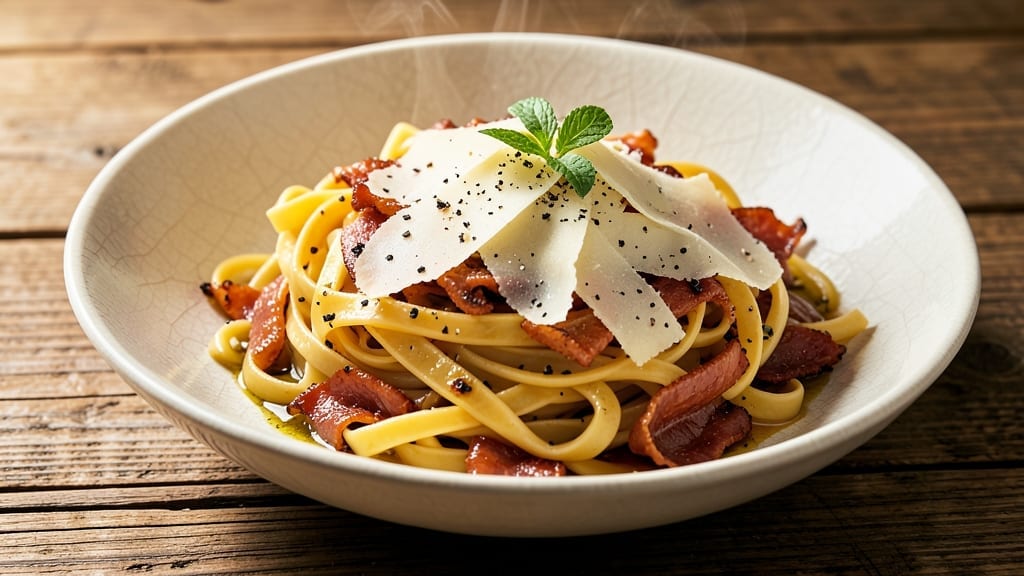
This 4-egg pasta recipe delivers the ultra-rich, creamy carbonara of your dreams—where perfectly crispy pancetta meets hand-stretched dough for a dish that feels like a Roman trattoria secret.
The magic lies in balancing eggs and cheese just right, creating a sauce so velvety it clings to every strand without weighing it down. I’ve perfected this over years of testing, ensuring the dough stays tender while the pancetta achieves that addictive crunch.
The process starts with the dough, where 4 large eggs form the foundation—rich but not greasy, thanks to precise flour-to-egg ratios and a touch of olive oil for elasticity.
While the dough rests, you’ll render the pancetta until it’s golden and crisp, then set it aside to keep its texture intact. The key to the sauce? Cooking the pasta al dente and finishing it in the pot with the eggs—no lumps, no curdling, just silky perfection.
What you’ll end up with is crispy pancetta that shatters between bites, strands of pasta coated in a sauce so luxurious it feels indulgent yet balanced. The eggs emulsify into a glossy finish, while the cheese melts into a blanket of savory richness.
This isn’t just pasta—it’s a restaurant-quality dish that takes less than an hour to master.
Serve immediately with extra pancetta on top and a sprinkle of black pepper for that classic carbonara bite. The leftovers? Toss them with a splash of pasta water to restore that creamy magic. Let’s make this dish your new go-to for weeknight dinners that taste like a special occasion.
Ingredients for 4 egg pasta
Four eggs, crispy pancetta, and freshly grated cheese—this is your Roman trattoria secret.
| Ingredient | Amount | Notes |
|---|---|---|
| All-Purpose Flour 🌾 | 2 ½ cups | Sifted for smooth dough texture |
| Large Eggs 🥚 | 4 whole | Room temperature for even dough |
| Extra-Virgin Olive Oil 🫒 | ¼ cup | High quality for elasticity |
| Pancetta 🥓 | 6 oz | Thinly sliced for crispy texture |
| Pecorino Romano Cheese 🧀 | 1 ½ cups | Freshly grated from block |
| Freshly Ground Black Pepper 🌶️ | 1 ½ tsp | Coarsely cracked for authentic bite |
| Diamond Crystal Kosher Salt 🧂 | ½ tsp | For dough and finishing |
| Spaghetti 🍝 | 12 oz | Fresh or high-quality dried |
| Parmesan Cheese 🧀 | ½ cup | Freshly grated for sauce richness |
| Reserved Pasta Water 💧 | 1 cup | From cooking pasta al dente |
The pancetta is non-negotiable here—look for thick-cut slices at your local butcher or Italian market. Whole Foods and Trader Joe’s carry pre-sliced versions, but nothing beats the texture of fresh-cut. If you can’t find pancetta, guanciale works too, though it’s pricier. For the cheese, Pecorino Romano is essential—it’s sharper and saltier than Parmesan, giving that authentic carbonara kick. Grate it yourself; pre-grated cheese gets clumpy and lacks flavor. The eggs? Room temperature is key—they’ll blend into the sauce more smoothly.
No pancetta? Smoked bacon in a pinch, but it won’t be the same—pancetta has that unmatched fat-to-meat ratio. Fresh pasta is ideal, but high-quality dried spaghetti works too if you’re in a hurry. Just cook it al dente—that firm bite is crucial for the sauce to cling. For the cheese, Parmesan can substitute half of the Pecorino, but the dish loses some depth without it. The olive oil matters too—avoid the cheap stuff. A good extra-virgin brand makes all the difference in the dough’s elasticity and the sauce’s richness.
Pancetta keeps for 1 week in the fridge, but it’s best used fresh for maximum crispiness. The dough can be made 1 day ahead—wrap it tightly in plastic and let it come to room temperature before rolling. The cooked pasta reheats beautifully—toss with a splash of reserved pasta water to restore that creamy sauce. Store leftovers in an airtight container for 2 days, but honestly, this dish is best eaten fresh. The crispy pancetta loses its crunch when reheated, so plan to make it when you’re ready to eat.
Why You’ll Love This Recipe
- Four Eggs, Zero Stress: I swear, this pasta takes less effort than store-bought—just flour, eggs, and a quick stretch. No kneading, no resting, no waiting. Honestly, I’ve made it while chatting on the phone.
- Pancetta Magic: That crispy, salty pancetta transforms everything. It’s the secret weapon—frying it first fills the kitchen with the best kind of aroma, and every bite has that smoky, umami punch.
- Weeknight to Dinner Party: Same recipe, different vibes. Toss it with a simple tomato sauce for a rushed Tuesday, or dress it up with fresh basil and extra pecorino for guests. It’s my “I’ll make it look fancy” go-to.
- Leftovers That Don’t Suck: Cold pasta the next day? Actually delicious. The eggs keep it rich, and the pecorino melts into the noodles like a cheesy hug. I’ve reheated mine three times—no complaints.
Step-by-step instructions for ultra-rich carbonara with crispy pancetta
Here’s how to create the perfect balance of crispy pancetta and creamy egg sauce every time.
Cook the Pancetta Until Crispy
Place the 6 oz pancetta in a large skillet over medium heat and cook for 8-10 minutes, stirring occasionally. You’re looking for the fat to render out and the pancetta to become golden brown and crispy at the edges. I like to press down gently on the pieces during the first minute—this prevents them from curling and ensures even contact with the pan.
Once the pancetta is crispy, remove it from the skillet and transfer it to a paper towel-lined plate, leaving the rendered fat in the pan. This fat is pure flavor gold—don’t waste it! If the fat looks too thin, reduce the heat to medium-low to prevent burning while you prepare the next steps.
Prepare the Egg and Cheese Mixture
In a medium bowl, whisk together the 4 whole Large Eggs and 1.5 cups Pecorino Romano Cheese until fully combined. The mixture should be smooth and pale yellow. I like to add the eggs first, then gradually whisk in the cheese to prevent any lumps from forming. Add 1.5 tsp Freshly Ground Black Pepper and 0.5 tsp Diamond Crystal Kosher Salt to the mixture and whisk again until evenly distributed.
This is where the magic happens—don’t rush this step. The cheese should be fully dissolved in the eggs, creating a creamy base for your sauce. Set this bowl aside while you cook the pasta, but keep it nearby so you can work quickly when the time comes.
Cook the Spaghetti Al Dente
Bring a large pot of water to a rolling boil and add 12 oz spaghetti. Cook according to package instructions until 1 minute shy of al dente. You want the pasta to have a slight bite to it—it’ll finish cooking in the sauce. Reserve 1 cup Reserved Pasta Water before draining, as this starchy water is essential for creating the perfect sauce consistency.
While the pasta cooks, keep an eye on it. The water should be bubbling vigorously, and you should be able to see the strands of spaghetti clearly. If the water starts to boil too aggressively, reduce the heat slightly to maintain a steady simmer. Drain the pasta directly into the skillet with the pancetta fat, shaking off any excess water.
Combine Pasta, Egg Mixture, and Cheese
Remove the skillet from heat and let it cool for 1 minute—this is crucial to prevent scrambling the eggs. Add the drained spaghetti to the skillet and toss to coat it in the rendered pancetta fat. Then, add 0.5 cup Parmesan Cheese and toss again to distribute evenly.
Working quickly, pour the egg and cheese mixture into the skillet with the pasta. Use tongs to toss everything vigorously for 1-2 minutes until the sauce becomes creamy and coats the pasta. If the sauce looks too thick, add 1-2 tablespoons of Reserved Pasta Water at a time until it reaches your desired consistency. The sauce should cling to the pasta beautifully, creating a glossy, rich coating.
Serve Immediately with Extra Cheese
Transfer the carbonara to warmed serving plates right away—this dish doesn’t wait. Top with additional Pecorino Romano Cheese and Freshly Ground Black Pepper for extra flavor. The pancetta should be crispy, the pasta al dente, and the sauce creamy and rich, with a perfect balance of cheesy, peppery, and salty flavors.
Serve immediately while the pancetta is still crispy and the sauce is at its peak creamy consistency. Each bite should deliver that satisfying crunch from the pancetta, followed by the luxurious creaminess of the egg and cheese sauce. Enjoy your ultra-rich, restaurant-quality carbonara!
Pro Tips For Making 4 Egg Pasta
- Work the flour fast: Once you mix eggs and flour, stop fiddling—knead for exactly 8–10 minutes by hand (or 5–6 in a stand mixer). I used to rush it, and the dough turned out gummy. This recipe needs that window of time to develop gluten properly, but don’t overwork it or the pasta will taste dense.
- Salt the eggs: Add 1 teaspoon of fine sea salt to the egg mixture before combining with flour. The salt dissolves into the eggs, so it distributes evenly throughout the pasta—no need to add it later. I learned this the hard way when my first batch tasted bland no matter how much I seasoned the sauce.
- Render pancetta low: Cook the pancetta over medium-low heat until the fat pools but doesn’t brown—you want it crispy later, not burnt now. High heat makes it bitter, and this dish relies on that salty, fatty richness. Save the rendered fat to toss with the cooked pasta; it’s liquid gold for flavor.
- Rest the dough overnight: Wrap the dough in plastic and refrigerate for at least 12 hours (or up to 2 days). It sounds like extra work, but the flavor deepens—like letting a good wine breathe. I was skeptical until I tried it: the pasta had a richer, nuttier taste, and the texture was silky instead of chewy.
Storing and reheating your 4 egg pasta
Refrigerator Storage
Your carbonara is best eaten fresh, but if you have leftovers, store them in an airtight container for up to 2 days in the fridge. The sauce will thicken slightly, so toss with 2-3 tablespoons of reserved pasta water when reheating.
I like to portion it into individual containers so each serving reheats perfectly. 🥫
Freezer Storage Tips
This dish freezes beautifully for up to 1 month—just let it cool completely first. Use freezer-safe containers or heavy-duty plastic bags with excess air removed. Thaw overnight in the fridge, then reheat gently on the stovetop with a splash of pasta water.
The texture won’t be identical to fresh, but it’s still delicious. 🧊
Reheating Stovetop
For the best results, reheat carbonara in a skillet over medium-low heat with 1-2 tablespoons of water to restore creaminess. Stir constantly for 3-4 minutes until heated through.
Avoid high heat—it can make the eggs grainy. If it looks dry, add more pasta water, 1 tablespoon at a time. 🔥
Microwave Method
If you’re short on time, microwave leftovers covered for 1-2 minutes on 50% power, stirring halfway. Add 1 tablespoon of reserved pasta water to help the sauce re-emulsify. This method works in a pinch, but the stovetop always gives better texture. 💫
Reviving Crispy Pancetta
The pancetta loses its crunch when reheated, but you can revive it slightly by frying fresh slices in a dry pan for 1-2 minutes before serving. Add them on top of reheated pasta for that authentic crunch. This trick makes all the difference for a restaurant-quality finish. 🥓
Sauce Consistency Fix
If your reheated carbonara is too thick, stir in 1-2 tablespoons of reserved pasta water or a splash of whole milk to smooth it out. The key is patience—let it sit for 1 minute after adding liquid before stirring again. This restores the sauce’s velvety texture. ✨
Nutrition facts
Frequently asked questions
Can I substitute bacon for pancetta in this recipe?
You can use bacon in a pinch, but pancetta has a higher fat-to-meat ratio that creates a richer, more flavorful sauce. For best results, choose thick-cut bacon and render it until extra crispy. If using regular bacon, reduce the amount to 5 oz to avoid overpowering the dish with saltiness.
Why does my egg sauce get grainy when I mix it with hot pasta?
This happens when the eggs cook too quickly in the hot pasta water. Always remove the skillet from heat for 1 minute before adding the egg mixture, then toss gently over low heat until creamy. Adding 1-2 tablespoons of reserved pasta water can also help emulsify the sauce smoothly.
How do I make this recipe with fewer eggs?
For a 2-egg version, reduce the cheese to 1 cup Pecorino and 0.25 cup Parmesan to maintain balance. Keep the pancetta amount the same, but add 1 extra tablespoon of reserved pasta water to help the sauce emulsify. The texture will be slightly lighter but still delicious.
Can I make the dough ahead of time for fresh pasta?
Wrap the dough tightly in plastic wrap and refrigerate for up to 24 hours or freeze for 1 month. Let it sit at room temperature for 30 minutes before rolling. For best texture, roll it by hand or use a pasta machine set to the thinnest setting.
What’s the secret to getting the perfect al dente pasta?
Start tasting your pasta 2 minutes before the package suggests, then check every 30 seconds. The perfect al dente should have a slight resistance when bitten—it’ll finish cooking in the sauce. Always reserve 1 cup of pasta water before draining, as it’s essential for creating a silky sauce.

- 6 Egg Cake Recipe with Oil: Light as Air With Buttery Moisture - October 4, 2026
- 4 Bean Casserole Recipe: One-Pan Heartiness With Smoky Paprika Depth - October 4, 2026
- 3-Ingredient Keto Mug Cake Recipe: Microwave Magic in 2 Minutes - October 4, 2026