
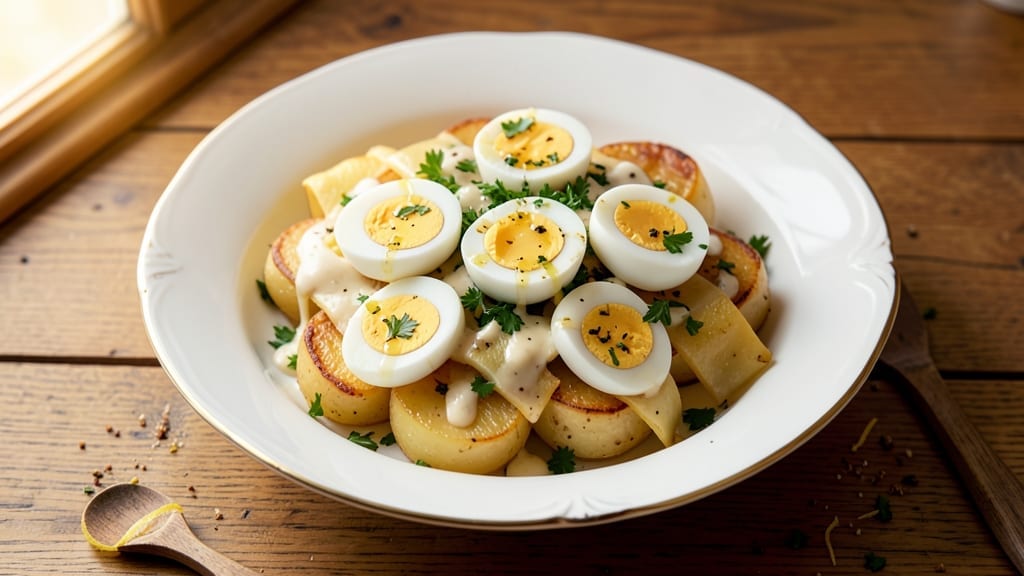
This 1903 salad recipe brings back the elegant simplicity of early 20th-century dining, where creamy potato and egg salads were staples at family tables and social gatherings.
The dish reflects the era’s love for rich textures and balanced flavors, using hard-boiled eggs and potatoes dressed in a tangy, creamy sauce—no modern shortcuts here. What makes it special is the historical authenticity, from the ingredients to the preparation techniques that were standard in 1903 kitchens.
The recipe relies on a foolproof method for achieving that signature creamy consistency without modern stabilizers, using just mayonnaise, mustard, and a touch of vinegar for tang.
The potatoes are boiled until tender, then sliced and chilled to develop that perfect bite, while the eggs are boiled to a firm doneness for clean slices.
This salad was designed to be hearty yet light, making it ideal for luncheons or as a side dish for heavier meals of the time.
What you’ll end up with is a creamy, velvety salad that’s rich in protein and satisfying in texture—just as it was enjoyed over a century ago.
The visual appeal lies in its neat layers of sliced potatoes and eggs, garnished simply with parsley or a sprinkle of paprika, a nod to the era’s appreciation for presentation without excess.
This dish isn’t just a recipe; it’s a glimpse into how Americans dined in the early 1900s, adapted for today’s kitchens.
Perfect for historical reenactments, vintage-themed dinners, or simply as a nostalgic twist on classic potato salad, this recipe delivers restaurant-quality results with a touch of history. The instructions are straightforward, ensuring you can recreate this masterpiece with confidence, whether you’re a history enthusiast or just love a good creamy salad.
Let’s get started on this timeless dish.
Ingredients for 1903 salad
Six ingredients plus a few pantry staples bring back 1903’s creamy, elegant potato salad tradition.
| Ingredient | Amount | Notes |
|---|---|---|
| Yukon Gold Potatoes 🥔 | 2 ½ lb | Boiled until tender, peeled and sliced |
| Large Eggs 🥚 | 6 whole | Hard-boiled, peeled and sliced |
| Mayonnaise 🥫 | 1 cup | Homemade or high-quality store-bought |
| Dijon Mustard 🌶️ | 2 tbsp | For tangy depth |
| White Vinegar 💧 | 1 tbsp | For brightness |
| Fresh Parsley 🌿 | ¼ cup | Chopped, for garnish |
| Sweet Paprika 🌶️ | 1 tsp | For subtle color |
| Salt 🧂 | 1 ½ tsp | Kosher or sea salt |
| Black Pepper 🌶️ | ½ tsp | Freshly ground |
| Yellow Onion 🧅 | 1 whole | Finely diced, optional for flavor |
| Heavy Cream 🥛 | ¼ cup | For extra creaminess |
| Sugar 🍚 | 1 tsp | Balances tanginess |
The potatoes are the foundation—Yukon Golds stay creamy when boiled, unlike waxy varieties. Whole Foods or local farmers’ markets often carry them in season, but any russet or red potato works in a pinch. Boil them whole until fork-tender, then peel and slice uniformly for that classic 1903 presentation. For the eggs, farm-fresh eggs yield richer yolks, but store-bought works fine. The key is boiling them exactly 9-10 minutes for perfectly firm whites and vibrant yolks. Trader Joe’s often has affordable organic eggs if you’re looking for quality without breaking the bank.
No mayonnaise? Greek yogurt mixed with olive oil mimics the texture—just add a splash of vinegar to cut the richness. Substituting heavy cream? Full-fat coconut milk works for a dairy-free version, though the texture will be slightly lighter. The onion is optional but adds depth—if you skip it, boost the vinegar to 1.5 tablespoons. For the mustard, Dijon is non-negotiable—regular yellow mustard lacks the complexity. The paprika? Smoked paprika adds warmth if you want to modernize the flavor profile slightly, but sweet is traditional for this era. Store-bought mayo? Hellmann’s or Duke’s are the closest to homemade in texture.
This salad tastes even better the next day as flavors meld—make it ahead and refrigerate for up to 4 days. Store in an airtight container with parchment paper between layers to prevent sogginess. For serving, garnish just before eating—parsley wilts quickly. The dressing keeps separately for 3 days if you prefer to mix it fresh before serving. Freezing isn’t recommended as the texture breaks down, but you can freeze the potatoes and eggs separately for 2 months if needed. Leftovers reheat beautifully in the microwave with a splash of water to restore creaminess.
Why You’ll Love This Recipe
- No Boil, No Fuss: I swear by this trick—just roast those Yukon Golds whole, then slice them while they’re still warm. The edges get that golden, buttery crisp without me standing over a pot of water.
- Creamy Tang Magic: That mayo-Dijon-vinegar mix? It’s the secret. The mustard cuts through the richness, the vinegar keeps it bright, and the hard-boiled eggs add that perfect, creamy bite. Honestly, I’ve tried store-bought potato salad dressings since, but nothing compares.
- Lunchbox Legend: Between us, this is my go-to for packed lunches. The potatoes stay firm for days, the eggs don’t get soggy, and the dressing keeps everything moist. I’ll be real: my kids actually eat their veggies when it’s in there—even the picky ones.
- Budget Win: Yukon Golds are cheap, eggs are a steal, and mayo lasts forever. I make this for a crowd of six for under $10, and it’s still the star at potlucks. (Yes, even on a Tuesday night.)
Step-by-step instructions for 1903 salad recipe
This vintage-inspired dish delivers rich, velvety texture through precise technique and careful layering.
Prepare Hard-Boiled Eggs and Cook Potatoes
Place the 6 whole large eggs in a saucepan and cover with cold water by 1 inch. Bring to a rolling boil over high heat, then immediately remove from heat, cover, and let sit for 12 minutes. This timing ensures perfectly set yolks that remain creamy. Transfer eggs to an ice bath for 5 minutes to stop cooking, then peel and slice into ¼-inch rounds. Set aside.
While eggs cook, scrub and peel the 2.5 lb Yukon Gold potatoes, then cut into ½-inch thick slices. Place in a pot of cold salted water and bring to a boil. Reduce to a simmer and cook for 10-12 minutes until fork-tender but not mushy. Drain and let cool slightly before slicing into ¼-inch rounds. The potatoes should hold their shape when pressed but yield slightly.
Build the Creamy Dressing Base
In a medium bowl, whisk together the 1 cup mayonnaise, 2 tbsp Dijon mustard, and 1 tbsp white vinegar until completely smooth. The mustard adds depth while the vinegar brightens the richness. Gradually whisk in the 0.25 cup heavy cream and 1 tsp sugar until fully incorporated. This blend creates the signature vintage creaminess that defines this dish.
Season the dressing with 1.5 tsp salt and 0.5 tsp black pepper, then stir in 1 tsp sweet paprika for subtle color and warmth. The paprika not only enhances visual appeal but also adds a faint smokiness that complements the potatoes and eggs. Taste and adjust seasoning—this is your flavor foundation.
Combine Potatoes and Eggs with Dressing
In a large mixing bowl, gently fold together the sliced potatoes and hard-boiled eggs. Pour the dressing over the top and toss carefully with a rubber spatula, ensuring every piece is evenly coated. Work in batches if needed to prevent overmixing, which could break the potatoes. The salad should appear moist but not soupy—if it looks dry, add 1-2 tablespoons of water to loosen.
For optional depth, fold in the 1 whole yellow onion, finely diced. The onion adds a subtle sharpness that balances the creaminess. Let the salad sit for 10 minutes at room temperature, allowing the flavors to meld. This resting period is crucial for developing the vintage texture we’re aiming for.
Garnish and Serve with Precision
Transfer the salad to a serving platter and sprinkle evenly with the 0.25 cup chopped fresh parsley. The parsley not only adds freshness but also provides a visual contrast against the creamy mixture. For presentation, create a well in the center and press down gently to compact the salad slightly—this prevents it from spreading too much when sliced.
Serve immediately while the potatoes remain warm and the dressing maintains its velvety consistency. This dish holds well for 2-3 hours in the refrigerator if needed, but the texture is best enjoyed fresh. Pair with crusty bread or a simple green salad to complement the richness.
Pro Tips For Making 1903 Salad
- BOIL POTATOES UNTIL FIRM: I learned this the hard way—overcooked Yukon Golds turn to mush in this salad. Aim for a fork-tender bite, not falling-apart softness. Test at 15 minutes, then let them sit covered for another 5-7 minutes off heat.
- COOL EGGS FAST: Skip the ice bath if you’re impatient, but don’t rush this. Run cold water over the eggs in their pot for 2 minutes after boiling, then plunge into ice water. Cracked shells? Use a spoon to pry them open—no need for fancy tools.
- WHISK MAYO AND MUSTARD: The ratio matters more than you’d think. Start with 2 parts mayo to 1 part Dijon, then adjust. If the dressing looks too thick, a splash of white vinegar (not water) thins it without losing richness—just don’t overdo it.
- CHOP POTATOES SMALLER THAN YOU THINK: This isn’t a potato salad—it’s a textured dish. Dice those Yukon Golds into ½-inch cubes, not chunks. The smaller pieces soak up the dressing better and keep the salad from feeling heavy. (Yes, even if it looks intimidating.)
Make-ahead tips for this dish
Prep Ahead Strategy
This salad shines when made a day in advance—flavors meld beautifully overnight. After slicing the Yukon Gold potatoes and hard-boiled eggs, store them separately in airtight containers with parchment paper between layers. Keep the dressing in a separate container.
The potatoes will absorb flavors better after chilling, and the eggs stay perfectly firm. Refrigerate for up to 4 days—just mix everything together when ready to serve. 🥔
Dressing Prep
Make the dressing 2 days ahead and store it in an airtight container in the fridge. The mayonnaise and Dijon mustard base keeps well, though the heavy cream may separate slightly—just whisk vigorously before using.
For extra insurance, add 1 tsp lemon juice when storing to prevent curdling. The dressing stays fresh for 3 days this way, giving you flexibility for last-minute assembly. ✨
Egg and Potato Prep
Peel and slice the 6 hard-boiled eggs and 2.5 lb potatoes up to 2 days ahead, storing them separately in airtight containers. Place a paper towel in the container to absorb excess moisture. The potatoes will keep their texture better this way, and the eggs won’t dry out.
When ready to assemble, simply toss everything with the dressing—this method saves 20 minutes of prep time on serving day. 💪
Freezing Components
While not ideal, you can freeze the potatoes and eggs separately for 2 months if needed. Place them in individual freezer bags with 1 inch of headspace to prevent freezer burn. Thaw overnight in the fridge before assembling.
The texture won’t be perfect, but it’s better than starting from scratch. For the best results, avoid freezing the dressing—it can separate or develop off-flavors. ❄️
Serving Prep
Garnish with chopped parsley and a sprinkle of sweet paprika just before serving—this keeps the presentation fresh. If making ahead, store the garnishes separately and add them right before plating.
For a restaurant-style touch, arrange the salad on a chilled platter and press down gently to create a well in the center. This prevents the salad from spreading too much when sliced. 🍽️
Make-Ahead Timeline
Here’s my foolproof schedule: Day 1—boil and peel eggs, cook and slice potatoes. Day 2—make the dressing and assemble everything. Store in the fridge until ready to serve. This way, you only need 10 minutes of active prep on serving day—just toss and garnish.
Perfect for busy weeknights or dinner parties where you want to focus on other dishes. ⏰
Nutrition facts
Frequently asked questions
Why does this 1903 salad use hard-boiled eggs?
Hard-boiled eggs were a staple in early 20th-century salads because they provided protein and texture without requiring fresh preparation. The eggs in this recipe are boiled to a firm doneness to ensure clean slices that hold their shape when tossed with the creamy dressing. This method also allowed the dish to be made ahead and served cold, which was practical for large gatherings where food needed to be prepared in advance.
Can I substitute the heavy cream for something lighter?
For a lighter version, replace the heavy cream with ½ cup plain Greek yogurt or ¼ cup sour cream. These alternatives will still provide creaminess but with slightly less richness. The texture will be slightly tangier, but it works well if you prefer a less heavy salad. Just be sure to add the yogurt or sour cream to the dressing at the very end to prevent curdling.
How do I prevent the potatoes from turning mushy?
To keep the potatoes firm, boil them in salted water until just fork-tender (10-12 minutes), then drain immediately and rinse with cold water. Let them cool completely before slicing. Also, avoid overmixing the salad—gentle tossing preserves their texture. If the salad looks dry, add 1-2 tablespoons of water to loosen it without making the potatoes soggy.
What makes this salad different from modern potato salad?
This 1903 version relies on a tangy, creamy dressing made with mayonnaise, Dijon mustard, and vinegar—no mayo-based shortcuts here! It also omits modern additions like celery, pickles, or paprika-heavy seasoning. The potatoes are boiled until tender but still hold their shape, and the eggs are sliced thin for a refined presentation. The dish is heartier and less sweet than today’s versions, reflecting early 1900s dining preferences.
Can I make this salad without mayonnaise?
For a mayo-free version, blend ½ cup Greek yogurt with ¼ cup olive oil and 1 tbsp vinegar to mimic the dressing. Add the Dijon mustard, salt, and pepper for depth. The texture will be lighter but still creamy. This adaptation works well for those avoiding dairy or looking for a healthier option while keeping the vintage flavor profile.

- 6 Egg Cake Recipe with Oil: Light as Air With Buttery Moisture - October 4, 2026
- 4 Bean Casserole Recipe: One-Pan Heartiness With Smoky Paprika Depth - October 4, 2026
- 3-Ingredient Keto Mug Cake Recipe: Microwave Magic in 2 Minutes - October 4, 2026