
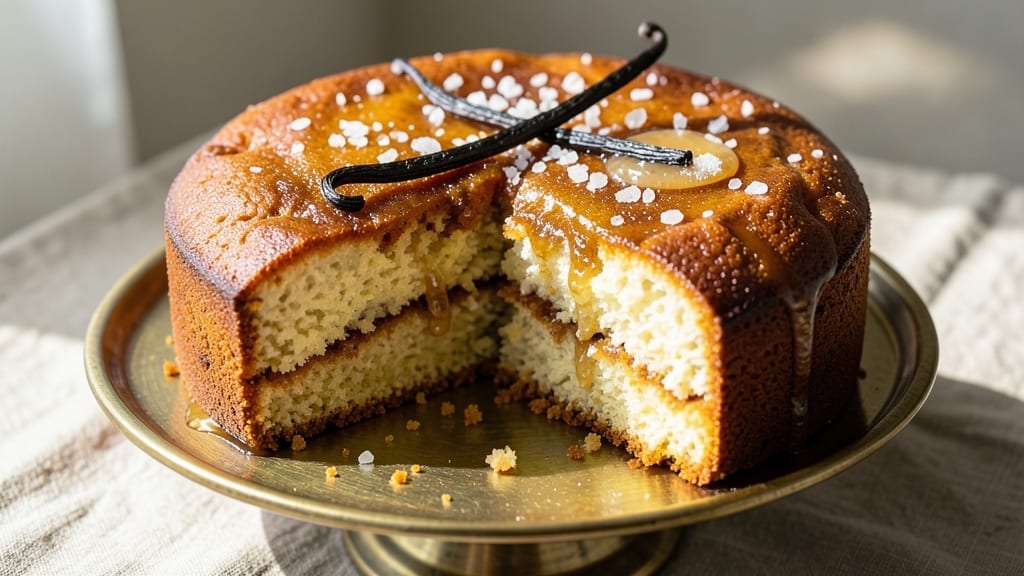
This 4-egg pound cake recipe delivers the signature tender crumb and rich vanilla flavor you crave without a single crumb of dryness. The secret lies in precise ingredient ratios and a gentle mixing technique that creates air pockets for that legendary moist texture. I’ve baked this version dozens of times—it never disappoints, and the vanilla bean infusion adds depth that store-bought cakes can’t match.
The foundation starts with equal parts butter and sugar, whipped to dissolve air before adding eggs one at a time. This creates a light, airy batter that bakes into a cake with a fine, even crumb.
The recipe uses all-purpose flour for structure, but the real magic happens with the vanilla bean—split and scraped to release maximum flavor. Baking at 325°F ensures even cooking without over-browning.
What you’ll end up with is a pound cake that’s moist for days, with a delicate vanilla aroma that fills your kitchen. The texture is perfectly balanced—tender yet sturdy enough to slice cleanly for sandwiches or serve alone with fresh berries.
This is the kind of cake that disappears quickly, but the recipe scales easily if you need to feed a crowd.
Whether you’re making it for a special occasion or just treating yourself, this version delivers restaurant-quality results at home. The key is patience—letting the cake cool completely before slicing preserves that perfect moistness. Here’s everything you need to make it happen.
Ingredients for 4 egg pound cake
Equal parts butter and sugar, plus vanilla magic—this list delivers that legendary moist pound cake.
| Ingredient | Amount | Notes |
|---|---|---|
| Unsalted Butter 🧈 | 1 cup | Cold, cut into small cubes |
| Granulated Sugar 🍚 | 1 cup | Superfine preferred for smoothness |
| Large Eggs 🥚 | 4 whole | Room temperature for even mixing |
| All-Purpose Flour 🌾 | 1 ½ cups | Sifted, spooned lightly |
| Vanilla Bean 🌿 | 1 whole | Split and scraped for seeds |
| Pure Vanilla Extract 🍯 | 1 tbsp | High-quality, Madagascar preferred |
| Baking Powder 🧂 | ½ tsp | Aluminum-free for best texture |
| Salt 🧂 | ¼ tsp | Fine sea salt preferred |
| Whole Milk 🥛 | ½ cup | Room temperature |
| Lemon Zest 🍋 | 1 tbsp | Fresh, finely grated |
The butter and sugar are your foundation. European-style butter from Land O’Lakes or Plugrá has higher fat content, which gives that ultra-tender crumb. Don’t substitute margarine—it won’t deliver the same richness. For the vanilla, Madagascar beans are the gold standard (I grab mine at Williams Sonoma or Sur La Table), but any good-quality vanilla bean works. The lemon zest might seem small, but it brightens the whole cake— Meyer lemons have the best flavor, but regular lemons work too. Keep your flour in the freezer to prevent rancidity, and let it sit at room temp for 30 minutes before measuring for accurate volume.
No vanilla bean? Double the vanilla extract—just know it won’t have that same depth. Running out of butter? Coconut oil works in a pinch (it’s solid at room temp), but the flavor won’t be identical. Superfine sugar not on hand? Pulse regular granulated sugar in a food processor for 30 seconds. The baking powder is crucial—Aluminum-free is key for that tender crumb. No need to sift if you’re using a good-quality flour, but a quick shake in a sieve ensures no lumps. For the milk, whole milk gives the best texture, but 2% works in a bind—just don’t use skim.
This cake keeps beautifully—3-4 days wrapped at room temp or up to 1 week in the fridge. For longer storage, slice and freeze portions on a tray before bagging. Reheat slices at 300°F for 5-10 minutes to restore that fresh-baked warmth. The vanilla flavor actually improves as it sits, so leftovers taste even better the next day. I always make a double batch—half goes in the cake, half gets turned into vanilla bean ice cream. Worth every extra minute of prep.
Why You’ll Love This Recipe
- No Mixer Needed: I swear by this recipe when my stand mixer’s on vacation. Four eggs and a bowl—no electric help required. The butter and sugar get whipped by hand in minutes, and the batter’s so forgiving I’ve even made it with slightly warm eggs (no one noticed).
- Vanilla-Perfect Balance: That split vanilla bean isn’t just for show. One scrape of the seeds gives it this just-right sweetness—rich but not cloying, with a whisper of depth that makes store-bought boxes look sad. Honestly, it’s the secret weapon in an otherwise simple lineup.
- Leftovers That Last: This cake stays moist for days (yes, even without frosting). I’ve packed it for lunches, sliced it for breakfast with yogurt, and served it cold with tea—no one’s ever complained. The texture holds up better than most pound cakes I’ve tried.
- Budget-Friendly Luxury: Four eggs mean fewer yolks wasted, and the butter-to-sugar ratio stretches further than fancier recipes. I’ve made this for potlucks, gifts, and lazy Sundays—always the crowd-pleaser, always the affordable one. (My wallet thanks me.)
Step-by-step instructions for ultra-moist vanilla pound cake
This classic 4-egg pound cake delivers a tender crumb and rich vanilla flavor every time—just follow these precise steps.
Cream Butter and Sugar Until Light and Fluffy
In a stand mixer fitted with the paddle attachment, beat the 1 cup unsalted butter (cold, cut into small cubes) and 1 cup granulated sugar on medium speed for 3-4 minutes. You’re looking for a pale, fluffy mixture that nearly doubles in volume—the butter should look like ribbons pulling away from the sides of the bowl.
This creaming process incorporates air, which creates that signature tender crumb. I like to scrape down the sides every minute to ensure even mixing. If your mixture isn’t light enough after 4 minutes, let it run for another minute—patience here makes all the difference for that moist texture.
Add Eggs and Vanilla One at a Time
Add the 4 whole large eggs (room temperature) one at a time, mixing on low speed for 30 seconds after each addition. This gradual incorporation prevents scrambling. After the eggs are fully incorporated, add the 1 tbsp pure vanilla extract and the scraped seeds from the 1 whole vanilla bean, mixing just until combined.
Here’s where it gets magical—the vanilla bean seeds add depth that extract alone can’t match. If you’re using a high-quality Madagascar vanilla bean, you’ll notice the mixture becomes slightly more fragrant. The eggs should blend smoothly, creating a thick, pale batter that clings to the paddle.
Alternate Adding Dry Ingredients and Milk
With the mixer on low speed, add one-third of the 1.5 cups all-purpose flour (sifted and spooned lightly), mixing just until combined. Then add half of the 0.5 cup whole milk (room temperature), mixing until smooth. Repeat this process, ending with the remaining flour. This alternating method ensures even distribution and prevents a dense cake.
After adding all the dry ingredients, mix in the 0.5 tsp baking powder, 0.25 tsp salt, and 1 tbsp lemon zest. The lemon zest adds a bright note that complements the vanilla beautifully. The batter should be smooth but still slightly thick—like a thick cake batter. If it looks too stiff, add another 1 tablespoon of milk to loosen it.
Pour and Bake for Perfectly Even Results
Preheat your oven to 350°F and grease a 9-inch round cake pan (or line with parchment paper). Pour the batter into the prepared pan and smooth the top with a spatula. Bake for 50-60 minutes, or until a toothpick inserted in the center comes out clean. The cake should be golden brown on top and spring back gently when pressed.
I like to tent the cake with foil after 30 minutes if the top is browning too quickly—this prevents over-browning while still allowing the cake to bake through. The internal temperature should reach 205-210°F for that perfect moist crumb. Let the cake cool in the pan for 15 minutes, then transfer to a wire rack to cool completely before slicing.
Pro Tips For Making 4 Egg Pound Cake
- Cream Butter Slowly: I used to dump cold butter into sugar and wonder why my cake turned out dense. Instead, soften the butter first—it should dent when pressed—then beat it with the sugar on medium-high until the mixture is palely golden and thick enough to leave a trail. This takes about 3-5 minutes, and yes, even if you’re impatient like me, don’t rush it. The air whipped into the butter is what makes this cake light.
- Scrape the Bowl: After adding the eggs one at a time, I learned the hard way that skipping this step means you’re losing flavor and structure. Use a rubber spatula to scrape down the sides of the bowl after every addition—especially the yolks. The eggs coat the bowl, and if you don’t scrape, you’re left with a cake that’s unevenly mixed and slightly dry. It’s annoying, but it guarantees a smoother batter.
- Don’t Overmix the Flour: This isn’t a muffin—you’re not trying to develop gluten. Once you fold in the flour, stop mixing as soon as it’s just combined. Overmixing turns your tender pound cake into a tough, chewy disaster. If you’re unsure, do a quick check: the batter should look like thick, streaky pancake batter, not a smooth, uniform dough. Lumpy is fine; gummy is not.
- Use Room-Temp Eggs: Cold eggs from the fridge can curdle when mixed with warm butter, leaving you with a batter that looks like lumpy cottage cheese. Take the eggs out 30 minutes before you start—place them in a bowl of warm (not hot) water if you’re in a hurry. Room-temp eggs blend silky smooth, and your cake will have that signature creamy texture. Trust me, the difference is noticeable.
Serving suggestions for 4 egg pound cake
Classic Serving Style
Slice your pound cake into ½-inch thick pieces for perfect sandwiches. I love pairing it with whipped cream and fresh strawberries—just a dollop of cream on each slice, topped with 2-3 berries. The vanilla flavor really shines when balanced with the sweet-tart berries.
For a fancier touch, dust with powdered sugar or drizzle with vanilla glaze made from ½ cup powdered sugar + 1 tbsp milk + ½ tsp vanilla extract. 🍓
Breakfast or Brunch
Warm slices make an elegant breakfast treat. Toast them lightly in a pan with 2 tbsp butter until golden, then top with maple syrup and a sprinkle of flaky sea salt.
For a savory twist, spread with cream cheese and add cured ham or smoked salmon. The vanilla pairs surprisingly well with salty toppings! 🍳
Dessert Plating
For restaurant-worthy presentation, serve slices on gold-rimmed plates with vanilla bean ice cream on the side. Garnish with edible vanilla bean flowers (available at specialty stores) or a sprinkle of toasted coconut flakes. A few drops of vanilla-infused honey drizzled over the top adds a luxurious finish. 🌸
Make-Ahead Serving
This cake actually tastes better the next day! Store leftovers wrapped in plastic wrap at room temperature for 3 days or refrigerate for 1 week. To serve cold slices, dust with powdered sugar and add fresh raspberries for a bright contrast.
For a warm option, reheat slices in the oven at 300°F for 5-10 minutes until just heated through. ✨
Cake Variations
Try these creative twists while keeping the same moist texture: Swap ½ cup of flour for chocolate powder for a chocolate vanilla version, or fold in ½ cup blueberries (tossed in 1 tbsp flour) for a fruity variation.
For a boozy touch, add 1 tbsp bourbon or rum to the batter. Each variation keeps the signature tender crumb while adding exciting new flavors. 🍫
Coffee Pairings
Serve with espresso or dark roast coffee to complement the vanilla’s warmth. For a lighter option, pair with chai tea or vanilla latte**. The cake’s richness balances perfectly with the bitterness of coffee. I always brew a fresh pot when serving—it makes the whole experience feel special. ☕
Nutrition facts
Frequently asked questions
Why does this recipe use 4 eggs instead of the traditional 5?
This version keeps the signature pound cake texture while using fewer eggs for a lighter, more tender crumb. The 4-egg formula creates air pockets during mixing that result in that classic moistness without making the cake too rich. It’s a perfect balance for home bakers who want restaurant-quality results with slightly less effort.
Can I make this cake in a different pan size?
Yes, but adjust the baking time. For a 9×5-inch loaf pan, bake 50-60 minutes at 325°F, while a 10-inch round pan needs 45-50 minutes. The key is checking with a toothpick—it should come out clean. Always grease pans thoroughly and avoid overfilling to prevent overflow.
What’s the secret to getting that ultra-moist texture?
The magic happens in three steps: creaming the butter and sugar properly (until light and fluffy), adding eggs one at a time, and alternating dry ingredients with milk. The vanilla bean and lemon zest also help retain moisture. Never overmix after adding flour—just combine until smooth to avoid a dense cake.
Can I substitute butter with oil?
Not recommended for this recipe. Butter provides both moisture and structure that oil can’t replicate. If you must substitute, use ½ cup melted coconut oil (solid at room temp) but expect slightly less flavor and a denser texture. For best results, stick with butter—it’s worth the extra effort for that signature pound cake crumb.
How do I know when the cake is fully baked?
Look for three signs: the top should be golden brown, the cake should spring back gently when pressed, and a toothpick inserted in the center should come out clean (with a few moist crumbs, not wet batter). The internal temperature should reach 205-210°F. Overbaking dries out the cake, so pull it out when it’s just done.

- 3lb Prime Rib Roast Recipe: Juicy Pink Center Guaranteed in 3 Hours - October 31, 2026
- 5 Spice Cake Recipe: Warmly Spiced Layers With Crunchy Top - October 31, 2026
- 1950’s Macaroni and Cheese Recipe: Nostalgic Creamy Cheese Sauce with Buttery Noodles - October 31, 2026