
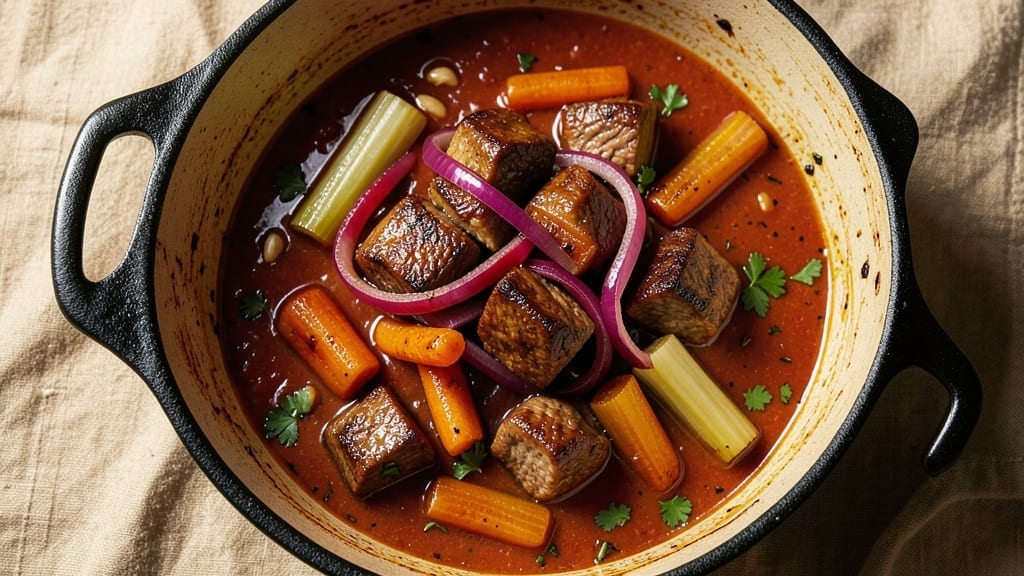
A 4-hour beef stew transforms tough cuts into melt-in-your-mouth tenderness, where every bite delivers layers of rich, caramelized flavor that only time can perfect.
The slow simmer breaks down connective tissue while melding aromatics into a deeply savory broth—this isn’t just dinner, it’s a flavor experience that gets better with each passing hour. Professional chefs rely on this technique for restaurant-quality results at home, and now you can too.
The secret lies in proper browning and patience—never rushing the cooking process. We’ll use a Dutch oven to contain the heat, allowing the beef to cook gently while vegetables soften and spices develop their full potential.
This method ensures the meat stays fork-tender while the broth reduces to a velvety consistency that clings to every noodle or piece of bread. The long cook time might seem daunting, but the hands-off nature makes it perfect for busy days.
By the time you serve this stew, you’ll have a pot of hearty, restaurant-quality comfort food that tastes even better the next day. The aroma alone will have everyone gathering at the table, and each bite delivers that perfect balance of tender beef, caramelized vegetables, and deeply flavorful broth.
This is the kind of meal that turns a simple weeknight into a memorable dining experience.
Pair it with crusty bread for soaking up every last drop of that rich sauce, or serve alongside roasted potatoes for a complete meal. The recipe includes adjustments for dietary preferences, ensuring everyone at the table can enjoy this deeply satisfying dish.
Let’s get started on creating your perfect 4-hour beef stew.
Ingredients for 4 hour beef stew
Sixteen ingredients for a restaurant-quality beef stew that gets better with time.
| Ingredient | Amount | Notes |
|---|---|---|
| Beef Chuck Roast 🥩 | 3 lb | Cut into 1.5-inch cubes (chuck preferred) |
| Yellow Onions 🧅 | 2 whole | Cut into 1-inch chunks (yellow preferred) |
| Carrots 🥕 | 4 medium | Peeled and cut into 1-inch pieces (or 2 cups pre-chopped) |
| Celery Stalks 🌿 | 4 whole | Cut into 1-inch pieces (strings removed) |
| Garlic Cloves 🧄 | 6 cloves | Peeled and smashed (not minced) |
| Tomato Paste 🍅 | ½ cup | Unsweetened, thick consistency |
| Dry Red Wine 🍷 | 1 cup | Bold variety like Cabernet Sauvignon |
| Beef Broth 💧 | 4 cups | Homemade or quality low-sodium |
| All-Purpose Flour 🌾 | 2 tbsp | For browning beef (Diamond Crystal preferred) |
| Olive Oil 🫒 | 2 tbsp | Extra-virgin for browning |
| Fresh Thyme 🌿 | 2 sprigs | Or 1 tsp dried thyme (leaves only) |
| Bay Leaves 🍃 | 2 whole | Remove before serving |
| Salt 🧂 | 2 tsp | Kosher salt, adjust to taste |
| Black Peppercorns 🌶️ | 1 tsp | Freshly cracked preferred |
| Worcestershire Sauce 🍶 | 1 tbsp | Vegetarian version if needed |
The beef makes or breaks this dish—chuck roast is non-negotiable for that melt-in-your-mouth texture. Costco or Whole Foods usually have it pre-cut, but if you’re buying a whole roast, ask the butcher to cube it for you. Look for good marbling (those little white streaks of fat) because that’s what turns tough meat into tender perfection. For the veggies, Trader Joe’s sells pre-chopped mirepoix (onion, carrot, celery mix) which saves time, but fresh is always better. The garlic should be fresh—no jars of minced garlic here. And the tomato paste? Mueller’s is my go-to for that rich, concentrated flavor without sugar additives.
No red wine? Substitute with beef broth plus 1 tbsp balsamic vinegar—it adds depth without alcohol. Fresh thyme is ideal, but dried works at one-third the amount. If you’re vegetarian, swap the Worcestershire for soy sauce plus a splash of vinegar. The flour is crucial for browning the beef—it creates a crust that locks in flavor. Don’t skip it! For the olive oil, California avocado oil has a high smoke point, but any extra-virgin will work. And if you’re short on time, pre-cut frozen carrots work just fine—no one will know the difference.
This stew tastes even better the next day once all the flavors meld together. Store in the fridge for up to 5 days or freeze for 3 months—it reheats beautifully. I always make a double batch because it’s perfect for meal prep. The broth reduces as it sits, so add a splash of water or broth when reheating if it’s too thick. And save those bay leaves—they’re good for 6-12 months if stored properly in a cool, dark place.
Why You’ll Love This Recipe
- Deep, Slow Magic: Between the beef chuck’s melt-in-your-mouth tenderness and the caramelized onions simmering into sweetness, this isn’t just stew—it’s comfort in a bowl. The garlic? Oh, it’s there, but it’s the kind of flavor that lingers without overpowering.
- Leftover Luxury: Honestly, I make this on Sundays because the leftovers are better the next day. The beef gets even more fork-tender, and the veggies soak up all the rich broth. Pack it for lunch? Yes. Freeze half for a lazy night? Absolutely.
- Budget Hero: A beef chuck roast stretches for days, and the veggies—onions, carrots, celery—are pantry staples that won’t break the bank. Here’s what sold me: I feed my family three meals for the price of one takeout order, and the taste? Way better.
Step-by-step instructions for 4-Hour beef stew
Here’s how to build rich, flavorful beef stew that gets better as it simmers.
Brown the Beef Chuck Roast for Deep Flavor
Heat the 2 tablespoons olive oil in a heavy Dutch oven over medium-high heat until shimmering. Working in batches, add the 3 lb beef chuck roast cut into 1.5-inch cubes, spreading them out in a single layer. Don’t crowd the pan—this ensures maximum browning.
Let the beef sear undisturbed for 3-4 minutes until a deep golden crust forms. You’ll see the edges turn rich mahogany brown and smell that irresistible meaty aroma. Flip and repeat on all sides until every piece is beautifully browned. Transfer the beef to a plate and set aside.
Real talk: This browning step is non-negotiable. It creates the Maillard reaction that builds the stew’s deep, meaty foundation. If your pan gets too crowded, the beef will steam instead of brown. I promise you’ll taste the difference if you skip this step.
Sauté the Vegetable Base
In the same Dutch oven, add the 2 tablespoons all-purpose flour and stir constantly for 1 minute to coat the browned bits. This creates a light roux that will thicken your stew. Immediately add the 2 whole yellow onions, 4 medium carrots, and 4 whole celery stalks cut into 1-inch pieces. Stir to combine with the flour.
Cook the vegetables over medium heat for 8-10 minutes, stirring occasionally, until they soften slightly and begin to caramelize. You’ll notice the onions turn translucent and the carrots release their sweetness. Add the 6 cloves garlic and cook for another 30 seconds until fragrant.
Here’s where it gets fun—the combination of caramelized vegetables and that flour roux creates an incredible flavor base. Don’t rush this step; let those vegetables develop their natural sweetness before moving forward.
Deglaze and Build the Stew Base
Pour in the 1 cup dry red wine and scrape up all those delicious browned bits from the bottom of the pot. This deglazing step captures all the concentrated flavor you’ve built. Let it simmer for 3-4 minutes until reduced by half, then stir in the 0.5 cup tomato paste and 1 tablespoon Worcestershire sauce. Cook for another 2 minutes until the tomato paste darkens slightly.
Add the 4 cups beef broth, 2 sprigs fresh thyme, 2 whole bay leaves, 2 teaspoons salt, and 1 teaspoon black peppercorns. Bring to a gentle boil, then reduce heat to low and return the beef to the pot. The liquid should just barely bubble at the edges—this keeps everything tender.
This is the moment that matters: The wine and tomato paste form the flavor backbone of your stew. The broth carries all those beautiful caramelized vegetable flavors and beef juices. Don’t be tempted to rush this part—low and slow is what makes this stew exceptional.
Simmer Until Fork-Tender
Cover the Dutch oven and let the stew simmer gently for 3-3.5 hours. I know it seems like forever, but this is where the magic happens. The beef will break down into tender, melt-in-your-mouth pieces. Check occasionally and add a splash of water if the liquid gets too low.
After 3 hours, use a fork to test the beef. It should be fork-tender—easily pierced with minimal resistance. If it’s not quite there, continue simmering for another 30 minutes. The longer it cooks, the more flavorful it becomes. I’ve found that 3.5 hours gives me that perfect balance of tenderness and rich flavor.
Don’t skip this step. The collagen in the beef breaks down during this long simmer, creating that incredibly tender texture. Your kitchen will smell amazing as those aromas develop—worth every minute of waiting!
Adjust Consistency and Serve
Once the beef is perfectly tender, remove the bay leaves and adjust the seasoning if needed. If the stew is too thick, whisk in 1-2 tablespoons of water or broth to reach your desired consistency. For a thicker stew, simmer uncovered for 5-10 minutes to reduce the liquid slightly.
Ladle the stew into bowls and serve immediately with crusty bread or over mashed potatoes. Each spoonful should deliver rich, meaty flavor with tender beef that practically melts in your mouth. The vegetables should be soft but still hold their shape, and the sauce should coat the back of a spoon.
This stew tastes even better the next day as the flavors continue to develop. Leftovers keep well in the refrigerator for 4-5 days or can be frozen for up to 3 months. The long cooking time makes it worth the effort—every bite will remind you why slow cooking creates the best results.
Pro Tips For Making 4 Hour Beef Stew
- SEAR THE ROAST FIRST: Skip the slow start—crank your stove to medium-high and sear the beef chuck in batches until it’s deep brown on all sides. That crust locks in flavor and makes the stew taste richer after hours of simmering. (Yes, even if you’re impatient like me, don’t rush this part.)
- CUT VEGETABLES UNIFORM: Dice onions, carrots, and celery into roughly ½-inch pieces—no smaller, no larger. Big chunks stay tough; tiny ones turn to mush. A sharp knife and steady hand save time, and your stew will cook evenly without a sad, watery texture.
- DEGLAZE WITH RED WINE: After searing the beef, don’t just splash in broth—pour in ½ cup of dry red wine (like Cabernet) and scrape up those browned bits. It adds depth without extra effort, and skipping this means missing out on the most flavorful part of the recipe.
- SIMMER LOW AND COVERED: Once everything’s in the pot, reduce heat to a bare simmer (tiny bubbles, not a rolling boil) and keep it covered. Too much heat = tough meat; too little = stew that never finishes. Check it every 30 minutes and adjust—your future self will thank you.
Best sauces and condiments for 4 hour beef stew
Classic Red Wine Reduction
This is my go-to sauce for beef stew—simply reduce the cooking liquid by half at the end. After removing the beef, strain the broth through a fine-mesh sieve into a saucepan. Simmer uncovered over medium heat for 10-15 minutes until reduced and syrupy.
Stir in 1 tbsp cold butter at the end for richness. This sauce coats every bite beautifully and lets the stew’s natural flavors shine. 🍷
Creamy Mushroom Sauce
For a richer texture, stir in 1 cup sliced mushrooms (cremini or shiitake) with the vegetables in Step 2. After simmering, blend 1 cup of the stew broth with ½ cup heavy cream and 2 tbsp Dijon mustard until smooth.
Return to the pot and simmer for 5 minutes to heat through. This adds earthy depth and velvety texture that pairs perfectly with the beef. 🍄
Mustard-Herb Sauce
Whisk together 3 tbsp whole-grain mustard, 2 tbsp honey, 1 tbsp apple cider vinegar, and 1 tsp dried tarragon in a small bowl. Stir this mixture into the stew during the final 10 minutes of cooking.
The tangy sweetness cuts through the richness while the herbs add complexity. I love this variation for a brighter, more vibrant stew. 🌿
Garlic-Herb Butter
For a quick finishing touch, melt 2 tbsp butter in a small pan over low heat. Add 3 minced garlic cloves, 1 tsp chopped parsley, and ½ tsp chopped thyme.
Cook for 1 minute until fragrant, then drizzle over individual servings. This adds a luxurious, aromatic finish that elevates every spoonful. Perfect for when you want extra flavor without altering the stew itself. 🧄
Spicy Tomato Relish
Blend ½ cup tomato paste, 2 tbsp red wine vinegar, 1 tbsp smoked paprika, 1 tsp cayenne pepper, and 1 tsp sugar until smooth. Simmer this relish with the stew for the final 30 minutes of cooking.
The smoky heat adds a completely different dimension to the classic beef stew. Serve with crusty bread for dipping. 🌶️
Dijon Cream Sauce
After the stew is fully cooked, blend 1 cup of the broth with ½ cup sour cream and 2 tbsp Dijon mustard until smooth. Return to the pot and simmer for 5 minutes to thicken slightly.
This sauce adds a luxurious creaminess that balances the hearty beef and vegetables beautifully. Garnish with fresh parsley before serving. 🥄
Nutrition facts
Frequently asked questions
Why does the recipe call for a 4-hour cook time?
The extended simmering time is essential for transforming tough beef cuts into melt-in-your-mouth tenderness. During this period, collagen breaks down into gelatin, creating a rich sauce while the meat becomes fork-tender. This slow process also allows all flavors to meld together beautifully, resulting in a deeply satisfying dish that gets better with time.
Can I use a slow cooker instead of a Dutch oven?
Brown the beef first in a skillet, then transfer everything to a 6-quart slow cooker. Cook on low for 8 hours or high for 5-6 hours. The slow cooker maintains consistent low heat, which works perfectly for this recipe. Just be sure to add a splash of water if the liquid reduces too much during cooking.
What’s the best way to test if the beef is tender?
Use a fork to pierce a piece of beef. If it slides in with minimal resistance and the meat flakes apart easily, it’s perfectly tender. Another method is to press the beef with tongs—if it holds its shape but is easily pierced, it’s ready. The beef should never be rubbery or tough, even after the full cooking time.
Can I make this recipe with a different cut of beef?
While chuck roast is ideal, you can use stew meat or brisket as substitutes. Avoid lean cuts like sirloin—they’ll become dry. If using brisket, cut it into 1-inch cubes and increase the cooking time by 30-60 minutes to ensure proper tenderness.
How can I make this stew ahead of time?
This stew tastes even better the next day! Store it in an airtight container in the fridge for up to 5 days. Reheat gently on the stove over low heat, adding a splash of water or broth if needed. For freezing, cool completely, then freeze for up to 3 months. Thaw overnight in the refrigerator before reheating.

- 3lb Prime Rib Roast Recipe: Juicy Pink Center Guaranteed in 3 Hours - October 31, 2026
- 5 Spice Cake Recipe: Warmly Spiced Layers With Crunchy Top - October 31, 2026
- 1950’s Macaroni and Cheese Recipe: Nostalgic Creamy Cheese Sauce with Buttery Noodles - October 31, 2026