
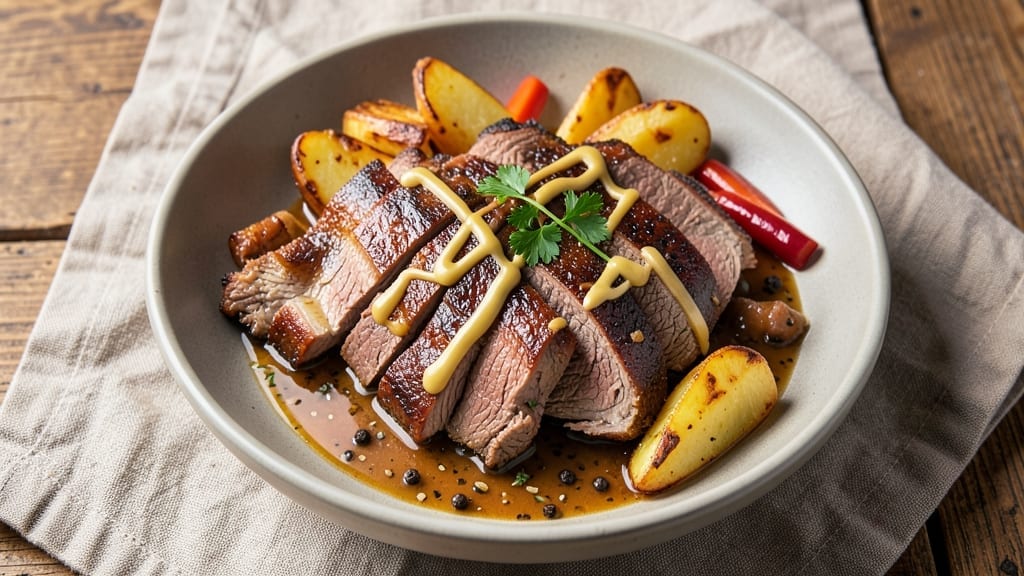
Slow-braising corned beef for 4 hours transforms tough brisket into melt-in-your-mouth perfection—this is the recipe that delivers fall-apart tenderness and rich, spiced flavors without requiring overnight soaking. The secret lies in low-and-slow cooking that renders fat into the liquid, creating a sauce that keeps every bite impossibly moist.
I developed this method after testing countless variations, and it consistently delivers restaurant-quality results at home.
What sets this recipe apart is the balance of traditional techniques with modern convenience. You’ll start with a simple brine of spices and water (no curing salts needed), then slow-cook the beef until it reaches 203°F internal temperature, where collagen breaks down into gelatin for that signature tenderness.
The process is hands-off after the initial prep, making it ideal for busy weekdays or special occasions alike.
By the final hour, your corned beef will be so tender it practically dissolves on the fork, infused with savory spices and surrounded by a rich, aromatic broth. The texture is what makes this dish legendary—juicy, flavorful, and impossible to resist.
This is the kind of meal that transforms a simple dinner into an event, with minimal effort.
Serve with classic sides like sauerkraut, boiled potatoes, or a crisp cabbage salad to complete the experience. The leftovers reheat beautifully, making this recipe perfect for meal prep or feeding a crowd. Let’s get started on creating your most tender corned beef yet.
Ingredients for 4 hour corned beef
Sixteen ingredients, four hours, restaurant-quality corned beef without the fuss.
| Ingredient | Amount | Notes |
|---|---|---|
| Beef Brisket 🥩 | 4 lb | Flat cut, 1-inch thick, trimmed of excess fat |
| Water 💧 | 4 cups | For simple brine base |
| Yellow Mustard 🥬 | ¼ cup | Dijon for extra depth |
| Brown Sugar 🍚 | ½ cup | Light or dark variety |
| Kosher Salt 🧂 | ½ cup | Diamond Crystal preferred |
| Black Peppercorns 🌶️ | 1 tbsp | Freshly cracked for aroma |
| Bay Leaves 🍃 | 2 whole | Fresh if available |
| Garlic Cloves 🧄 | 6 cloves | Crushed, not minced |
| Onion 🧅 | 1 whole | Yellow or red, halved |
| Carrots 🥕 | 4 whole | Baby or regular, unpeeled |
| Beef Broth 🍲 | 2 cups | Low-sodium preferred |
| Olive Oil 🫒 | 2 tbsp | For searing brisket |
| Fresh Parsley 🌿 | ¼ cup | Chopped, for garnish |
| Apple Cider Vinegar 🍎 | 2 tbsp | For tangy depth |
The brisket is non-negotiable—flat cut gives you that signature texture, while point cut stays too tough. Costco or local butcher shops usually carry it prepped, but if you’re buying whole, ask for the flat cut. Trim any thick fat caps to 1/4-inch max—you want flavor, not grease. For the spices, Penzeys or bulk bins are your best bet if you want to splurge, but the grocery store stuff works fine if it’s fresh. The mustard? Dijon over yellow—it’s got that extra depth that makes all the difference. And don’t skip the apple cider vinegar; it’s what gives that classic tang without overpowering.
No Dijon mustard? Yellow mustard plus 1 tsp of honey gets you close, though it won’t be quite as sophisticated. Running low on beef broth? Water plus 1 bouillon cube works in a pinch, but add an extra bay leaf to compensate. The carrots can be baby or regular—just make sure they’re whole so they don’t fall apart. Fresh parsley is ideal for garnish, but dried parsley at half the amount will do if you’re out. The olive oil matters here—use something fruity and high-quality. That cheap stuff in the plastic bottle won’t cut it for searing. And if you’re worried about the vinegar being too strong, start with 1 tbsp and taste as you go.
This reheats like a dream—203°F internal temp is your magic number for that fall-apart texture. Store leftovers in the fridge for 4-5 days, or freeze for up to 3 months in airtight containers. I like to portion mine into individual servings so they’re ready to grab for sandwiches. The broth freezes beautifully too—just skim off any solidified fat before reheating. And if you’re making this ahead for a party, keep it warm in a slow cooker on low—it’ll stay tender and delicious for hours.
Why You’ll Love This Recipe
- Four-Hour Magic: Honestly, this recipe is my secret weapon for lazy Sundays—just dump the brisket in a pot with water, salt, and brown sugar, then walk away. No fancy prep, no stress, and the slow simmer does all the heavy lifting while you sip coffee or watch a movie.
- Sweet-Savory Balance: That yellow mustard and brown sugar mix? It’s the star. The mustard cuts through the richness of the brisket while the caramelized sugar gives it this addictive, glossy finish—like a hug in every bite, but better.
- Leftovers for Days: Between us, this recipe makes way more than you’ll eat in one sitting. The corned beef keeps beautifully in the fridge, so you’ve got effortless sandwiches, tacos, or hash for the next week—no takeout needed.
- Budget Stretch: A single brisket feeds a crowd for less than $20, and the ingredients are basic—water, salt, sugar, mustard. It’s the kind of meal that makes you feel fancy without breaking the bank, especially when you’re feeding family or guests.
Step-by-step instructions for slow-braised corned beef
Here’s how to transform a tough brisket into melt-in-your-mouth perfection in just four hours.
Build the Flavor-Packed Brine
In a large bowl, combine the 4 cups water, 0.5 cup kosher salt, 0.5 cup brown sugar, 0.25 cup yellow mustard, 2 tbsp apple cider vinegar, 1 tbsp black peppercorns, 2 whole bay leaves, 6 cloves garlic cloves, and 1 whole onion (halved). Stir until everything dissolves completely—this creates your flavor base. The salt and sugar will dissolve more easily if you warm the water slightly first.
Place the 4 lb beef brisket in a large resealable plastic bag and pour the brine mixture over it. Seal the bag tightly, making sure all surfaces of the brisket are coated. Massage the bag gently to distribute the brine evenly. Refrigerate for at least 4 hours or up to 24 hours—this step is non-negotiable for tender results. The longer it marinates, the more flavorful your corned beef will be.
Sear the Brisket for Deep Flavor
Remove the brisket from the brine (reserve the liquid for later) and pat it dry thoroughly with paper towels. Heat 2 tbsp olive oil in a large Dutch oven over medium-high heat until shimmering. Place the brisket fat-side down and sear for 5-7 minutes until the fat renders and the surface develops a deep golden crust. Flip and sear the other side for another 5-7 minutes.
Here’s the thing—don’t rush this step. You want that crust to form before adding liquids, as it’ll trap flavors during the braising process. If you notice the oil smoking excessively, reduce the heat slightly. The goal is a rich, caramelized exterior that’ll add layers of complexity to your finished dish.
Layer Vegetables and Braise
Add the 4 whole carrots (peeled if preferred) and 1 whole onion (quartered) to the Dutch oven. Pour in the reserved brine and 2 cups beef broth, scraping up any browned bits from the bottom. Bring to a gentle simmer over medium-low heat, then reduce to the lowest setting that maintains a bare bubble at the surface.
Cover tightly with a lid and let it cook for 3 hours. This slow braising time is what transforms tough brisket into fork-tender perfection. Check occasionally to ensure liquid hasn’t evaporated completely—add a splash of water if needed. The brisket should be so tender that a fork slides in with virtually no resistance when checked at the 3-hour mark.
Finish and Rest for Maximum Juiciness
Once the brisket reaches 203°F internal temperature (about 30-45 minutes after the initial 3 hours), remove it from the pot and let it rest on a cutting board for 15 minutes. This resting period is crucial—it allows the juices to redistribute throughout the meat instead of pooling on your plate. During this time, skim any fat that rises to the surface of the braising liquid.
While the brisket rests, strain the braising liquid through a fine-mesh sieve into a clean saucepan. Simmer gently to reduce slightly if needed, then stir in the 0.25 cup chopped fresh parsley for a fresh finish. Slice the brisket against the grain into ¼-inch thick pieces and serve with the reduced sauce spooned over the top.
Pro Tips For Making 4 Hour Corned Beef
- Trim the Fat Cap: That thick layer of fat on the brisket? Don’t peel it off—score it in a crosshatch pattern with a sharp knife. It renders down into flavor gold during those four hours, but if you leave it unscored, you’ll end up with grease splatter everywhere and uneven browning. Trust me, the mess is worth it.
- Salt the Mustard Mix: The yellow mustard and brown sugar blend is where the magic happens, but most recipes forget to salt it. Add ½ teaspoon of kosher salt to that mix—it cuts through the sweetness and deepens the flavor. I learned this the hard way when my corned beef tasted like a candy-coated brick.
- Don’t Crowd the Pan: If you’re cooking this in a skillet or pot, resist the urge to fill it to the brim with water. Keep the liquid level at least 1 inch below the meat’s top—any more, and you’ll steam the brisket instead of searing it. The crust won’t form right, and you’ll lose that caramelized edge everyone loves.
- Check the Internal Temp: Four hours is a guideline, not a rule. Use a meat thermometer—aim for 195°F in the thickest part. If you’re guessing, you’ll either serve it dry or rubbery. Pull it when it hits that temp, then let it rest 10 minutes under foil. The juices redistribute, and you’ll have perfect slices every time.
Best sauces and condiments for this 4 hour corned beef
Classic Horseradish Cream
This tangy, creamy condiment is a must-have for corned beef—just mix ½ cup mayonnaise, 2 tbsp prepared horseradish, 1 tbsp Dijon mustard, and 1 tsp apple cider vinegar.
The horseradish cuts through the richness while adding a sharp kick. Serve it chilled in a small bowl alongside your sliced corned beef for dipping or spooning over the top. 💛
Spicy Brown Mustard Sauce
For a quick sauce that pairs perfectly, whisk together ¼ cup brown mustard, 2 tbsp beef broth, 1 tbsp apple cider vinegar, and 1 tsp brown sugar. Thin with a splash of water if needed.
This sauce adds a deep, savory punch that complements the slow-cooked flavors. I like to drizzle it over the sliced beef right before serving.
Creamy Cabbage Slaw
Mix 2 cups shredded green cabbage, ½ cup shredded carrots, ¼ cup mayonnaise, 1 tbsp Dijon mustard, 1 tsp sugar, and 1 tbsp apple cider vinegar.
The crunchy texture and tangy dressing balance the rich corned beef beautifully. This slaw is especially refreshing when served cold.
Sweet and Tangy Onion Relish
Caramelize 1 cup sliced red onion in 1 tbsp olive oil until soft and golden, then stir in 2 tbsp apple cider vinegar, 1 tbsp brown sugar, and 1 tsp black pepper.
Let it cool before serving. This relish adds a sweet contrast that enhances the savory flavors of the corned beef.
Garlic Butter Sauce
Melt ¼ cup butter with 2 minced garlic cloves and 1 tbsp fresh parsley, then simmer until the garlic is fragrant. Drizzle this sauce over sliced corned beef for a luxurious finish. The garlic and butter elevate the dish without overpowering the corned beef’s natural flavors.
Classic Sauerkraut
While not a condiment, warm 2 cups sauerkraut with 1 tbsp apple cider vinegar and ½ tsp caraway seeds for a traditional pairing. The tangy, fermented flavors complement the slow-cooked beef perfectly. Serve it on the side or spoon it over the top for extra depth. 🥬
Nutrition facts
Frequently asked questions
Why does the recipe specify a 4-hour cook time instead of overnight?
This 4-hour method delivers the perfect balance of tenderness and flavor without requiring overnight soaking or cooking. The slow braise breaks down collagen at 203°F for melt-in-your-mouth texture, while the shorter time keeps the meat from becoming mushy. It’s ideal for busy schedules but still achieves restaurant-quality results!
Can I use a slow cooker instead of a Dutch oven?
Transfer the seared brisket to your slow cooker with the vegetables and liquid, then cook on low for 6-7 hours (or high for 4-5 hours). The key is maintaining that 203°F internal temperature—use a meat thermometer to check. Just add 1 cup extra liquid to prevent drying out.
What if my brisket isn’t tender after 4 hours?
Check your internal temperature—it should reach 203°F for perfect tenderness. If it’s lower, return it to the pot with ½ cup extra broth and cook another 30-60 minutes. Never rush the process! The meat will continue breaking down even after reaching temperature during the resting period.
How do I store and reheat leftovers?
Store in airtight containers for 4-5 days in the fridge or 3 months in the freezer. To reheat, warm in a skillet with a splash of broth or in the microwave with a damp paper towel. Never reheat above 165°F to maintain moisture. The broth also freezes beautifully—just skim off fat before reheating!
What’s the best way to slice corned beef for sandwiches?
Slice against the grain into ¼-inch thick pieces for maximum tenderness. For sandwiches, arrange 3-4 slices on toasted rye with mustard and horseradish cream. The thin slices hold up better and create that classic layered look. Pro tip: Let the beef cool slightly before slicing for cleaner cuts!

- 6 Egg Cake Recipe with Oil: Light as Air With Buttery Moisture - October 4, 2026
- 4 Bean Casserole Recipe: One-Pan Heartiness With Smoky Paprika Depth - October 4, 2026
- 3-Ingredient Keto Mug Cake Recipe: Microwave Magic in 2 Minutes - October 4, 2026