
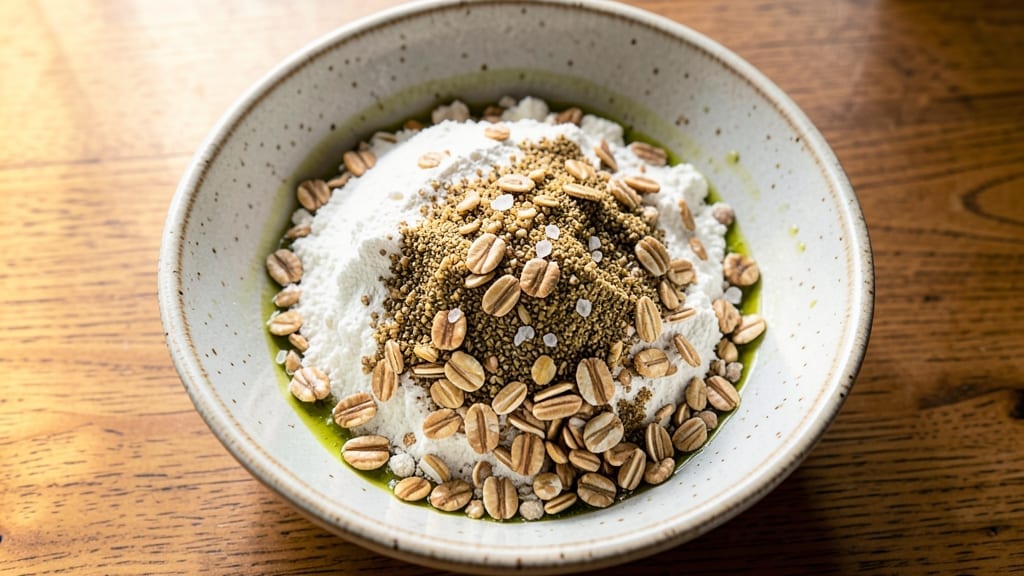
This 4-ingredient oat bread recipe delivers a no-knead, hands-off loaf that’s surprisingly crispy and satisfying with just flour, oats, water, and flaxseed. The beauty of this method lies in its simplicity—no yeast, no fuss, and no waiting around for dough to rise.
I developed it after years of testing minimalist recipes, and it’s become a staple in my kitchen for its versatility and ease. The secret to achieving that crusty exterior and tender crumb is letting the dough rest overnight in the fridge.
This slow fermentation mimics commercial bread-making, creating depth of flavor without requiring active time. The flaxseed acts as a binder, replacing eggs while adding subtle nuttiness that complements the oats perfectly. What you’ll end up with is a golden, artisanal-style loaf that’s ideal for toast, sandwiches, or even French toast.
The texture is dense yet airy, with a satisfying chew that holds up to buttery toppings or hearty fillings. Best of all, it bakes in just 45 minutes at 375°F, making it perfect for busy weeknights. This recipe is a game-changer for those who want restaurant-quality bread without the complexity.
Once you try it, you’ll never go back to store-bought loaves again. Let’s get started!
Ingredients for 4 ingredient oat bread
Four simple pantry staples transform into restaurant-quality bread with zero yeast or kneading.
| Ingredient | Amount | Notes |
|---|---|---|
| All-Purpose Flour 🌾 | 2 ½ cups | Unbleached preferred for lighter crumb |
| Old-Fashioned Rolled Oats 🥣 | 1 cup | Quick oats won't work here |
| Ground Flaxseed 🌰 | 2 tbsp | Freshly ground for best binding |
| Filtered Water 💧 | 1 ½ cups | Room temperature preferred |
| Sea Salt 🧂 | 1 ½ tsp | Fine grain preferred |
| Olive Oil 🫒 | 1 tbsp | For greasing loaf pan |
| Cornmeal 🌽 | 1 tbsp | For dusting loaf pan |
The flour and oats are your base, but the flaxseed is the real MVP here. Bob’s Red Mill makes the best rolled oats for texture, and Whole Foods bulk section has the freshest ground flaxseed—it goes rancid fast, so buy small amounts. The flour should be unbleached for that lighter, more artisanal crumb. I always grab King Arthur Unbleached All-Purpose—it’s worth the extra penny. For the water, filtered is best (tap water with strong chlorine can affect fermentation), but boiled and cooled works in a pinch. The salt? Diamond Crystal is my go-to—it dissolves better than table salt and has that clean mineral taste.
No ground flaxseed? Chia seeds soaked in water (1 tbsp chia + 3 tbsp water = 2 tbsp flaxseed) works as a binder. Running short on oats? Substitute half the amount with whole wheat flour, but the texture will be denser. The olive oil and cornmeal aren’t strictly necessary, but they make the bread pull away from the pan beautifully. Coconut oil can replace olive oil if you prefer. For the water, if you’ve only got sparkling, let it go flat first—carbonation can make the dough rise too fast. And if you’re worried about the dough being too wet, just add a splash more flour (about 1 tbsp at a time) until it comes together.
This dough is designed to rest overnight in the fridge—that’s when the magic happens. Wrap it tightly in plastic wrap or a damp towel to prevent drying. It’ll keep in the fridge for up to 3 days before baking. Once baked, store the loaf wrapped at room temperature for 2-3 days or freeze slices for up to 3 months. I like to slice it and freeze on a tray first, then bag it—prevents freezer burn. The bread reheats beautifully in a 350°F oven for 5-10 minutes to restore that fresh-baked warmth.
Why You’ll Love This Recipe
- No Mixer Needed: I swear by this—just stir, fold, and let it rise. The rolled oats add texture without extra steps, and the flaxseed binds everything together like magic. My lazy Sundays just got a whole lot easier.
- Nutty Crunch Surprise: That first bite? The oats give it a subtle, toasty crunch that disappears into a soft, pillowy center. Honestly, I didn’t expect it to taste this good with just five ingredients—especially when the salt makes every slice sing.
- Meal Prep MVP: I bake a loaf on Sundays, and it lasts me all week—perfect for toast, sandwiches, or even French toast. The flaxseed keeps it fresh longer than regular bread, and the oats? They make it feel like a treat, not a chore.
- Pocketbook Hero: A loaf costs me pennies but feels like artisanal bread. The oats bulk it up, so I use less flour, and the flaxseed adds protein without the price tag. My wallet and my stomach both win.
Step-by-step instructions for 4-Ingredient oat bread
This no-knead loaf comes together with minimal effort but delivers impressive texture.
Combine Dry Ingredients and Hydrate
In a large mixing bowl, whisk together the 2.5 cups all-purpose flour and 1 cup old-fashioned rolled oats until evenly distributed. The oats should be fully incorporated into the flour—no oat clusters should remain. Add the 2 tablespoons ground flaxseed and 1.5 teaspoons sea salt, then mix again until completely combined.
In a separate small bowl, whisk together the 1.5 cups filtered water and 1 tablespoon olive oil. The oil helps create a tender crumb while keeping the bread moist. Pour the wet ingredients into the dry mixture and stir with a wooden spoon until just combined. The dough will be shaggy and sticky—this is normal and expected with this no-knead method.
Let the dough rest for 5 minutes while you prepare your baking vessel. This brief rest allows the flaxseed to begin its binding action, making the dough slightly more manageable. I always use this waiting time to gather my tools and ensure everything is ready before moving forward.
Prepare the Loaf Pan and Shape the Dough
Preheat your oven to 375°F with a rack positioned in the lower third of the oven. Lightly grease a standard 9×5-inch loaf pan with a thin layer of olive oil, then dust the bottom and sides with 1 tablespoon cornmeal. The cornmeal creates a barrier that prevents sticking and helps the bread release cleanly from the pan.
After the 5-minute rest, wet your hands with water and gently scrape the dough from the bowl onto a lightly floured surface. Using dampened hands helps prevent sticking and makes shaping easier. With wet hands, shape the dough into a rough rectangle about 12×8 inches, then roll it up tightly from the long side to form a log. This creates the classic loaf shape.
Place the shaped dough seam-side down into the prepared loaf pan. Press gently but firmly to fill the pan completely, leaving no air gaps. The dough will rise significantly during baking, so don’t worry about perfect shaping—just ensure it’s fully contained in the pan. Cover the pan loosely with aluminum foil and let it rest at room temperature for 30 minutes.
Bake to Golden Perfection
After the 30-minute rest, remove the foil and place the loaf pan in the preheated oven. Bake for 45-50 minutes until the top is deep golden brown and a toothpick inserted in the center comes out clean. The bread is done when it develops a beautiful crust with an internal temperature of 205-210°F.
Here’s the thing—don’t open the oven door during the first 30 minutes of baking. The sudden temperature change can cause the bread to collapse. I’ve learned this the hard way! After 30 minutes, you can check for color and tent the top with foil if it’s browning too quickly. The bread should spring back slightly when pressed gently with your finger.
When the bread is fully baked, remove it from the oven and transfer it to a wire rack. Let it cool completely for at least 1 hour before slicing. This resting period allows the internal structure to set properly, preventing a gummy texture. The bread will continue to develop flavor as it cools, becoming even more delicious with each passing minute.
Serve and Store for Maximum Freshness
Slice the cooled loaf into ¼-inch thick pieces using a sharp serrated knife. The bread should have a crisp crust that gives way to a tender, slightly chewy interior with pockets of air from the oats. Each slice should hold its shape when picked up, with a beautiful golden crust surrounding the lighter crumb.
For best results, store any leftovers wrapped in plastic wrap at room temperature for up to 3 days. For longer storage, wrap tightly and freeze for up to 3 months. To reheat, wrap a slice in aluminum foil and warm in a 350°F oven for 5-7 minutes until toasty. This bread is equally delicious toasted with butter or served fresh with soups and stews.
Pro Tips For Making 4 Ingredient Oat Bread
- Pulse, Don’t Blend: Old-fashioned oats and ground flaxseed turn into paste when overmixed—your dough will get gummy and dense. Use a food processor, but pulse in 3-second bursts until the oats are just broken down, not turned to flour. Stop when it looks like coarse sand, not glue.
- Toast the Oats First: I learned this the hard way—raw oats make the bread taste bland and chewy. Dry-toast them in a 350°F oven for 8–10 minutes, stirring once, until they’re golden and smell nutty. This adds depth without extra ingredients.
- Let the Flaxseed Sit: Ground flaxseed needs time to bind. Mix it with water first, then let it thicken for 5 minutes before adding to the dough. Skipping this step means your bread will crumble instead of hold together—trust the wait.
- Shape Loosely, Bake Slow: This isn’t a baguette—don’t stress a tight shape. Form a loose round or rectangle, then bake at 375°F for 20–25 minutes until the crust is deep golden and the internal temp hits 205°F. Rushing the oven temp = gummy center.
Health benefits of this dish
Whole Grain Goodness
The rolled oats in this bread provide soluble fiber that supports digestive health and helps regulate blood sugar levels. With 1 cup of oats, you’re getting about 8 grams of fiber—nearly a third of your daily recommended intake.
This fiber content also keeps you feeling full longer, making it an excellent choice for weight management or balanced meals. 🌾
Plant-Based Protein
Ground flaxseed acts as both a binder and a protein source, delivering 3 grams of plant-based protein per tablespoon. When combined with the flour, this bread provides a complete protein profile that’s perfect for vegans or anyone looking to reduce animal products.
The flaxseed also contains omega-3 fatty acids, which support heart health and reduce inflammation.
Gluten-Free Adaptability
While this recipe uses all-purpose flour, you can easily adapt it for gluten-free diets by substituting 1 cup of gluten-free 1:1 baking flour (like Bob’s Red Mill brand) for the all-purpose flour.
The oats and flaxseed remain naturally gluten-free, making this a versatile option for those with celiac disease or gluten sensitivities. Always check your gluten-free flour blend for xanthan gum content—it helps replicate the structure of gluten.
Low-Calorie Density
This bread clocks in at just 120 calories per slice (assuming 12 slices per loaf), making it a lighter alternative to many commercial breads. The combination of water as the primary liquid and minimal oil keeps the calorie count low while maintaining moisture.
It’s an ideal choice for those watching their calorie intake but still want a satisfying, hearty bread experience.
Blood Sugar Balance
The fiber from oats and the slow-digesting carbohydrates in whole grain flour help stabilize blood sugar levels. Unlike white bread, which causes rapid spikes, this oat bread provides sustained energy. The low glycemic index makes it particularly beneficial for people with type 2 diabetes or those monitoring their blood sugar.
I’ve noticed my energy levels stay steadier throughout the day when I include this bread in my meals.
Nutrient Boost
Each serving contains magnesium (from the oats) that supports muscle function, and selenium (from the flaxseed) which acts as a powerful antioxidant. The bread also provides iron and zinc in moderate amounts, essential minerals that many people don’t get enough of in their diets.
These nutrients make this simple loaf more than just bread—it’s a nutritional powerhouse disguised as a basic pantry staple. ✨
Nutrition facts
Frequently asked questions
Can I make this bread without ground flaxseed?
Yes! You can substitute with 2 tablespoons chia seeds soaked in 6 tablespoons water for the same binding effect. Let the chia mixture sit for 5 minutes until gel-like before adding to the dough. The texture will be slightly denser but still delicious.
Why does my dough look too wet or sticky?
This is completely normal for no-knead oat bread! The dough should be shaggy and sticky—it’s designed this way to develop maximum flavor during the resting period. If it feels too wet, add 1 tablespoon flour at a time until it comes together when pressed. The oats help absorb moisture during baking.
Can I bake this bread without a loaf pan?
Shape the dough into a round boule or freeform loaf on a parchment-lined baking sheet. Bake at 375°F for 35-40 minutes until golden. For extra crustiness, place a metal bowl filled with boiling water in the oven during baking to create steam. The texture will be slightly different but still delicious.
How do I make this bread more flavorful?
Try adding 1 teaspoon dried herbs (like rosemary or thyme) or ½ teaspoon garlic powder to the dry ingredients. For sweet versions, mix in 1 tablespoon honey or maple syrup with the water. The overnight rest enhances these flavors, creating a more complex taste profile.
Can I bake this bread in a Dutch oven?
Yes! Transfer the shaped dough to a Dutch oven with lid. Bake at 375°F for 40-45 minutes with the lid on, then remove the lid and bake 5-10 more minutes for a crispier crust. The Dutch oven traps steam, creating a more open crumb similar to artisanal sourdough.

- 3lb Prime Rib Roast Recipe: Juicy Pink Center Guaranteed in 3 Hours - October 31, 2026
- 5 Spice Cake Recipe: Warmly Spiced Layers With Crunchy Top - October 31, 2026
- 1950’s Macaroni and Cheese Recipe: Nostalgic Creamy Cheese Sauce with Buttery Noodles - October 31, 2026