
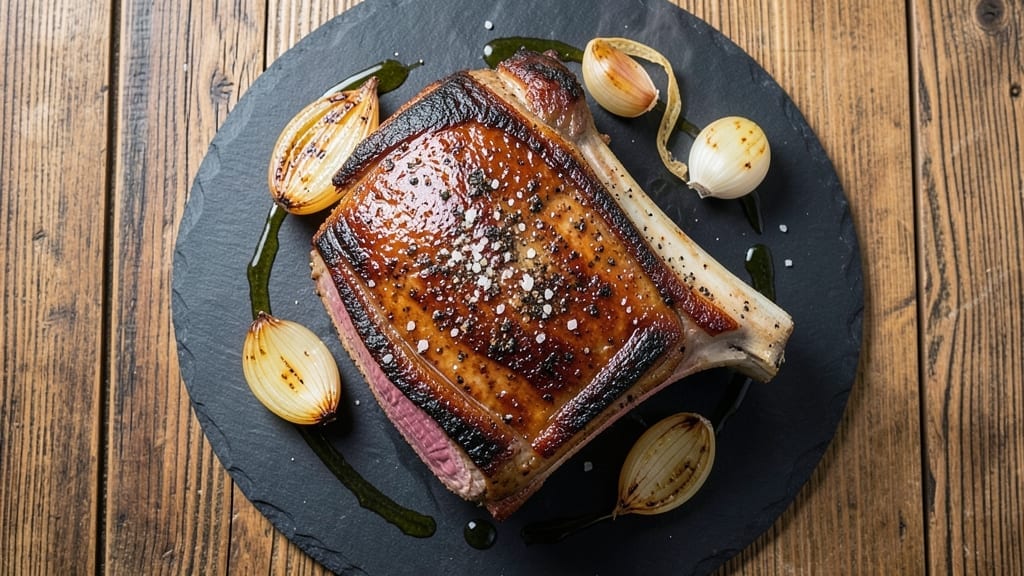
A 4 lb bone-in ribeye roast cooked to juicy pink perfection transforms a simple dinner into a showstopping centerpiece. The reverse-sear method ensures a crispy crust while keeping the interior tender and rich—no guesswork, just precise technique.
This recipe delivers restaurant-quality results with minimal effort, making it ideal for special occasions or when you want to impress without stressing over timing.
The secret lies in low-and-slow roasting followed by a high-heat sear, which builds deep flavor and locks in moisture. You’ll need just kosher salt, black pepper, and olive oil, plus patience for the resting period—critical for even doneness.
The bone adds natural richness, while the crust develops that coveted caramelized bark that’s impossible to resist.
By the time you serve it, you’ll have a juicy pink core with a deeply browned exterior, perfect for slicing against the grain. The aroma alone will have everyone anticipating the first bite.
Pair it with roasted garlic mashed potatoes or a bold red wine reduction to elevate the dish further.
This method works for bone-in or boneless cuts, and the same principles apply to other premium roasts like strip or sirloin. The key is temperature control—125°F internal for medium-rare—so the meat stays tender while developing that irresistible crust. Let’s get started on creating your most impressive roast yet.
Ingredients for 4 lb bone in ribeye roast
Four pounds of premium ribeye plus a few simple elements create this showstopping centerpiece.
| Ingredient | Amount | Notes |
|---|---|---|
| Bone-In Ribeye Roast 🥩 | 4 lb | Center-cut, 1-1.5 inches thick |
| Kosher Salt 🧂 | 1 ½ tbsp | Diamond Crystal preferred |
| Freshly Ground Black Pepper 🌶️ | 1 ½ tsp | Coarsely cracked preferred |
| Extra-Virgin Olive Oil 🫒 | 2 tbsp | High quality, fruity |
| Yellow Onion 🧅 | 1 whole | Quartered, for aromatics |
| Garlic Cloves 🧄 | 6 cloves | Smashed, skin-on |
| Fresh Thyme 🌿 | 2 sprigs | Or 1 tsp dried thyme |
| Fresh Rosemary 🌿 | 2 sprigs | Or 1 tsp dried rosemary |
| Butter 🧈 | 4 oz | Unsalted, cold for searing |
| Red Wine 🍷 | ½ cup | Bold, dry variety |
| Beef Tallow or Duck Fat 🧂 | 2 tbsp | For high-heat sear |
| Fresh Parsley 🌿 | ¼ cup | Chopped, for garnish |
The ribeye is non-negotiable here—bone-in, center-cut with good marbling is essential for that melt-in-your-mouth texture. Costco or Whole Foods carry excellent cuts, but your butcher will have the freshest options. Look for a roast that’s bright red with visible fat—avoid any with grayish edges. If you’re buying whole, ask for it to be trimmed but not overworked. The bone adds richness, so don’t skip it unless you’re making boneless. For this recipe, the roast should be 1-1.5 inches thick—thicker cuts need longer roasting times.
No Diamond Crystal kosher salt? Morton or any coarse sea salt works, but adjust to taste since grain size varies. Freshly ground pepper is a must—pre-ground loses potency fast. Running short on olive oil? Avocado oil or grapeseed oil are great substitutes, but stick with high smoke point oils for searing. The butter should be cold and cubed when you add it during the sear—this builds incredible flavor. For the wine, any bold red works—Cabernet Sauvignon, Merlot, or even a good Zinfandel. If you don’t have any, beef broth with a splash of balsamic mimics the depth.
Let the roast sit at room temperature for 30-45 minutes before cooking—this ensures even doneness. The aromatics (onion, garlic, herbs) can be prepped ahead and refrigerated. For maximum flavor, toast the garlic cloves in the fat until golden before removing them. Leftovers? This reheats beautifully—warm in the oven at 275°F for 20-30 minutes with a splash of beef broth to keep it moist. The crust won’t be as crispy, but the meat stays incredibly tender. Store in the fridge for up to 4 days or freeze for 3 months—portion into individual servings before freezing for easy reheating.
Why You’ll Love This Recipe
- Just Three Ingredients: I swear, the magic happens with salt, pepper, and olive oil—no fancy rubs or complicated steps. That bone-in ribeye? It practically cooks itself, releasing flavor while you sip your coffee.
- Crispy-Creamy Magic: The sear on the outside? Chef’s kiss. The inside stays juicy as can be, and the onion caramelizes just enough to add this deep, savory sweetness that makes every bite unforgettable.
- Sunday Dinner Hero: This roast is my go-to for family gatherings—feeds six without breaking the bank, and the leftovers? Even better the next day. Slice it thin, serve with mashed potatoes, and watch everyone come back for seconds.
- Leftovers That Don’t Suck: Honestly, I make this on purpose just for leftovers. The meat stays tender, the flavor deepens, and I can throw it into sandwiches or tacos all week—no sad, dry slices here.
Step-by-step instructions for reverse-seared bone-in ribeye roast
This method guarantees a perfectly pink center with a deep, flavorful crust every time.
Season and Sear the Roast for Flavor Foundation
Pat the 4 lb bone-in ribeye roast completely dry with paper towels—this is critical for that perfect crust. In a small bowl, mix the 1.5 tbsp kosher salt and 1.5 tsp freshly ground black pepper. Generously coat the roast on all sides, pressing the seasoning into the meat so it adheres well. Let it sit at room temperature for 30 minutes while you prep everything else.
Heat a heavy oven-safe skillet over medium-high heat. Add 1 tbsp of the extra-virgin olive oil and 2 tbsp beef tallow or duck fat. When the fat shimmers (about 2 minutes), carefully place the roast fat-side down in the pan. Press down gently on the roast during the first minute to prevent curling, then let it sear undisturbed for 3-4 minutes until a deep golden brown crust forms. Flip and sear the other side for another 3-4 minutes. Remove from heat and set aside—this initial sear locks in juices and builds flavor.
Build Aromatic Base and Slow Roast
In the same skillet (with all those flavorful browned bits), add the quartered yellow onion, smashed garlic cloves, fresh thyme sprigs, and rosemary sprigs. Cook over medium heat for 3-4 minutes until the onions soften and garlic becomes fragrant but not browned. Pour in the 0.5 cup red wine and scrape up any browned bits from the bottom with a wooden spoon—this deglazing captures all that meaty flavor.
Transfer the skillet to a preheated 275°F oven and nestle the seared roast back in. The wine should partially cover the bottom of the pan, creating a self-basting liquid. Roast for 2 hours, or until the internal temperature reaches 110°F at the thickest part of the roast (use a meat thermometer). This low-and-slow phase ensures the meat stays juicy through the center while developing deep flavor. Don’t be tempted to peek—the temperature fluctuations will set you back.
Complete the Reverse Sear for Perfect Doneness
Remove the roast from the oven and let it rest for 5 minutes while you finish the sauce. Increase your oven temperature to 450°F. Place the roast back in the oven on a wire rack set over a baking sheet (to catch drippings) and roast for 15-20 minutes, turning occasionally, until the internal temperature reaches 125-130°F for medium-rare. You’ll know it’s done when the crust is deep mahogany brown and the edges are slightly caramelized.
Here’s the thing—this final sear isn’t just about temperature. It’s about creating that perfect crust while keeping the interior juicy. The roast should release easily from the pan when you try to move it, and the crust should crackle when you press it gently with tongs. If the crust isn’t dark enough after 15 minutes, give it another 5 minutes at 475°F.
Rest and Create the Sauce
Transfer the roast to a cutting board and tent loosely with foil. Let it rest for at least 15 minutes (I prefer 20) before slicing—this resting period allows the juices to redistribute throughout the meat. While it rests, reduce the wine mixture in the skillet over medium heat until it thickens to a syrupy consistency (about 5 minutes). Stir in the remaining 1 tbsp extra-virgin olive oil and 4 oz cold butter, whisking until incorporated and the sauce emulsifies.
Slice the roast against the grain into ½-inch thick slices. The meat should be beautifully pink in the center with a deep mahogany crust. Spoon the rich wine sauce over the top and garnish with the chopped fresh parsley. Serve immediately with roasted potatoes or a simple green salad—each bite should be perfectly balanced between tender meat and bold flavor.
Pro Tips For Making 4 Lb Bone In Ribeye Roast
- SEAR HARD FIRST: Get that pan screaming hot—like, blue-flame-on-the-gas-stove hot—before adding the ribeye. A quick 3-4 minutes per side on the bone side and the meaty side builds crust that’ll make your roast taste like it came from a steakhouse, not a home kitchen. (Yes, even if you’re impatient like me.)
- SALT THE ONION: Toss the sliced yellow onion with salt and olive oil before it hits the pan—it’ll soften faster and caramelize better. I learned this the hard way after serving mushy onions that tasted like sad, forgotten lunch meat. (Bonus: The salt pulls out moisture, so it browns instead of steaming.)
- STOP AT 125°F: Pull the roast out of the oven when the internal temp hits 125°F for medium-rare—it’ll climb to 130°F while resting, which is where you want it. After burning three ribeyes by overcooking them, I finally realized: resting is part of the cooking. (Your meat thermometer is your new best friend.)
- BASTE WITH FAT: If your roast isn’t self-basting (and most aren’t), spoon the rendered fat from the pan over the meat every 20 minutes. It’s the closest thing to dry aging you’ll get at home, and it turns tough cuts into melt-in-your-mouth perfection. (Skip this, and you’re missing out on the juiciest payoff.)
Best sauces and condiments for 4 lb bone in ribeye roast
Classic Red Wine Reduction
The bold red wine sauce in this recipe is a game-changer—it cuts through the richness of the ribeye while amplifying its natural beefy flavors. I use ½ cup dry Cabernet Sauvignon reduced with the roast’s fond (browned bits) until syrupy.
For extra depth, add 1 tsp balsamic vinegar at the end and finish with 1 tbsp cold butter to create a velvety sauce. This sauce works equally well with boneless cuts or strip roasts. 🍷
Creamy Horseradish Sauce
For a tangy kick, whip up a quick horseradish sauce by mixing ½ cup sour cream, 2 tbsp prepared horseradish cream, 1 tbsp Dijon mustard, and 1 tsp Worcestershire sauce. Drizzle this over slices before serving—it adds a sharp contrast that balances the richness beautifully.
I like to add a pinch of smoked paprika for warmth. This sauce keeps well in the fridge for 3 days.
Garlic Butter Baste
Skip the wine and go for a classic garlic butter baste by melting 4 oz cold butter with 3 minced garlic cloves and 1 tbsp fresh parsley in the roasting pan. Brush this over the roast during the final 15 minutes of cooking for a golden, aromatic crust.
The butter adds richness while the garlic infuses every bite. For extra flavor, add ½ tsp crushed red pepper flakes to the butter mixture. 🌶️
Smoky Chipotle Glaze
For a smoky twist, blend ½ cup ketchup, 2 tbsp adobo sauce (from canned chipotles), 1 tbsp apple cider vinegar, and 1 tsp brown sugar into a glaze. Simmer until thickened, then brush over the roast during the last 10 minutes of the high-heat sear.
This adds a deep, smoky complexity that pairs perfectly with the ribeye’s natural fat. Store leftover glaze in the fridge for up to 1 week.
Simple Herb Butter
Melt 4 oz cold butter with 1 tbsp chopped fresh thyme, 1 tbsp chopped fresh rosemary, and 1 tsp lemon zest until just combined. Spread this over the roast during the final sear for a fragrant, herbaceous crust.
The lemon zest brightens the dish while the herbs complement the beef’s richness. This butter works as a topping or can be used as a finishing sauce for individual slices. 🌿
Nutrition facts
Frequently asked questions
Why does the recipe call for resting the roast before slicing?
Resting allows the meat’s juices to redistribute evenly after cooking—skipping this step causes them to pool on your plate instead of staying in the meat. For a 4 lb roast, 15-20 minutes of resting ensures each slice stays juicy and tender. The crust will stay intact while the interior firms up just enough for clean slicing.
Can I use this reverse-sear method for a smaller or larger roast?
Yes! Adjust the timing based on thickness: 1 inch thick = 1 hour low-and-slow, 1.5 inch thick = 2 hours (like this recipe). For 6+ lb roasts, add 30-45 minutes to the slow roast time. Always use a meat thermometer—110°F internal before the final sear is your target for medium-rare.
What if my oven doesn’t go up to 450°F for the final sear?
No problem! Broil on high for 5-7 minutes with the oven rack positioned 4-5 inches from the heat source, turning the roast halfway. Watch closely to avoid over-browning. Alternatively, finish in a cast-iron skillet over medium-high heat for 2-3 minutes per side until the crust is deep mahogany.
How do I know when the roast is done without a meat thermometer?
For medium-rare, press the roast gently with tongs—the meat should feel slightly springy (not firm). A visual cue is a deep mahogany crust with pinkish edges when sliced. Cut into the thickest part: ½-inch pink center = medium-rare. If unsure, err on the cooler side—beef continues cooking slightly after removal from heat.
Can I make this recipe ahead of time?
Cook the roast as directed, then refrigerate it uncovered for 2-3 hours to dry the surface for better crust development. Reheat in a 275°F oven for 20-30 minutes with a splash of beef broth. The crust won’t be as crispy, but the meat stays incredibly tender. For best results, slice and serve immediately after reheating.

- 3lb Prime Rib Roast Recipe: Juicy Pink Center Guaranteed in 3 Hours - October 31, 2026
- 5 Spice Cake Recipe: Warmly Spiced Layers With Crunchy Top - October 31, 2026
- 1950’s Macaroni and Cheese Recipe: Nostalgic Creamy Cheese Sauce with Buttery Noodles - October 31, 2026