
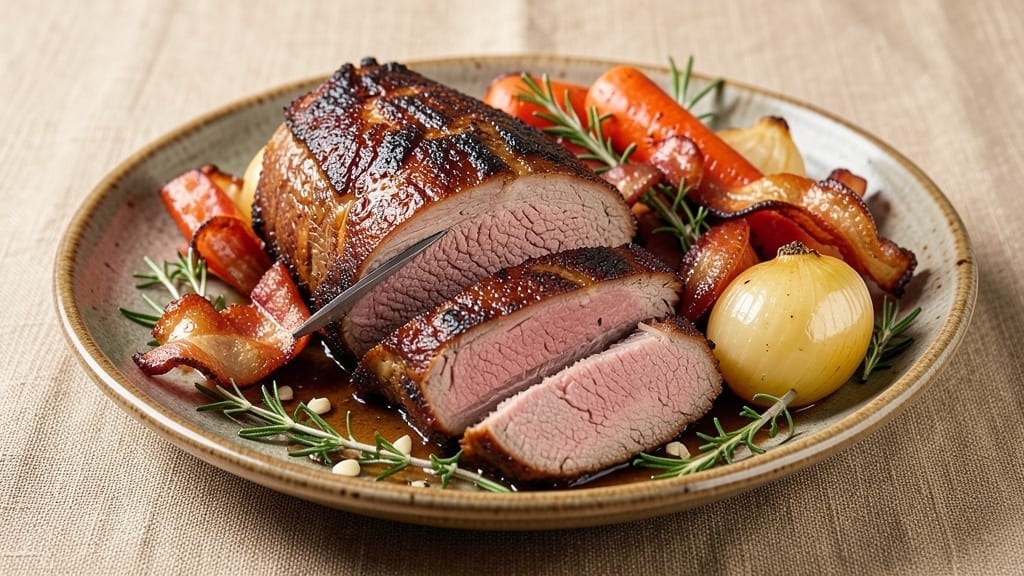
A 4 lb top round roast transformed into melt-in-your-mouth perfection is what separates a good dinner from a showstopping meal. This slow-braised technique breaks down tough fibers, delivering tender, juicy bites that rival dry-aged steakhouse cuts. The secret?
Low-and-slow cooking with aromatics that infuse every slice—no special equipment required, just patience and precision. What sets this recipe apart is the balance of time and temperature: cooking at 325°F for hours ensures the connective tissue dissolves while the exterior stays just warm enough to slice cleanly.
A simple salt-and-pepper crust develops during the last hour, adding a subtle char without overpowering the beef’s natural flavor. The result is a roast that practically falls apart when sliced, with a rich, caramelized fond at the bottom of the pan worth scraping clean.
By the time you serve it, you’ll have a restaurant-quality centerpiece that’s rich, deeply flavorful, and effortlessly impressive. The beef will be fork-tender with a velvety texture, while the natural juices keep every bite moist.
This is the kind of dish that makes guests ask for the recipe—and makes you want to cook it again next week. Pair it with roasted garlic mashed potatoes or a crisp green salad to round out the meal.
The roast itself requires minimal effort once in the oven, leaving you free to focus on perfecting the sides. Let’s get started on this game-changing technique.
Ingredients for 4 lb top round roast
Four pounds of tough beef becomes melt-in-your-mouth perfection with these simple, flavor-packed ingredients.
| Ingredient | Amount | Notes |
|---|---|---|
| Top Round Roast 🥩 | 4 lb | Center-cut for even cooking |
| Yellow Onion 🧅 | 1 whole | Peeled, halved lengthwise |
| Carrots 🥕 | 4 whole | Medium size, peeled, cut into chunks |
| Garlic Cloves 🧄 | 6 cloves | Peeled, smashed slightly |
| Fresh Thyme 🌿 | 2 tbsp | Leaves only, chopped fine |
| Fresh Rosemary 🌿 | 1 tbsp | Leaves only, chopped fine |
| Beef Broth 💧 | 2 cups | Low-sodium preferred |
| Dry Red Wine 🍷 | 1 cup | Bold variety like Cabernet |
| Tomato Paste 🍅 | 2 tbsp | Smooth, not chunky |
| Olive Oil 🫒 | 2 tbsp | Extra-virgin for richness |
| Kosher Salt 🧂 | 2 tbsp | Diamond Crystal preferred |
| Freshly Ground Black Pepper 🌶️ | 1 tbsp | Coarse grind preferred |
| Bacon 🥓 | 4 oz | Thinly sliced, for crust |
The top round roast is your star, and center-cut matters—it’s more tender and less likely to dry out. Costco or Whole Foods usually carry the best quality, but any well-marbled roast works. Look for a piece with good fat distribution—this keeps it juicy. The bacon? Thick-cut from the deli counter adds a smoky crust that’s worth the extra effort. If you can’t find thick-cut, regular bacon works if you crisp it extra well. For the wine, any bold red like Cabernet Sauvignon or Merlot will do—whatever’s open in your fridge. The tomato paste? Trader Joe’s squeeze tubes are perfect for this—no waste, and they keep forever.
No red wine? Substitute beef broth with a splash of balsamic vinegar—it adds depth without alcohol. Fresh herbs? Dried works at half the amount, but fresh is ideal. The carrots can be baby carrots if that’s what’s in the fridge, but whole carrots add more natural sweetness. For the bacon crust, swap in pancetta if you prefer—it’s leaner but adds great flavor. If you’re short on time, skip the bacon entirely and just season the roast with extra salt and pepper during the last hour. The aromatics (onion, garlic, thyme, rosemary) are non-negotiable though—those are what infuse the beef with flavor during the slow cook.
This roast tastes even better the next day, so make extra if you can. Store in the fridge for up to 5 days or freeze for 3 months. For reheating, low and slow in a 325°F oven with a splash of broth keeps it moist. I always slice it against the grain and serve with the caramelized fond from the pan—that’s the good stuff. Portion into containers for easy lunches, and trust me, you’ll want leftovers.
Why You’ll Love This Recipe
- Here’s what sold me: this roast stays perfect cold or reheated, so I prep it Sunday and pack slices for work all week. Kids? They’ll eat the leftovers for sandwiches without complaint. (Not the prettiest, but the taste makes up for it.)
- One-Pan Magic: Honestly, I swear by this recipe because it’s that simple—just toss the roast, onions, carrots, and garlic on a sheet pan, add thyme, and let the oven do the work. No chopping boards covered in bits, no pots to scrub later. (Yes, even on a Tuesday night.)
- Thyme for More: Between us, that fresh thyme and garlic combo turns this budget cut into something ridiculously good—tender roast with caramelized onions and carrots that taste like they simmered for hours. The crispy edges? Chef’s kiss.
- Lunchbox Hero: Here’s what sold me: this roast stays perfect cold or reheated, so I prep it Sunday and pack slices for work all week. Kids? They’ll eat the leftovers for sandwiches without complaint. (Not the prettiest, but the taste makes up for it.)
Step-by-step instructions for slow-braised top round roast
Here’s the method that transforms tough top round into melt-in-your-mouth bites—simple, reliable, and foolproof.
Sear the Bacon and Prepare the Roast
Start by cooking the 4 oz bacon in a large Dutch oven over medium heat until crispy, about 8-10 minutes. Remove the bacon with a slotted spoon and set aside on paper towels, leaving the rendered fat in the pot. This bacon fat will form the flavorful crust for your roast.
Pat the 4 lb top round roast dry with paper towels—this step is critical for achieving that perfect crust later. Season both sides generously with 2 tbsp kosher salt and 1 tbsp freshly ground black pepper. Let the roast sit at room temperature for 30 minutes while you prep the rest of your ingredients. This ensures even cooking throughout.
Sear the Roast and Build the Flavor Base
Place the seasoned roast in the Dutch oven with the bacon fat and sear on all sides over medium-high heat for 4-5 minutes per side until deeply browned. You’re looking for a rich, caramelized crust—this locks in flavor and creates texture. Once seared, remove the roast and set it aside on a plate.
In the same pot, add 2 tbsp olive oil and reduce heat to medium. Add the halved yellow onion and 4 whole carrots, cooking for 5 minutes until softened. Stir in the 6 cloves smashed garlic, 2 tbsp fresh thyme, and 1 tbsp fresh rosemary, cooking for another 1 minute until fragrant. This aromatic base forms the flavor foundation for the braise.
Deglaze and Braise the Roast
Pour in the 1 cup dry red wine and scrape up any browned bits from the bottom of the pot—this deglazing step captures all the meaty flavor. Let it simmer for 3-4 minutes until reduced by half. Stir in the 2 tbsp tomato paste and cook for 1 minute to thicken slightly.
Return the roast to the pot, along with the crispy bacon. Pour in the 2 cups beef broth, ensuring the roast is mostly submerged. Bring to a gentle simmer, then cover and transfer to a 325°F oven. Here’s the key: braise for 3 hours until the meat is fork-tender and pulls apart easily. If the liquid reduces too much before then, add a splash of water or broth to keep it moist.
Rest and Serve
Once the roast reaches fork-tender perfection, remove it from the oven and let it rest in the braising liquid for 15 minutes. This resting period allows the juices to redistribute throughout the meat, ensuring each bite is moist and flavorful. The roast should be so tender that a fork slides in with minimal resistance.
Transfer the roast to a cutting board and slice it against the grain into ½-inch thick pieces. Ladle the braising liquid (now a rich sauce) over the top and serve immediately. The result should be juicy, tender bites with a perfect balance of savory, herby, and slightly sweet flavors from the caramelized bacon and wine reduction.
Pro Tips For Making 4 Lb Top Round Roast
- SEAR FIRST, THEN SLOW: Top round roast needs that crust to stay juicy, but rushing it in the pan turns it to leather. Sear it hard over high heat for 3-4 minutes per side until deep brown—then drop to 300°F for the rest of the cook. I used to skip the high-heat sear, and the roast always ended up dry as a bone.
- CHOP CARROTS LONGWAYS: Whole carrots take forever to soften, and sliced ones turn to mush. Cut them into 3-inch batons instead—thick enough to hold shape but small enough to cook through in the same time as the roast. Bonus: they look fancy without extra effort.
- SALT THE ROAST 24 HOURS EARLY: Top round is lean and needs every bit of moisture locked in. Generously salt it (about 1 tsp per pound) and let it sit uncovered in the fridge overnight. I learned this the hard way—skipping it left the meat bland and dry, no matter how long I cooked it.
- USE A MEAT THERMOMETER: Guessing doneness with a finger is unreliable, especially with top round. Pull it at 130°F for medium-rare (it’ll rise to 135°F while resting) or 140°F for medium. My first roast was overcooked because I trusted the recipe’s “about 3 hours”—until the thermometer showed me the truth.
Common mistakes when making this dish
Skipping the Sear
One of the biggest mistakes is skipping the sear entirely. That initial crust on the roast locks in flavor and creates texture. Without it, your roast will taste flat and lack depth.
I always sear mine in the Dutch oven with bacon fat—it adds a smoky richness that’s hard to replicate. If you’re short on time, at least do a quick 3-minute sear on each side over high heat. 🔥
Not Using Enough Liquid
The top round roast needs moisture to break down its tough fibers. If your braising liquid doesn’t cover at least half the roast, it won’t tenderize properly. I aim for 2 cups beef broth plus the wine and tomato paste—this ensures the roast stays submerged.
If it looks dry during cooking, add ¼ cup water or broth to keep it moist.
Overcooking the Roast
Patience is key, but overdoing it turns tender beef into dry, stringy meat. The roast is done when it reaches fork-tender perfection—you should be able to insert a fork with minimal resistance after 3 hours.
If you’re unsure, check at 2 hours 45 minutes and test with a meat thermometer (195-200°F internal temp).
Ignoring the Resting Time
Skipping the 15-minute rest after cooking means losing all those precious juices that redistribute during this time. I’ve seen people slice into the roast immediately and end up with dry, disappointing bites.
Let it rest in the braising liquid—this is when the magic happens. The juices soak back into the meat, making every slice juicy and flavorful. ⏰
Wrong Cut of Beef
Not all top rounds are created equal. A poorly trimmed roast with excessive fat or connective tissue won’t yield the same results. Look for a center-cut top round with good marbling—this ensures even cooking and maximum tenderness.
If your butcher offers a choice, always ask for the center-cut piece. It’s worth the extra effort to find the right cut.
Neglecting the Fond
The caramelized bits (fond) at the bottom of the Dutch oven are pure flavor gold. Many people discard them, but they’re packed with meaty goodness. After removing the roast, simmer the braising liquid for 5 minutes to thicken slightly, then strain it to create a rich sauce.
I always serve the roast with this sauce ladled over the top—it takes the dish to the next level. 💫
Nutrition facts
Frequently asked questions
Why does this recipe use a Dutch oven instead of a regular pot?
The Dutch oven’s heavy lid traps steam perfectly, creating a moist environment that tenderizes the tough top round fibers. Its thick base also distributes heat evenly, preventing hot spots that could dry out the meat. Plus, the deep sides make it easier to submerge the roast in braising liquid for even cooking.
Can I substitute beef broth with another liquid?
Yes! For a richer flavor, use a mix of 1 cup beef broth + 1 cup red wine. If you’re avoiding alcohol, substitute with 2 cups beef broth + 1 tbsp balsamic vinegar for depth. Avoid water alone—it lacks the fat and minerals that help break down collagen in the beef.
How do I know when the roast is done without a meat thermometer?
Insert a fork into the thickest part of the roast. If it slides in easily with minimal resistance and the meat pulls apart like shredded chicken, it’s ready. The internal temperature should be around 195-200°F. For extra confirmation, check if the juices run clear when you pierce the meat with a knife.
What’s the best way to reheat leftovers?
Slice the roast and store it in the fridge for up to 5 days. To reheat, place slices in a skillet with 1 tbsp beef broth and warm over medium-low heat for 3-4 minutes until heated through. For oven reheating, cover with foil and bake at 325°F for 15 minutes. Never microwave—it turns the meat rubbery.
Can I make this roast in an Instant Pot?
Yes! Sear the roast first, then add all ingredients except the bacon (use bacon bits instead). Cook on High Pressure for 30 minutes, then let it naturally release for 10 minutes. The Instant Pot version takes about 1 hour total, but the texture will be slightly different—more fork-tender but less caramelized than oven-braised.

- 3lb Prime Rib Roast Recipe: Juicy Pink Center Guaranteed in 3 Hours - October 31, 2026
- 5 Spice Cake Recipe: Warmly Spiced Layers With Crunchy Top - October 31, 2026
- 1950’s Macaroni and Cheese Recipe: Nostalgic Creamy Cheese Sauce with Buttery Noodles - October 31, 2026