
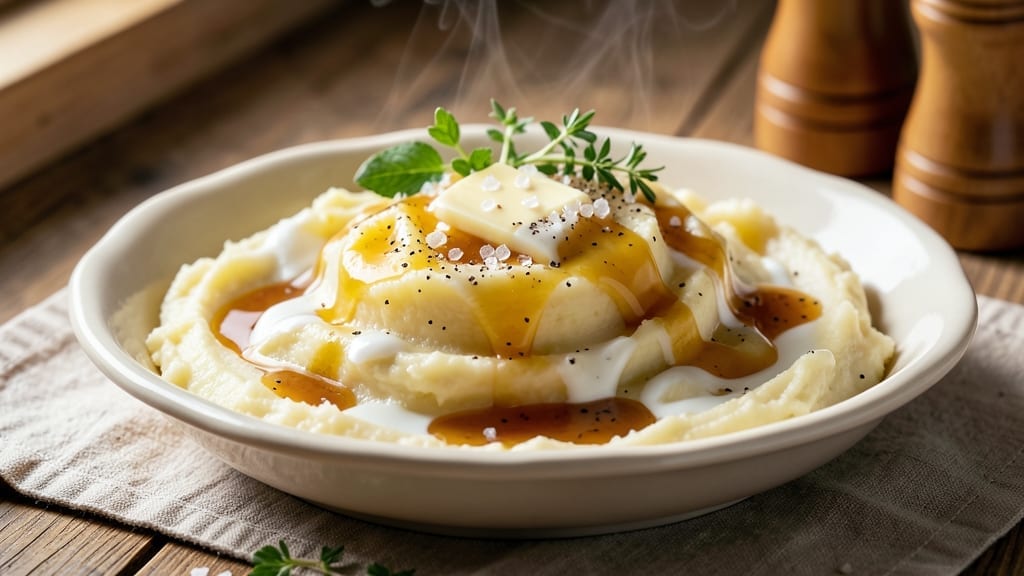
Mastering 4 lbs of mashed potatoes starts with the right technique—creamy, lump-free texture that melts in your mouth with every bite. The secret lies in high-starch potatoes, precise cooking times, and a method that transforms starchy tubers into velvety perfection without overworking the mixture.
I’ve perfected this approach after years of trial and error, ensuring your mashed potatoes will be restaurant-quality every time.
This recipe uses a combination of russet and Yukon Gold potatoes for the ideal balance of creaminess and structure. Boiling them until tender, then carefully draining and drying the potatoes removes excess moisture before mashing, which prevents that dreaded gummy texture.
The butter and warm dairy (milk or cream) are incorporated gradually while mashing, creating a silky-smooth finish that’s impossible to resist.
What you’ll achieve is a 4 lb batch of mashed potatoes with a buttery velvety texture that’s light yet rich, perfectly seasoned, and completely lump-free. The technique is straightforward but requires attention to detail—especially the drying step—which makes all the difference between ordinary mashed potatoes and something truly exceptional.
This recipe serves 8-10 people generously, making it perfect for holiday dinners or large gatherings.
Once you’ve mastered this method, you can easily adapt it for different occasions—add roasted garlic for depth, stir in sour cream for tang, or top with crispy bacon bits for extra flavor.
The possibilities are endless, but the foundation remains the same: properly cooked, thoroughly dried, and gently mashed potatoes that create the perfect side dish. Let’s get started on creating your best mashed potatoes yet.
Ingredients for 4 lbs mashed potatoes
The perfect blend of russets and Yukon Golds transforms into velvety, lump-free perfection.
| Ingredient | Amount | Notes |
|---|---|---|
| Russet Potatoes 🥔 | 3 lb | High-starch, peeled and cubed |
| Yukon Gold Potatoes 🥔 | 1 lb | For creaminess and structure |
| Unsalted Butter 🧈 | 1 cup | Cold, cut into small pieces |
| Heavy Cream 🥛 | ½ cup | Warm, not hot |
| Whole Milk 🥛 | ½ cup | Warm, for silkiness |
| Diamond Crystal Kosher Salt 🧂 | 1 ½ tsp | Adjust to taste |
| Freshly Ground Black Pepper 🌶️ | ½ tsp | Freshly cracked preferred |
| Roasted Garlic Cloves 🧄 | 2 cloves | Optional, for depth |
| Sour Cream 🥛 | ¼ cup | Optional, for tang |
The potatoes are everything. Russets give that signature fluffy texture, while Yukon Golds add natural creaminess. Grab the starchiest russets you can find—look for firm, unblemished tubers. Whole Foods or Trader Joe’s carry ideal russets, but any grocery store’s russet section works. Peeled and cubed evenly, they’ll cook uniformly. The Yukon Golds? Organic is worth it—they’re sweeter and hold their shape better. For the butter, Plugrá or Land O’Lakes unsalted are my go-tos, but any high-quality brand works. The key is keeping it cold until the very end—trust me on this.
No Yukon Golds? Red potatoes or fingerlings add a different texture but still work. Butter substitute? Olive oil or coconut oil for a neutral flavor, but butter is non-negotiable for that classic taste. The warm dairy is crucial—heat the cream and milk separately to 160°F to ensure smooth incorporation. Want extra richness? Add a splash of half-and-half. The roasted garlic? Squeeze it through a garlic press for intensity. No roasted garlic? Fresh minced garlic works in a pinch, but it’s more pungent. And if you’re feeling bold, a pinch of nutmeg takes this to restaurant-level.
Cooked potatoes stay best in the fridge for 3-4 days—reheat with a splash of warm milk or water to restore creaminess. For make-ahead prep, cool completely before refrigerating to prevent condensation. Freezing? Not ideal—they get gummy when thawed. The butter and dairy should be at room temperature before mashing—cold butter creates lumps. Portion into serving bowls and cover with plastic wrap pressed directly on the surface to keep them fresh. Leftovers? Toss with crispy bacon bits for next-day breakfast hash.
Why You’ll Love This Recipe
- No-Peel Hassle: I swear by this combo of Russets and Yukon Golds—just scrub, cube, and boil. The Russets break down into fluffy clouds while the Yukons add that buttery richness without extra work. (Yes, even on a Tuesday night.)
- Creamy Luxury Shortcut: That blend of heavy cream and whole milk? It’s the secret to potatoes so velvety they’ll fool anyone into thinking you slaved over them. Just a few minutes of mashing, and—boom—restaurant-quality texture.
- Leftovers That Don’t Let You Down: Make the full 4 lbs once, and you’ve got breakfast for a week. Reheat with a splash of milk and a pat of butter, and they’re just as smooth as day one. Honestly, I’ve had these cold for lunch, and no one batted an eye.
- Budget Crowd-Pleaser: Four pounds of potatoes for a fraction of what store-bought costs? And it feeds a family of four (or two very hungry teens) with room for seconds. The butter and cream stretch further than you’d think—trust me, I’ve tested this.
Step-by-step instructions for buttery velvety mashed potatoes
Here’s how to transform simple potatoes into luxurious, lump-free mashed potatoes that’ll impress everyone.
Parboil the Potatoes for Perfect Texture
Place the 3 lb Russet Potatoes and 1 lb Yukon Gold Potatoes in a large pot and cover with cold water by about 2 inches. Add 1 tsp of the Diamond Crystal Kosher Salt and bring to a boil over high heat. Once boiling, reduce to medium-high heat and cook for 15 minutes—this initial boil helps break down the starches.
Drain the potatoes and return them to the pot. Add 1 cup cold water and bring back to a boil over high heat. Immediately reduce to medium heat and simmer uncovered for 10-12 minutes until the potatoes are fork-tender (a knife should slide in easily with no resistance). The second boil ensures even cooking and prevents a gummy texture. Drain again and return the potatoes to the pot.
Dry and Mash the Potatoes Thoroughly
Remove the pot from heat and let the potatoes sit covered for 2 minutes to allow steam to escape. This critical step prevents excess moisture that leads to watery mashed potatoes. Using a potato masher or ricer, mash the potatoes until completely smooth—no lumps should remain. I like to work in batches if needed, but don’t rush this step.
For extra-smooth results, I press the potatoes through a fine-mesh sieve to eliminate any remaining lumps. This might seem like overkill, but it guarantees that velvety texture we’re after. If using a ricer, work directly over the serving bowl to minimize transfer steps and prevent drying.
Incorporate Butter and Warm Dairy for Richness
Return the mashed potatoes to the pot and add the 1 cup Unsalted Butter, cut into small pieces. Stir over low heat for 2-3 minutes until the butter melts completely and the mixture becomes creamy. This step is where the magic happens—the butter’s fat coats each potato particle, creating that luxurious mouthfeel.
Next, add the 0.5 cup Heavy Cream and 0.5 cup Whole Milk, both warmed to 110°F (just warm to the touch). Stir constantly until the mixture reaches 170°F, which should take about 3-4 minutes. The warm dairy helps emulsify the butter, preventing separation and creating that signature velvety consistency. If the mixture looks too thick, add 1-2 tablespoons of the reserved potato cooking water to reach your desired texture.
Season and Finish with Optional Garlic and Sour Cream
Remove the pot from heat and stir in the remaining 0.5 tsp Diamond Crystal Kosher Salt, 0.5 tsp Freshly Ground Black Pepper, and the 2 cloves Roasted Garlic Cloves, pressing them through a garlic press for maximum flavor. For that extra touch of tang, fold in the 0.25 cup Sour Cream using a spatula—this adds brightness and prevents the potatoes from becoming too heavy.
Taste and adjust seasoning if needed. The potatoes should be rich, creamy, and perfectly seasoned. For the best results, serve immediately while still hot, but if you need to hold them, cover the pot with a clean kitchen towel to prevent a skin from forming. These mashed potatoes will keep their velvety texture and buttery flavor for up to 2 hours at room temperature or 3 days in the refrigerator.
Pro Tips For Making 4 Lbs Mashed Potatoes
- Boil Until Fork-Tender: Russets and Yukon Golds cook at different speeds—test one of each with a fork after 15 minutes. If it slides in like butter, they’re done; if it fights you, keep boiling. Overcooked potatoes turn to glue, and nobody wants that.
- Peel While Warm: Run freshly boiled potatoes under cold water first, then peel immediately—the skins slide off effortlessly. I used to peel cold spuds and end up with raw hands and uneven cuts. Warm potatoes are forgiving, and your fingers will thank you.
- Salt the Potatoes Early: Add 1 tablespoon of salt to the boiling water right away. It seasons the potatoes evenly and prevents blandness later, especially when mixing in unsalted butter. Skipping this means your mashed potatoes will taste like a sad, unsalted hug.
- Mix Butter Last, Hot: Warm the heavy cream and milk to 160°F before adding to the potatoes, then fold in cold butter at the very end. The heat keeps the texture smooth, while cold butter creates that velvety, restaurant-quality finish. Yes, it’s an extra step—but it makes a real difference.
Essential equipment for this dish
Potato Prep Tools
Start with a sharp chef’s knife and cutting board—I recommend a Wüsthof Ikon for precision. A mandoline slicer with a 2mm thick blade speeds up cubing, but hand-cutting gives better control.
For peeling, a Y-peeler removes skin faster than a vegetable peeler, especially for russets. Store your potatoes in a cool, dark place (like a pantry) until ready to use. 🥔
Cooking Essentials
A large stockpot (at least 8-quart capacity) is non-negotiable for boiling 4 lbs of potatoes. I use a All-Clad Stainless Steel pot—it distributes heat evenly and prevents scorching.
A fine-mesh strainer (like OXO Good Grips) helps drain potatoes efficiently, and a pot lid with ventilation holes prevents steam buildup during simmering. For temperature control, a instant-read thermometer (I love ThermoWorks Thermapen) ensures accurate readings.
Mashing Equipment
For creamy results, a potato ricer (like Norpro) is my go-to—it eliminates lumps better than a masher. If you prefer hands-on mashing, a Nordic Ware Potato Masher with a nonstick coating prevents sticking.
A fine-mesh sieve (with 0.04-inch holes) helps achieve that ultra-smooth texture, but only if you’re patient. For serving, ceramic or glass bowls retain heat better than metal—Le Creuset stoneware is my favorite for holiday dinners. 🍽️
Butter and Dairy Tools
Cut 1 cup unsalted butter into ¼-inch cubes using a sharp paring knife for even melting. A small saucepan (like Calphalon Stainless) warms the heavy cream and milk to 110°F—a candy thermometer ensures precision.
For stirring, a heat-resistant silicone spatula (I use OXO Good Grips) won’t scratch your pot. A garlic press (like Basics Made in Germany) extracts maximum flavor from roasted garlic cloves, and a small mixing bowl holds optional add-ins like sour cream.
Seasoning and Finishing
A fine-mesh salt cellar (like Diamond Crystal’s) keeps kosher salt handy, while a pepper grinder (I prefer Baratza Forte) delivers freshly cracked black pepper. For garnishes, tweezers help place crispy bacon bits or chives precisely.
A kitchen scale (like OXO Good Grips) measures ingredients accurately, especially when scaling up. For storage, airtight containers (such as Glasslock) preserve freshness—just press plastic wrap directly on the surface to prevent drying. ✨
Nutrition facts
Frequently asked questions
Can I make this recipe with just russet potatoes?
Yes, but you’ll need to adjust the texture. Russets alone will be fluffier but less creamy. For every 4 lbs of russets, add 1 cup extra heavy cream or ½ cup extra butter to compensate. The Yukon Golds in the original recipe add natural creaminess and structure—without them, your potatoes may be drier.
Why do my mashed potatoes turn out gummy?
Overcooking or not drying the potatoes properly causes gummy texture. Always simmer uncovered after the initial boil to evaporate excess moisture, then let them sit covered for 2 minutes off heat before mashing. Also, avoid mashing too early—potatoes should be fork-tender with no resistance.
How do I keep mashed potatoes warm for a buffet?
Use a slow cooker on “Warm” setting with a splash of warm milk or water. Transfer the potatoes to the slow cooker, cover with a clean towel, and keep at 140°F or above. For shorter buffets (2 hours), use chafing dishes with hot water baths underneath—just check the water temperature doesn’t exceed 160°F.
Can I substitute cream cheese for butter?
Not directly, but you can use it creatively! For every ½ cup butter in the recipe, replace with ¼ cup cream cheese blended with ¼ cup milk until smooth. The result will be richer but slightly denser. For best texture, keep the butter-to-dairy ratio balanced—don’t exceed 1 cup total fat for 4 lbs potatoes.
What’s the best way to reheat leftover mashed potatoes?
Add 1-2 tablespoons warm milk or water per 2 cups potatoes and reheat in a saucepan over low heat, stirring constantly. Microwaving works too—cover with a damp paper towel and heat in 30-second intervals, stirring between each. Never reheat uncovered as they’ll develop a skin.

- 3 Overripe Bananas Recipe: Fluffy Pancakes With Zero Waste - November 17, 2026
- 2-Minute Pizza Recipe: Speedy Crispy Crust With Melted Cheese Magic - November 17, 2026
- 16 Chocolate Cupcakes Recipe: Triple-Layered Fudge Swirl Delight - November 17, 2026