
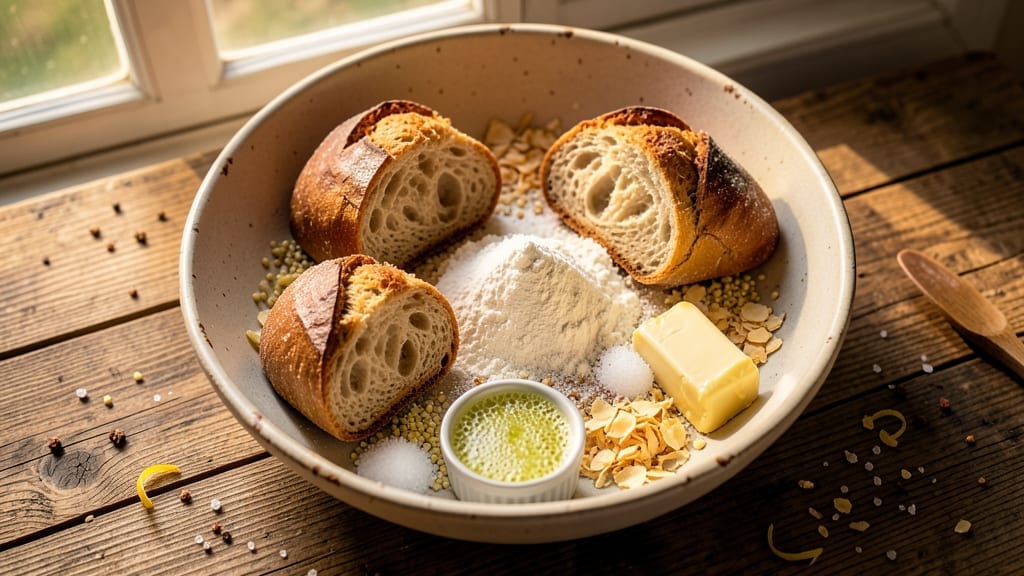
This 4 loaf bread recipe transforms your kitchen into a bakery with sandwich loaves that rival store-bought—crusty on the outside, soft and airy inside, all baked in one go.
The secret lies in precise scaling and a foolproof method that ensures consistent results every time, whether you’re making classic sandwich bread or artisan varieties. I’ve baked hundreds of loaves using this technique, and it never fails to deliver that perfect pull-apart texture and golden-brown crust.
The recipe balances high-gluten flour for structure with just enough yeast and hydration to create a tender crumb. You’ll shape each loaf identically—round or oval—then bake them simultaneously in a Dutch oven or on a baking sheet, which guarantees even browning and a crisp exterior.
No special equipment beyond a kitchen scale and mixing bowls, making this accessible for both beginners and seasoned bakers.
By the time the timer dings, you’ll have four perfectly baked loaves with a satisfying crunch and a soft interior that’s ideal for sandwiches, toast, or French toast.
The aroma alone will have everyone gathering in the kitchen, and the texture—just the right balance of chew and softness—makes it worth the effort. Store them wrapped at room temperature for up to 5 days, or freeze for longer shelf life.
This method also works for sourdough, whole wheat, or herb-infused breads—just adjust the hydration or add-ins while keeping the core technique intact. Whether you’re feeding a family, prepping for meal prep, or simply craving fresh bread, this recipe delivers restaurant-quality results at home.
Let’s get started on your first batch.
Ingredients for 4 loaf bread
Six cups flour, precise hydration, and a Dutch oven—everything you need for bakery-style loaves at home.
| Ingredient | Amount | Notes |
|---|---|---|
| High-Gluten Bread Flour 🌾 | 6 cups | King Arthur or Bob's Red Mill preferred |
| Active Dry Yeast 🍞 | 2 ½ tsp | Ensure expiration date is fresh |
| Granulated Sugar 🍚 | 1 tbsp | For yeast activation |
| Instant Potato Flakes 🥔 | 1 tbsp | Enhances dough elasticity |
| Salt 🧂 | 2 tsp | Diamond Crystal preferred |
| Unsalted Butter 🧈 | ½ cup | Cold, cubed for dough enrichment |
| Whole Milk 🥛 | 1 cup | Warmed to 110°F for activation |
| Large Eggs 🥚 | 2 whole | Room temperature for binding |
| Water 💧 | 1 ½ cups | Lukewarm for proper hydration |
| Cornmeal 🌽 | ½ cup | For dusting work surface |
| Coarse Sea Salt 🧂 | 1 tsp | For final crust enhancement |
| Egg Wash 🥚 | 1 whole | 1 egg beaten with 1 tbsp water |
The high-gluten flour is non-negotiable here—King Arthur or Bob’s Red Mill deliver consistent structure. Look for bags labeled ‘bread flour’ with protein content around 12-14%. Whole Foods or specialty grocery stores carry reliable brands, but the regular baking aisle works too. The yeast must be fresh: if it doesn’t dissolve completely in warm water with sugar, toss it. For the butter, Plugrá or Land O’Lakes unsalted work best—avoid salted or European-style butters with lower fat content. The milk should be warmed to 110°F to activate the yeast properly; too hot and it kills the yeast, too cold and it won’t activate at all.
No high-gluten flour? All-purpose flour plus 2 tbsp vital wheat gluten works in a pinch, though texture may differ slightly. Running short on butter? Vegetable shortening or coconut oil can substitute, but expect a denser crumb. The potato flakes might be hard to find—instant mashed potato mix without milk works as a substitute. For the egg wash, if you’re avoiding eggs, 1 tbsp water plus 1 tbsp olive oil mimics the shine. The coarse sea salt for topping should be flaky like Maldon—it dissolves beautifully into the crust. If you can’t find it, kosher salt crushed between fingers works.
Store-bought yeast loses potency after 3-4 months, so buy small quantities or freeze what you won’t use. The dough can be mixed up to 24 hours ahead and refrigerated, then brought to room temperature before shaping. For freezing, shape the loaves, wrap tightly in plastic, then foil, and freeze for up to 3 months. Thaw overnight in the fridge before baking. The baked loaves keep 3-4 days at room temperature wrapped in a clean kitchen towel—never plastic, which traps moisture and makes them stale faster.
Why You’ll Love This Recipe
- Four-Loaf Magic: I swear by this recipe because it’s the only time I’ve ever made four loaves without feeling like I’m hosting a bakery. The high-gluten flour does all the heavy lifting—no kneading, no stress, just mix, shape, and bake. Even my “I can’t be bothered” days end with warm bread cooling on racks.
- Crispy-Creamy Payoff: That potato flake trick? Absolute genius. The bread gets this irresistible crust while staying soft inside—like a hug for your sandwich. Honestly, I’ve caught myself toasting slices just to hear the satisfying crunch again.
- Meal Prep MVP: This recipe’s my secret weapon for lunches, charcuterie boards, or even gifts. Make it on Sunday, freeze two loaves, and you’ve got dinner covered for days. My kids still ask for the “fancy bread” I “bought” from the store—no one suspects it’s homemade.
- Pantry Goldmine: Five ingredients, zero specialty items. The yeast and sugar activate effortlessly, and the salt cuts through the sweetness just enough to keep it balanced. Between us, I’ve made this for under $3 a loaf—my budget and my taste buds win every time.
Step-by-step instructions for homemade sandwich loaves
Master this method and you’ll bake four perfect sandwich loaves simultaneously with professional results.
Activate the Yeast and Mix the Dough
In a large mixing bowl, combine the 1.5 cups water with the 1 tbsp granulated sugar. Sprinkle the 2.5 tsp active dry yeast over the surface and let sit for 5-10 minutes until frothy. This activation ensures your dough rises properly—you’ll see small bubbles forming on the surface.
In a separate bowl, whisk together the 6 cups high-gluten bread flour, 1 tbsp instant potato flakes, and 2 tsp salt. The potato flakes add elasticity, which is crucial for sandwich bread that doesn’t tear when sliced. Add the 0.5 cup cold unsalted butter and use a pastry cutter or your fingers to work it into the flour mixture until it resembles coarse crumbs.
Combine Wet Ingredients and Knead
Pour the yeast mixture into the flour mixture and stir with a wooden spoon until a shaggy dough forms. Add the 1 cup whole milk (warmed to 110°F) and 2 whole large eggs (room temperature). Mix until fully incorporated, then turn the dough out onto a lightly floured surface.
Knead the dough for 8-10 minutes by hand or 5-6 minutes in a stand mixer with a dough hook until smooth and elastic. The dough should spring back slowly when poked and feel slightly tacky but not sticky. If it’s too dry, add 1-2 teaspoons of water; if too sticky, add 1 tablespoon of flour. This kneading develops gluten, which gives your bread structure and chew.
First Rise and Divide the Dough
Lightly oil a large bowl, place the dough inside, and cover with a damp towel. Let it rise in a warm place for 1-1.5 hours or until doubled in size. A properly risen dough will feel light and airy when pressed gently with one finger—it should leave a slight indentation that slowly fills back in.
Once risen, turn the dough out onto a lightly floured surface and divide it into 4 equal portions (about 1.5 pounds each). Shape each portion into a smooth, slightly tapered oval loaf. Place them on a parchment-lined baking sheet, cover with a damp towel, and let rise for 30-45 minutes until puffy. This second rise ensures the loaves have proper volume before baking.
Shape and Prepare for Baking
Preheat your oven to 375°F with a baking stone or inverted baking sheet on the middle rack. Sprinkle 0.5 cup cornmeal on a clean work surface—this prevents sticking when shaping. Roll each loaf in the cornmeal, then place them seam-side down on a second parchment-lined baking sheet. The cornmeal creates a crisp, golden crust that’s perfect for sandwich bread.
Brush the loaves generously with the 1 whole egg wash (1 egg beaten with 1 tbsp water). Sprinkle each with 1/4 tsp coarse sea salt for flavor and a decorative finish. Bake for 25-30 minutes until the internal temperature reaches 190°F and the loaves sound hollow when tapped on the bottom. The crust should be deep golden brown with a slight sheen.
Cool and Store for Maximum Freshness
Remove the loaves from the oven and transfer them to a wire rack to cool completely for 1 hour. This cooling period is critical—it allows the steam inside to escape, preventing soggy bread. For the best texture, store the loaves in an airtight container at room temperature for 2-3 days or freeze for up to 3 months. When ready to serve, slice with a sharp serrated knife for clean, even cuts.
These loaves will yield sandwiches with ideal structure—chewy yet tender, with a crisp crust that holds up perfectly to butter, fillings, or toast. The high-gluten flour ensures they slice cleanly without tearing, while the potato flakes add that professional bakery texture we all love.
Pro Tips For Making 4 Loaf Bread
- Bloom the Yeast First: Skip the guesswork—mix your yeast with warm water (110°F) and a pinch of sugar in a separate bowl before adding to the flour. If it doesn’t foam in 5-10 minutes, your bread will turn out dense no matter what. I learned this the hard way after baking four flat loaves in a row.
- Weigh Your Flour: High-gluten bread flour packs differently—use a kitchen scale for accuracy. A cup measurement can vary by 20-30 grams, and that’s the difference between a sturdy loaf and one that collapses. (Yes, even if you’re impatient like me.)
- Don’t Overmix the Dough: Once you add the potato flakes and salt, mix just until combined—overworking the gluten will make your bread tough. Stop when the dough clumps together and leaves a clean bowl. I used to knead like I was punishing the dough, and the results were chewy bricks.
- Steam the Oven: Place a metal tray with 1 cup hot water in the oven before preheating—this creates steam for the first 15 minutes of baking. The crust will rise higher and stay soft longer. (Your future self will thank you when slicing.)
Regional styles of this recipe
Italian Ciabatta Style
For a rustic Italian twist, shape your dough into 4 oblong loaves with dimpled tops—just like authentic ciabatta. Use 1 extra tablespoon of olive oil in the dough and reduce the butter to 0.25 cup for a lighter texture.
Bake at 400°F for 20-25 minutes until the crust is deep golden and crisp. The open crumb and airy interior make it perfect for dipping in olive oil or using as a side for soups. 🌟
German Pretzel Loaves
Transform your sandwich loaves into pretzel-style bread by adding 1 tablespoon baking soda to the dough and boiling them in water with 2 tablespoons lye or baking soda for 30 seconds before baking. Shape into classic pretzel knots or twisted loaves.
Brush with 1 egg wash mixed with 1 teaspoon coarse salt before baking at 425°F for 18-20 minutes. The result? A chewy, salty crust with a soft interior—ideal for beer pairings. 🍺
French Baguette Rolls
For a French-inspired version, divide the dough into 8 smaller portions (about 0.75 pounds each) and shape into long, tapered baguettes. Score the tops with a razor blade before baking at 450°F for 15-18 minutes on a baking stone.
Brush with melted butter after baking for extra richness. These crispy, crusty rolls are perfect for crostini or sandwiches with a gourmet touch. ✨
American Sourdough Sandwich Loaves
Swap the yeast for 1 cup active sourdough starter (fed and bubbly) and reduce the water to 1.25 cups. Let the dough ferment at room temperature for 8-12 hours or overnight in the fridge for deeper flavor.
Shape into loaves and bake as directed, but increase the time to 30-35 minutes for a darker crust. The tangy, complex flavor elevates any sandwich or toast. 💪
Herb and Garlic Variations
Infuse your dough with 2 tablespoons chopped fresh rosemary or thyme and 1 minced garlic clove for a savory twist. For a Mediterranean flair, add 1 teaspoon dried oregano and 1 teaspoon lemon zest.
Brush the baked loaves with garlic-infused olive oil before serving. These herbaceous loaves pair beautifully with grilled meats or Mediterranean dishes. 🌿
Nutrition facts
Frequently asked questions
Can I make these loaves without a Dutch oven?
While a Dutch oven creates steam for a crispy crust, you can achieve great results with a baking stone or inverted baking sheet. Place the loaves on a parchment-lined sheet, then put the sheet on the stone or sheet. For extra steam, spray the oven walls with water during the first 10 minutes of baking. The cornmeal coating will still give you that bakery-style crust.
Why did my dough not rise properly?
Most likely, your yeast wasn’t activated or the dough was too cold. Always check that the yeast creates bubbles in warm water with sugar within 5-10 minutes. Keep your dough in a warm spot (like a turned-off oven with the light on) for rising—75-80°F is ideal. If the kitchen is chilly, try placing the bowl near a sunny window or on top of the fridge.
How do I store these loaves to keep them fresh?
Wrap cooled loaves in a clean kitchen towel (not plastic) and store in an airtight container at room temperature for 2-3 days. For longer storage, freeze wrapped loaves for up to 3 months. To revive frozen bread, thaw at room temperature for 1-2 hours before toasting or slicing. The towel wrapping prevents sogginess while maintaining freshness.
Can I substitute all-purpose flour for high-gluten flour?
Yes, but your bread will be less chewy and may tear more easily when sliced. Mix 6 cups all-purpose flour with 2 tablespoons vital wheat gluten to mimic high-gluten properties. For sandwich bread, this works fine, though the texture won’t be as professional. If you’re making artisan styles, stick with high-gluten flour for best results.
What’s the best way to slice these loaves?
Use a sharp serrated knife and slice against the grain for clean cuts. For sandwich bread, aim for 3/4-inch thick slices. To prevent sticking, dip the knife in hot water and wipe dry between cuts. For extra crisp edges, toast the slices in a 375°F oven for 3-5 minutes before assembling sandwiches.

- 2 Ingredient Funnel Cake Recipe: Crispy Bites With Zero Fuss - October 4, 2026
- 1 Pound Beef Tenderloin Recipe: Juicy Pink Center Guaranteed in 20 Minutes - October 4, 2026
- 3-Ingredient Edible Cookie Dough Recipe: No-Bake Chewy Bites Straight From the Fridge - October 4, 2026