
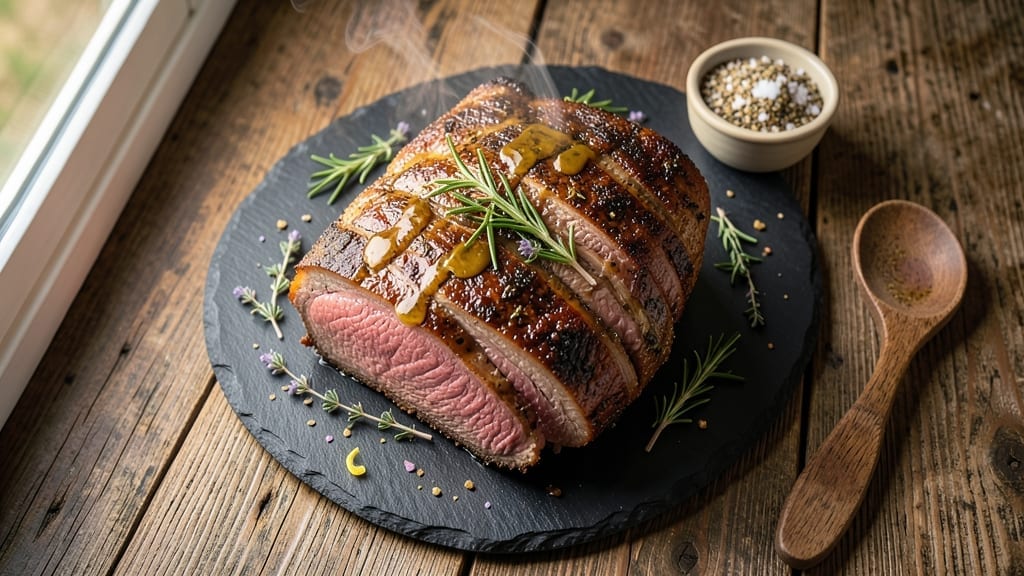
A 4-rib prime rib roast cooked to perfection delivers melt-in-your-mouth tenderness with a herb-crusted exterior that locks in juices. This recipe transforms a holiday centerpiece into a foolproof weeknight masterpiece—no special equipment required. The secret lies in precise temperature control and a resting period that ensures every slice stays juicy.
What sets this apart is the herb crust, a blend of coarse salt, black pepper, and fresh rosemary that creates a flavorful bark while keeping the interior rose-colored and tender.
We’ll guide you through the reverse sear method, the gold standard for achieving a perfect pink center every time—no guesswork, no dry meat.
By the time you carve into this roast, you’ll have a showstopping main course with a crisp exterior and juicy interior, ready to impress even the most discerning guests. The aroma alone will have everyone anticipating dinner, while the rich, beefy flavor makes it worth every effort.
Serve with classic sides like roasted garlic mashed potatoes or a fresh garden salad to complete the meal. Let’s get started on your prime rib mastery—this is the recipe that turns good into legendary.
Ingredients for 4 rib prime rib roast
Six ingredients transform prime rib into a showstopping centerpiece—juicy pink perfection with a crisp herb crust.
| Ingredient | Amount | Notes |
|---|---|---|
| 4-Rib Prime Rib Roast 🥩 | 4 lb | Bone-in, center-cut preferred |
| Coarse Kosher Salt 🧂 | ½ cup | Diamond Crystal preferred |
| Freshly Ground Black Pepper 🌶️ | 2 tbsp | Freshly cracked for intensity |
| Fresh Rosemary Sprigs 🌿 | ¼ cup | Woody stems removed |
| Fresh Thyme Sprigs 🌿 | ¼ cup | Leaves only, finely chopped |
| Extra-Virgin Olive Oil 🫒 | 2 tbsp | High-quality, fruity variety |
| Yellow Onion 🧅 | 1 whole | Quartered, for aromatics |
| Garlic Cloves 🧄 | 4 cloves | Smashed, skin-on for flavor |
| Unsalted Butter 🧈 | ½ cup | Cold, cubed for basting |
| Beef Tallow or Duck Fat 🧈 | 2 tbsp | For extra crisp crust |
| Fresh Parsley 🌿 | ⅛ cup | Chopped, for garnish |
| Red Wine 🍷 | ½ cup | Bold Cabernet Sauvignon |
| Beef Bone Broth 🍲 | ½ cup | Homemade or high-quality |
The prime rib is non-negotiable here—4 ribs, bone-in, center-cut is the gold standard. Costco or local butcher shops are your best bets for quality; avoid pre-trimmed roasts that lose precious flavor. Look for bright red color with good marbling—USDA Choice or Prime if you can afford it. The herb crust relies on fresh rosemary and thyme (dried works in a pinch but lacks depth), so grab them from the grocery store’s produce section. For the salt, Diamond Crystal flakes more dramatically than Morton’s—trust me, it makes a difference. The olive oil should be fruity and peppery, not bland; California Extra Virgin brands are my go-to.
No fresh rosemary? Dried at half the amount gets you close, but the texture suffers. Running low on red wine? Beef broth with a splash of balsamic works surprisingly well. The butter must be cold—take it straight from the fridge—or your crust won’t crisp. For the aromatics, yellow onion and garlic are non-negotiable, but if you’re in a rush, 1 tbsp onion powder and 1 tsp garlic powder will save time. The beef tallow or duck fat is optional but adds an incredible crispness—substitute with extra olive oil if you’re avoiding animal fats. And if you’re feeling fancy, truffle oil in the basting butter takes this to next-level restaurant quality.
Prep the roast 12 hours ahead for best results—pat dry and refrigerate uncovered to form a crust. The herb crust keeps for 3 days in the fridge if stored in an airtight container, but fresh is always better. Leftover prime rib reheats beautifully—wrap slices in foil and warm in a 200°F oven for 15 minutes. For leftovers, store in the fridge for 3-4 days or freeze for up to 3 months. The crust loses crispness when reheated, so save that for the first serving. Garnish with fresh parsley right before serving—it brightens the dish and looks stunning in photos. Portion into individual slices for easy serving.
Why You’ll Love This Recipe
- I’ll be real: this isn’t a Sunday splurge. It’s the roast I pull out when I’m exhausted but still want to impress. Four ribs feed a crowd, cooks in one pan, and tastes like you actually know what you’re doing—even if you’re just heating up takeout the rest of the week.
- Two-Handed Prep: Honestly, this roast is that easy. You’re basically just rubbing salt, pepper, and herbs onto a hunk of meat—no chopping, no sauces, no stress. The hardest part is deciding whether to sear it first (worth it) or skip straight to the oven.
- Rosemary-Pepper Magic: That crispy crust? The rosemary’s piney brightness cutting through the rich fat? The thyme adding just enough earthiness? It’s the kind of flavor combo that makes you want to close your eyes while you eat—no fancy garnish needed.
- Leftovers for Days: Between us, this roast always yields seconds. Slice the first night for dinner, then shred the rest for breakfast hash or sandwiches all week. My freezer’s full of it—because why buy lunch when you can reheat prime rib?
Step-by-step instructions for herb-crusted prime rib roast
Here’s how to achieve a restaurant-quality prime rib with a perfect pink center and flavorful herb crust.
Prepare the Herb Crust and Season the Roast
In a food processor, pulse the 0.25 cup fresh rosemary sprigs and 0.25 cup fresh thyme sprigs until finely chopped but not pasty. Transfer to a small bowl and mix with the 0.5 cup coarse kosher salt, 2 tbsp freshly ground black pepper, and 2 tbsp extra-virgin olive oil until fully combined. This creates your flavorful crust.
Remove the 4 lb 4-rib prime rib roast from the refrigerator and pat it completely dry with paper towels. I can’t emphasize enough how important this drying step is—it ensures a crispy exterior. Spread the herb mixture evenly over the entire surface, pressing it gently into the meat so it adheres well. Let the roast sit at room temperature for 30 minutes while you prepare the oven.
Sear the Roast for Maximum Flavor
Preheat your oven to 450°F. Place a heavy oven-safe roasting pan on the stovetop over medium-high heat. Add the 0.5 cup unsalted butter and 2 tbsp beef tallow or duck fat to the pan and let it melt completely, about 2 minutes. This high-fat mixture will create a beautiful crust.
Carefully place the roast in the hot pan, fat-side down. Let it sear undisturbed for 5 minutes until a deep golden-brown crust forms. Flip the roast and sear the other side for another 5 minutes. This initial searing locks in juices and builds flavor. Transfer the roast to the preheated oven.
Roast to Perfect Medium-Rare
Roast the prime rib for 20 minutes at 450°F, then reduce the oven temperature to 325°F. This initial high heat helps develop the crust, while the lower temperature ensures even cooking throughout. Continue roasting for 1 hour 15 minutes or until the internal temperature reaches 125°F for medium-rare.
Here’s the thing—don’t rely solely on time. Use a meat thermometer inserted into the thickest part of the roast (not touching bone) to check the temperature. The roast will continue rising 5-10°F after removal, so pull it out when it hits 125°F. The exterior should be beautifully browned with a crispy crust that gives way slightly when pressed.
Create the Red Wine Reduction
While the roast rests, place the roasting pan on the stovetop over medium heat. Add the 1 whole yellow onion, 4 cloves garlic cloves, and any accumulated juices from the pan. Sauté for 3 minutes until the onions soften. Pour in the 0.5 cup red wine and let it simmer for 5 minutes until reduced by half.
Stir in the 0.5 cup beef bone broth and simmer for another 3 minutes until the sauce thickens slightly. Remove from heat and let it cool for 2 minutes. This rich reduction will be perfect for basting your prime rib slices or serving as a sauce.
Rest and Slice for Maximum Juiciness
Transfer the roast to a cutting board and let it rest for 15 minutes before slicing. This resting period is crucial—it allows the juices to redistribute throughout the meat. I know it’s tempting to cut into it immediately, but trust me, this step makes all the difference in keeping your prime rib juicy and tender.
Slice the prime rib against the grain into ½-inch thick portions. Arrange the slices on a warm platter and spoon the red wine reduction over the top. Garnish with 0.125 cup chopped fresh parsley for a pop of color and freshness. Serve immediately with your favorite sides—mashed potatoes and roasted vegetables pair beautifully with this herb-crusted masterpiece.
Pro Tips For Making 4 Rib Prime Rib Roast
- SEAR HARD AND FAST: Get that pan screaming hot—think 450°F or higher—before laying the rib bone-side down first. I used to linger, and the crust never formed right; now I count to 20 seconds per side for that deep, caramelized bite. (Yes, even if you’re impatient like me.)
- SALT THE HERBS: Toss the rosemary and thyme sprigs in a generous pinch of kosher salt before tucking them into the roast’s crevices. This keeps them from floating away in the fat and ensures they stick—no more hunting for stray sprigs in the pan.
- DON’T CUT THE FAT CAP: Leave that thick layer of fat intact—it’s your built-in basting sauce. After searing, just score the top lightly (1/4-inch deep) so it renders slowly and bastes the meat as it roasts. I learned this the hard way when I trimmed it aggressively and ended up with dry edges.
- USE A THERMOMETER (YES, REALLY): Pull the roast at 115–120°F internal temp—not guesswork. It’ll rise to 130°F while resting, giving you that perfect medium-rare finish. I used to eyeball it and either overcook or undercook; now I set a timer for 10 minutes after hitting 115°F and walk away. (Your future self will thank you.)
Best sauces and condiments for this dish
Classic Horseradish Cream
This tangy, slightly spicy sauce is a must-have for prime rib—it cuts through the richness beautifully. Mix ½ cup sour cream, 2 tbsp prepared horseradish, 1 tbsp Dijon mustard, and 1 tsp Worcestershire sauce.
Adjust the horseradish to taste (I like it bold, but start with 1 tbsp if you’re sensitive to heat). Chill for 30 minutes before serving to let flavors meld. 💛
Red Wine Jus
Use the pan drippings from your roast to create a luxurious red wine jus. After resting the prime rib, place the roasting pan on the stovetop over medium heat. Deglaze with ½ cup dry red wine (like Cabernet Sauvignon) and scrape up all the browned bits.
Add ½ cup beef bone broth and simmer for 5-7 minutes until reduced by half. Strain for a silky texture, then drizzle over sliced prime rib. This sauce elevates every bite to restaurant quality.
Garlic-Herb Butter
For a simple yet elegant topping, mix ½ cup softened unsalted butter, 2 minced garlic cloves, 1 tbsp chopped fresh parsley, ½ tsp coarse salt, and ¼ tsp black pepper. Shape into a log, wrap in parchment paper, and chill until firm.
Slice and serve on top of each portion—it melts beautifully and adds a rich, herby finish. Perfect for those who love bold flavors without extra sauce.
Smoky Chipotle Aioli
Add a smoky kick with this vibrant aioli. Blend ½ cup mayonnaise, 1 tbsp chipotle pepper in adobo sauce, 1 tsp lime juice, ½ tsp smoked paprika, and 1 minced garlic clove until smooth.
Thin with 1-2 tsp water if needed. This sauce pairs exceptionally well with the herb crust and adds a modern twist to classic prime rib. Serve chilled for the best texture.
Classic Au Jus
A timeless choice, this au jus is made from the roast’s natural juices. After removing the prime rib, skim excess fat from the pan drippings, then deglaze with ½ cup red wine and ½ cup beef broth.
Simmer for 10 minutes until thickened slightly. Strain through a fine-mesh sieve for a silky finish. Serve warm with roasted potatoes or crusty bread for dipping. This sauce is the ultimate classic for prime rib lovers.
Nutrition facts
Frequently asked questions
Why is resting the prime rib so important?
Resting allows the meat’s juices to redistribute evenly after cooking, preventing them from running out when sliced. For a 4 lb roast, 15 minutes at room temperature keeps every bite juicy and tender. Skipping this step means dry, disappointing slices—don’t rush it!
Can I cook prime rib without a meat thermometer?
Yes, but it’s riskier! For medium-rare, aim for 1 hour 20 minutes total cook time after searing (including the 20 minutes at 450°F). Press the roast gently—the center should feel slightly springy but yield to gentle pressure. Still, a thermometer guarantees 125°F accuracy for perfect results.
How do I adjust cooking time for a larger roast?
Add 15-20 minutes per pound beyond 4 lbs at 325°F. For example, a 6 lb roast would need about 1 hour 45 minutes total. Always use a thermometer—thicker cuts need extra time. The herb crust may require 5-10 extra minutes at 450°F to crisp properly.
What’s the best way to reheat leftover prime rib?
Wrap slices in foil and warm in a 200°F oven for 15 minutes to preserve moisture. Avoid microwaving—it dries out the meat. For the crust, reheat only until warm (about 10 minutes) to maintain texture. Leftover prime rib reheats best within 3 days for optimal flavor.
Can I make this recipe with a bone-in or boneless roast?
This recipe is designed for bone-in prime rib—the bones add flavor and help retain moisture. Boneless versions cook faster and may dry out more easily. If using boneless, reduce cook time by 10-15 minutes and watch closely for 125°F internal temp. The herb crust works on both, but bone-in delivers superior texture.

- 3lb Prime Rib Roast Recipe: Juicy Pink Center Guaranteed in 3 Hours - October 31, 2026
- 5 Spice Cake Recipe: Warmly Spiced Layers With Crunchy Top - October 31, 2026
- 1950’s Macaroni and Cheese Recipe: Nostalgic Creamy Cheese Sauce with Buttery Noodles - October 31, 2026