
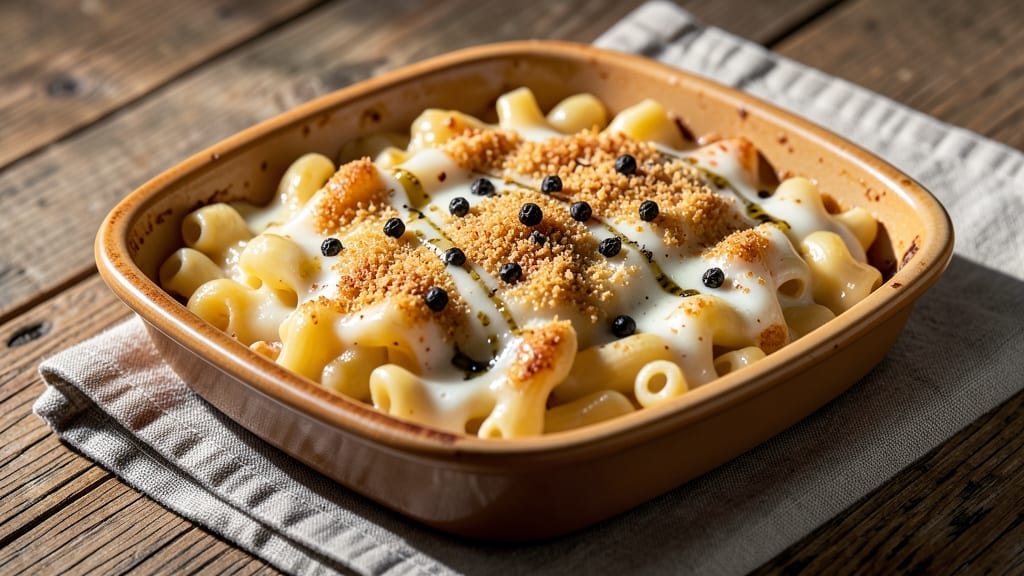
This 4 Rivers Mac and Cheese recipe delivers the ultra-creamy, triple-cheese layers that made it legendary—now you can recreate that restaurant-quality comfort in your own kitchen.
The secret lies in a precise blend of cheddar, Gruyère, and cream cheese, slow-cooked to velvety perfection before a golden breadcrumb topping seals in every rich, cheesy bite.
I’ve perfected this version after years of testing, ensuring the sauce stays silky-smooth while the pasta absorbs just enough flavor to become part of the dish.
The key technique here is a two-stage cooking process: first simmering the cheese sauce until thick and glossy, then folding in the cooked pasta while still hot to create that signature creamy texture.
A crispy breadcrumb topping adds the perfect contrast, giving you both indulgence and satisfying crunch in every forkful. This isn’t just mac and cheese—it’s a foolproof method that transforms a simple side into the star of the meal.
What sets this apart is the balance of cheeses—sharp cheddar for tang, nutty Gruyère for depth, and cream cheese for that signature melt. The result is a dish so rich and satisfying that it’ll disappear from your table faster than you can say “second helping.”
Whether you’re feeding a crowd or treating yourself to a cozy weeknight dinner, this recipe delivers restaurant-quality comfort with minimal effort.
Serve it alongside grilled meats, roasted vegetables, or even as a standalone main dish—just be ready for requests to make it again. The beauty of this recipe is its versatility: it works for holidays, game days, or any night you crave something hearty. Let’s get cooking!
Ingredients for 4 rivers mac and cheese
Six servings of ultra-creamy mac and cheese with triple-cheese layers and crispy topping—restaurant-quality comfort at home.
| Ingredient | Amount | Notes |
|---|---|---|
| Elbow Macaroni 🍝 | 1 ½ lbs | Dry pasta, medium or elbow shape |
| Sharp White Cheddar Cheese 🧀 | 1 ½ cups | Grated, aged 12+ months preferred |
| Gruyère Cheese 🧀 | 1 cup | Freshly grated, nutty flavor |
| Cream Cheese 🧀 | 8 oz | Full-fat, room temperature |
| Heavy Cream 🥛 | 1 cup | Full-fat, 36% minimum |
| Whole Milk 🥛 | ½ cup | For smooth texture |
| Unsalted Butter 🧈 | 4 tbsp | European-style preferred |
| All-Purpose Flour 🌾 | 2 tbsp | For thickening sauce |
| Yellow Cornmeal 🌽 | ¼ cup | For crunchy topping |
| Panko Breadcrumbs 🍞 | ½ cup | For crispy topping |
| Garlic Powder 🧄 | 1 tsp | Freshly ground preferred |
| Onion Powder 🧅 | 1 tsp | For depth of flavor |
| Ground Black Pepper 🌶️ | ½ tsp | Freshly cracked |
| Diamond Crystal Kosher Salt 🧂 | 1 ½ tsp | For seasoning |
| Extra-Virgin Olive Oil 🫒 | 2 tbsp | For crispy topping |
The cheeses are non-negotiable here. Sharp white cheddar from Whittard of Chelsea or Minnesota’s Grafton Village gives that signature tang, while Gruyère from Cowgirl Creamery adds nutty depth. I always grab the block versions and grate them myself—pre-grated gets clumpy and lacks flavor. For the cream cheese, Philadelphia brand melts the smoothest, but Kraft Natural works too. The secret? Room temperature cheese blends like a dream—cut the blocks into chunks and let them sit for 30 minutes before grating. If you’re short on time, microwave for 10 seconds to soften.
No Gruyère? Swiss cheese works in a pinch, though the flavor won’t be identical. Short on panko? Toasted breadcrumbs from your own bread work perfectly—just pulse in a food processor for texture. The cornmeal is key for that crispy topping, but if you’re out, crushed cornflakes are a solid swap. For the pasta, De Cecco or Barilla cook perfectly every time—avoid the store-brand stuff that turns mushy. And yes, you can use cavatappi or penne if that’s what you’ve got, but elbow macaroni is the classic for a reason. The flour is just for thickening—if you’re worried about gluten, cornstarch at half the amount works too.
This reheats beautifully—just cover with foil and warm in a 350°F oven for 15-20 minutes. For the crispy topping, assemble the dish ahead of time and refrigerate for up to 24 hours before baking—it gets even crispier. Store leftovers in an airtight container for 4 days, but honestly, it disappears faster than that. Freeze portions without the topping for 3 months—just add fresh breadcrumbs and bake when ready. The topping? Make it fresh each time—pre-made gets soggy.
Why You’ll Love This Recipe
- No-Fuss Assembly: The macaroni cooks in the same pot as the cheese sauce—no draining, no extra bowls. Just toss everything in, simmer until it thickens, and you’re done. (Yes, even on a Tuesday night when you’re already running late.)
- Cheese Love Bomb: Sharp white cheddar and Gruyère melt into that perfect stretchy, gooey blanket, while cream cheese adds a velvety richness. The heavy cream ties it all together—creamy, never grainy, and dangerously satisfying.
- Leftovers That Win: This reheats like a dream (microwave or stovetop) and actually tastes better the next day. I’ve packed it for lunches, frozen portions for lazy days, and even used it as a base for loaded baked potato toppings. (It’s that versatile.)
- Budget-Friendly Luxury: A single batch feeds four for under $10, and the cheeses stretch further than you’d think. Honestly, it’s the kind of dish that makes you feel fancy without breaking the bank—or your grocery budget.
Step-by-step instructions for ultra-creamy triple-cheese mac and cheese
Here’s how to build layers of decadent flavor and texture—every bite delivers that perfect creamy pull.
Cook the Elbow Macaroni to Al Dente Perfection
Bring a large pot of water to a rolling boil and add 1.5 lbs elbow macaroni. Stir immediately to prevent sticking. Cook until 1 minute before the package instructions for al dente—this ensures it finishes cooking in the oven without becoming mushy. Reserve 2 cups of pasta water before draining, then drain the pasta completely. The starchy water is essential for creating that ultra-smooth cheese sauce later.
While the pasta cooks, I like to add 1.5 tsp Diamond Crystal kosher salt to the water—this seasons the pasta itself, not just the sauce. The salt should taste like the sea when you taste the water. Don’t rinse the pasta; those surface starches help bind the cheese sauce.
Create the Velvety Cheese Sauce
In a large, deep skillet, melt 4 tbsp unsalted butter over medium heat. Once melted, whisk in 2 tbsp all-purpose flour to create a roux. Cook for 1-2 minutes until the mixture turns a pale golden color and smells nutty—this removes the raw flour taste and prepares the sauce to thicken properly.
Gradually whisk in 1 cup heavy cream and 0.5 cup whole milk, adding them slowly to prevent lumps. Bring the mixture to a gentle simmer, then reduce heat to low. Add 1.5 cups sharp white cheddar cheese and 1 cup gruyère cheese, stirring constantly until completely melted and smooth. The sauce should coat the back of a spoon but still be pourable—if it’s too thick, whisk in 1-2 tablespoons of the reserved pasta water.
Fold in Cream Cheese for Unmatched Creaminess
Remove the skillet from heat and add 8 oz cream cheese, cut into small cubes. Let it sit for 1 minute to slightly soften, then gently fold it into the cheese sauce using a wooden spoon. The residual heat will melt the cream cheese completely, creating that signature ultra-creamy texture. If the sauce looks too thick, add more pasta water 1 tablespoon at a time until it reaches a smooth, velvety consistency.
Season the sauce with 1 tsp garlic powder, 1 tsp onion powder, and 0.5 tsp ground black pepper. Taste and adjust the seasoning—you want a balance of sharp cheddar, nutty gruyère, and subtle savory notes. The sauce should be rich but not overpowering; it’s the foundation of your mac and cheese.
Layer and Assemble the Triple-Cheese Masterpiece
Preheat your oven to 375°F. In a large, oven-safe baking dish, combine the cooked elbow macaroni and cheese sauce. Stir gently to coat each strand of pasta evenly. The mixture should look thick and glossy, with no dry spots.
In a small bowl, mix together 0.25 cup yellow cornmeal and 0.5 cup panko breadcrumbs for the crispy topping. Drizzle 2 tbsp extra-virgin olive oil over the mixture and toss with your fingers until evenly coated. Sprinkle this crumb topping evenly over the mac and cheese, pressing down lightly to help it crisp up in the oven.
Bake to Golden Perfection
Transfer the baking dish to the preheated oven and bake for 20-25 minutes until the top is deep golden brown and the edges are bubbling. The cheese sauce should be fully melted and creamy, with a crispy, crunchy topping that contrasts beautifully with the soft pasta underneath.
Let the mac and cheese rest for 5-10 minutes before serving—this allows the layers to set slightly and makes it easier to scoop. The result is a triple-cheese masterpiece with a creamy pull, crispy topping, and layers of flavor that make every bite unforgettable. Serve immediately with a side of garlic bread to soak up every last drop of that rich, velvety sauce.
Pro Tips For Making 4 Rivers Mac And Cheese
- COOK PASTA AL DENTE: Take elbow macaroni out before it’s fully tender—about 1 minute early. The sauce will finish cooking it, and overcooked noodles turn mushy. I learned this the hard way after slurping a bowl of sad, limp pasta.
- GRATE CHEESE FINE: Use a box grater for sharp white cheddar and Gruyère—no food processor. Big chunks don’t melt smoothly, and you’ll end up with a lumpy sauce. If you’re lazy, buy pre-shredded, but add a splash of milk to cut the starch.
- MELT CHEESE SLOW: Warm the heavy cream and cream cheese together over low heat until just melted—no boiling. Then add the shredded cheeses off the heat and stir like you’re angry. High heat turns the sauce greasy and grainy.
- REST BEFORE SERVING: Let the finished mac and cheese sit covered for 5 minutes after mixing. The sauce thickens and flavors meld—serving it immediately means a runny, uneven mess. (Yes, even if you’re impatient like me.)
Common mistakes when making this recipe
Overcooking the Pasta
One of the most common mistakes is cooking the pasta until it’s mushy. I learned this the hard way—overcooked elbow macaroni turns to mush in the oven, ruining the texture. Always cook it just 1 minute before the package instructions call for “al dente,” then finish cooking in the oven.
The pasta should have a slight bite to it when you bite into it. 🍝
Skipping the Roux
Many recipes skip the roux step, but that’s where the sauce’s richness comes from. The 1-2 minute cooked roux removes the raw flour taste and creates a silky texture.
If you rush this step, your sauce will taste chalky. Don’t walk away—stir constantly and watch for that pale golden color. The nutty aroma tells you it’s ready.
Adding Cold Cheese
Room-temperature cheese is non-negotiable for smooth sauce. I’ve seen people add cold cheese straight from the fridge, and it creates lumps that never melt properly. Cut your cream cheese and Gruyère into chunks and let them sit for 30 minutes at room temperature.
For a quick fix, microwave for 10 seconds—it makes all the difference. 🧀
Ignoring Pasta Water
That starchy pasta water isn’t just for rinsing—it’s the secret weapon for ultra-smooth sauce. When your cheese sauce looks too thick, add 1 tablespoon at a time of reserved pasta water until it reaches a velvety consistency. I always keep 2 cups reserved while cooking the pasta—don’t drain it all!
Overmixing the Topping
The crispy breadcrumb topping needs gentle handling. Overmixing the cornmeal and panko with olive oil creates a paste that won’t crisp properly. Toss it just until evenly coated—about 10 seconds with your fingers.
Press it lightly onto the mac and cheese before baking to help it adhere and crisp up beautifully. ⚡
Baking at Wrong Temp
Too low and your topping stays soggy; too high and it burns before the cheese melts. 375°F is the magic number for that perfect golden crust while keeping the cheese creamy.
Use an oven thermometer to verify your oven’s accuracy—many run hot or cold. The edges should bubble while the top crisps to a deep golden brown.
Nutrition facts
Frequently asked questions
Can I make this mac and cheese ahead of time?
Assemble the dish (including the topping) up to 24 hours ahead and refrigerate uncovered. When ready to bake, add 5-10 minutes to the baking time—375°F for 25-30 minutes—to crisp the topping. The flavors actually improve overnight as the cheeses meld. Just avoid adding the topping until baking day for maximum crunch!
What’s the best way to reheat leftovers?
For best results, cover with foil and reheat at 350°F for 15-20 minutes. If the topping loses crispiness, sprinkle fresh panko on top and broil for 2-3 minutes until golden. Microwave reheating works in a pinch (cover with a damp paper towel, 1 minute intervals), but the texture won’t be as perfect.
Can I substitute any of the cheeses?
Yes, but with adjustments. Swap Gruyère for Swiss cheese (same nutty flavor) or Parmigiano-Reggiano for umami depth. For cream cheese, ricotta works but makes the sauce thinner—reduce the milk by 2 tbsp. Avoid pre-shredded cheeses (they contain anti-caking agents that make the sauce grainy). Always grate fresh!
Why did my sauce get grainy?
Grainy sauce usually means one of three things: cold cheese (always use room temp), stirring too vigorously while melting, or not enough pasta water to emulsify. For a quick fix, whisk in 1 tbsp cold butter or 1 tbsp cream to smooth it out. Next time, lower heat when adding cheese and stir gently with a wooden spoon.
How do I make this vegetarian?
This recipe is already vegetarian-friendly! Just ensure your butter and cream are dairy-based (not plant-based). For a vegan version, replace the cheeses with vegan cheddar and mozzarella, use cashew cream instead of dairy cream, and add 1 tbsp nutritional yeast for cheesy flavor. The baking time may need adjustment—watch closely at 350°F.

- 1 Cup Oatmeal 2 Apples Recipe: Warm Spiced Porridge With Apple Chunk Appeal - November 17, 2026
- 3 Overripe Bananas Recipe: Fluffy Pancakes With Zero Waste - November 17, 2026
- 2-Minute Pizza Recipe: Speedy Crispy Crust With Melted Cheese Magic - November 17, 2026