
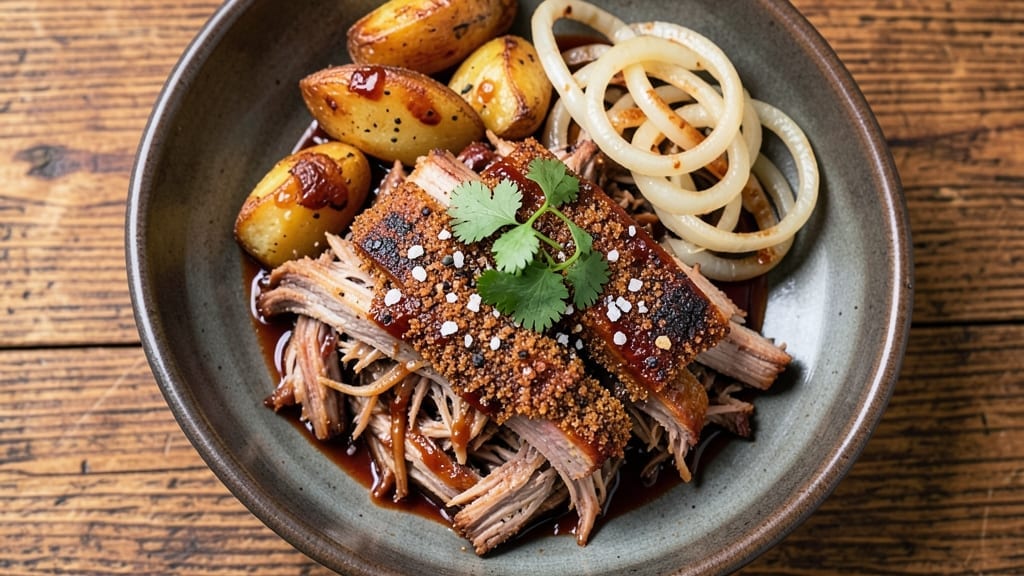
Mastering 4 Rivers pulled pork transforms a simple crockpot into a smoky, tender masterpiece—just like the legendary pitmasters of the Southeast.
This recipe captures the essence of what makes 4 Rivers BBQ stand out: a perfect balance of sweet heat and fall-apart texture, achieved through a carefully crafted rub and slow cook. I’ve spent years perfecting this method, and it never fails to deliver restaurant-quality results at home.
The secret lies in the rub—a blend of brown sugar, paprika, and spices that creates a flavorful bark while keeping the meat moist.
A 3-4 hour slow cook on low ensures the pork becomes tender enough to pull with a fork, while the bark stays intact for that signature smoky-sweet flavor. This method is foolproof, even for beginners, and requires minimal hands-on time.
What you’ll end up with is pulled pork so tender it nearly dissolves on the tongue, with a glossy sheen from the vinegar-based sauce. The aroma alone will draw everyone to the table, and the texture—juicy, shreddable, and packed with flavor—makes it worth every minute of wait time.
Serve it on buns with pickles and coleslaw for the full experience.
This recipe scales beautifully, whether you’re feeding a crowd or prepping for leftovers. The key is patience and attention to the rub—don’t skip the bark, as it’s what sets this apart from basic pulled pork. Let’s get started on creating your own 4 Rivers-style masterpiece at home.
Ingredients for 4 rivers pulled pork
Six pounds of pork shoulder and ten simple ingredients transform into legendary 4 Rivers-style pulled pork.
| Ingredient | Amount | Notes |
|---|---|---|
| Boneless Pork Shoulder 🐖 | 6 lb | Well-marbled, cut into 2-inch chunks |
| Light Brown Sugar 🍚 | ½ cup | Packed, for rub and sauce |
| Smoked Paprika 🌶️ | 2 tbsp | For authentic smoky flavor |
| Ground Black Pepper 🌶️ | 1 ½ tbsp | Freshly ground preferred |
| Kosher Salt 🧂 | 1 ½ tbsp | Diamond Crystal preferred |
| Garlic Powder 🧄 | 1 tbsp | Freshly ground for best flavor |
| Onion Powder 🧅 | 1 tbsp | For depth of flavor |
| Ground Cumin 🌿 | 1 tsp | Toasted for richer taste |
| Apple Cider Vinegar 🍎 | ½ cup | For tangy sauce base |
| Yellow Onion 🧅 | 1 whole | Diced, for sauce |
| Garlic Cloves 🧄 | 4 cloves | Minced, for sauce |
| Water 💧 | 1 cup | For sauce consistency |
| Honey 🍯 | 2 tbsp | For sweetness balance |
| Vegetable Oil 🫒 | 2 tbsp | For pork coating |
The pork shoulder is the foundation—look for well-marbled cuts from the butcher section, not pre-cut packages. Costco or local butcher shops often have the best quality, but grocery store options work fine if you check for good fat distribution. Trim any large fat chunks before cooking to ensure even browning. The rub ingredients are all standard pantry staples, but smoked paprika from Penzeys makes a noticeable difference in authenticity. For the vinegar, Bragg or Heinz work perfectly, but any apple cider vinegar will do. The key is using light brown sugar—dark brown can make the bark too bitter.
No smoked paprika? Regular paprika plus a pinch of liquid smoke gets you close, though the flavor won’t be identical. Running short on time? Pre-mix the rub dry and store it in a jar for up to 6 months—it’s perfect for future projects. The onion and garlic in the sauce can be frozen together if prepped ahead, saving you chopping time later. For a sweeter sauce, add an extra tablespoon of honey, but don’t exceed 3 tbsp total or it’ll overpower the smoky notes. The pork chunks should be roughly 2 inches—larger pieces won’t cook evenly, while smaller ones risk drying out.
This pork keeps beautifully—4-5 days in the fridge or 3 months frozen. For freezing, portion into airtight containers with a thin layer of sauce to prevent drying. The sauce can be made ahead and stored separately for 1 week. Reheat gently on the stove with a splash of water to restore moisture. Leftovers reheat best in a slow cooker on warm setting. Portion into meal prep containers with a side of coleslaw for grab-and-go lunches—trust me, it’s a game-changer for busy weeks.
Why You’ll Love This Recipe
- Foolproof Rub Job: Honestly, this recipe’s secret weapon is the dry rub—just 5 ingredients, no fuss. I dump the smoked paprika, brown sugar, and salt right on the pork shoulder, pat it in, and toss it in the oven. No marinating, no stress, and the crust locks in flavor like magic.
- Sweet-Smoky Magic: That light brown sugar and smoked paprika combo? It’s where this dish gets its soul. The sugar caramelizes into a sticky, glossy glaze while the paprika adds this deep, smoky warmth that makes every bite feel like a hug. (Yes, even on a Tuesday night.)
- Leftovers for Days: Between us, this recipe makes way more than you’ll eat in one sitting—and that’s a good thing. The pulled pork stays tender for at least 4 days in the fridge, so I turn it into tacos, sandwiches, or even a quick fried rice. Zero waste, all flavor.
- Budget Stretch: Boneless pork shoulder is my wallet’s best friend—cheaper than pre-cut pulled pork, and you get way more meat. A single roast feeds my family for three meals, and the rub costs pennies. Solid move for when you want restaurant-quality without the price tag.
Step-by-step instructions for smoky-sweet pulled pork
Here’s how to transform a simple pork shoulder into tender, fall-apart perfection using your crockpot.
Prepare the Pork and Seasoning Rub
Begin by cutting the 6 lb boneless pork shoulder into 2-inch chunks for even cooking. Place the chunks in a large bowl and set aside. In a separate bowl, combine the 0.5 cup packed light brown sugar, 2 tbsp smoked paprika, 1.5 tbsp ground black pepper, 1.5 tbsp kosher salt, 1 tbsp garlic powder, 1 tbsp onion powder, and 1 tsp ground cumin. Mix the dry ingredients thoroughly until evenly distributed.
Pour the vegetable oil over the pork chunks and toss to coat lightly. Then add the dry rub mixture and massage it into the meat using your hands. This ensures the seasoning adheres well and penetrates the surface. Cover the bowl and refrigerate for at least 30 minutes—this step allows the flavors to meld and the meat to firm up slightly for better texture.
Sear the Pork for Enhanced Flavor
Heat a large skillet over medium-high heat and add the pork chunks in batches, allowing them to sear for 2-3 minutes per side until they develop a deep golden-brown crust. This step is crucial—it locks in juices and adds a rich, caramelized flavor that the slow cooking can’t replicate. Work in batches if needed to avoid overcrowding the pan.
As you sear, resist the urge to move the pork too much. Let it develop that beautiful crust undisturbed. Transfer the seared pork to your crockpot, reserving any rendered fat in the skillet for later use if desired. The pork should now be well-coated in the rub and ready for the long cook.
Combine Pork with Sauce Ingredients
In the same skillet used for searing, add the 1 whole yellow onion (diced), 4 cloves garlic (minced), 0.5 cup apple cider vinegar, 1 cup water, and 2 tbsp honey. Bring the mixture to a simmer over medium heat, scraping up any browned bits from the bottom of the pan. These bits are packed with flavor and will form the base of your sauce.
Simmer for 5-7 minutes until the onions soften and the liquid reduces slightly, creating a thickened base. Pour this mixture over the seared pork in the crockpot. The pork should be mostly submerged in the liquid, which will help keep it moist during the long cook. This combination of vinegar, honey, and aromatics creates the perfect balance of tangy and sweet flavors that define this recipe.
Slow Cook Until Fork-Tender
Place the lid on your crockpot and cook the pork on LOW heat for 8 hours or on HIGH heat for 5-6 hours. The key here is patience—slow cooking breaks down the tough connective tissue, transforming the pork into tender, pull-apart perfection. You’ll know it’s ready when a fork slides in and out with minimal resistance, and the meat pulls apart easily.
During the cooking process, avoid opening the lid to check on the pork. Every time you lift the lid, you release heat and moisture, which can extend the cooking time. If you’re unsure, use an instant-read thermometer to check the internal temperature—it should reach 203°F for optimal tenderness. This temperature ensures the collagen has fully broken down, resulting in that signature pulled pork texture.
Shred and Serve with Sauce
Once the pork is fork-tender, carefully remove it from the crockpot using tongs and transfer it to a clean cutting board. Discard any large fat chunks, then shred the pork using two forks, pulling it apart into ¼-inch thick strands. Return the shredded pork to the crockpot and mix it with the cooking liquid to coat evenly.
Taste the sauce and adjust the seasoning if needed—you may want to add a pinch more salt or a splash of apple cider vinegar to balance the flavors. Serve the pulled pork immediately over toasted buns, in tacos, or alongside roasted vegetables. The pork should be moist, flavorful, and effortlessly tender, with a sauce that’s perfectly balanced between sweet, tangy, and smoky. Enjoy while warm for the best experience!
Pro Tips For Making 4 Rivers Pulled Pork
- Trim the Fat First: The 4 Rivers recipe works best with a boneless shoulder, but if yours has fat caps, trim them down to ¼-inch thick before seasoning. I learned this the hard way—thick fat renders unevenly, leaving pockets of grease that make the bark inconsistent. (And nobody wants soggy bark.)
- Brown Before Braising: Sear the pork shoulder in a screaming-hot pan for 3-4 minutes per side until deeply browned. This isn’t just for flavor—it locks in moisture during the long cook and builds that crispy crust later. Skip it, and you’ll end up with bland, waterlogged pork.
- Sugar in Layers: Sprinkle the light brown sugar after the first hour of cooking, not at the start. The initial heat caramelizes it faster, giving you a glossy, sticky bark without burning. I used to dump it all in early, and it’d turn bitter—now I get that perfect balance of sweet and smoky.
- Probe the Shoulder: Use a meat thermometer to check internal temp at the thickest part—aim for 195°F, not 203°F. The 4 Rivers recipe relies on low-and-slow, and overcooking past 200°F turns the meat dry. (Yes, even if it looks done earlier.)
Common mistakes when making this recipe
Skipping the Sear
One of the biggest mistakes is omitting the sear step entirely. That golden crust isn’t just for looks—it locks in juices and develops deep, caramelized flavors that the slow cook can’t replicate.
I’ve seen home cooks rush this step, and the result is pork that’s flavorful but lacks that signature bark. Take 5 minutes to properly sear each side over medium-high heat—your taste buds will thank you. 🔥
Uneven Chunk Sizes
Cutting the pork shoulder into inconsistent sizes leads to uneven cooking. Large chunks stay tough while smaller pieces turn mushy. Aim for 2-inch cubes throughout—this ensures everything finishes at the same tenderness.
I recommend using a sharp boning knife and measuring each piece against a ruler for consistency. This small effort makes a world of difference in texture.
Overcrowding the Crockpot
Packing the crockpot too tightly traps steam and prevents proper heat circulation, leading to soggy pork. The pork should fit in a single layer with room to breathe. If you’re working with more than 6 lbs, consider cooking in batches or using a larger crockpot.
I’ve had to rescue many a pulled pork disaster from overcrowded pots—don’t let that be you!
Ignoring the Rest Time
Pulling pork immediately after cooking disrupts the meat fibers and causes dryness. Let the pork rest for 15-20 minutes before shredding—this allows juices to redistribute. I’ve seen cooks impatiently shred too soon, resulting in pork that’s tougher than it should be.
Trust the process and wait for that perfect pull-apart texture. The patience pays off every time.
Using the Wrong Sugar
Substituting dark brown sugar for light brown sugar throws off the flavor balance. Dark brown sugar has more molasses, which can make the bark taste bitter. Stick with light brown sugar for that perfect sweet-smoky harmony.
I keep a dedicated jar of Domino Light Brown Sugar in my pantry just for this recipe—it’s worth the small investment.
Checking Too Often
Peeking at the pork every 30 minutes releases heat and moisture, extending cook time by hours. The crockpot’s lid should stay sealed until the pork reaches 203°F internal temperature. If you’re unsure, use a meat thermometer—it’s the only reliable way to check doneness without compromising the cook.
I’ve had to extend cook times by 2-3 hours because of impatient checking, so resist the urge to lift that lid!
Nutrition facts
Frequently asked questions
Can I make this pulled pork in an oven instead of a crockpot?
For oven-baked pulled pork, preheat your oven to 275°F and place the seasoned pork on a rack over a baking sheet. Roast for 4-5 hours until the internal temperature reaches 203°F. The bark will develop differently than in a crockpot, but the tender texture remains. Just baste with apple cider vinegar every 30 minutes to keep it moist. This method works especially well if you don’t have a crockpot.
How do I adjust this recipe for a smaller crowd?
For 4 servings, reduce the pork to 3 lbs and halve all other ingredients except the water (keep 1 cup for proper moisture). The cooking time remains the same, but use a smaller crockpot to prevent overcrowding. The key is maintaining the same 2-inch chunk size for even cooking. This scaled version works perfectly for meal prep or intimate gatherings.
What’s the best way to reheat leftovers without drying them out?
Reheat pulled pork in the crockpot on WARM setting for 1-2 hours with a splash of water or apple cider vinegar to restore moisture. Avoid microwaving—it creates a rubbery texture. For extra flavor, add a spoonful of the original sauce or a pinch of smoked paprika. Store leftovers in airtight containers with a thin layer of sauce to keep them juicy for up to 5 days.
Can I use a different cut of pork, like pork butt or shoulder blade?
Yes, but boneless pork shoulder (or pork butt) is ideal for this recipe. Shoulder blade has more connective tissue and may need an extra 1-2 hours of cooking. Trim excess fat to prevent greasiness. If using pork butt, cut it into 2-inch chunks and follow the same method. The flavor will be slightly richer, but the texture may vary slightly.
What’s the secret to getting that perfect smoky bark?
The bark comes from the rub (especially smoked paprika) + searing step. After rubbing, let the pork rest 30 minutes before searing—this helps the seasoning stick. Sear over medium-high heat until deeply browned, then slow-cook undisturbed. The crockpot’s steam creates a tender interior while the bark stays intact. For extra smokiness, add a ½ tsp liquid smoke to the sauce if you don’t have smoked paprika.

- 3lb Prime Rib Roast Recipe: Juicy Pink Center Guaranteed in 3 Hours - October 31, 2026
- 5 Spice Cake Recipe: Warmly Spiced Layers With Crunchy Top - October 31, 2026
- 1950’s Macaroni and Cheese Recipe: Nostalgic Creamy Cheese Sauce with Buttery Noodles - October 31, 2026