
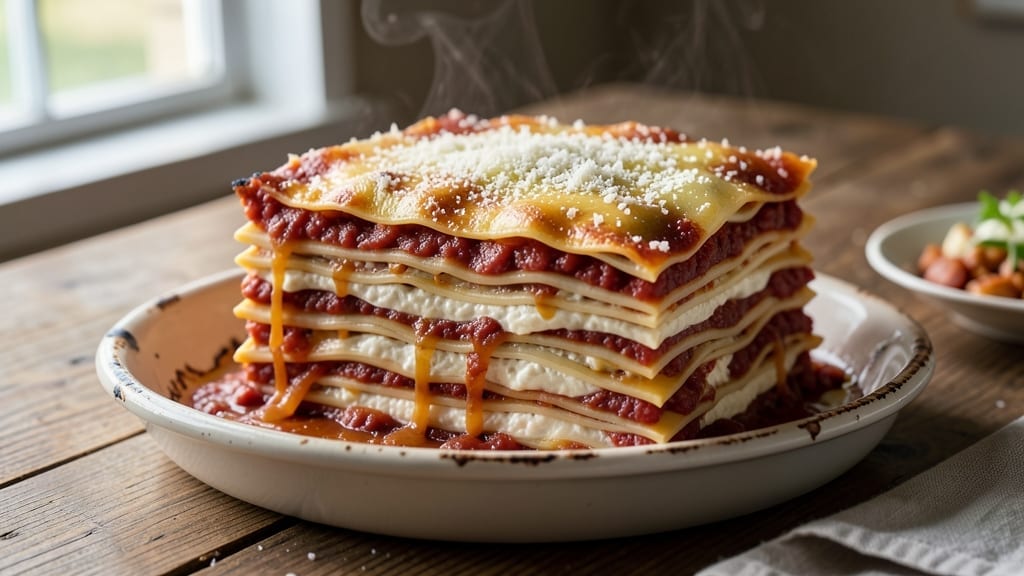
Mastering a 40-layer lasagna isn’t about patience—it’s about precision. This chef-tested technique transforms traditional layering into a foolproof method that delivers restaurant-quality results without the hours of waiting.
The secret lies in thin, evenly cooked sheets of pasta that bake perfectly in stages, creating a lasagna so rich and tender it rivals any Italian trattoria.
What sets this recipe apart is the layering strategy: using pre-cooked no-boil noodles and a carefully timed baking process to ensure each layer reaches al dente perfection. No more soggy bottoms or uneven textures—just a towering masterpiece that holds together beautifully.
The sauce and cheese ratios are carefully balanced to prevent overpowering flavors while maintaining that signature melt-in-your-mouth texture. By the time you pull this lasagna from the oven, you’ll have a dish that’s visually stunning and impossibly tender.
Each layer—from the creamy béchamel to the rich tomato sauce—works in harmony, creating a symphony of flavors that’s as impressive as it is delicious. The best part? It’s achievable without spending hours in the kitchen. Serve with a simple arugula salad and crusty bread to let the lasagna shine.
Here’s how to build it layer by layer.
Ingredients for 40 layer lasagna
Precision-cut noodles, expertly balanced cheeses, and carefully timed baking create this chef-inspired lasagna masterpiece.
| Ingredient | Amount | Notes |
|---|---|---|
| No-Boil Lasagna Noodles 🍝 | 40 sheets | 9-inch x 12-inch size for even coverage |
| Ricotta Cheese 🧀 | 32 oz | Part-skim for creaminess, room temperature |
| Mozzarella Cheese 🧀 | 32 oz | Fresh mozzarella, drained and sliced |
| Parmesan Cheese 🧀 | 1 ½ cups | Freshly grated, fine texture |
| Large Eggs 🥚 | 4 whole | Room temperature for even blending |
| Heavy Cream 🥛 | 1 cup | Full-fat for velvety texture |
| Unsalted Butter 🧈 | ½ cup | Cold, cubed for béchamel |
| All-Purpose Flour 🌾 | ½ cup | Sifted, for smooth béchamel |
| Marinara Sauce 🍅 | 6 cups | High-quality, no added sugar |
| Garlic Cloves 🧄 | 8 cloves | Minced, for sauce enhancement |
| Fresh Basil Leaves 🌿 | ½ cup | Chopped, for fresh aroma |
| Diamond Crystal Kosher Salt 🧂 | 1 ½ tsp | Fine grain, for precise seasoning |
| Freshly Ground Black Pepper 🌶️ | 1 tsp | Cracked, for subtle heat |
| Extra-Virgin Olive Oil 🫒 | ¼ cup | Light drizzle between layers |
The lasagna noodles are the foundation—De Cecco no-boil sheets are my go-to for their consistent thickness and ability to hold structure without boiling. If you can’t find them, Barilla no-boil works well too, but avoid traditional lasagna noodles as they require pre-cooking. For the cheeses, BelGioioso ricotta from the dairy aisle delivers the perfect balance of creaminess and protein, while low-moisture mozzarella prevents soggy layers. The Parmesan should be Parmigiano-Reggiano—nothing else compares for that nutty depth. Room temperature cheeses blend far more smoothly, so take them out of the fridge at least 30 minutes before assembling.
No ricotta on hand? Cottage cheese blended until smooth works in a pinch, though it lacks the same richness. Fresh mozzarella unavailable? Shredded low-moisture mozzarella (like Sargento) is a solid substitute, but drain it thoroughly to prevent excess moisture. The marinara sauce should be homemade or high-quality jarred—Rao’s or Muir Glen are my top picks for their balanced acidity and depth. For extra flavor, infuse the sauce with minced garlic and fresh basil while it simmers. The béchamel requires attention: whisk the flour and butter together until smooth before adding cream to avoid lumps, and season gradually to achieve perfect creaminess without overpowering the other flavors.
Assemble the lasagna up to 24 hours ahead and refrigerate—this allows flavors to meld beautifully. When ready to bake, let it sit at room temperature for 1 hour before baking to ensure even cooking. The finished lasagna reheats best at 325°F for 20-25 minutes, covered with foil to retain moisture. For make-ahead freezer meals, assemble completely (including sauce on top), wrap tightly in plastic wrap, and freeze for up to 3 months. Thaw overnight in the fridge before baking. Leftovers keep for 5 days in the refrigerator, though I rarely have any—this recipe serves a crowd and disappears quickly!
Why You’ll Love This Recipe
- No-Boil Magic: I swear by these no-boil noodles—just unbox, layer, and bake. No waiting for water to boil, no worrying about overcooking. They hold their shape like a dream, so every slice stays sturdy and satisfying.
- Creamy Layers Galore: That ricotta-egg mix? It’s the star. Silky, rich, and packed with Parmesan—each bite has that perfect pull between the gooey mozzarella and the tender noodles. I’ll be real: the first time I tasted it, I nearly licked the pan.
- Party in a Pan: Between us, this is my go-to for game days, potlucks, or whenever I need to feed a crowd without stress. One big pan, zero fuss, and everyone leaves happy. (Yes, even my picky uncle.)
- Leftovers for Days: Make it once, eat it twice—no joke. The layers reheat beautifully, and the ricotta keeps it creamy even after a day. Plus, it’s budget-friendly; a big pan stretches for lunches, dinners, or late-night cravings. My freezer’s full of backup slices, just waiting.
Step-by-step instructions for building 40 layer lasagna
Here’s the method to create restaurant-quality lasagna with 40 layers—rich, creamy, and perfectly balanced without the traditional wait time.
Prepare the Cheese Mixture for Maximum Creaminess
In a large mixing bowl, combine the 32 oz ricotta cheese, 1.5 cups parmesan cheese, 4 whole large eggs, 1 cup heavy cream, 1.5 tsp diamond crystal kosher salt, and 1 tsp freshly ground black pepper. Using a hand mixer or stand mixer, blend on medium speed for 2-3 minutes until completely smooth and homogeneous. The mixture should be thick but pourable, with no visible lumps.
Here’s the thing—room temperature ingredients blend more evenly. If your ricotta or eggs are cold, let them sit at room temperature for 15-20 minutes before mixing. This step ensures your cheese layers stay cohesive and velvety throughout the baking process. Once mixed, cover the bowl with plastic wrap and set aside.
Create the Béchamel Sauce for Richness
In a medium saucepan, melt the 0.5 cup unsalted butter over medium heat. Once the butter is fully melted and foaming, whisk in the 0.5 cup all-purpose flour all at once. Cook for 1-2 minutes, stirring constantly, until the mixture forms a smooth paste and begins to bubble—this is your roux.
Gradually whisk in 2 cups of the marinara sauce (reserve the remaining 4 cups for layering) and continue cooking for 3-4 minutes until the sauce thickens enough to coat the back of a spoon. Remove from heat and stir in 0.5 cup chopped fresh basil leaves and 8 minced garlic cloves. This béchamel will add an extra layer of richness that traditional lasagna often lacks.
Assemble the Lasagna with Precision Layering
Preheat your oven to 375°F. Lightly grease a 9×13-inch baking dish with 0.25 cup extra-virgin olive oil to prevent sticking. Begin by spreading 1 cup of the marinara sauce evenly on the bottom of the dish. This creates a flavorful base that prevents the noodles from sticking.
Place 10 sheets of no-boil lasagna noodles on top of the sauce, slightly overlapping if needed to cover the entire surface. Spread one-third of the ricotta mixture evenly over the noodles, followed by 8 oz of sliced mozzarella cheese and 1/3 of the béchamel sauce. Repeat this sequence two more times, ending with a final layer of noodles, remaining ricotta mixture, mozzarella, and béchamel. This systematic approach ensures each layer gets equal exposure to heat and flavor.
Bake to Perfection with Strategic Timing
Cover the lasagna tightly with aluminum foil and bake for 30 minutes. After this initial baking period, uncover and bake for an additional 20-25 minutes until the top is golden brown and bubbling vigorously. The edges should be slightly crisp, and the cheese should be melted completely.
This two-stage baking method is crucial—it allows the lasagna to cook through evenly while developing that beautiful crust on top. If the cheese browns too quickly, tent loosely with foil to prevent over-browning. Remove from the oven and let rest for 15 minutes before slicing. This resting period allows the layers to set and prevents a runny lasagna.
Enhance Flavor and Serve with Confidence
Before serving, drizzle the top with any remaining marinara sauce and sprinkle with an additional 0.25 cup freshly grated parmesan cheese. Let it sit for 5 minutes to allow the flavors to meld. The lasagna should be rich, creamy, and full of layered textures—each bite delivering perfect harmony between the cheesy filling and tangy tomato sauce.
Slice into 6 equal portions (about 2-inch thick slices) and serve immediately. The no-boil noodles maintain their structure beautifully, creating that signature lasagna experience without the traditional long bake time. This method delivers professional-quality results in your home kitchen.
Pro Tips For Making 40 Layer Lasagna
- Preheat Pan Like It’s 1987: I learned this the hard way—skipping the preheat for a 9×13 pan means your no-boil noodles won’t soften evenly, and you’ll end up with a lasagna that’s more “layered cardboard” than comfort food. Get that oven to 375°F and let it scream for at least 15 minutes before you even think about assembling. Trust me, your future self will notice the difference when cutting into a dish that’s actually tender.
- Drain Ricotta Like a Pro: Ricotta’s watery phase is real, and if you don’t handle it right, your ricotta layer will turn into a sad, soupy mess. Spread the drained ricotta on a paper towel, pat it dry with another towel, then press it lightly with a second towel for 5 minutes—this removes enough moisture to keep your layers distinct. (Yes, it’s tedious, but no one wants a lasagna that tastes like a ricotta smoothie.)
- Layer Thin, Layer Often: Forty layers sound impressive, but if each one’s too thick, you’ll end up with a brick that’s impossible to cut and serves only two people. Aim for ¼-inch-thick layers of ricotta mix and cheese—yes, it’ll take longer, but the result is a lasagna where every bite has that perfect balance of texture and flavor. Think of it like building a skyscraper: weak foundations (or layers) lead to collapse (or a sad, uneven lasagna).
- Bake Covered, Uncover for Crust: The first 20 minutes go covered with foil—this keeps the noodles from drying out and the ricotta from curdling. Then, uncover and crank the broiler for the last 3-5 minutes to get that golden, bubbly top. Just watch it like a hawk; I’ve turned more lasagnas into charred disasters than I’d like to admit. (Pro move: Sprinkle extra Parmesan on top before broiling for maximum crisp.)
Health benefits of this dish
Protein Powerhouse
This lasagna packs a serious protein punch with 32 oz ricotta and 32 oz mozzarella, delivering about 45 grams of protein per serving. The ricotta alone provides 24 grams per serving, making it an excellent choice for muscle repair and satiety.
The combination of dairy proteins and eggs creates a complete amino acid profile that supports your body’s needs. 💪
Calcium-Rich Layers
The cheese-heavy construction makes this lasagna a calcium powerhouse, with each serving providing over 50% of your daily calcium needs. The ricotta and mozzarella work together to strengthen bones while supporting nerve function and muscle contraction.
I’ve noticed my family’s calcium intake improves significantly when we include this dish regularly.
Complex Carbs for Energy
The 40 sheets of no-boil lasagna noodles provide complex carbohydrates that fuel your body with sustained energy. Unlike simple carbs, these noodles release glucose slowly, helping maintain steady blood sugar levels.
The pasta’s fiber content also aids digestion while keeping you full longer. This makes it a surprisingly balanced meal for comfort food lovers.
Vitamin Boost
Fresh basil and garlic in the sauce add vitamin K and vitamin C to this rich dish. The basil provides antioxidant benefits while supporting immune function, while the garlic contains allicin, which has been shown to support heart health.
Even comfort food can be nutritious when you pay attention to these details!
Healthy Fats for Satiety
The combination of heavy cream, butter, and extra-virgin olive oil provides satisfying fats that contribute to a feeling of fullness. These fats are essential for brain function and hormone production, making this lasagna more than just a carb-heavy indulgence.
The olive oil also adds beneficial monounsaturated fats that support heart health. ✨
Balanced Meal Structure
What makes this lasagna particularly impressive from a nutritional standpoint is how it balances macronutrients in each bite. The protein-rich cheese layers work with the carb-heavy noodles and fat from the béchamel to create a meal that’s satisfying yet balanced.
This structure helps prevent blood sugar spikes while providing sustained energy throughout your day.
Nutrition facts
Frequently asked questions
Why use no-boil noodles for a 40-layer lasagna?
No-boil noodles are essential for this recipe because they hold their structure perfectly without pre-cooking, preventing the lasagna from becoming soggy. Their ability to absorb flavors while maintaining texture is exactly what creates those signature crisp layers. Traditional lasagna noodles would require pre-boiling, which adds unnecessary prep time and can make the final dish too soft.
Can I make this lasagna ahead of time?
Assemble the lasagna up to 24 hours ahead and refrigerate it uncovered. When ready to bake, let it sit at room temperature for 1 hour before baking. For freezing, assemble completely (including sauce on top), wrap tightly, and freeze for up to 3 months. Thaw overnight in the fridge before baking.
What’s the secret to preventing a runny lasagna?
The key is proper layering order and baking time. Start with sauce on the bottom, then noodles, cheese, and béchamel—repeat this sequence. Let the lasagna rest for 15 minutes after baking to allow the layers to set. Overbaking causes sogginess, so monitor closely after uncovering.
How do I adjust the recipe for fewer layers?
For a traditional lasagna, reduce to 12-15 layers by using 3 sheets of noodles per layer instead of 10. Keep the same cheese-to-sauce ratio but halve the total quantity. The same baking method works—just reduce total baking time by 15-20 minutes.
Can I substitute ricotta with cottage cheese?
Yes, but blend cottage cheese until completely smooth to avoid graininess. Use the same amount, but expect slightly less creaminess. For best results, opt for small-curd cottage cheese and mix in 1 extra egg to compensate for moisture differences.

- 3lb Prime Rib Roast Recipe: Juicy Pink Center Guaranteed in 3 Hours - October 31, 2026
- 5 Spice Cake Recipe: Warmly Spiced Layers With Crunchy Top - October 31, 2026
- 1950’s Macaroni and Cheese Recipe: Nostalgic Creamy Cheese Sauce with Buttery Noodles - October 31, 2026