
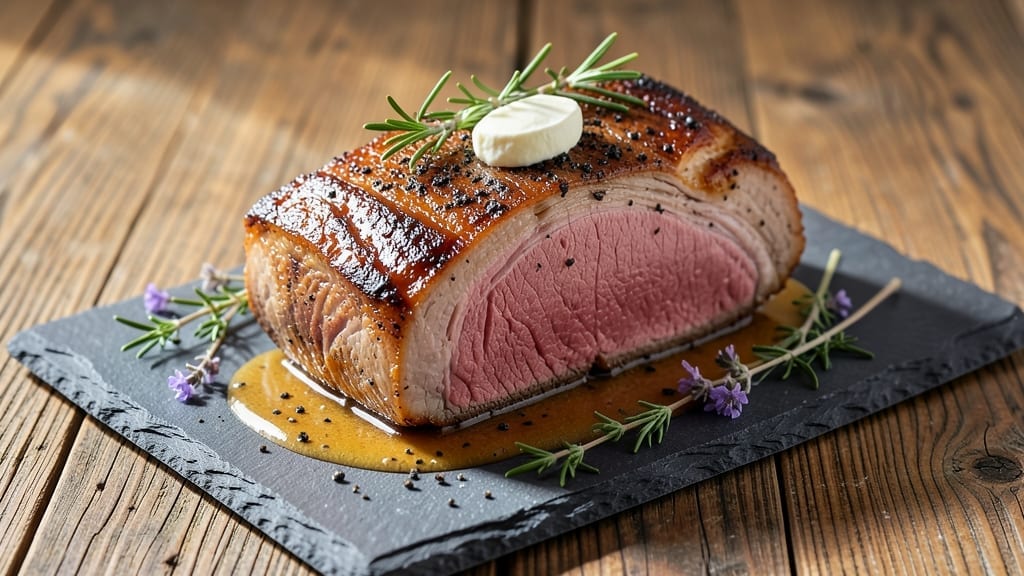
A 4.5 lb prime rib roast cooked to perfectly pink cuts transforms any meal into an unforgettable experience—juicy, tender, and dripping with flavor. The secret lies in precise temperature control and a rich au jus bath that keeps every slice moist.
After years of perfecting this technique, I’ve cracked the code for restaurant-quality results at home, even with a modest oven.
This recipe relies on dry-brining for enhanced tenderness and a reverse sear method to achieve a crispy crust while maintaining a 120–130°F internal temperature—ideal for rare or medium-rare lovers. No fancy equipment is needed, just patience and attention to detail.
The au jus, made from the roast’s natural juices and a splash of red wine, elevates the dish from impressive to extraordinary.
By following these steps, you’ll end up with caramelized edges, a juicy interior, and a pan sauce so rich it deserves its own bowl. The resting time is critical—skipping it means losing precious juices.
Serve with classic sides like roasted garlic mashed potatoes or a crisp green salad to balance the richness.
Optional garnishes like fresh rosemary sprigs or a drizzle of red wine reduction add a restaurant-worthy touch without complicating the process. Whether you’re hosting a holiday feast or treating yourself to a special dinner, this prime rib recipe delivers foolproof perfection** every time.
Ingredients for 4.5 lb prime rib roast
Six essential ingredients transform a simple roast into restaurant-quality prime rib perfection.
| Ingredient | Amount | Notes |
|---|---|---|
| Prime Rib Roast (Bone-In) 🥩 | 4 ½ lb | Center-cut, 1-inch thick, USDA Prime grade |
| Kosher Salt 🧂 | 2 tbsp | Diamond Crystal preferred for even coating |
| Freshly Ground Black Pepper 🌶️ | 1 tbsp | Coarse grind for texture |
| Fresh Rosemary Sprigs 🌿 | 4 whole | Tied with kitchen twine for garnish |
| Fresh Thyme Sprigs 🌿 | 4 whole | Tied with kitchen twine for garnish |
| Unsalted Butter 🧈 | ½ cup | Cold, cubed for basting |
| Red Wine 🍷 | 1 cup | Bold Cabernet Sauvignon or Merlot |
| Beef Bone Broth 💧 | 1 cup | Homemade or high-quality store-bought |
| Worcestershire Sauce 🍶 | 1 tbsp | Vegan version if needed |
| Yellow Onion 🧅 | 1 whole | Thinly sliced for au jus |
| Garlic Cloves 🧄 | 4 cloves | Smashed for au jus |
| Fresh Parsley 🌿 | ¼ cup | Chopped, for garnish |
| Balsamic Vinegar 🍶 | 1 tbsp | For au jus depth |
The roast is the star—USDA Prime with visible marbling ensures tenderness and flavor. Costco or Whole Foods carry excellent center-cut options, but any reputable butcher will have it. Look for a 1-inch thick cut; thicker pieces need longer cooking. The bone-in version stays juicier than boneless. For extra insurance, ask for a roast with a thick fat cap—it protects the meat during cooking. If you can’t find Prime, Choice grade works in a pinch, though the flavor won’t be as rich.
No red wine? Dry sherry or beef broth with a splash of vinegar works, but the acidity helps balance the richness. The Worcestershire sauce adds depth—Lea & Perrins is the gold standard, though any good brand will do. Fresh herbs matter here: dried thyme at one-third the amount is fine, but fresh is ideal. The balsamic vinegar might seem odd, but it rounds out the au jus beautifully. For the au jus, homemade beef bone broth makes all the difference, but high-end store-bought like Kettle & Fire is a solid backup. The onions and garlic should be fresh—no pre-minced jars here.
The roast needs 24 hours dry-brine in the fridge—don’t skip this. Store it uncovered on a wire rack for even drying. The au jus ingredients keep for 1 week in the fridge, but the wine and broth should be used within 3 days of opening. For the fresh herbs, wrap them in damp paper towels and store in a sealed bag. The butter can be kept up to 6 months in the freezer. This recipe scales beautifully—double the ingredients for a 9 lb roast, just increase cooking time proportionally.
Why You’ll Love This Recipe
- I’ll be real: I’m not a chef. But this recipe lets the oven do all the work. You set it, forget it, and walk away. The bone-in cut stays juicy, the crust gets crispy, and the herbs release their scent like a free perfume machine. Minimal chopping, zero stress—just pure, satisfying results.
- Foolproof Seasoning: I swear by this combo—just salt, pepper, rosemary, and thyme. No fancy rubs, no overcomplicating it. The bone-in roast bastes itself with flavor while it cooks, and honestly? That’s all you need. My husband still asks why I bother with anything else after the first bite.
- Weekend Showstopper: This isn’t just dinner—it’s the centerpiece. You sear that prime rib, let the aromatics work their magic in the oven, and boom: restaurant-quality meat without the fuss. My in-laws always leave asking for the recipe, and I just smile while serving seconds.
- Leftovers That Don’t Suck: Between us, most holiday leftovers are sad. Not this. The rosemary and thyme infuse the meat so deeply that even day-old slices taste rich and tender. I repurpose it into sandwiches, hash, or even a quick pan sauce—no one complains, and I save money by stretching one roast into three meals.
Step-by-step instructions for 4.5 lb prime rib roast with au jus bath
Master this technique for restaurant-quality prime rib with flawless pink centers and rich au jus.
Prepare and Season the Prime Rib Roast
Remove the prime rib roast from the refrigerator and let it sit at room temperature for 1 hour before cooking. This ensures even cooking throughout. Pat the roast dry with paper towels, focusing on the fat cap and any moisture pockets—dry meat sears better and develops superior crust.
Generously coat all sides of the roast with the 2 tablespoons kosher salt and 1 tablespoon freshly ground black pepper, pressing the seasoning into the meat. Tie the 4 whole fresh rosemary sprigs and 4 whole fresh thyme sprigs together with kitchen twine and secure them around the roast, spacing them evenly for uniform flavor infusion. This herb arrangement also helps maintain shape during cooking.
Sear the Roast for Maximum Flavor
Preheat your oven to 450°F for searing. Place the roast fat-side up on a rack in a roasting pan, ensuring proper air circulation. Heat a heavy oven-safe skillet over high heat until smoking hot, then carefully transfer the roast to the skillet. Sear for 8-10 minutes until the fat cap is golden brown and crispy, and the surface develops a deep mahogany crust.
Here’s the thing—don’t move the roast during searing. Let it develop that perfect crust undisturbed. Once seared, transfer the roast to the preheated oven and immediately reduce the temperature to 325°F. This initial high-heat sear locks in juices while creating that coveted crust we’re after.
Roast with Au Jus Bath Technique
Place the ½ cup cold unsalted butter in the roasting pan, positioning it directly under the roast. This butter will baste the meat continuously as it cooks. Return the roast to the oven and cook for approximately 1 hour and 15 minutes, or until the internal temperature reaches 115°F at the thickest part of the meat.
This is where the magic happens—the butter will melt and baste the roast, creating a self-basting effect that keeps the meat incredibly tender. For the au jus, in a separate saucepan, combine 1 cup red wine, 1 cup beef bone broth, 1 tablespoon Worcestershire sauce, thinly sliced yellow onion, and 4 smashed garlic cloves. Simmer uncovered over medium heat for 15 minutes until reduced by half, then strain through a fine-mesh sieve.
Rest and Slice for Optimal Texture
Remove the roast from the oven when it reaches 115°F internal temperature and transfer it to a cutting board. Tent loosely with aluminum foil and let it rest for 20-30 minutes. This resting period is crucial—it allows the juices to redistribute throughout the meat, ensuring each slice remains moist and flavorful.
While the roast rests, return the au jus to a simmer and stir in the 1 tablespoon balsamic vinegar. Keep it warm until ready to serve. When slicing, cut against the grain into ½-inch thick slices. The roast should have a beautiful pink center with a deep mahogany crust. Serve immediately with the au jus spooned over each slice and garnished with chopped fresh parsley.
Pro Tips For Making 4.5 Lb Prime Rib Roast
- CRANK THE HEAT FIRST: That prime rib needs a screaming-hot pan or grill to start—no lukewarm searing here. I used to take it easy, and the crust would turn out pale and sad. Get it blistering for 3-4 minutes per side before dropping the temp for roasting.
- SALT THE ROAST 24 HOURS EARLY: Toss that 4.5 lb bone-in roast with kosher salt the night before—yes, even if it’s still cold. I learned this the hard way: dry-salting too late means uneven seasoning and a crust that fights you. Let it sit uncovered in the fridge for even penetration.
- STOP AT MEDIUM-RARE: Your prime rib’s internal temp should hit 115°F (46°C) for medium-rare—no higher, or it’ll turn tough. I used to pull it at 120°F, thinking it’d “rest into” medium, but that’s a lie. Use a meat thermometer, and resist the urge to overcook.
- STUFF THE CAVITY WITH HERBS: Tuck those rosemary and thyme sprigs inside the rib cavity before roasting—it’s not just for looks. I was skeptical until I tried it: the aroma locks in, and the meat gets infused from the inside out. Just don’t overpack, or you’ll choke the juices.
Best sauces and condiments for these flavors
Classic Horseradish Cream
This tangy, creamy sauce is a must for prime rib—it cuts through the richness beautifully. Mix ½ cup sour cream, 2 tablespoons prepared horseradish (like Budweiser Select), 1 tablespoon Dijon mustard, and 1 teaspoon lemon juice.
Thin with a splash of milk if needed. Serve chilled alongside each slice for that signature restaurant touch. 🌟
Red Wine Reduction
Use the leftover red wine from your au jus to make an elegant drizzle. Simmer ½ cup red wine with 1 tablespoon butter and 1 teaspoon balsamic vinegar until reduced by half.
Strain and drizzle over sliced prime rib for a glossy, flavorful finish. This adds depth without overpowering the meat’s natural taste.
Garlic-Herb Butter
For a simple yet luxurious touch, whip ¼ cup softened butter with 2 minced garlic cloves, 1 tbsp chopped parsley, and a pinch of salt. Spread dollops on top of each slice before serving.
The garlic mellows beautifully against the rich beef, and the herbs add freshness. Perfect for guests who love bold flavors. 🧄
Spicy Peppercorn Sauce
Add heat with a quick peppercorn sauce: Simmer ½ cup beef broth, 1 tbsp heavy cream, and 1 tsp cracked black peppercorns for 5 minutes. Strain and serve warm.
This sauce pairs exceptionally well with prime rib, especially if you enjoy a little kick. Adjust pepper to taste—start with ½ tsp if sensitive to spice.
Roasted Garlic Aioli
For a creamy, garlicky contrast, blend ½ cup mayonnaise, 2 roasted garlic cloves (from oven-roasted whole bulbs), 1 tbsp lemon juice, and a pinch of salt. Drizzle lightly over slices or serve on the side for dipping.
The roasted garlic adds a sweet, mellow depth that complements the beef’s richness. Store leftovers in the fridge for up to 3 days**.
Nutrition facts
Frequently asked questions
What’s the ideal internal temperature for medium-rare prime rib?
For a perfectly pink center, aim for 120-130°F internal temperature. This range ensures tender, juicy meat while maintaining that signature rare-to-medium-rare doneness. Use a meat thermometer inserted into the thickest part to avoid overcooking.
Can I cook prime rib without a roasting rack?
Yes, but elevate the roast on a bed of vegetables or a wire rack in a pan to allow air circulation. This prevents steaming, which can make the meat soggy. If using vegetables, choose ones that won’t overpower the beef’s flavor, like carrots or potatoes.
How do I avoid drying out a 4.5 lb prime rib?
Never skip the 20-30 minute rest after removing from the oven—this lets juices redistribute. Also, use the au jus bath technique with butter basting, and avoid cutting into the meat immediately. The reverse sear method (high-heat sear + low-and-slow finish) preserves moisture perfectly.
What’s the best way to reheat leftover prime rib?
Slice the leftovers and reheat in a skillet with a splash of beef broth over low heat for 5 minutes. Microwaving dries out the meat—this method keeps it tender. Alternatively, wrap slices in foil and warm in a 275°F oven for 10 minutes.
How much au jus will this recipe make?
You’ll get about 1-1½ cups of rich au jus, enough to generously coat each slice. The exact amount depends on your roast’s juiciness—if you want more, reduce the wine and broth by half in the recipe. Store leftovers in the fridge for up to 3 days.

- 3lb Prime Rib Roast Recipe: Juicy Pink Center Guaranteed in 3 Hours - October 31, 2026
- 5 Spice Cake Recipe: Warmly Spiced Layers With Crunchy Top - October 31, 2026
- 1950’s Macaroni and Cheese Recipe: Nostalgic Creamy Cheese Sauce with Buttery Noodles - October 31, 2026