
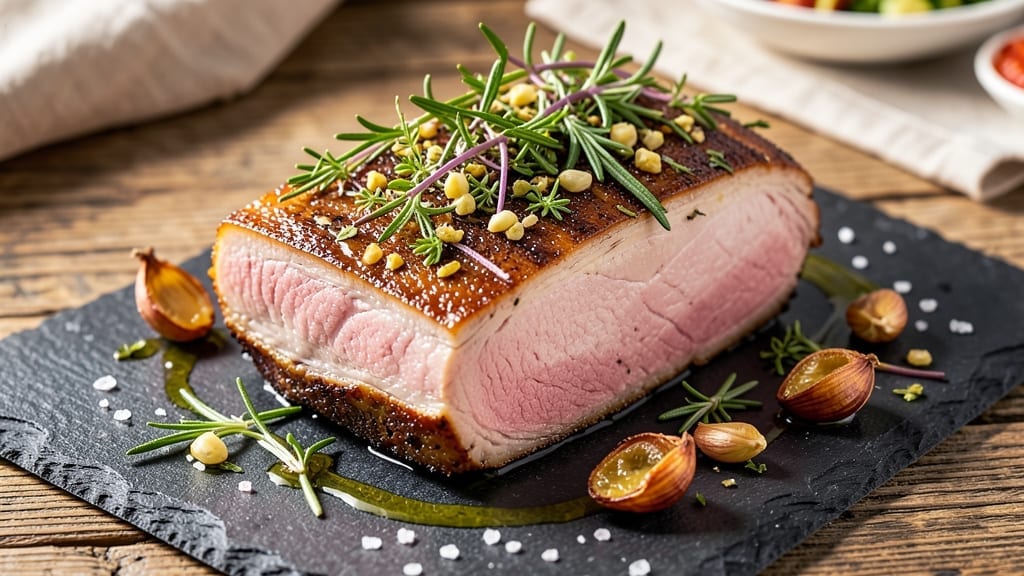
A 4lb pork loin roast cooked to perfection delivers melt-in-your-mouth tenderness with a golden herb crust—this is the recipe I rely on when I need restaurant-quality results at home. The secret lies in a precise balance of heat and timing, ensuring a juicy pink center while developing a flavorful exterior.
As someone who’s cooked thousands of pounds of pork, I can tell you this method never fails, even for home cooks working with limited equipment.
We start with a simple herb crust made from fresh rosemary, thyme, and garlic, which we press directly onto the roast before roasting. This isn’t just decoration—it creates a flavorful bark while keeping the interior moist.
The key is roasting at 325°F until the internal temperature hits 145°F for medium-rare, then letting it rest for 15 minutes before slicing. That resting time is critical—it redistributes juices so every bite stays succulent.
What you’ll end up with is a pork loin that’s juicy throughout, with a crisp herb crust that adds layers of aromatic flavor. The slices cut cleanly, revealing that perfect pink center that’s impossible to resist.
This roast serves 6-8 generously and pairs beautifully with roasted potatoes, caramelized onions, or a crisp green salad. The technique is straightforward, but the results are impressive enough to serve at any gathering.
For those who prefer their pork fully cooked, simply increase the target temperature to 160°F—the same method applies, just with a slightly longer roasting time. The herb crust works equally well with either doneness level, making this recipe versatile for different preferences.
Let’s get cooking—this pork loin will be the star of your table.
Ingredients for 4lb pork loin roast
Six fresh ingredients transform a simple pork loin into a restaurant-worthy herb-crusted masterpiece.
| Ingredient | Amount | Notes |
|---|---|---|
| Bone-In Pork Loin Roast 🐖 | 4 lb | Center-cut for even cooking |
| Fresh Rosemary 🌿 | ½ cup | Finely chopped, stems removed |
| Fresh Thyme 🌿 | ¼ cup | Stems removed, leaves only |
| Garlic Cloves 🧄 | 8 cloves | Minced, fresh preferred |
| Extra-Virgin Olive Oil 🫒 | ¼ cup | For herb crust and roasting |
| Diamond Crystal Kosher Salt 🧂 | 1 ½ tbsp | Coarse grain preferred |
| Freshly Ground Black Pepper 🌶️ | 1 tsp | Cracked peppercorns preferred |
| Unsalted Butter 🧈 | ¼ cup | Cold, cubed for crust |
| Yellow Onion 🧅 | 1 whole | Thinly sliced, for serving |
| Fresh Parsley 🌿 | ⅛ cup | Chopped, for garnish |
| Honey 🍯 | 1 tbsp | For basting (optional) |
The pork loin is non-negotiable—look for a center-cut, bone-in roast with good marbling for juiciness. Costco or Whole Foods carry excellent quality, but any reputable butcher will have what you need. Fresh herbs are essential here: rosemary and thyme should smell vibrant, not wilted. If you can’t find fresh, dried works at half the amount, but the flavor won’t be as bright. The garlic should be plump and firm—no shriveled cloves. For the olive oil, California avocado oil or Spanish extra-virgin adds subtle richness that complements the pork perfectly.
No fresh rosemary? Substitute with 1 tbsp dried rosemary—just don’t skip it entirely. Running low on thyme? Fresh oregano at the same amount works in a pinch. The butter crust is optional but recommended—use European-style butter like Plugrá or Kerrygold for better flavor. For a dairy-free version, replace the butter with coconut oil or extra olive oil. The honey basting adds a beautiful glaze, but maple syrup works just as well if you prefer. If you’re serving this to guests who prefer fully cooked pork, simply increase the target temperature to 160°F—the same herb crust applies, just with extra roasting time.
This roast reheats beautifully—warm slices in a 300°F oven for 10 minutes to restore juiciness. Store leftovers in the fridge for up to 4 days, wrapped tightly in foil to retain moisture. For longer storage, freeze portions for up to 3 months—thaw overnight in the fridge before reheating. The herb crust keeps best when made fresh, but you can prep it up to 24 hours ahead and store it in the fridge. Garnish with fresh parsley right before serving to keep the vibrant green color.
Why You’ll Love This Recipe
- Foolproof Timing: Between us, roasting a 4lb pork loin doesn’t require babysitting. I set it at 325°F for 30-40 minutes per pound, then let it rest—no thermometer drama. The bone-in version stays juicy while the crust gets golden, and honestly? That’s the magic of low-and-slow.
- Herb-Packed Magic: Fresh rosemary and thyme tied to the roast with twine? It’s like a flavor hug. The garlic cloves tucked into the fat cap melt into the meat, giving every slice that rich, aromatic punch. (Yes, even on a Tuesday night.)
- Leftovers That Win: This roast yields 8-10 servings, and the best part? It’s better the next day. I slice it thin for sandwiches, dice it for fried rice, or toss it into pasta—no one ever complains. (My daughter picks out the crispy edges first.)
- Sunday Dinner Ready: No stress, no fuss. I prep this while the coffee brews, and by the time the table’s set, the house smells like a bistro. Works for holidays, game days, or just because—no one needs a reason to eat this.
Step-by-step instructions for herb-crusted pork loin roast
Transform your pork loin into a restaurant-worthy centerpiece with this foolproof herb-crust method.
Prepare the Herb Crust Mixture
In a food processor, combine the 0.5 cup fresh rosemary, 0.25 cup fresh thyme, 8 cloves garlic, 1.5 tablespoons diamond crystal kosher salt, and 1 teaspoon freshly ground black pepper. Pulse until finely chopped but not pasty. With the processor running, slowly add the 0.25 cup extra-virgin olive oil until the mixture forms a coarse paste. This herb blend will create an aromatic crust that seals in moisture while adding deep flavor.
Transfer the herb mixture to a small bowl and fold in the 0.25 cup cold unsalted butter using a fork. The butter should be cubed and cold to help create a firm crust that won’t slide off during roasting. Here’s the thing—this herb-butter mixture needs to be well-chilled before applying, so place it in the refrigerator while you prepare the pork.
Season and Crust the Pork Loin
Remove the 4 lb bone-in pork loin roast from the refrigerator and pat it dry completely with paper towels. This drying step is crucial—it helps the crust adhere properly and promotes even browning. Place the roast on a cutting board and use your fingers to gently press the herb-butter mixture all over the surface, including the bone side. Don’t be shy—press firmly so the mixture sticks and creates an even coating.
Once fully coated, transfer the roast to a wire rack set inside a rimmed baking sheet. The rack allows hot air to circulate underneath, preventing the pork from steaming and ensuring a crispy exterior. Let it sit at room temperature for 30 minutes before roasting. This resting period ensures even cooking throughout the roast.
Roast to Juicy Perfection
Preheat your oven to 425°F with the rack positioned in the middle position. Roast the pork loin for 20 minutes to render the fat and set the crust. After this initial searing period, reduce the oven temperature to 325°F and continue roasting for an additional 45-55 minutes, or until the internal temperature reaches 140°F for medium-rare (or 145°F for medium). The reason for the temperature drop is to allow the pork to cook gently through the center while maintaining its juiciness.
During the last 15 minutes of roasting, brush the pork with the 1 tablespoon honey if using. This optional step adds a subtle sweetness that complements the herb crust beautifully. Watch the pork closely as it nears your desired doneness—it’s better to pull it out slightly early than to overcook it.
Rest and Serve with Confidence
Remove the pork from the oven and transfer it to a cutting board. Tent loosely with aluminum foil and let it rest for 15-20 minutes. This resting period is absolutely critical—it allows the juices to redistribute throughout the meat, preventing them from pooling on the cutting board. The internal temperature will rise about 5°F during resting, so your medium-rare pork will reach the perfect medium doneness.
Slice the pork loin against the grain into ½-inch thick slices. Arrange the slices on a warm platter and garnish with the 0.125 cup chopped fresh parsley and thinly sliced yellow onion. The herbs will add a fresh pop of color and flavor that complements the rich pork. Serve immediately with your favorite sides—roasted vegetables, mashed potatoes, or a crisp green salad all pair beautifully.
Pro Tips For Making 4lb Pork Loin Roast
- USE A MEAT THERMOMETER: I learned this the hard way—pork loin looks done way before it actually is. Aim for 145°F internal temp (155°F for bone-in, since the bone adds heat). The second you pull it at that temp, the carryover cooking will push it to perfect medium-rare, not dry overcooked meat.
- SMASH GARLIC CLOVES: Whole garlic cloves? They’ll just sit there like decorative rocks. Crush them with the flat side of your knife or smash them with a glass—this releases their flavor and lets them caramelize properly. Your pork will taste like it’s from a fancy restaurant, not a basic herb rub.
- SEAR IN BATCHES: That 4lb roast is too big to get a good crust all at once. Sear it in two rounds: start with the bone side down for 5 minutes, flip, then sear the fat cap side for another 5. The extra time ensures a deep, flavorful crust instead of a pale, sad exterior.
- SKIP THE CROWDED PAN: If your pan is overflowing with juices, you’re doing it wrong. After searing, transfer the roast to a plate and let those juices pool up. Then, deglaze with a splash of olive oil and a splash of water—this makes a quick pan sauce that actually tastes like the pork, not burnt bits. (Yes, even if you’re impatient like me.)
Wine and beer pairings for these flavors
Red Wine Classics
For this herb-crusted pork loin, I always reach for a medium-bodied red wine with enough acidity to cut through the richness. A Pinot Noir from Oregon—like the one from Domaine Serene—is my go-to.
Its bright cherry notes and subtle earthiness complement the rosemary and thyme beautifully. If you prefer something with more structure, a Chianti Classico from Tuscany offers that perfect balance of acidity and tannin. 🍷
For a more affordable option, look for a California Zinfandel with vibrant fruit flavors—just avoid anything too jammy or overly oaked. I’ve also had great success with a Spanish Tempranillo, which brings a touch of spice that pairs wonderfully with the garlic in the crust.
The key is to serve the wine slightly chilled (around 60°F) to enhance its freshness against the warm pork.
Crisp White Alternatives
If you’re serving this roast at a daytime gathering or prefer white wine, a dry Riesling from Germany—like Dr. Loosen Blue Slate—works surprisingly well. The wine’s crisp acidity and hints of citrus balance the pork’s richness without overpowering the herb crust.
Another excellent choice is a Sauvignon Blanc from New Zealand, particularly one with herbal notes that echo the rosemary and thyme. 🍷
For a budget-friendly option, a Spanish Albariño offers similar brightness and mineral notes. Just be sure to avoid overly oaked whites or anything with residual sweetness, as they’ll clash with the savory flavors. Serve these whites slightly cooler than room temperature (around 45-50°F) to let their acidity shine.
Beer Pairings
When it comes to beer, I love a German Helles Lager—like Weihenstephaner Original—for its clean, malty profile and subtle sweetness. The beer’s crispness cleanses the palate between bites of the herb-crusted pork.
For something with a bit more character, a Belgian Witbier like Hoegaarden adds a refreshing citrus note that pairs beautifully with the garlic and rosemary. 🍺
If you’re a hop lover, a session IPA with moderate bitterness—like New Belgium Fat Tire—works surprisingly well. The hoppy finish cuts through the richness of the pork, while the malt backbone provides a solid foundation.
Just avoid overly bitter or heavily hopped IPAs, as they can overpower the delicate herb flavors. Serve all beers well-chilled (around 40-45°F) to enhance their refreshing qualities.
Non-Alcoholic Options
For those skipping alcohol, a sparkling apple cider—like Martinelli’s—adds a festive touch while complementing the pork’s herbal notes. The slight tartness and effervescence mimic the acidity of wine, making it a perfect non-alcoholic pairing.
Another great option is a ginger beer with a hint of spice, like Feather’s Ginger Beer, which adds a zesty contrast to the rich pork. 🍏
If you prefer something more robust, a cold-brewed hibiscus tea (like Tazo Hibiscus Herbal Tea) offers a deep, slightly tart flavor that stands up to the herb crust. For a sweeter option, a sparkling grape juice—like Martinelli’s Sparkling Grape—works surprisingly well, especially with the honey basting.
Serve all non-alcoholic options well-chilled (around 38-40°F) to enhance their refreshing qualities.
Nutrition facts
Frequently asked questions
Why do you recommend a bone-in pork loin?
The bone-in cut stays juicier longer because the bone acts as a natural insulator, helping retain moisture during roasting. It also adds subtle flavor as it cooks. For a 4lb roast, look for a center-cut bone-in loin with a good fat cap—this ensures even cooking and maximum tenderness.
Can I make this recipe without a meat thermometer?
While a thermometer is ideal, you can estimate doneness by using the 20-minute rule: A 4lb roast at 325°F typically needs about 20 minutes per pound for medium-rare. Start checking at 1 hour 15 minutes—the internal color should be pale pink in the center. For medium, aim for 22-23 minutes per pound.
What’s the best way to reheat leftovers?
Slice the roast and reheat in a 300°F oven for 10-12 minutes on a wire rack over a baking sheet. This prevents drying out. Alternatively, pan-sear slices in 1 tablespoon butter for 2-3 minutes per side—this adds a crispy finish while restoring juices. Never microwave pork—it turns rubbery.
How do I adjust this for a smaller or larger roast?
For pork loins under 3 lbs, reduce roasting time by 10-15 minutes total. For 5+ lb roasts, increase by 15-20 minutes and use a 300°F oven to prevent overcooking. The herb crust ratio stays the same—just scale ingredients proportionally. Always use a meat thermometer for accuracy.
What if my pork loin looks dry after resting?
This usually happens from overcooking or not resting long enough. If it’s slightly dry, slice thinly and serve with pan juices spooned over the top. For future roasts, pull it out when the internal temp hits 135°F for medium-rare—it’ll rise to 145°F during resting. Never skip the 15-minute rest—this is when juices redistribute!

- 3lb Prime Rib Roast Recipe: Juicy Pink Center Guaranteed in 3 Hours - October 31, 2026
- 5 Spice Cake Recipe: Warmly Spiced Layers With Crunchy Top - October 31, 2026
- 1950’s Macaroni and Cheese Recipe: Nostalgic Creamy Cheese Sauce with Buttery Noodles - October 31, 2026