
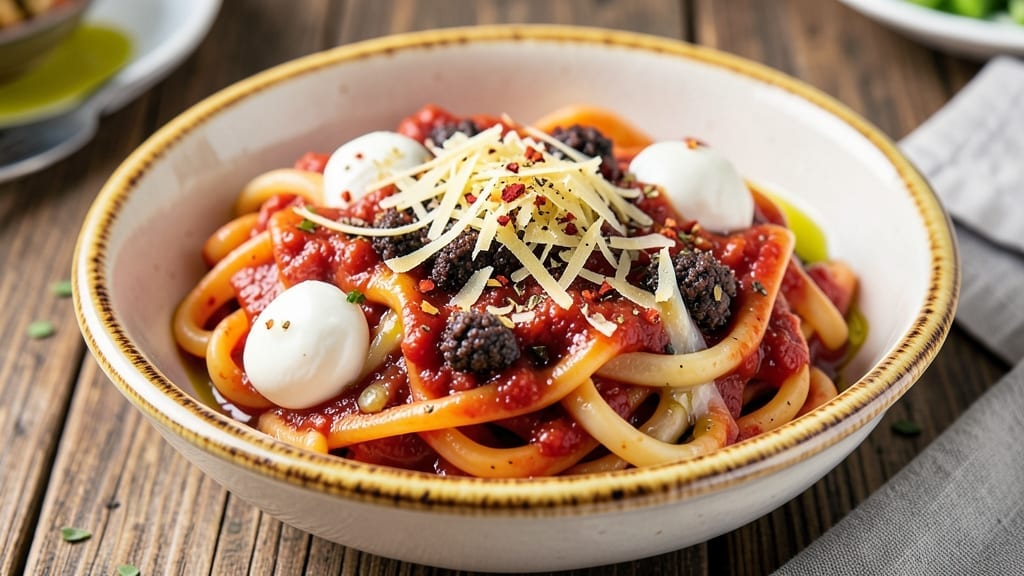
A 5-cheese marinara pasta recipe transforms weeknight dinners into restaurant-quality meals with every forkful. The secret lies in blending five distinct cheeses—mozzarella, parmesan, ricotta, provolone, and fontina—each contributing texture and depth to create a sauce so rich it melts into every strand of al dente pasta.
This isn’t your average marinara; it’s a velvety, cheesy masterpiece that clings to the noodles like a dreamy embrace.
What sets this recipe apart is the technique: simmering the sauce low and slow allows the cheeses to fully emulsify, creating a creamy yet vibrant sauce that balances tangy tomato and buttery richness.
No heavy cream needed—just the right combination of cheeses and a few pantry staples. The result? A dish so satisfying it’ll have everyone asking for seconds before the plate is even empty.
Perfect for feeding a crowd or a cozy family dinner, this pasta comes together in one pot with minimal cleanup. The cheeses melt into a luxurious blanket over the noodles, while the marinara base keeps the sauce bright and flavorful.
Whether you’re a seasoned home cook or just starting out, this recipe delivers restaurant-quality results with simple steps and foolproof timing.
Serve it with a sprinkle of fresh basil and extra parmesan for that final touch of elegance. The best part? Leftovers reheat beautifully, making it an ideal meal prep option. Let’s get cooking—your taste buds will thank you.
Ingredients for 5 cheese marinara pasta
Five distinct cheeses and a few pantry staples—this is your shortcut to restaurant-quality marinara.
| Ingredient | Amount | Notes |
|---|---|---|
| Extra-Virgin Olive Oil 🫒 | ½ cup | High-quality, fruity variety |
| Garlic Cloves 🧄 | 4 cloves | Freshly minced, aromatic |
| Canned San Marzano Tomatoes 🍅 | 28 oz | Crushed by hand, seeds removed |
| Dried Oregano 🌿 | 1 tbsp | Mediterranean variety preferred |
| Red Pepper Flakes 🌶️ | ½ tsp | Adjust for heat preference |
| Salt 🧂 | 1 ½ tsp | Diamond Crystal preferred |
| Fresh Basil Leaves 🌿 | ¼ cup | Packed, stems removed |
| Pasta (Penne or Rigatoni) 🍝 | 12 oz | Al dente preferred |
| Mozzarella Cheese (Fresh) 🧀 | 8 oz | Low-moisture, shredded |
| Parmesan Cheese (Parmigiano-Reggiano) 🧀 | ½ cup | Freshly grated from block |
| Ricotta Cheese 🧀 | ½ cup | Whole-milk, room temperature |
| Provolone Cheese 🧀 | 4 oz | Mild, shredded |
| Fontina Cheese 🧀 | 4 oz | Melted, creamy texture |
| Heavy Cream (Optional) 🥛 | ¼ cup | For extra richness |
The cheeses are non-negotiable here. Parmigiano-Reggiano from Italy delivers the most complex flavor, so skip the pre-grated stuff—it’s full of anti-caking agents that make the sauce grainy. For the mozzarella, low-moisture shredded (the kind in bags) melts cleaner than fresh. Whole Foods or specialty cheese shops carry the best fontina, but Costco’s pre-shredded provolone is a solid shortcut. Ricotta should be room temperature when added—it blends better and doesn’t clump. If you’re short on time, Trader Joe’s sells pre-shredded blends that work in a pinch, though fresh is always superior.
No San Marzano tomatoes? Any high-quality crushed tomatoes will do—just remove the seeds for a smoother sauce. Running low on fontina? Gruyère or Swiss cheese melts beautifully and adds a nutty depth. The heavy cream is truly optional, but if you’re making this for company, it’s worth the extra richness. For the basil, fresh is ideal, but dried basil at half the amount works if you’re in a bind. The oregano should be Mediterranean—it’s more robust than Mexican oregano. If you’ve got any of these cheeses leftover, freeze them in portions for future pasta nights—they’ll keep for 6 months without losing quality.
This sauce tastes even better the next day as the cheeses fully emulsify. Store leftovers in an airtight container with a thin layer of olive oil on top to prevent browning—they’ll keep for 4-5 days in the fridge. For meal prep, cook the pasta separately and toss it with the sauce just before serving to maintain that perfect al dente texture. If you’re freezing, portion the sauce into ice cube trays—thaw and reheat only what you need. The cheeses will separate slightly when reheated, but a quick stir with a splash of pasta water brings it all back together.
Why You’ll Love This Recipe
- Pantry Magic: I swear by this recipe when I’m staring at an empty fridge—just a can of San Marzano tomatoes, a few cloves of garlic, and a handful of cheeses I already had. No last-minute grocery runs, no stress. The olive oil and dried oregano turn those basic ingredients into something that tastes like a restaurant made it.
- Cheese Overload (In a Good Way): Between the sharpness of pecorino, the creaminess of mozzarella, and the nutty kick of parmesan, this sauce is ridiculously rich without being heavy. The red pepper flakes add just enough heat to keep it interesting, and honestly? I’ve never met a cheese combo I didn’t love.
- Game for Any Night: This is my go-to for lazy Mondays, game nights, or when unexpected guests show up. Toss it with fresh pasta for a quick meal, or let it sit overnight so the flavors meld even deeper—perfect for meal prep. (Yes, even on a Tuesday night.)
- Leftovers That Don’t Suck: Most pasta sauces turn into glue after day two, but not this one. The San Marzano tomatoes keep it bright, and the cheese doesn’t separate. I’ve reheated portions for breakfast (trust me, it’s amazing with eggs) and packed it for work—no sad, watery regrets here. Budget-friendly and foolproof.
Step-by-step instructions for bold triple-cheese marinara pasta
Master this technique for a rich, melty cheese sauce that clings perfectly to al dente pasta.
🍳 Step 1: Build the Tomato Base
Heat the 0.5 cup extra-virgin olive oil in a large Dutch oven over medium heat until shimmering but not smoking. Add the 4 cloves freshly minced garlic cloves and sauté for 30 seconds until fragrant—don’t let them brown or they’ll turn bitter. Immediately add the 28 oz crushed San Marzano tomatoes, stirring to combine.
Bring the mixture to a gentle simmer, then reduce heat to low. Add the 1 tbsp dried oregano, 0.5 tsp red pepper flakes, and 1.5 tsp salt. Stir in the 0.25 cup packed fresh basil leaves. Let the sauce simmer uncovered for 20-25 minutes until thickened and reduced by about one-third. You’ll see the oil begin to separate slightly from the tomatoes—that’s perfect. The sauce should coat the back of a spoon with a velvety texture.
🍳 Step 2: Prepare the Cheese Mixture
While the tomato sauce simmers, create the cheese blend in a separate bowl. Combine the 8 oz shredded fresh mozzarella cheese, 0.5 cup freshly grated Parmigiano-Reggiano, 0.5 cup room-temperature ricotta cheese, 4 oz shredded provolone cheese, and 4 oz shredded fontina cheese. If using, stir in the 0.25 cup heavy cream for extra richness. This combination creates a perfect balance of meltability and flavor—mozzarella for stretch, Parmigiano for depth, ricotta for creaminess, and provolone/fontina for that signature Italian cheesy tang.
I like to break up the ricotta slightly with my fingers to distribute it evenly through the other cheeses. This ensures a smooth, creamy texture rather than clumpy bits in your final dish. Keep this mixture at room temperature until ready to add.
🍳 Step 3: Cook the Pasta Al Dente
Bring a large pot of generously salted water to a rolling boil. Add the 12 oz penne or rigatoni and cook until 1 minute before the package’s recommended al dente time. This slight undercooking ensures the pasta finishes perfectly in the cheese sauce. Reserve 1 cup of pasta water before draining—this starchy liquid is crucial for creating the silky sauce.
Drain the pasta and immediately return it to the pot. Lower the heat to medium-low and add ½ cup of the reserved pasta water. Toss the pasta vigorously to coat it evenly with the starch. This step prevents the sauce from seizing up when you add the cheese later. The pasta should look glossy and well-coated—this is your signal it’s ready for the cheese.
🥘 Step 4: Combine and Create the Cheese Melt
With the pasta still in its pot, carefully ladle 2 cups of the tomato sauce into the pasta. Stir gently to distribute it evenly. Now, add the cheese mixture in stages—start with half, stir until melted, then add the remaining cheese. The residual heat from the pasta and sauce will begin melting the cheese immediately. If the mixture looks too thick, add 1-2 tablespoons of pasta water at a time until you reach a creamy, clingy consistency.
Here’s where the magic happens: the acidity from the tomatoes and the heat from the pasta work together to create a silky, stretchy cheese sauce. You’ll see the sauce transform from separate cheese pieces to a glossy, molten coating. Keep stirring gently for 2-3 minutes until the cheese is completely melted and the sauce coats the pasta beautifully. The final texture should be rich but not heavy, with each strand of pasta perfectly enrobed.
🍽️ Step 5: Finish and Serve Immediately
Transfer the pasta to warmed serving plates and ladle the remaining tomato sauce on top. Garnish with additional fresh basil leaves if desired. The dish should be served immediately—this sauce doesn’t reheat well. Each bite should deliver a perfect balance of tangy tomato, melty cheese, and al dente pasta. The cheese should be stretchy with each forkful, clinging to the pasta without being overly greasy.
For an extra touch, serve with a sprinkle of freshly cracked black pepper and a side of garlic bread to soak up any remaining sauce. The contrast of the warm, cheesy pasta with the crispy bread creates a complete dining experience. This technique ensures a restaurant-quality dish that’s surprisingly simple to execute at home.
Pro Tips For Making 5 Cheese Marinara Pasta
- CRUSH THE GARLIC: I learned this the hard way—when you smash those cloves with the flat side of your knife before mincing, they release more flavor and won’t burn as fast. No need to rush; let them sizzle gently in the olive oil for at least 30 seconds before adding anything else.
- SAVE THE TOMATO JUICE: After crushing the San Marzano tomatoes by hand (don’t skip this—canned tomatoes taste better when you do), pour the juice into a separate bowl. Stir it back in later when the sauce thickens; it adds brightness and prevents a heavy, one-note flavor.
- STOP STIRRING SO MUCH: The second you add the tomatoes, lower the heat and resist the urge to constantly check on it. Simmering uncovered for 20 minutes without stirring lets the sauce develop depth—no one’s watching, and the cheese will thank you later.
- TOAST THE CHEESES: Skip the pre-shredded stuff—it’s dry and past its prime. Instead, pulse your five cheeses (Pecorino, Parmigiano, Mozzarella, Ricotta, and whatever fifth you’re using) in a food processor for 10 seconds, then toast them in a dry pan for 1-2 minutes until fragrant. The nutty, caramelized edges make all the difference.
Serving suggestions for this recipe
Garlic Bread Pairing
No cheesy pasta dinner is complete without a side of garlic bread to soak up every last drop of that luxurious sauce. I love using a fresh baguette split lengthwise, brushed with melted butter mixed with 2 minced garlic cloves and 1 tbsp chopped parsley.
Sprinkle with grated Parmigiano-Reggiano and toast in a 400°F oven for 8-10 minutes until golden and crisp. The warm, buttery crunch contrasts perfectly with the rich pasta. 🍞
Light Salad Balance
Cut through the richness with a simple arugula salad tossed with lemon vinaigrette. Whisk 3 tbsp extra-virgin olive oil with 1 tbsp lemon juice, ½ tsp Dijon mustard, and a pinch of salt.
Toss with 4 cups baby arugula and top with ¼ cup shaved fennel and 2 tbsp toasted pine nuts. The peppery bite cleanses your palate between cheesy bites.
White Wine Pairing
A crisp Italian white wine like Pinot Grigio or Vermentino complements this dish beautifully. Look for wines with bright acidity and citrus notes—they cut through the cheese’s richness while enhancing the tomato’s tang. I recommend chilling your wine to 45-50°F for the perfect balance of refreshment and harmony. 🍷
Extra Cheese Topping
For the final touch, serve with a small bowl of extra cheese on the table. Offer Parmigiano-Reggiano shavings and crumbled fontina so guests can customize their portions. The cheese should be at room temperature for the best melt—just 10 minutes out of the fridge works perfectly.
This lets everyone adjust the richness to their taste.
Dessert Contrast
End the meal with something light like lemon sorbet or panna cotta. The bright, citrusy flavors refresh your palate after the rich pasta. For a crowd-pleaser, try affogato—vanilla gelato drowned in a shot of hot espresso.
The contrast between the warm, cheesy pasta and cool dessert makes the whole meal unforgettable. 🍋
Family-Friendly Sides
For picky eaters or kids, serve roasted cherry tomatoes with balsamic glaze> and a sprinkle of fresh mozzarella pearls. The sweet-tart flavor is approachable, and the cheese ties back to the main dish.
Another great option is crispy roasted broccoli with lemon zest>—the nutty crunch balances the pasta’s creaminess perfectly.
Nutrition facts
Frequently asked questions
Can I substitute any of the cheeses in this recipe?
The key is maintaining a balance of textures and flavors. Swap fontina for Gruyère (nutty depth) or Swiss cheese (slight sweetness). For ricotta, try mascarpone if you prefer a creamier texture. Just avoid pre-shredded cheeses—the anti-caking agents make the sauce grainy. If you’re dairy-free, use nutritional yeast and cashew cream for a vegan alternative.
Why does my sauce get grainy when I add the cheese?
Graininess happens when cheese releases moisture too quickly or when anti-caking agents (common in pre-shredded cheese) don’t dissolve properly. Always use freshly grated Parmigiano-Reggiano and low-moisture shredded mozzarella. Add the cheese mixture in stages over low heat, stirring constantly. If it still looks grainy, add 1-2 tablespoons of pasta water to help emulsify it.
Can I make this ahead of time?
Yes, but with a few key adjustments. Cook the pasta al dente, drain, and toss it with 1 tablespoon olive oil to prevent sticking. Store the sauce separately in an airtight container. When ready to serve, reheat the sauce gently (don’t boil) and toss it with the pasta, adding pasta water as needed. The sauce will be smoother after resting, but the texture won’t be as glossy as fresh.
What’s the best pasta shape for this dish?
Penne or rigatoni are ideal—their ridges and tubes trap the cheesy sauce beautifully. For a twist, try fettuccine (flat surface for sauce clinging) or farfalle (bowtie shape adds visual appeal). Avoid long, thin noodles like spaghetti—they can get tangled in the thick sauce. Always cook pasta 1 minute less than package instructions for perfect al dente texture.
How do I fix a sauce that’s too thick or too thin?
For a thick sauce, add pasta water 1 tablespoon at a time, stirring constantly. If it’s too thin, simmer uncovered for 5-10 minutes to reduce. The sauce should coat the back of a spoon but still flow smoothly. Pro tip: If the cheese separates when reheating, whisk in a splash of pasta water and a pinch of salt to help it re-emulsify.

- 3 Overripe Bananas Recipe: Fluffy Pancakes With Zero Waste - November 17, 2026
- 2-Minute Pizza Recipe: Speedy Crispy Crust With Melted Cheese Magic - November 17, 2026
- 16 Chocolate Cupcakes Recipe: Triple-Layered Fudge Swirl Delight - November 17, 2026