
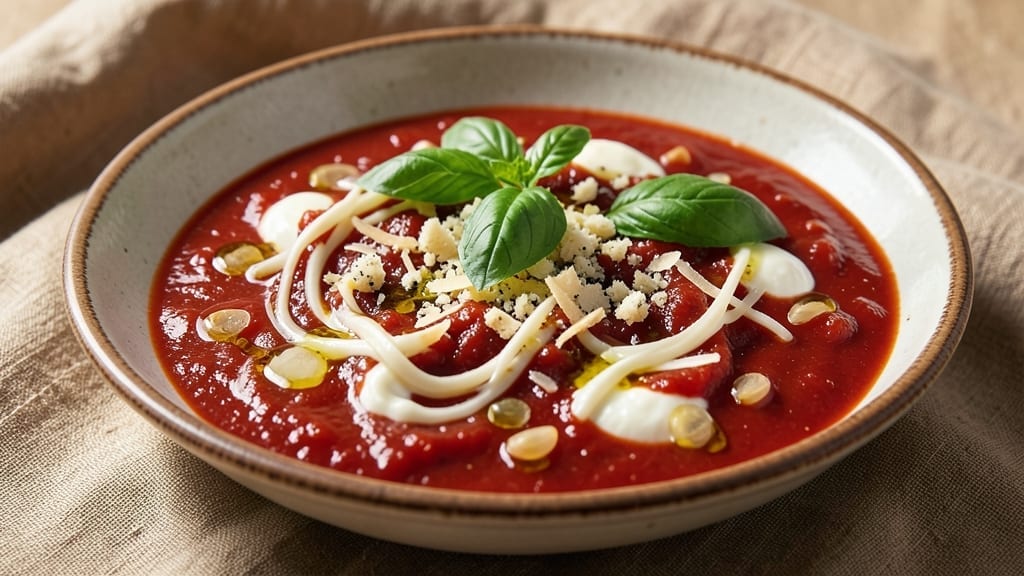
This 5 cheese marinara sauce transforms ordinary pasta into a luxurious, umami-rich experience with every forkful. The secret lies in blending five distinct cheeses—each contributing unique textures and flavors—while maintaining that perfect silky consistency.
I developed this recipe after years of testing commercial sauces that never quite delivered the depth and complexity I craved.
The magic happens through precise technique: simmering the sauce low and slow to emulsify the cheeses into a velvety base, then finishing with a touch of heavy cream for richness.
Parmesan adds nutty depth, mozzarella creates melty strings, while ricotta, provolone, and Gorgonzola bring layers of tangy, creamy complexity. This isn’t just marinara—it’s a restaurant-quality sauce that elevates any dish.
What you’ll achieve is a sauce with perfect balance: vibrant tomato flavor preserved while the cheeses melt into a luxurious, clingy consistency. The Gorgonzola adds subtle blue cheese notes that deepen over time, while the ricotta prevents separation.
This sauce keeps beautifully for up to 5 days in the fridge, with flavors actually improving as they meld.
Perfect for drizzling over pasta, chicken parmesan, or even as a dipping sauce for crusty bread. The technique is straightforward but requires patience—simmering at the right temperature ensures the cheeses blend seamlessly without breaking. Let’s create this umami bomb that will have everyone asking for seconds.
Ingredients for 5 cheese marinara sauce
Eight essential ingredients transform ordinary marinara into a luxurious, umami-rich masterpiece.
| Ingredient | Amount | Notes |
|---|---|---|
| Extra-Virgin Olive Oil 🫒 | ½ cup | High-quality, fruity variety preferred |
| San Marzano Crushed Tomatoes 🍅 | 28 oz | Canned, no salt added |
| Garlic Cloves 🧄 | 4 cloves | Fresh, minced for aromatic depth |
| Shallots 🧅 | 2 whole | Minced, adds sweetness |
| Heavy Cream 🥛 | ¼ cup | Full-fat for luxurious texture |
| Fresh Basil Leaves 🌿 | ½ cup | Packed, stems removed |
| Parmesan Cheese 🧀 | ½ cup | Freshly grated, aged 24+ months |
| Ricotta Cheese 🧀 | ½ cup | Whole milk, creamy texture |
| Provolone Cheese 🧀 | ½ cup | Shredded, mild flavor |
| Gorgonzola Cheese 🧀 | ¼ cup | Crumbled, aged blue cheese |
| Mozzarella Cheese 🧀 | ½ cup | Fresh, low-moisture shredded |
| Kosher Salt 🧂 | 1 ½ tsp | Diamond Crystal preferred |
| Freshly Ground Black Pepper 🌶️ | ½ tsp | Coarsely cracked |
| Dried Oregano 🍃 | 1 tsp | Mediterranean blend preferred |
The cheeses are the heart of this sauce—each plays a distinct role. Parmesan delivers nutty depth, while ricotta acts as a natural emulsifier to prevent separation. For the best results, grab aged Parmigiano-Reggiano from a specialty cheese shop—it melts into a velvety texture that pre-shredded can’t match. Gorgonzola adds that signature tangy punch, but if you’re avoiding blue cheese, swap for an extra ounce of provolone. Fresh mozzarella is ideal for melty strings, but low-moisture shredded works in a pinch. The ricotta should be whole milk for maximum creaminess—part-skim won’t blend as smoothly. For the tomatoes, San Marzano cans from Italy are worth the splurge—they’re sweeter and less acidic than standard brands.
No ricotta? Cream cheese at half the amount works surprisingly well, though it lacks the same silky texture. Running out of Gorgonzola? Blue cheese crumbles or even a splash of balsamic vinegar can mimic that deep umami note. The olive oil matters here—use something you’d drizzle on bread, not the cheap cooking oil. For the basil, fresh is non-negotiable, but if you’re stuck, dried basil at one-third the amount will get you close. The heavy cream is optional but adds that restaurant-quality richness—substitute with half-and-half if needed. And if you’re watching calories, reduce the cream to 2 tablespoons and add an extra splash of water to maintain consistency.
This sauce tastes even better the next day as the flavors meld. Store in an airtight container in the fridge for up to 5 days, though I rarely have any left that long. For freezing, portion into ice cube trays first—perfect for adding to future pasta batches. The cheeses keep well in their original packaging, but once opened, Parmesan should be wrapped in wax paper and stored in the fridge for up to 3 months. The ricotta and mozzarella are best used within 2 weeks of opening. Pro tip: Make a double batch—it disappears faster than you’d think, especially when you’re serving it over creamy fettuccine or as a dipping sauce for garlic bread
Why You’ll Love This Recipe
- No-Chop Required: I swear by this—just crush the garlic cloves (no peeling!) and slice the shallots if I’m feeling fancy. The San Marzano tomatoes do all the work, and the heavy cream at the end? That’s the magic that turns it from good to “why didn’t I make this sooner?”
- Rich Without Effort: That heavy cream at the end isn’t just a trick—it’s the secret to a sauce that’s silky and deep, not watery. The five cheeses (mozzarella, parmesan, ricotta, provolone, and gorgonzola) melt into something so smooth, it’ll make you forget store-bought ever existed. (Yes, even on a Tuesday night.)
- Weeknight to Dinner Party: This sauce is my go-to for pasta, but I’ve also drizzled it over grilled chicken, stuffed into baked potatoes, or even slathered on garlic bread. Honestly, the versatility is why I keep it in my back pocket—it’s the kind of thing that makes you look like a hero without trying.
- Leftovers That Taste Better: Between us, this sauce actually improves the next day. The flavors meld, the cheeses settle into that perfect pull, and it reheats like a dream. I make double batches on Sundays because it’s my budget-friendly secret weapon—cheaper than takeout, way better than jarred, and always a hit.
Step-by-step instructions for 5 cheese marinara sauce
This layered sauce builds depth and texture—rich tomato base, velvety cream, and melty cheese strings that transform every bite.
Develop the Tomato Base
Heat the 0.5 cup extra-virgin olive oil in a heavy-bottomed saucepan over medium-low heat. Add the 2 whole minced shallots and cook for 3-4 minutes until softened but not browned. Here’s the thing—you want them translucent, not caramelized, so they don’t overpower the tomatoes.
Add the 4 cloves minced garlic and cook for 30 seconds until fragrant. Immediately add the 28 oz San Marzano crushed tomatoes, 1.5 tsp kosher salt, 1 tsp dried oregano, and 0.5 tsp freshly ground black pepper. Stir well to combine, then reduce heat to low and let it simmer uncovered for 20-25 minutes. You’re looking for a thick, syrupy consistency—this is your flavor foundation.
Infuse with Cream and Herbs
Once the tomato base has thickened, remove the pan from heat and stir in the 0.25 cup heavy cream. The heat will cause the cream to gently emulsify, creating a luxurious silkiness. Return the pan to low heat and add the 0.5 cup packed fresh basil leaves, stirring gently to wilt them into the sauce.
Here’s where it gets magical: the cream adds body while the basil brightens the deep tomato flavor. Keep the heat at low—you’re just warming through, not cooking the cream. Taste and adjust seasoning if needed; you might want to add a pinch more salt to balance the cream’s richness.
Layer the Cheeses for Maximum Impact
With the pan still on low heat, begin adding the cheeses in this precise order: first the 0.5 cup shredded provolone, stirring until melted and smooth. Then add the 0.5 cup ricotta cheese, breaking it up with a wooden spoon until fully incorporated. The ricotta will create pockets of creamy texture throughout the sauce.
Next comes the 0.25 cup crumbled gorgonzola cheese. Stir just until melted—don’t overwork it, or the sauce will separate. Finally, add the 0.5 cup freshly grated Parmesan cheese and 0.5 cup low-moisture shredded mozzarella cheese, stirring constantly until completely melted and glossy. The sauce should now have a luxurious, velvety consistency with visible cheese strings.
Finish and Rest for Perfection
Remove the sauce from heat and let it rest for 5-10 minutes. This resting period allows the cheeses to fully meld and the sauce to thicken slightly. If it’s too thick, thin with 1-2 tablespoons water or pasta water. The sauce should coat the back of a spoon but still be pourable.
Taste one final time and adjust seasoning if needed. The gorgonzola adds a subtle tang that needs balancing—this is your chance to perfect it. Serve immediately over pasta or hold at 160°F for up to 2 hours if needed. The cheese strings will stretch beautifully when tossed with hot pasta, creating that restaurant-quality experience at home.
Pro Tips For Making 5 Cheese Marinara Sauce
- Sweat, Don’t Burn, the Aromatics: The moment you add garlic and shallots, keep the heat medium-low—yes, even if you’re impatient. I learned this the hard way when my sauce turned bitter from charred shallots. Let them soften and perfume the oil for 8-10 minutes before tossing in the tomatoes.
- Use Whole Garlic Cloves: Peeling and mincing garlic is a hassle, but whole cloves (2-3, lightly smashed) infuse flavor without overpowering. They’ll soften and release their aroma into the oil—no risk of burning, and you’ll taste the difference when blending the final sauce.
- Stir in Cheese Gradually: Dumping all five cheeses at once? That’s how you end up with a clumpy mess. Start with half the ricotta or mozzarella, stir until melted, then add the rest. Heavy cream will smooth it out, but patience here makes the texture velvety.
- Simmer Tomatoes First: Before adding cream or cheese, let the San Marzano tomatoes reduce on low heat for 15-20 minutes—no stirring. This deepens their sweetness and thickens the base. Skipping this step means your sauce will taste thin, even after blending. (Your future self will notice.)
Regional styles of these flavors
Classic Italian Style
The Italian approach to this sauce focuses on simplicity and letting the cheeses shine. In regions like Tuscany and Sicily, you’ll find marinara sauces enriched with just Parmesan and Pecorino—but this 5-cheese version takes it further.
Use freshly grated Pecorino Romano instead of some of the Parmesan for a sharper, saltier kick. Add a splash of white wine (about 2 tbsp) when cooking the tomatoes to brighten the flavor, just like they do in Florence.
The key is to simmer the sauce uncovered for 30-40 minutes to develop deeper caramelized notes. 🍷
New York-Style Twist
In New York, marinara gets a heartier, creamier treatment—perfect for dishes like chicken parmesan. Swap the Gorgonzola for Fontina cheese (about ¼ cup crumbled) to add a milder, sweeter depth.
New Yorkers often finish their sauce with a splash of cream (like in this recipe) and a sprinkle of fresh parsley instead of basil. For extra richness, some chefs add a pinch of nutmeg when incorporating the cheeses.
The sauce should be thick enough to cling to meatballs or chicken cutlets without being gluey. 🍽️
Southern Italian Fusion
Southern Italian regions like Campania (home of pizza!) take marinara in bold directions. For a Neapolitan-inspired version, add a pinch of chili flakes (about ¼ tsp) when cooking the tomatoes and finish with fresh basil and a drizzle of olive oil.
Use fresh mozzarella (like bocconcini) instead of shredded for those iconic melty strings. Some chefs even add a splash of tomato paste (about 1 tbsp) at the start for extra depth. The sauce should be bright, tangy, and perfect for pizza or lasagna. 🍕
Cajun-Inspired Spicy Kick
For a Louisiana-inspired twist, add ½ tsp smoked paprika and ¼ tsp cayenne pepper when cooking the tomatoes. Swap the Gorgonzola for sharp cheddar (about ¼ cup shredded) to balance the heat.
Finish with fresh thyme instead of basil and a dash of hot sauce (like Crystal or Tabasco) to taste. This version pairs perfectly with shrimp and sausage pasta or Cajun-style chicken. The sauce should be slightly thicker to handle the spices without losing its velvety texture. 🌶️
Vegetarian-Friendly Adaptation
For a vegetarian or vegan-friendly take, use nutritional yeast (about 2 tbsp) to mimic the umami depth of Parmesan. Replace the ricotta with silken tofu (about ½ cup blended) for creaminess, and the Gorgonzola with vegan blue cheese or extra firm tofu marinated in lemon juice.
Use cashew cream (about ¼ cup) instead of heavy cream. This version still delivers that luxurious texture but with plant-based ingredients—perfect for vegetarian lasagna or mushroom risotto. 🌱
Nutrition facts
Frequently asked questions
Why does the order of cheeses matter in this recipe?
The order ensures perfect texture and prevents separation. Provolone goes first to melt smoothly, ricotta acts as a natural emulsifier, and Gorgonzola’s tang needs gentle incorporation. Adding Parmesan and mozzarella last creates those signature cheese strings.
Can I make this sauce without heavy cream?
Yes! Replace the 0.25 cup heavy cream with 0.25 cup whole milk or 2 tbsp cashew cream for a lighter version. The sauce will still be rich but slightly thinner. For extra depth, add 1 tbsp tomato paste when cooking the tomatoes.
How do I fix separated sauce?
If the sauce separates, whisk in 1-2 tbsp cold water or pasta water while stirring constantly over low heat. For a more permanent fix, blend the sauce briefly with an immersion blender to re-emulsify. The ricotta helps prevent separation, but if it happens, don’t panic—just blend and adjust seasoning.
What’s the best pasta to pair with this sauce?
This luxurious sauce works best with fettuccine, pappardelle, or penne to capture those melty cheese strings. For extra indulgence, try creamy casarecce or gluten-free pappardelle. Avoid thin noodles like spaghetti—they can overwhelm the rich sauce.
Can I make this sauce ahead of time?
This sauce tastes even better the next day as flavors meld. Store in an airtight container in the fridge for up to 5 days. For freezing, portion into ice cube trays first—perfect for adding to future pasta batches. Reheat gently on low heat, stirring frequently.

- 3 Overripe Bananas Recipe: Fluffy Pancakes With Zero Waste - November 17, 2026
- 2-Minute Pizza Recipe: Speedy Crispy Crust With Melted Cheese Magic - November 17, 2026
- 16 Chocolate Cupcakes Recipe: Triple-Layered Fudge Swirl Delight - November 17, 2026