
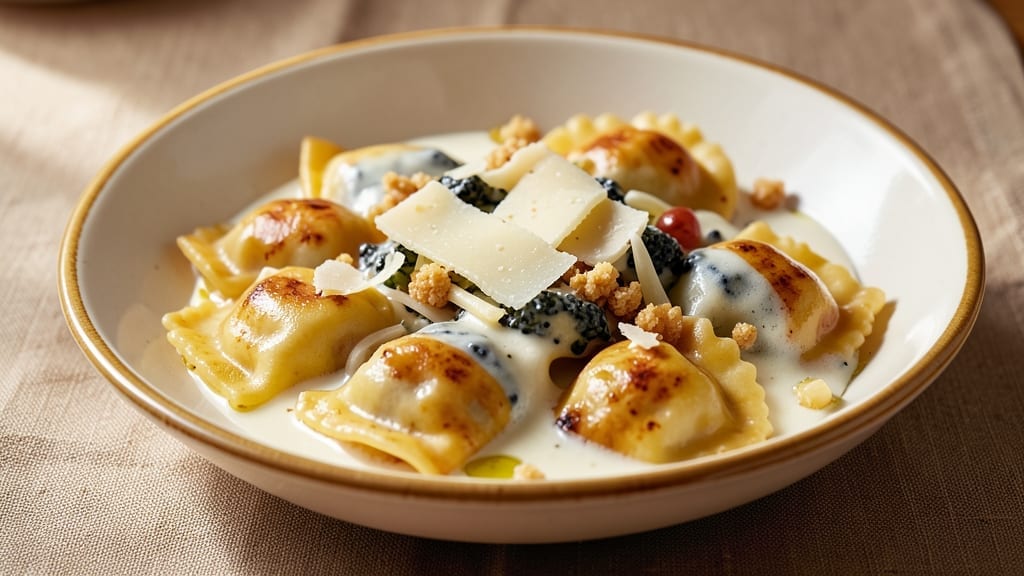
This 5 cheese ravioli sauce recipe transforms ordinary pasta into a luxurious experience with its velvety, multi-layered richness. The secret lies in melting five distinct cheeses—Parmesan, mozzarella, ricotta, Gruyère, and fontina—to create a sauce that’s impossibly creamy yet light, with each cheese contributing its unique character.
I developed this recipe after years of testing, and it’s now my go-to for restaurant-quality results at home.
The magic happens in the melting process, where we gradually incorporate each cheese to maintain a smooth, emulsified texture. No lumps, no graininess—just a silky sauce that clings perfectly to ravioli without weighing them down.
The key technique involves blooming aromatics in butter before adding cream, which creates a flavorful base that supports the cheeses without overpowering them.
What you’ll end up with is a sauce that’s rich yet balanced, with nutty Gruyère, creamy ricotta, and sharp Parmesan working in harmony. The fontina adds a subtle sweetness, while the mozzarella provides that classic stretch you crave in every bite.
This isn’t just a sauce—it’s the kind of dish that turns a simple pasta night into something memorable.
Perfect for special occasions or casual weeknight dinners, this sauce pairs beautifully with homemade or store-bought ravioli. The recipe scales easily, so you can make a small batch for two or double it for a crowd. Let’s create this cheese masterpiece together—your taste buds will thank you.
Ingredients for 5 cheese ravioli sauce
Five cheeses, one sauce—where luxurious meets effortless. These ingredients create velvety magic for your ravioli.
| Ingredient | Amount | Notes |
|---|---|---|
| Extra-Virgin Olive Oil 🫒 | ½ cup | High quality, fruity, cold-pressed |
| Unsalted Butter 🧈 | 4 tbsp | European-style preferred for flavor |
| Shallots 🧅 | 2 whole | Finely minced, not sliced |
| Garlic Cloves 🧄 | 3 cloves | Peeled, minced to paste |
| Heavy Cream 🥛 | 1 cup | Full-fat for optimal richness |
| Parmesan Cheese 🧀 | 1 cup | Freshly grated from block |
| Gruyère Cheese 🧀 | ¾ cup | Finely grated, aged 18 months |
| Fontina Cheese 🧀 | ½ cup | Mild, creamy variety |
| Ricotta Cheese 🧀 | ½ cup | Whole-milk, no additives |
| Mozzarella Cheese 🧀 | ½ cup | Fresh, low-moisture type |
| Diamond Crystal Kosher Salt 🧂 | ½ tsp | Fine grain, not iodized |
| Freshly Ground Black Pepper 🌶️ | ¼ tsp | Cracked peppercorns preferred |
The cheeses are non-negotiable here. Gruyère brings nutty depth, while fontina adds that signature melt. For Gruyère, Cowgirl Creamery or Murray’s are my go-tos—their aged wheels have the perfect balance of tang and sweetness. Fontina? President cheese from the Italian deli section is the secret weapon. Mozzarella should be fresh, never shredded from a bag—Whole Foods or Trader Joe’s carry the best blocks. Ricotta needs to be whole-milk, no additives—Galbani is reliable, but check the label. Parmesan? Only freshly grated from a wedge—Parmigiano-Reggiano from the deli counter is worth the splurge. Butter matters too: European-style like Plugrá or Kerrygold has higher fat content, which prevents graininess in the sauce.
No Gruyère? Comté is a decent swap, though it lacks the same nutty punch. Fontina hard to find? Emmental at half the amount works in a pinch. Fresh mozzarella unavailable? Low-moisture shredded is better than nothing, but toss it in at the very end to preserve stretchiness. The ricotta can be substituted with mascarpone for a richer texture. For the aromatics, shallots add subtle sweetness—yellow or red both work, but avoid green tops. Garlic should be freshly minced; jarred minced garlic lacks the depth. The heavy cream can be swapped for half-and-half, though the sauce won’t be quite as velvety. Salt? Diamond Crystal is ideal, but any fine kosher salt will do—just taste as you go.
This sauce is best made fresh, but it reheats beautifully. Store leftovers in an airtight container with a thin layer of olive oil on top to prevent a skin from forming—keeps for 4-5 days in the fridge. For longer storage, freeze portions in ice cube trays (each cube = 1 tbsp) for up to 3 months. When reheating, add a splash of warm water or milk to restore creaminess. The sauce thickens as it cools, so don’t over-thicken it while cooking—it’ll come together as it sits. Double the recipe? It scales perfectly, just ensure your pot is large enough to handle the volume without boiling over.
Why You’ll Love This Recipe
- Pantry-Friendly Magic: I swear by this sauce—no fancy ingredients, just what’s already lurking in my fridge. Shallots and garlic caramelize in butter and olive oil while I sip coffee, then the heavy cream ties it all together without a single strainer or special tool.
- Cheese Overload: Five cheeses? Yes. The combo of sharp parm, creamy ricotta, and melted mozzarella in that sauce is ridiculously good—rich but not heavy, tangy but smooth. Honestly, my kids don’t even notice the veggies hiding in there.
- Weeknight to Dinner Party: This sauce starts on the stove and ends up on the table faster than you can say “fresh pasta.” Use it for ravioli, toss it with greens, or even drizzle it over grilled chicken. (Yes, even on a Tuesday night.)
- Leftovers That Win: The best part? It reheats like a dream. Store it in the fridge for up to five days, and the flavors only get deeper. My freezer stash is always full because this sauce turns last night’s dinner into tomorrow’s lunch without a second thought.
Step-by-step instructions for 5 cheese ravioli sauce
This rich, velvety sauce delivers perfect melt-in-your-mouth texture every time.
Build the Flavor Base with Shallots and Garlic
Heat the 0.5 cup extra-virgin olive oil and 4 tbsp unsalted butter together in a large saucepan over medium-low heat. Add the 2 whole minced shallots and cook for 8-10 minutes until completely softened and translucent. You’ll know they’re ready when they’ve lost all their raw bite and just begin to turn golden around the edges.
Add the 3 cloves minced garlic and cook for another 30 seconds until fragrant—don’t let it brown or it’ll turn bitter. Here’s the thing: low and slow is key. Rushing this step means your sauce will taste raw and sharp rather than rich and mellow. Keep the heat gentle and let those aromatics develop their full flavor potential.
Create the Creamy Foundation
Pour in the 1 cup heavy cream and bring to a gentle simmer over medium heat. Let it bubble softly for 5 minutes until slightly reduced and thickened. You want to concentrate those flavors before adding the cheeses—this prevents a watery sauce later.
Season with the 0.5 tsp diamond crystal kosher salt and 0.25 tsp freshly ground black pepper, then taste. The cream should be seasoned but not salty—you’ll be adding more salt through the cheeses. This is where the sauce’s depth begins, so don’t skip tasting. Adjust now rather than later when the cheeses are already melted.
Layer the Cheeses for Maximum Melt
Reduce heat to low and begin adding the cheeses in this specific order: start with the 1 cup freshly grated parmesan and 0.75 cup gruyère, stirring constantly until completely melted. Then add the 0.5 cup fontina and 0.5 cup ricotta, mixing until smooth. The ricotta will make the sauce thicker—this is normal and exactly what we want.
Finally, stir in the 0.5 cup mozzarella last. This cheese has the lowest melting point and will give your sauce that signature creamy, stretchy texture. Keep stirring gently—don’t let it scorch. If the sauce looks too thick, add 1-2 tablespoons of pasta water to reach your desired consistency. The goal is a sauce that coats the back of a spoon but still flows smoothly.
Finish and Hold at Perfect Temperature
Remove from heat and let the sauce rest for 5 minutes. This crucial step allows the cheeses to fully emulsify and the flavors to meld together. The sauce should be silky smooth with no graininess—if you see any unmelted cheese bits, stir over low heat for another 30 seconds to finish melting.
Keep the sauce warm over low heat while you cook your ravioli. The ideal serving temperature is 170-180°F—hot enough to melt any remaining cheese on the ravioli but not so hot it cooks them further. Taste before serving and adjust seasoning if needed. This sauce should be rich, slightly tangy from the parmesan, and have that perfect melt that makes every bite irresistible.
Pro Tips For Making 5 Cheese Ravioli Sauce
- Sweat the Shallots: I learned this the hard way—don’t brown them. Shallots release their sweetness when softened, not fried. A splash of water and a lid for 3-4 minutes at medium-low does the trick without burning. (Yes, even if you’re impatient like me.)
- Melt Butter Slowly: Unsalted butter burns faster than you’d think. Start with a low flame, let it foam, then add the shallots. If it browns too quickly, pull the pan off the heat for 10 seconds. This isn’t the prettiest method, but it’s the tastiest.
- Skip the Raw Garlic: Minced garlic burns in seconds, and charred garlic ruins the whole sauce. Mince it fresh, then toss it in after the shallots are soft. Or, for lazy nights, use a garlic press—but still add it last.
- Stir the Cream Gently: Heavy cream curdles if you don’t play nice. Once you add it, reduce heat to low and stir in slow circles. If it starts to thicken too fast, splash in a tablespoon of pasta water to loosen it up. (Your future self will thank you.)
Best sauces and condiments for this recipe
Classic Brown Butter Twist
For a deeper, nutty flavor, brown the butter before adding shallots. Heat the 4 tbsp unsalted butter in a light-colored saucepan over medium heat until it foams, then increase to medium-high and cook until golden brown with nutty aroma (3-5 minutes).
Immediately pour into your saucepan with the olive oil to preserve those rich flavors. This adds a toasty depth that pairs perfectly with the Gruyère and Parmesan. 🔥
Creamy Garlic-White Wine Reduction
Swap the heavy cream for a 1 cup white wine reduction made by simmering 1 cup dry white wine (like Sauvignon Blanc) with 1 tbsp butter until reduced by half. This adds bright acidity that cuts through the richness while enhancing the cheese flavors.
Add the reduction to your sauce after the shallots and garlic step, then proceed with the cheese additions as directed.
Herb-Infused Olive Oil Base
For a lighter, more aromatic sauce, infuse the olive oil with fresh herbs before cooking. Heat 0.5 cup extra-virgin olive oil with 1 tbsp chopped fresh thyme, 1 tbsp chopped fresh rosemary, and 2 cloves smashed garlic over low heat for 5 minutes.
Strain out the herbs before adding shallots. This imparts a fragrant herbal note that pairs beautifully with the creamy cheese blend, especially if you’re serving with spinach or mushroom ravioli.
Spicy Chili Oil Finish
Add a kick by finishing the sauce with 1 tbsp chili oil (store-bought or homemade). Stir it in during the final 30 seconds of cooking after all cheeses are melted. This adds a subtle heat that complements the richness without overpowering.
For a milder version, reduce to ½ tbsp or use ½ tsp red pepper flakes instead. The chili oil should be swirled into the sauce gently to distribute evenly. ✨
Lemon-Zest Brightness
Finish your sauce with 1 tbsp freshly grated lemon zest and 1 tsp lemon juice for a refreshing contrast to the richness. Add these off the heat to preserve their bright flavors. This works especially well if you’re serving with seafood ravioli or a light salad on the side.
The citrus notes balance the dairy perfectly, creating a more complex flavor profile that feels lighter yet still indulgent.
Nutrition facts
Frequently asked questions
Can I make this sauce ahead of time?
This sauce actually tastes better the next day as the flavors meld. Store it in an airtight container with a thin layer of olive oil on top to prevent a skin from forming. It keeps well in the fridge for 4-5 days. For longer storage, freeze it in ice cube trays (each cube = 1 tbsp) for up to 3 months. When reheating, add a splash of warm water or milk to restore creaminess.
What if I don’t have Gruyère?
No problem! You can substitute with Comté for a similar nutty flavor, though it won’t be identical. For a milder option, try Emmental at half the amount. If you’re avoiding dairy, a blend of nutritional yeast and cashew cream can mimic some of the umami depth, though the texture will differ significantly.
Why does my sauce get grainy?
Graininess usually happens when cheeses melt unevenly or the sauce gets too hot. Always stir constantly while melting, and keep the heat at low. If you see lumps, add 1-2 tablespoons of warm water or milk and stir gently. Also, make sure to add mozzarella last—it melts fastest and can cause separation if added too early.
Can I use this sauce for other pasta shapes?
This sauce is perfect for fettuccine, pappardelle, or even gnocchi! The creamy texture works well with any wide, flat noodles that can cradle the sauce. For smaller shapes like penne or farfalle, you might want to thin the sauce slightly with a splash of milk or pasta water to ensure even coating.
How do I prevent the sauce from separating?
To keep the sauce emulsified, never boil it—just simmer gently. The ricotta helps thicken naturally, but if it gets too thick, add 1 tablespoon of pasta water at a time. Also, avoid adding cold ingredients (like cheese straight from the fridge) to a hot sauce—let them sit at room temperature for 10 minutes before melting.

- 6 Egg Cake Recipe with Oil: Light as Air With Buttery Moisture - October 4, 2026
- 4 Bean Casserole Recipe: One-Pan Heartiness With Smoky Paprika Depth - October 4, 2026
- 3-Ingredient Keto Mug Cake Recipe: Microwave Magic in 2 Minutes - October 4, 2026