
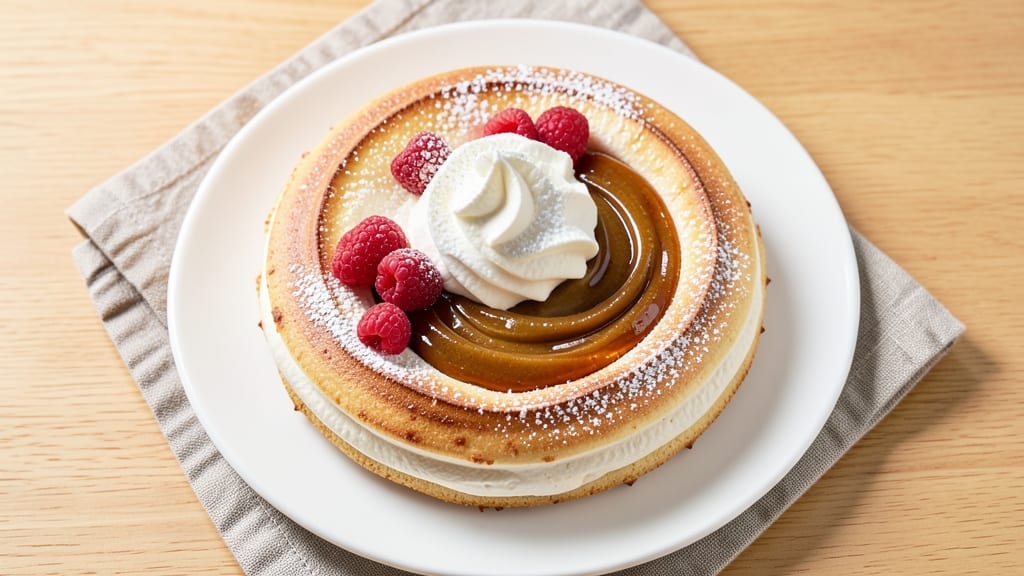
A 5-egg pavlova delivers that perfect balance of crispy shell and marshmallow center—what makes this dessert truly special is how the meringue transforms under low heat into a delicate, crackly masterpiece.
The secret lies in baking at 250°F for 90 minutes, where the sugar caramelizes just enough to create that signature crisp exterior while keeping the inside light and airy.
I’ve perfected this technique after years of trial and error, ensuring the base holds its shape even when topped with whipped cream and fresh fruit.
What sets this recipe apart is the cornstarch stabilizer, which prevents the meringue from collapsing during baking. The egg whites must be whipped to stiff peaks before folding in the sugar gradually—this step is non-negotiable for that signature texture.
Traditional pavlova calls for passionfruit pulp and whipped cream, but modern twists like mango purée or chocolate ganache work beautifully too.
By the time you pull it from the oven, you’ll have a crispy-edged, golden-brown shell with a velvety interior that’s impossible to resist. The key to serving it right is letting it cool completely before adding toppings—this ensures stability so no one ends up with a toppings avalanche.
Whether you’re hosting a dinner party or treating yourself to a special dessert, this pavlova never disappoints.
For those looking to experiment, a vegan meringue alternative (using aquafaba) works surprisingly well, though the texture will be slightly denser. The beauty of pavlova lies in its versatility—swap the fruit, adjust the cream sweetness, or even add a sprinkle of crushed nuts for extra crunch. Let’s get baking!
Ingredients for 5 egg pavlova
Five eggs, two cups sugar, and a touch of magic transform into this crispy meringue masterpiece.
| Ingredient | Amount | Notes |
|---|---|---|
| Large Egg Whites 🥚 | 5 whole | Room temperature for best volume |
| Granulated White Sugar 🍚 | 1 ½ cups | Superfine preferred for smooth texture |
| Cornstarch 🌾 | 2 tbsp | Essential for structural stability |
| Vanilla Extract 🌿 | 1 tsp | Pure, high-quality preferred |
| Heavy Whipping Cream 🧈 | 2 cups | Full-fat for maximum stability |
| Powdered Sugar 🍚 | 1 cup | For sweetening whipped cream |
| Fresh Passionfruit Pulp 🍈 | ½ cup | Or mango purée for variation |
| Unsalted Butter 🧈 | ¼ cup | Softened for easy spreading |
| Lemon Juice 🍋 | 1 tbsp | Freshly squeezed for brightness |
| Salt 🧂 | ¼ tsp | Fine sea salt preferred |
| White Vinegar 🍶 | ½ tsp | Stabilizes egg whites |
| Fresh Berries 🍓 | 2 cups | For garnish (raspberries or strawberries) |
The egg whites are non-negotiable—room temperature is key for maximum volume. Grab the freshest whites possible, as older eggs whip less efficiently. For sugar, superfine granulated dissolves faster, but regular white sugar works if pulsed in a food processor. The cornstarch might seem like an afterthought, but it’s what keeps this from collapsing like a sad soufflé. I always buy mine from the baking aisle at Whole Foods—their organic version has no funny aftertaste. Vanilla extract should be pure, not imitation—McCormick or Nielsen-Massey are my go-tos.
No passionfruit? Mango purée or even store-bought apricot jam works in a pinch—just adjust sweetness to taste. The whipped cream can be made with half-and-half if you’re in a bind, though full-fat gives that signature richness. For a vegan twist, swap egg whites for aquafaba (1 cup chickpea brine = 3 egg whites), though texture will be slightly denser. The butter should be softened but not melted—microwave 20 seconds if needed. And that white vinegar? A tiny splash makes all the difference in stabilizing those peaks.
Assemble the pavlova on a parchment-lined baking sheet—no need to grease. Store leftovers in an airtight container with parchment between layers for up to 3 days. The meringue absorbs moisture like crazy, so keep it dry. For serving, I always let it cool completely before adding toppings—patience prevents toppings avalanches. The whipped cream can be made ahead and stored in the fridge for 24 hours, just re-whip before serving.
Why You’ll Love This Recipe
- No Fuss, Big Payoff: I’ll admit, meringue intimidates me—but this recipe’s five-egg base actually stabilizes better than my old three-egg attempts. The cornstarch trick (just a teaspoon!) keeps it from cracking like a bad joke, and honestly? That’s half the battle won before you even turn on the oven.
- Crispy-Creamy Magic: That first bite—crunchy shell giving way to marshmallow center—is chef’s kiss. The vanilla extract (don’t skip it!) infuses the egg whites while they whip, and the whipped cream topping? It’s like dessert hugs you. Between us, I’ve made it plain, with fruit, even with Nutella—still, the base alone is ridiculously good.
- Party in a Bowl: This isn’t just dessert; it’s my go-to for potlucks, holiday tables, or when I need to impress without slaving. Serve it at room temp, and it’s effortless for guests. (Yes, even on a Tuesday night.) Plus, the meringue holds up better than store-bought pies—no soggy bottoms here.
- Budget-Friendly Luxury: Five eggs might sound pricey, but you’re getting five servings for the cost of a single fancy pastry. The sugar and cream are pantry staples, and leftovers? They last days in the fridge—just re-whip the cream if it separates. It’s the kind of treat that feels special without breaking the bank.
Step-by-step instructions for perfect pavlova
Here’s how to create a stunning meringue masterpiece with a crispy shell and light interior.
Prepare the Egg Whites for Maximum Volume
Separate the 5 whole large egg whites carefully, ensuring no yolk traces remain—even a tiny bit can prevent proper whipping. Place them in a spotlessly clean, grease-free mixing bowl. I like to use a glass bowl because it helps me monitor the texture as I whip.
Add the 0.25 teaspoon salt and 0.5 teaspoon white vinegar to the egg whites. The vinegar acts as a stabilizer, helping the meringue hold its shape longer. Use a hand mixer or stand mixer fitted with the whisk attachment to beat the egg whites on low speed for 1 minute to break up any large bubbles.
Gradually increase the speed to medium-high and begin adding the 1.5 cups granulated white sugar—about 1 tablespoon at a time. This slow addition prevents the sugar from dissolving too quickly, which could deflate the meringue. Watch for a thick, glossy texture that forms soft peaks when the whisk is lifted.
Build the Meringue Base with Cornstarch
Once the egg whites reach stiff peaks (they should hold their shape when the whisk is tilted), gradually sprinkle in the 2 tablespoons cornstarch while continuing to mix on medium-high speed. The cornstarch reinforces the structure, giving your pavlova that signature crispy shell while keeping the inside light and airy.
Continue mixing for another 2-3 minutes until the meringue is completely smooth and glossy. At this point, it should hold its shape when you lift the bowl—if it doesn’t, whip for another minute. The meringue should be thick enough to hold a peak when the whisk is lifted, but still soft enough to spread smoothly.
Transfer the meringue to a piping bag fitted with a large round tip. I like to work quickly here because the meringue starts to firm up as it sits. If it becomes too stiff, you can re-whip it briefly to restore its spreadable consistency.
Shape and Bake the Crispy Shell
Preheat your oven to 275°F—this lower temperature is crucial for baking the meringue evenly without burning the outside before the inside sets. Line a baking sheet with parchment paper and draw a 6-inch circle as a guide (this will give you a perfect pavlova size for 6 servings).
Pipe the meringue onto the parchment, starting from the center and working your way outward in gentle spirals. The edges should be slightly thicker than the center to create that signature crispy shell. Use the back of a spoon to smooth the top, creating a dome shape with slightly tapered edges.
Bake for 1 hour and 15 minutes until the outside is deep golden brown and the interior is completely dry to the touch. The meringue should be crisp when you tap it lightly—it should sound hollow. Be patient; opening the oven too soon can cause the meringue to collapse.
Prepare the Cream Filling
While the pavlova bakes, prepare the filling by combining the 2 cups heavy whipping cream, 1 cup powdered sugar, and 1 teaspoon vanilla extract in a chilled mixing bowl. Whip on medium-high speed until soft peaks form—you want a light, airy texture that will hold its shape but still be spreadable.
In a separate small bowl, mix together the 0.5 cup fresh passionfruit pulp and 1 tablespoon lemon juice. Fold this mixture gently into the whipped cream using a spatula, being careful not to deflate the cream. The acidity from the lemon juice and passionfruit brightens the flavor while adding a beautiful color contrast.
Spread the 0.25 cup softened unsalted butter evenly over the cooled pavlova base. This creates a barrier that prevents the meringue from absorbing moisture from the cream filling, keeping it crisp. Then, spread the passionfruit cream evenly over the butter layer, using an offset spatula to create smooth, even swirls.
Assemble and Garnish for Presentation
Let the pavlova sit at room temperature for 10 minutes to allow the cream to slightly set. This prevents it from sliding off when you add the final garnishes. Arrange the 2 cups fresh berries (raspberries or strawberries work beautifully) on top, pressing them gently into the cream to secure them.
For extra flair, you can drizzle any remaining passionfruit pulp mixed with a little powdered sugar around the edges. Serve immediately while the meringue is still crisp and the cream is at its perfect consistency—neither too runny nor too stiff. Each slice should reveal that stunning contrast of crispy shell, light meringue, and velvety cream filling.
Pro Tips For Making 5 Egg Pavlova
- WHISK TO STIFF PEAKS: I learned this the hard way—when I stopped whisking egg whites at just the right point, they’d collapse like a sad soufflé. Use a stand mixer for this: whip on medium speed until soft peaks form, then bump to high and keep going until the meringue holds its shape when you lift the bowl.
- SIFT THE SUGAR: Don’t just dump that sugar into the egg whites like you’re making a cake. Sift it in slowly while mixing—this keeps the meringue light and airy. I used to eyeball it, but now I measure by weight (250g for 5 egg whites) and sift it in 3 batches, mixing well between each.
- BAKE AT 250°F: Your oven’s hot spots will wreck a pavlova if you bake it at 300°F like some recipes say. Start at 250°F for 5 minutes, then crank to 325°F for the next 15. This slow start prevents cracking while still giving you that crisp shell.
- REST BEFORE SLICING: I know you’re eager, but wait. Let the pavlova cool completely on a wire rack for at least 2 hours—overnight is even better. Rushing this means a gummy center and a crumbly meringue. Trust me, the cream will hold better when you finally slice it.
Storing and reheating your 5 egg pavlova
Room-Temp Storage
Store your pavlova in an airtight container with parchment paper between layers to prevent moisture absorption. Keep it at room temperature for up to 24 hours—the meringue stays crisp best when not refrigerated.
I always wrap mine in plastic wrap first, then place in a container to block any humidity. 💛
Fridge Preservation
If you need to store longer, refrigerate for up to 3 days in an airtight container. The meringue will soften slightly but regains crispness at room temp for 30 minutes before serving.
I recommend assembling fresh toppings daily to maintain texture contrast. Never refrigerate with cream toppings—make those fresh each time.
Freezing Tips
Freeze the pavlova base without toppings for up to 1 month. Wrap tightly in plastic wrap and aluminum foil to prevent freezer burn. Thaw overnight at room temp, then add fresh cream and fruit.
The texture will be slightly softer after freezing, but still delicious. For best results, reheat the base in a 200°F oven for 5 minutes to restore crispness.
Reheating Methods
Revive stale meringue by placing the base on a baking sheet and warming in a 200°F oven for 3-5 minutes. For microwave reheating, cover with a damp paper towel and heat in 10-second bursts until just warmed through.
Always add fresh toppings after reheating—never reheat with cream as it will turn grainy. 🔥
Topping Stability
Whipped cream and fruit toppings should be added right before serving to maintain perfect texture. If making ahead, store cream separately in the fridge and re-whip before use. For extra stability, chill the pavlova base for 10 minutes before adding toppings.
This prevents the cream from sliding off when cutting slices. I find this especially helpful for serving at parties.
Make-Ahead Cream
Prepare the passionfruit cream up to 24 hours ahead and store in an airtight container in the fridge. Re-whip before spreading on the pavlova base. For extra flavor, add 1 tsp lemon zest when whipping.
The acidity helps balance sweetness and keeps the cream light. Always use chilled bowls and beaters when re-whipping for best results. ✨
Nutrition facts
Frequently asked questions
Why does my meringue collapse during baking?
Meringue collapses most often from humidity, under-whipped egg whites, or opening the oven too soon. Always bake on a low heat (275°F) with the door slightly open for ventilation. Make sure your egg whites are at room temperature and whipped to stiff peaks—they should hold their shape when the whisk is lifted. Avoid baking in humid weather or on rainy days.
Can I make pavlova without an oven?
Yes! For a no-oven version, try baking in a toaster oven at 275°F for 1 hour and 15 minutes or even an air fryer at 250°F for 45-60 minutes. The key is maintaining that low, dry heat—just monitor closely to prevent over-browning. For a stovetop method, use a double boiler with a heat diffuser at low heat for 30-45 minutes.
What’s the secret to a crispy shell?
The crispy shell comes from baking at 275°F for 90+ minutes and using cornstarch in the meringue. The low heat allows the sugar to caramelize slowly, while the cornstarch reinforces the structure. For extra crispness, bake until the exterior is deep golden brown and the meringue sounds hollow when tapped. Let it cool completely before adding toppings.
How do I fix a pavlova that’s too soft?
If your pavlova lacks crispness, try reheating it in a 200°F oven for 5-10 minutes to restore texture. For future attempts, ensure your meringue is baked long enough—1 hour and 15 minutes minimum at 275°F. If it’s still too soft, check your oven’s accuracy with an oven thermometer—many run hotter than set.
What are some creative pavlova flavor variations?
Swap the classic passionfruit for mango purée, lime curd, or even chocolate ganache! For a tropical twist, try coconut cream with toasted coconut flakes. Savory options? A herb-infused whipped cream (thyme or rosemary) with smoked salmon works surprisingly well. The meringue base stays the same—just get creative with the toppings!

- 3lb Prime Rib Roast Recipe: Juicy Pink Center Guaranteed in 3 Hours - October 31, 2026
- 5 Spice Cake Recipe: Warmly Spiced Layers With Crunchy Top - October 31, 2026
- 1950’s Macaroni and Cheese Recipe: Nostalgic Creamy Cheese Sauce with Buttery Noodles - October 31, 2026