
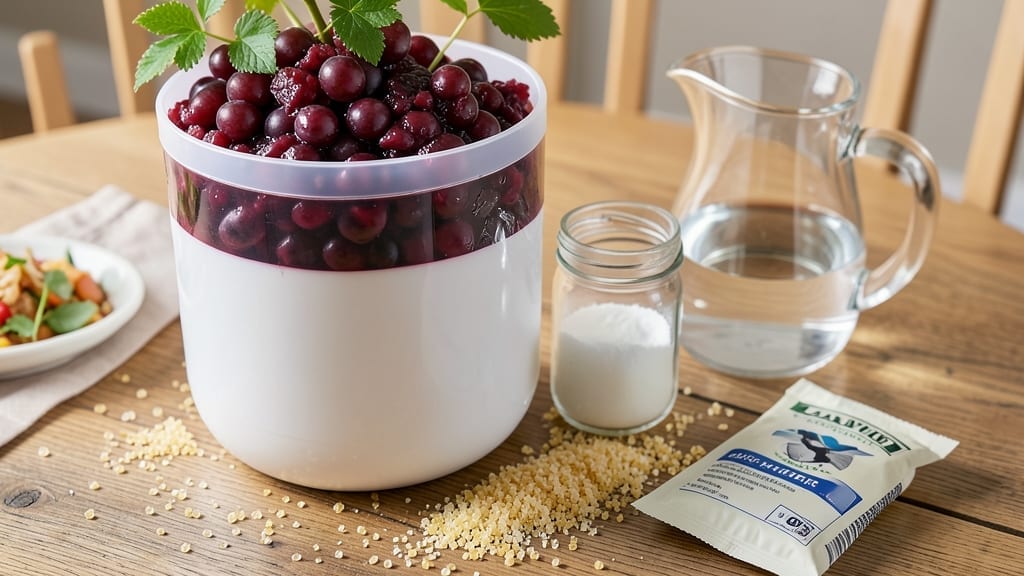
Crafting bold a 5-gallon homemade wine recipe transforms fresh fruit into a rich, fermented beverage with depth and character—no winery required. This recipe delivers restaurant-quality flavor in just 6 weeks, using simple ingredients and precise fermentation techniques that ensure consistency.
The key lies in proper sanitization, yeast selection, and patience during aging, where subtle complexities develop over time.
This foolproof method starts with high-quality fruit (grapes, berries, or apples work exceptionally well) combined with sugar, yeast, and water in a sanitized carboy.
The fermentation process is straightforward but demands attention to detail—using an airlock prevents contamination while allowing CO₂ to escape, and regular temperature monitoring ensures optimal yeast activity. Unlike store-bought wines, homemade batches reward your effort with a unique, personalized flavor profile.
By the time you bottle your wine, you’ll have a rich, balanced beverage with notes of fruit, spice, and subtle acidity—depending on your base ingredients. The aging process (minimum 4 weeks, up to 6 months for deeper flavor) transforms raw fermentation into a refined drink ready to impress.
Whether you’re a beginner or an experienced home winemaker, this recipe guarantees a rewarding result with professional-level quality.
Safety is paramount: always use food-grade equipment, follow alcohol content guidelines, and store bottles properly to prevent explosions. With this step-by-step approach, you’ll master the art of fermentation and unlock a world of homemade wine possibilities—starting with your first bold 5-gallon batch.
Ingredients for 5 gallon homemade wine
Five gallons of fruit, yeast, and precision create restaurant-quality homemade wine in six weeks.
| Ingredient | Amount | Notes |
|---|---|---|
| Fresh Grapes (Red or Black Variety) 🍇 | 12 lbs | Organic preferred, crushed for juice |
| Granulated White Sugar 🍚 | 8 lbs | Non-iodized for fermentation |
| Wine Yeast (Lalvin EC-1118 or Red Star Premier Rouge) 🍄 | 1 package | Specialty yeast for bold reds |
| Campden Tablets (Potassium Metabisulfite) 💊 | 2 tablets | Crushed for sterilization |
| Distilled Water 💧 | 4 ½ gallons | Non-chlorinated, room temperature |
| Acid Blend (Citric Acid + Tartaric Acid) 🍋 | ½ oz | Adjusts acidity balance |
| Food-Grade Oxygen Absorber 🔒 | 2 pieces | For bottling stage |
| Priming Sugar (Corn Sugar) 🍬 | ½ cup | For carbonation at bottling |
| Pectic Enzyme (Pectolase or similar) 🧪 | 1 tbsp | For clear fermentation |
| Food-Grade Plastic Carboy (5 Gallon) 🥫 | 1 whole | With airlock system |
| Food-Grade Bottles (12 oz, Swing Top) 🍷 | 10 whole | For final storage |
| Non-Chlorinated Water (Backup) 💧 | 1 gallon | For rinsing equipment |
The grapes are non-negotiable—organic red or black varieties yield the richest flavor profiles. Local vineyards or specialty grocery stores like Whole Foods carry high-quality options, but avoid bruised fruit. Sugar content is critical: 8 lbs per gallon ensures proper fermentation without over-sweetness. The yeast package matters too—Lalvin EC-1118 is a winemaker favorite for bold reds, available at Wine Supply stores or online retailers. Always check expiration dates, as stale yeast fails to activate properly. For the Campden tablets, Wine Supply or Amazon carry reliable brands—just one crushed tablet per gallon sterilizes the must perfectly.
No Campden tablets? Potassium sorbate at 1/4 tsp per gallon works as a backup, though it’s less effective. Running short on grapes? Substitute with 6 lbs of frozen blackberries or 8 lbs of apples, but adjust sugar accordingly—berries need less, apples more. The acid blend is crucial for balance: citric acid brightens, tartaric adds structure. If you’re unsure about ratios, start with the 0.5 oz recommendation and taste-test before bottling. The pectic enzyme may seem optional, but it clarifies the wine significantly—skip only if you prefer cloudy wine. For the carboy, Blichmann or Vinolok systems are industry standards, but any food-grade plastic with an airlock suffices.
All equipment must be sanitized with Star San or equivalent before use—no shortcuts. The wine ferments best between 65-75°F, so monitor your space closely. Once bottled, store in a cool, dark place for aging—6 weeks minimum, up to 6 months for deeper complexity. The oxygen absorbers are essential during bottling to prevent oxidation. Label bottles with dates to track aging progress. Leftovers? The leftover sugar and acid blend can be stored in airtight containers for 1 year, while yeast packets last 2 years unopened. Always use within 3 months of opening yeast packages.
Why You’ll Love This Recipe
- Five-Ingredient Magic: You only need grapes, sugar, yeast, a Campden tablet, and water—no fancy gadgets or confusing steps. I’ve done this in my kitchen with just a sanitized bucket, a spoon, and patience (the hardest part is waiting).
- Fruit-Forward Richness: That first sip? Pure grape essence with just enough sweetness to balance the yeast’s bite. The Lalvin EC-1118 yeast gives it a velvety finish—no artificial flavors, just real fruit character that improves with time.
- Batch-and-Forget Joy: Make a 5-gallon batch once and sip for months. Perfect for holiday gatherings (impress guests with homemade wine), weekend BBQs, or just because you deserve a glass of something special without the store-bought shortcuts.
- Budget Wins Big: A 5-gallon batch costs pennies per glass—far cheaper than buying wine by the bottle. Plus, you control the quality: sweeter grapes? More sugar. Tart? Let it ferment longer. It’s wine on your terms, not the grocery store’s.
Step-by-step instructions for fermenting bold homemade wine
Transform fresh grapes into rich, fermented wine with precise technique and patience.
Sanitize Equipment and Prepare Grapes
Crush the 12 lbs of fresh grapes using a clean sanitizer solution (mix 1 gallon non-chlorinated water with 2 crushed Campden tablets). This sterilizes both the fruit and your equipment. Transfer the crushed grapes to the 5-gallon food-grade plastic carboy, ensuring no stems or leaves remain—they can impart bitter flavors.
Dissolve the 8 lbs granulated white sugar in 1 gallon of distilled water separately, then pour this sugar solution into the carboy. Stir gently to distribute evenly. The sugar will dissolve completely, creating a sweet must that will later ferment into alcohol. I recommend using a sanitized wooden spoon for stirring to avoid introducing contaminants.
Add Acid Blend and Pectic Enzyme
Measure out the 0.5 oz acid blend and dissolve it in ½ gallon of distilled water before adding to the carboy. This adjustment ensures proper acidity balance, which is critical for both flavor and preservation. The target pH should be between 3.2 and 3.6—test with a wine-specific pH meter if available.
Add the 1 tbsp pectic enzyme directly to the carboy and stir well. This enzyme breaks down pectin in the grape juice, resulting in a clearer final product. Cover the carboy loosely with a clean cloth or sanitized lid and let it sit at room temperature (70-75°F) for 12-24 hours. You’ll notice the mixture become slightly thinner as the enzyme works—this is normal and indicates proper activity.
Initiate Fermentation with Yeast
After the enzyme treatment, open the carboy and sprinkle the 1 package wine yeast (Lalvin EC-1118) evenly over the surface. Seal the carboy with an airlock filled with distilled water, leaving about 1 inch of headspace to prevent overflow as fermentation begins. Place the carboy in a dark, temperature-stable location.
Fermentation will start within 12-24 hours, visible by active bubbling in the airlock. This primary fermentation should last 7-10 days at 70-75°F. Stir the mixture gently once daily during this period to prevent a skin from forming. The liquid will become foamy and develop a fruity aroma—this confirms active yeast metabolism. Taste a small sample after 3-4 days to check sugar conversion; it should taste noticeably less sweet.
Rack and Secondary Fermentation
After 7-10 days, when fermentation slows significantly (bubbling reduces to 1-2 bubbles per minute), it’s time to rack. Carefully siphon the wine into a clean, sanitized 5-gallon carboy, leaving behind the sediment that has settled. Add 1 more gallon of distilled water to replace what was lost during siphoning, then reseal with the airlock.
Secondary fermentation should continue for 4-6 weeks, during which the wine will develop deeper flavors. Monitor the airlock activity—it should remain active but less vigorous than primary fermentation. After 4 weeks, test the wine’s specific gravity using a hydrometer. If it reads below 1.000, fermentation is complete. If not, allow it to continue until it stabilizes. The wine should smell clean and fruity, with no harsh or vinegary notes.
Bottle with Priming Sugar and Oxygen Absorbers
Once fermentation is complete, siphon the wine into 10 swing-top bottles, leaving 1 inch of headspace in each. Add 1 piece of food-grade oxygen absorber to each bottle to prevent oxidation during storage. Dissolve the 0.5 cup priming sugar in ½ cup of distilled water, then add 1 tablespoon of this solution to each bottle. Seal the bottles tightly and store them in a dark, cool place (55-65°F) for 4-6 weeks to allow carbonation to develop.
After the carbonation period, check for proper pressure by gently opening one bottle. It should have a slight fizz but not be overly fizzy. If the wine is still flat after 6 weeks, you may need to add more priming sugar and rebottle. Once carbonated to your liking, store the bottles at 50-55°F for at least 3 months before drinking to allow flavors to fully mature. The final product should have rich, fermented fruit notes with balanced acidity and a smooth finish.
Pro Tips For Making 5 Gallon Homemade Wine
- Crush Grapes Cold: Skip the warm mash—dump your grapes straight into the fermenter at room temp (around 70°F). I used to crush them in the sun, thinking heat helped, but it just turns your must into a bacterial buffet. Cold grapes mean cleaner fermentation and less risk of wild yeast taking over.
- Sanitize Like Your Life Depends On It: Campden tablets aren’t just for show—dissolve both tablets in a gallon of sterile water (not tap) and let it sit for 24 hours before adding to your must. I learned this after my first batch turned to vinegar because a dirty spoon hitchhiked in. No shortcuts here.
- Yeast Needs Warmth: Rehydrate your Lalvin EC-1118 or Premier Rouge in warm (not hot) distilled water (around 85°F) for 15 minutes before pitching. Cold yeast? It’ll wake up sluggish, and your fermentation will crawl. I’ve seen batches stall because of this—don’t let it happen to you.
- Stir the Sugar: Don’t just dump sugar into the must—dissolve it in a little warm water first, then stir like you’re mixing pancake batter. Undissolved sugar sits at the bottom, creating a gummy mess that yeast avoids. Trust me, your future self will notice the difference.
Best sauces and condiments for this dish
Sweetening Agents
Homemade wine relies on sugar for fermentation, but not all sweeteners work equally well. I use granulated white sugar because it dissolves completely and provides consistent fermentation, but honey or maple syrup can add unique depth—just reduce sugar by 1 lb if substituting.
For a drier wine, cut sugar to 6 lbs and add 1 tsp tannin powder to balance. Always use non-iodized sugar to avoid inhibiting yeast activity. 🍯
Flavor Enhancers
Elevate your wine with spices like cinnamon sticks (2-3) or vanilla bean (1 split) during fermentation. For berry wines, add 1 tbsp blackberry leaves for herbal notes.
I like orange peel (1 strip) in red wines—it adds citrus brightness without overpowering. Remove spices after 3 days of fermentation to prevent bitterness. 🍊
Acidity Adjustments
The 0.5 oz acid blend (citric + tartaric) is crucial for balance, but you can tweak it: more citric acid brightens flavors, while tartaric acid adds structure. For tart wines (like Riesling), increase to 0.75 oz total.
Test pH after adding—aim for 3.2-3.6. If your wine tastes flat, a pinch of cream of tartar during bottling can restore vibrancy. 🍋
Clarifying Agents
Skip the pectic enzyme for a cloudy, rustic wine—it adds texture and complexity. For crystal-clear results, use 1 egg white (pasteurized) or 1 tbsp bentonite clay during racking.
I prefer gelatin (1 tsp) for reds—it binds tannins beautifully. Always filter through a fine cheesecloth before bottling for professional clarity. ⚡
Carbonation Boosters
Need more fizz? Add 0.25 cup extra priming sugar per bottle for sparkling wine. For a dry sparkling style, use corn sugar—it ferments faster than cane sugar.
If your wine is too fizzy, rebottle with less sugar (0.25 cup total). Always store bottles upside-down during carbonation to maximize bubbles. 🥂
Post-Fermentation Infusions
After bottling, infuse wine with 1 tsp oak chips (per bottle) for 3 weeks to add vanilla and spice notes. For herbal wines, add 1 sprig rosemary or 1 tsp lavender buds—remove after 1 week.
I love chocolate-covered cherries (2 per bottle) in dessert wines for depth. Always taste-test before serving! 🍫
Nutrition facts
Frequently asked questions about homemade wine
How do I know when fermentation is complete?
Fermentation is complete when the airlock stops bubbling almost entirely (1-2 bubbles per minute) and the wine smells clean and fruity with no harsh or vinegary notes. Use a hydrometer to confirm—when the specific gravity reads below 1.000, fermentation has finished. This typically takes 7-10 days for primary fermentation and 4-6 weeks for secondary.
Can I use frozen fruit instead of fresh grapes?
Yes, but with adjustments! Frozen berries (like blackberries) work well—use 6 lbs instead of grapes and reduce sugar to 6 lbs since frozen fruit already contains natural sugars. Thaw the fruit first and strain out seeds or skins for a smoother texture. For apples, use 8 lbs of fresh or frozen fruit with 7 lbs sugar.
Why did my homemade wine turn cloudy?
Cloudiness is common if you skipped the pectic enzyme or clarifying agents. For a rustic look, embrace it! For crystal-clear wine, add 1 egg white (pasteurized) or 1 tsp gelatin during racking, then filter through fine cheesecloth before bottling. Always use sanitized equipment to prevent bacterial cloudiness.
How long should I age my wine before drinking?
Minimum 4 weeks for basic drinkability, but 3-6 months yields richer flavors. Red wines benefit from longer aging (up to 6 months), while fruit wines can be enjoyed after 2-3 months. Store bottles horizontally in a 50-55°F dark place—colder temps slow aging, while warmth speeds it up.
Is my homemade wine safe to drink?
Yes, if you followed proper sanitization and fermentation steps. The wine should reach at least 12% alcohol (test with a hydrometer), which preserves it safely. Never drink wine that smells off (vinegary, rotten, or overly sweet)—this indicates contamination. If in doubt, pasteurize by heating to 140°F for 30 minutes before bottling.

- 3lb Prime Rib Roast Recipe: Juicy Pink Center Guaranteed in 3 Hours - October 31, 2026
- 5 Spice Cake Recipe: Warmly Spiced Layers With Crunchy Top - October 31, 2026
- 1950’s Macaroni and Cheese Recipe: Nostalgic Creamy Cheese Sauce with Buttery Noodles - October 31, 2026