
A 5-ingredient yeast bread recipe that delivers restaurant-quality results with minimal effort—this is the no-knead magic you’ve been waiting for. With just flour, yeast, water, salt, and a touch of sugar, you’ll create a bread so tender and flavorful it’ll fool even experienced bakers.
The secret lies in a slow rise and high-heat baking, transforming simple ingredients into a loaf with a crisp crust and airy crumb.
What makes this recipe truly revolutionary is its foolproof simplicity: no kneading, no fancy equipment, and no waiting all day. The dough comes together in minutes, rests while you handle other tasks, and bakes in under an hour.
Perfect for beginners or anyone short on time, this method preserves the soul of traditional bread-making while adapting to modern life. The texture is what you’d expect from an artisanal bakery—not a compromise.
By the time your timer goes off, you’ll have a golden-brown loaf with a crackly crust and soft interior that practically melts in your mouth. The aroma alone will have everyone in your kitchen asking for seconds.
This isn’t just bread—it’s a game-changer for home bakers who want quality without complexity. Ready to master the art of no-knead? Let’s get started.
The best part? This recipe scales effortlessly—make one loaf for your family or double the batch for gatherings. Store leftovers at room temperature for freshness, or freeze slices for quick toast.
With just five ingredients and a little patience, you’ll have bread that tastes like it came from a professional bakery. The proof is in the slice—crisp, warm, and impossible to resist.
Ingredients for 5 ingredient bread recipe with yeast
Five simple ingredients transform into restaurant-style bread with no kneading required.
| Ingredient | Amount | Notes |
|---|---|---|
| All-Purpose Flour 🌾 | 4 cups | Unbleached preferred for lighter crumb |
| Active Dry Yeast 🍞 | ¼ oz | Or 2.25 tsp, ensure freshness |
| Warm Water 💧 | 1 ½ cups | 110°F for optimal yeast activation |
| Kosher Salt 🧂 | 1 ½ tsp | Diamond Crystal preferred for purity |
| Granulated Sugar 🍚 | 1 tbsp | Feeds yeast for better rise |
Flour is the foundation—King Arthur or Bob’s Red Mill make all the difference for that tender crumb. Look for unbleached if you want a lighter loaf, but bleached works in a pinch. Yeast is the magic: check the expiration date—old yeast won’t activate properly. I always buy mine in small jars from Whole Foods to keep it fresh. The sugar might seem like overkill, but it’s what gets the yeast party started. Use white sugar here; brown sugar can make the crust too dark.
No yeast? Instant yeast works 1:1, but active dry needs proofing first. Short on sugar? Honey or maple syrup at half the amount gives extra flavor. Salted butter craving? Add 1 tbsp melted butter to the dough—it makes the crust irresistibly crisp. The water temperature matters: too hot kills yeast, too cold slows activation. Aim for warm to the touch (like bathwater). For a whole wheat version, swap half the flour for whole wheat—just add 1 extra tbsp water since it absorbs more.
Mix the dough, let it rest, then bake. That’s it. No fancy tools needed—just a bowl and your hands. Store leftovers at room temperature for 2-3 days in a bread bag, or freeze slices for up to 3 months. For extra crispiness, reheat slices in a 350°F oven for 5 minutes. The bread improves overnight—trust the process. Double the recipe? Use a 9×5-inch loaf pan or shape into two smaller loaves.
Why You’ll Love This Recipe
- Pantry Magic: I swear by this one—just flour, yeast, water, salt, and sugar. If you’ve got those five, you’ve got bread. No fancy ingredients, no stress.
- Golden Crust Secret: That sugar in the dough? It’s not just for sweetness—it caramelizes the crust into something crispy and addictive. Toast it for extra crunch, and you’ll forget it’s “just” yeast bread.
- Weeknight Hero: Between us, this is my go-to when I’m too tired to measure out a dozen ingredients. Toss it together while dinner simmers, and you’ve got warm bread ready when the meal is done.
- Budget Bread: A whole loaf for pennies? With these five staples, I make enough for sandwiches, toast, or even breadcrumbs—no wasted dough, no wasted money. My wallet thanks me every time.
Step-by-step instructions for 5-Ingredient yeast bread
Here’s how to transform simple pantry staples into homemade bread with minimal effort.
Activate the Yeast with Warm Water and Sugar
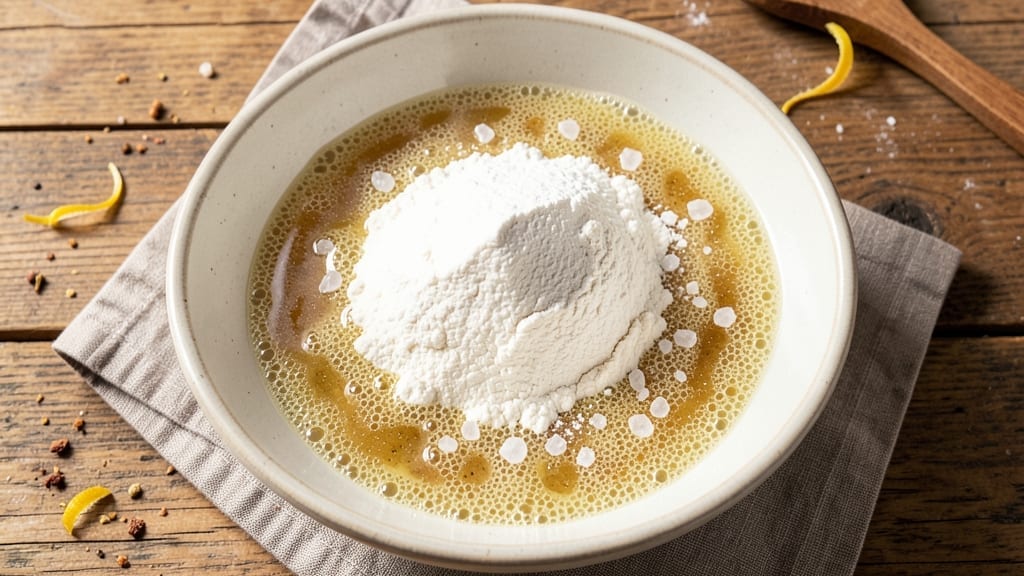
In a large mixing bowl, combine the 1.5 cups warm water (about 110°F) with the 1 tbsp granulated sugar and 0.25 oz active dry yeast. Stir gently with a wooden spoon and let sit for 5-10 minutes until you see bubbles forming on the surface. This tells you the yeast is alive and ready to work its magic.
If no bubbles appear after 10 minutes, your yeast might be expired. In that case, start fresh with new yeast—this is the foundation of your bread, and skipping it leads to dense, flat results. The mixture should look slightly foamy, almost like a thin batter, when ready to proceed.
Mix the Dough Until Just Combined
Add the 4 cups all-purpose flour and 1.5 tsp kosher salt to the yeast mixture. Using a wooden spoon or your hands, stir vigorously until a shaggy dough forms. You’ll notice the dough will be sticky and wet—this is normal with no-knead bread. Resist the urge to add extra flour; the dough needs moisture to develop properly.
Once the flour is fully incorporated and the dough comes together in a rough mass, let it rest for 2 minutes. This brief pause helps the gluten relax slightly, making the next step easier. The dough should be soft but not sticky enough to cling to your fingers—if it is, you’re good to go.
Let the Dough Rise Until Doubled in Size
Lightly oil a large mixing bowl with a neutral oil (like vegetable or canola) and transfer the dough to it. Cover the bowl loosely with plastic wrap or a damp kitchen towel. Place the dough in a warm spot—like near a turned-off oven with the light on, or on top of your refrigerator—to rise for 1-2 hours.
You’ll know it’s ready when the dough has visibly doubled in size and looks puffy. Gently press your finger into the dough—if it springs back slowly (not immediately), it’s ready. Overproofing here leads to a dense loaf, so keep an eye on it during the last 30 minutes of rising. The ideal dough should feel light and airy, with a slightly domed top.
Shape and Bake for Crispy, Golden Bread
Preheat your oven to 375°F and place a baking sheet on the middle rack. Line the baking sheet with parchment paper for easy removal. Turn the risen dough onto the prepared baking sheet and gently shape it into a round loaf by folding the edges toward the center. The dough will resist at first, but don’t force it—just coax it into shape.
Bake for 25-30 minutes until the bread is golden brown and sounds hollow when tapped on the bottom. If the top browns too quickly, tent the bread with aluminum foil after 15 minutes to prevent over-browning. The internal temperature should reach 190-200°F when done. The crust should be crisp, and the interior should be soft and fluffy.
Cool and Enjoy Your Homemade Bread
Remove the bread from the oven and let it cool on a wire rack for at least 10 minutes before slicing. This resting period allows the steam inside to escape, preventing a gummy texture. The bread will continue to firm up as it cools, developing that perfect balance of crisp crust and tender crumb.
Slice the bread and serve warm with butter or your favorite spread. You’ll be amazed at how simple ingredients can create such a satisfying loaf. Store any leftovers wrapped in a clean kitchen towel at room temperature for up to 3 days, or freeze for longer storage. The flavor actually improves slightly the next day as the crumb firms up!
Pro Tips For Making 5 Ingredient Bread Recipe With Yeast
- MEASURE WATER PRECISELY: This isn’t a “close enough” recipe—yeast needs exact hydration. Use a kitchen scale for 110g warm water (about ½ cup) or measure it cold in a liquid measuring cup, then warm it to 105-110°F (40-43°C). Too hot kills yeast; too cold slows fermentation. I learned this after my first batch rose like a sad soufflé.
- DISSOLVE YEAST FIRST: Skip mixing yeast directly into flour—it’ll clump and die. Instead, sprinkle it over warm water with sugar, stir, then let sit 5 minutes until frothy. This guarantees activation before flour gets in the way. (Yes, even if you’re impatient like me.)
- KNEAD JUST ENOUGH: This isn’t sourdough—overworking gluten makes dense bread. Mix flour, salt, and yeasted water, then knead by hand for 3-4 minutes until slightly tacky. Stop when the dough pulls away cleanly from the bowl. I used to punch it until my arm ached; the bread was tougher for it.
- LET IT RISE UNTIL DOUBLED: Don’t rush the rise—wait until the dough puffs to nearly double its size (about 1-1.5 hours, depending on warmth). Poke it: if it springs back slowly, it’s ready. My first loaf collapsed because I pulled it too soon. Patience here means better flavor and texture.
Best sauces and condiments for this recipe
Classic Garlic Butter
Nothing elevates this simple bread like a generous spread of garlic butter. Melt 2 tbsp unsalted butter with 1 minced garlic clove and a pinch of salt until fragrant.
Brush the warm butter on freshly baked slices—it melts into the crust beautifully. For extra richness, add ½ tsp lemon zest to brighten the flavor. 🧄
Honey-Lavender Glaze
Drizzle slices with a delicate honey-lavender glaze for a floral touch. Mix 2 tbsp honey with ½ tsp dried culinary lavender buds (steeped in warm water for 10 minutes), then strain.
Brush on warm bread—this pairs perfectly with cheese boards or charcuterie. Store-bought lavender works, but fresh is ideal if you have it.
Whole-Grain Mustard Spread
A tangy whole-grain mustard spread transforms this bread into a sandwich star. Mix 2 tbsp Dijon mustard with 1 tbsp honey and 1 tbsp crème fraîche. Spread on toasted slices and pair with smoked salmon or roasted chicken.
The mustard’s depth cuts through rich proteins beautifully. For extra crunch, sprinkle with toasted sesame seeds before serving.
Olive Oil & Rosemary
Drizzle slices with high-quality extra-virgin olive oil and sprinkle with fresh rosemary leaves (finely chopped). The oil’s fruity notes complement the bread’s crust, while rosemary adds an earthy aroma.
Use Penzeys brand rosemary for the best flavor. This combo works wonders with grilled meats or as a simple side for soups.
Spicy Chipotle Aioli
For a kick, whip up a spicy chipotle aioli by blending ¼ cup mayonnaise with 1 tsp adobo sauce (from canned chipotles) and ½ tsp lime juice. Spread on toasted bread and top with avocado slices.
The smoky heat balances the bread’s mild sweetness perfectly. Store-bought adobo sauce works, but homemade is even better if you’re feeling adventurous.
Sweet Cinnamon Sugar
Turn this bread into a dessert with a cinnamon sugar coating. Mix 2 tbsp granulated sugar with 1 tsp cinnamon, then sprinkle on warm slices. Toast in a 350°F oven for 5 minutes** until golden and caramelized.
Serve with vanilla ice cream or whipped cream for a cozy treat. This is my go-to for weekend breakfasts—simple but always a crowd-pleaser. 🍯
Nutrition facts
Frequently asked questions
Can I use instant yeast instead of active dry yeast?
Yes, you can substitute instant yeast 1:1 by weight—just skip the proofing step with warm water and sugar. Sprinkle the instant yeast directly into the dry ingredients when mixing. The recipe will still work perfectly since instant yeast activates when mixed with liquids in the dough.
Why did my dough collapse after baking?
This usually happens from overproofing (letting the dough rise too long) or opening the oven too early. Keep an eye on the dough during the final 30 minutes of rising—it should double but not collapse when gently pressed. Bake until the internal temperature reaches 190-200°F for best results.
How do I make this bread without a baking sheet?
No problem! Shape the dough into a round loaf and place it directly on the oven rack (preheated to 375°F) for 25-30 minutes. For extra crispiness, bake on a cast-iron skillet or a heatproof plate. Just be sure to rotate the bread halfway through for even browning.
Can I add herbs or seeds to this recipe?
Mix in 1 tbsp dried herbs (like rosemary or thyme) or 2 tbsp seeds (sesame, poppy, or flax) with the flour. For fresh herbs, use 1 tbsp finely chopped (like parsley) and add them after the first rise. Just be mindful of the dough’s texture—too many additions may make it denser.
What’s the best way to reheat stale bread?
Wrap slices in foil and reheat in a 350°F oven for 5-7 minutes until warm and crispy. For a quicker fix, toast in a toaster or air fryer at 375°F for 3-4 minutes**. Avoid the microwave—it makes bread gummy. The oven method restores that fresh-baked texture perfectly.

- 3lb Prime Rib Roast Recipe: Juicy Pink Center Guaranteed in 3 Hours - October 31, 2026
- 5 Spice Cake Recipe: Warmly Spiced Layers With Crunchy Top - October 31, 2026
- 1950’s Macaroni and Cheese Recipe: Nostalgic Creamy Cheese Sauce with Buttery Noodles - October 31, 2026