
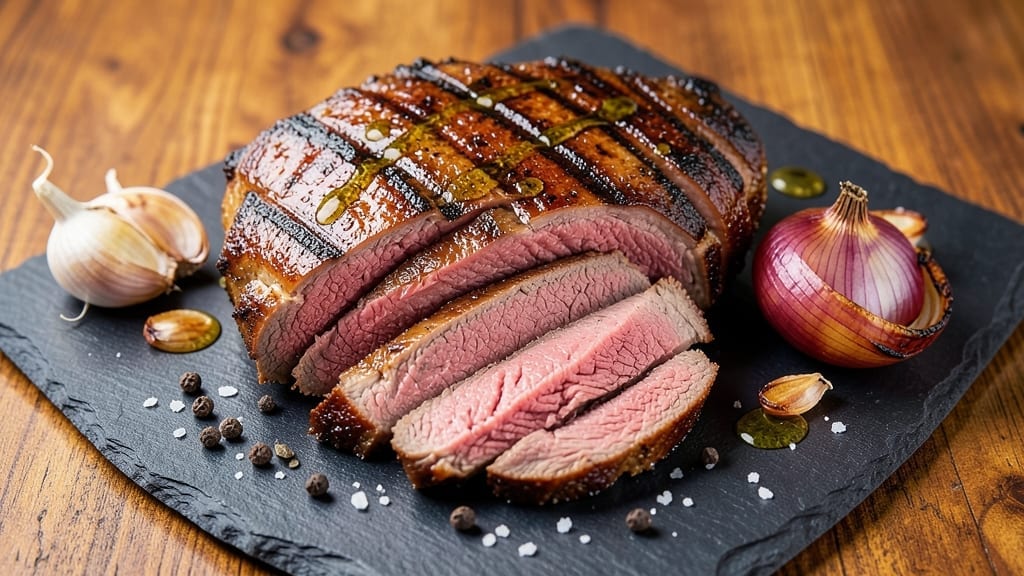
A 5-pound rib eye roast transforms a simple Sunday dinner into a showstopping centerpiece—tender, flavorful, and perfect for slicing into generous portions. The secret lies in a high-heat sear followed by precise low-and-slow roasting, ensuring every slice stays juicy with a caramelized crust.
I’ve perfected this method over years of hosting dinner parties, and it never fails to impress. What sets this recipe apart is the open-faced sear technique, where the roast rests uncovered during the final minutes to develop a deep, meaty crust without drying out the interior.
A simple salt-and-pepper rub enhances the beef’s natural richness, while a 30-minute rest before carving locks in moisture for effortless, crowd-pleasing slices. By the time you serve this roast, you’ll have a perfectly medium-rare center (or well-done, if preferred) with a glossy, mahogany crust that slices cleanly.
The aroma alone will have everyone gathering at the table—this is the kind of meal that makes an ordinary weeknight feel special. Pair with classic sides like garlic mashed potatoes and roasted vegetables, or elevate it with a red wine reduction for dipping. Let’s get started on the perfect roast.
Ingredients for 5 pound rib eye roast
Eight essential ingredients elevate this 5-pound rib eye roast into a restaurant-quality centerpiece.
| Ingredient | Amount | Notes |
|---|---|---|
| Rib Eye Roast 🥩 | 5 lb | Bone-in preferred, trimmed of excess fat |
| Kosher Salt 🧂 | 1 ½ tbsp | Diamond Crystal preferred for even distribution |
| Freshly Ground Black Pepper 🌶️ | 1 ½ tbsp | Cracked peppercorns for optimal freshness |
| Extra-Virgin Olive Oil 🫒 | 2 tbsp | High smoke point for searing |
| Yellow Onion 🧅 | 1 whole | Cut into wedges for aromatics |
| Garlic Cloves 🧄 | 6 cloves | Smashed for intense flavor infusion |
| Fresh Rosemary 🌿 | ½ cup | Needle-like sprigs for aromatic depth |
| Fresh Thyme 🌿 | ¼ cup | Leaves only for subtle earthiness |
| Unsalted Butter 🧈 | 4 tbsp | Cold, cubed for basting |
| Red Wine 🍷 | 1 cup | Bold Cabernet Sauvignon for deglazing |
| Beef Bone Broth 🍲 | 1 cup | Homemade preferred for depth |
| Balsamic Vinegar 🍶 | 1 tbsp | For finishing drizzle |
The rib eye roast is the star, and quality matters. Look for USDA Prime or Choice grade with good marbling—Costco or Whole Foods carry excellent selections. Bone-in roasts develop richer flavor, but trim excess fat to ¼-inch thickness for cleaner slices. For the herbs, fresh is non-negotiable—dried won’t deliver the same aromatic punch. The olive oil should be light golden in color, not dark or peppery. If using pre-smashed garlic, Patagonia or Lyre brands from the grocery store work well, but fresh is always better. Let the roast sit at room temperature for 1 hour before cooking to ensure even doneness.
No kosher salt? Diamond Crystal is ideal, but Morton’s in a pinch works—just use slightly more. Substituting butter? Ghee works beautifully for basting. For the red wine, any bold Cabernet Sauvignon does the trick—what’s open in your fridge will work. Short on fresh rosemary? Fresh thyme at double the amount bridges the gap, though it won’t be identical. The beef bone broth can be swapped for beef stock, but homemade adds layers of richness. For the balsamic, aged 25+ years is ideal, but a good Trader Joe’s bottle works fine. The key is to use full-fat ingredients—this isn’t a diet-friendly roast, and it shouldn’t be.
The roast reheats beautifully—200°F oven for 30 minutes with a splash of broth keeps it moist. Store leftovers in airtight containers for up to 5 days, or freeze portions for 3 months. For presentation, slice against the grain into ¼-inch thick pieces and arrange on a platter with the pan juices reduced by half. The crust will stay intact if you let it rest 30 minutes before slicing—don’t skip this step. For a quick weeknight shortcut, prep the roast the night before and refrigerate uncovered to dry the surface slightly for better crust formation.
Why You’ll Love This Recipe
- Two-Ingredient Magic: The rib eye and olive oil alone do most of the work—just a quick sear, a sprinkle of salt, and the oven handles the rest. Honestly, the onions are just there to make me feel fancy, but the beef carries everything.
- Weeknight Crowd-Pleaser: This feeds six without stress—perfect for game days, Sunday dinners, or when your in-laws drop by unannounced. (Yes, even on a Tuesday night.) The leftovers? Just as good reheated the next day.
- Budget-Friendly Luxury: A 5-pound roast stretches to actual meals, not just scraps. Slice it thin for sandwiches, dice it for hash, or serve thick for steak night—same beef, endless possibilities.
- Crispy-Centered Perfection: That first bite where the crust gives way to tender meat? Chef’s kiss. The kosher salt and pepper do all the heavy lifting, and the caramelized onions add just enough sweetness to make it feel like a restaurant dish.
Step-by-step instructions for 5-Pound rib eye roast
Here’s the method that guarantees ultra-juicy results with a perfect open-faced sear every time.
Prepare and Season the Roast
Remove the 5 lb rib eye roast from the refrigerator and let it sit at room temperature for 1 hour. This allows for even cooking and prevents cold spots in the center. Pat the roast dry with paper towels—this step is critical for achieving that coveted crust. I use two layers of paper towels and press firmly to remove all moisture.
In a small bowl, combine the 1.5 tbsp kosher salt and 1.5 tbsp freshly ground black pepper. Generously coat the roast with this mixture, pressing it into the meat so it adheres evenly. Pay special attention to the bone side and edges, as these areas tend to dry out more quickly during cooking. The salt will begin to draw out moisture, which is why we wait until after seasoning to pat the roast dry.
Sear the Roast for Maximum Flavor
Preheat your oven to 450°F for the sear. Heat a large oven-safe skillet over high heat until it’s smoking hot. Add the 2 tbsp extra-virgin olive oil and swirl to coat the bottom evenly. Place the seasoned roast in the skillet, bone-side down, and sear for 5 minutes without moving it.
I press down gently on the roast during the first minute to ensure even contact with the pan. This prevents it from curling and ensures the entire surface develops that beautiful crust. After 5 minutes, carefully flip the roast and sear the other side for another 5 minutes. The edges should be deeply browned and the surface should release easily from the pan when you lift it with a spatula.
Roast with Aromatics for Depth of Flavor
Transfer the seared roast to the preheated oven. Cut the 1 whole yellow onion into wedges and smash the 6 cloves garlic lightly with the side of your knife. Place the onion and garlic in the same skillet with the roast. Add the 0.5 cup fresh rosemary and 0.25 cup fresh thyme, spreading them around the roast.
Pour the 1 cup red wine into the skillet, scraping up any browned bits from the bottom. This deglazing step captures all the flavor that would otherwise stick to the pan. Roast the rib eye for 20 minutes at 450°F, then reduce the heat to 325°F and continue roasting for another 1 hour and 15 minutes, or until the internal temperature reaches 125°F.
Rest and Create the Pan Sauce
Remove the roast from the oven and transfer it to a cutting board. Tent loosely with aluminum foil and let it rest for 30 minutes. During this time, place the skillet with the aromatics and wine on the stovetop over medium heat. Add the 4 tbsp unsalted butter and 1 cup beef bone broth, scraping up any browned bits from the bottom of the pan.
Simmer the sauce for 5-7 minutes until it reduces slightly and thickens. The sauce should coat the back of a spoon and have a rich, caramelized appearance. Taste and adjust the seasoning with additional salt and pepper if needed. The reduced sauce will add incredible depth of flavor to your slices.
Finish with Balsamic and Serve
After the roast has rested, slice it against the grain into ½-inch thick slices. Arrange the slices on a platter and drizzle generously with the 1 tbsp balsamic vinegar. The acidity of the balsamic cuts through the richness of the beef and adds a beautiful glossy finish.
Serve immediately with the pan sauce spooned over the top. Each slice should be incredibly tender with a perfect crust, and the sauce should cling beautifully to the meat. The internal temperature should reach 130-135°F when sliced, ensuring maximum juiciness. This method guarantees a roast that’s so tender it practically falls apart, making it perfect for feeding a crowd.
Pro Tips For Making 5 Pound Rib Eye Roast
- SEAR FIRST, THEN SALT: I learned this the hard way—salt the rib eye after searing, not before. The crust forms better when the meat hits the pan dry, and adding salt too soon just makes it stick. Pat it dry first, then sear until deep brown, and then hit it with kosher salt while it’s still sizzling hot.
- USE A MEAT THERMOMETER: No, guessing isn’t good enough. A 5-pound rib eye needs precision—aim for 130°F for medium-rare (yes, it’ll rise to 135°F while resting). I used to pull it “when it looked done,” and it was always overcooked. A $20 thermometer changes everything.
- SLICE AGAINST THE GRAIN: This isn’t just a butcher’s trick—it’s a texture game-changer. Rib eye has long muscle fibers, and cutting perpendicular makes each bite tender. If you’re unsure which way is “against,” look for the widest grain pattern and slice at a 45-degree angle to it.
- CARAMELIZE ONIONS FIRST: Skip the raw onion chunks—sauté them in olive oil until deep golden brown (about 15 minutes) before adding to the pan. They’ll add sweetness and depth without overpowering the beef. I used to toss them in raw, and they just turned to mush. Now they’re the star of the pan juices.
Flavor customization for these flavors
Classic Herb Crust
For a restaurant-worthy finish, create a herb butter crust by mixing 4 tbsp softened unsalted butter with 1 tbsp chopped fresh rosemary and 1 tbsp chopped thyme. Spread this mixture over the roast after searing but before roasting.
The butter melts into a golden, aromatic crust while keeping the meat juicy. I like to add ½ tsp smoked paprika for a subtle smoky depth that pairs beautifully with the red wine aromatics. 🌿
Spicy Kick
If you love heat, add 1 tbsp crushed red pepper flakes to the salt-and-pepper rub before searing. For a smokier heat, swap the red pepper flakes for 1 tsp chipotle powder> or ½ tsp cayenne pepper.
I also recommend adding 1 tbsp finely chopped fresh jalapeños to the pan sauce for a bright, spicy finish. This works especially well with a bourbon reduction instead of balsamic.
Umami Boost
Elevate the flavor profile with umami-rich additions. Add 1 tbsp soy sauce or 1 tsp fish sauce to the red wine when deglazing the pan. For extra depth, sprinkle 1 tbsp dried porcini mushrooms (rehydrated and finely chopped) over the roast before roasting.
I also love adding 1 tbsp Worcestershire sauce to the pan sauce for a savory complexity that complements the beef perfectly. 🍄
Sweet and Tangy
Balance the richness with a sweet-tangy contrast by adding 1 tbsp honey> or 1 tbsp maple syrup to the pan sauce during the final reduction.
For a fruity twist, deglaze with ½ cup apple cider> instead of red wine and finish with 1 tbsp apple butter drizzled over the slices. This pairing works especially well with a medium-rare> finish, where the sweetness enhances the beef’s natural flavors.
Garlic and Mustard Glaze
For a bold, tangy glaze, mix 2 tbsp Dijon mustard with 1 tbsp minced garlic> and 1 tbsp honey. Brush this mixture over the roast during the last 15 minutes> of roasting.
The mustard adds a sharp tang that cuts through the richness, while the garlic infuses deep, aromatic notes. I serve this version with a creamy horseradish sauce> for an extra kick. 🧄
Cheesy Twist
For a decadent finish, top the roast with ½ cup shredded Gruyère or Parmesan cheese> during the final 10 minutes> of roasting. The cheese melts into a golden crust that adds a nutty, savory depth.
I also recommend adding 1 tbsp fresh thyme> to the cheese mixture for an extra aromatic punch. This version is perfect for serving with a white wine reduction**> instead of balsamic.
Nutrition facts
Frequently asked questions
How do I know when my 5-pound rib eye roast is done?
Use a meat thermometer for accuracy. For medium-rare, aim for an internal temperature of 125°F (it’ll rise to 130-135°F while resting). For medium, target 135°F, and 145°F for well-done. Insert the probe into the thickest part, avoiding the bone. The 30-minute rest after roasting is crucial—this lets the juices redistribute for perfect tenderness.
Can I cook a 5-pound rib eye roast in a slow cooker?
While possible, it won’t achieve the same crust or depth of flavor. A slow cooker on low for 6-8 hours with 1 cup beef broth and 1 tbsp soy sauce will give tender meat, but you’ll lose the caramelized exterior. For best results, sear the roast first in a skillet, then transfer to the slow cooker. The open-faced sear method in this recipe is ideal for maximizing flavor and texture.
How do I prevent my roast from drying out?
Three key steps: Don’t overcook—remove it when it reaches 125°F for medium-rare, rest for 30 minutes (never skip this!), and use a meat thermometer instead of guessing. Also, pat the roast dry before seasoning and sear it at high heat to lock in juices. The open-faced finish in the last 10 minutes of roasting helps develop a crust without drying the interior.
What’s the best way to reheat leftover rib eye roast?
Slice the roast into ½-inch thick pieces and reheat in a skillet over medium-low heat with 1 tbsp butter and 2 tbsp beef broth for 2-3 minutes per side. For oven reheating, wrap slices in foil with a splash of broth and bake at 200°F for 15-20 minutes. Never microwave—it turns the meat rubbery. Leftovers keep well in airtight containers for 5 days or frozen for 3 months.
Should I trim all the fat off my rib eye roast?
No—fat equals flavor! Trim excess fat to ¼-inch thickness for cleaner slices, but leave some marbling intact. The fat renders during cooking, basting the meat naturally and keeping it moist. If you’re concerned about presentation, focus on trimming the outer edges and the bone side, where fat accumulates most. The bone-in roast in this recipe actually enhances flavor as it cooks.

- 3lb Prime Rib Roast Recipe: Juicy Pink Center Guaranteed in 3 Hours - October 31, 2026
- 5 Spice Cake Recipe: Warmly Spiced Layers With Crunchy Top - October 31, 2026
- 1950’s Macaroni and Cheese Recipe: Nostalgic Creamy Cheese Sauce with Buttery Noodles - October 31, 2026