
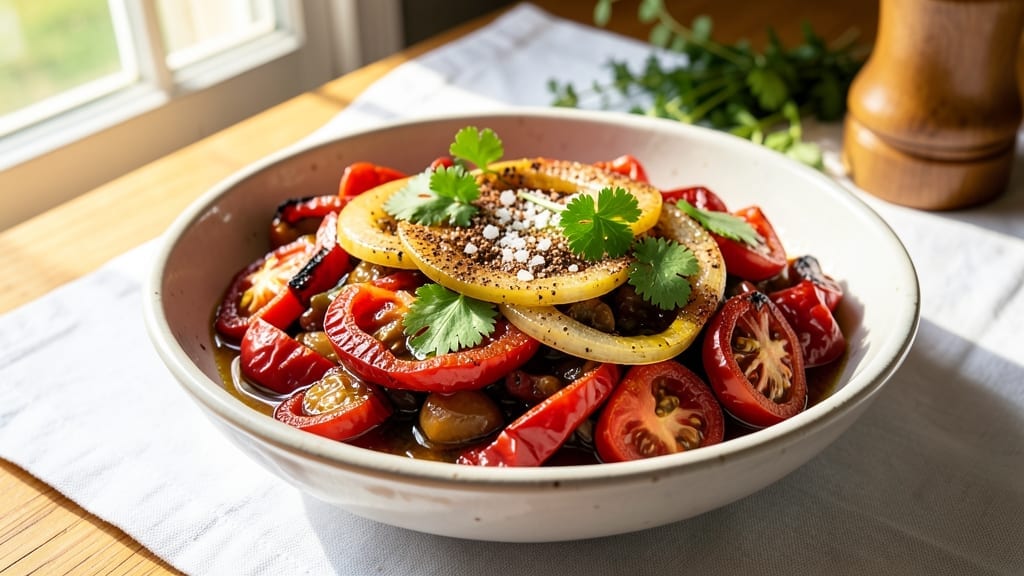
This 5-minute fire-roasted salsa recipe delivers restaurant-quality depth without the wait—just charred peppers, tomatoes, and onions over high heat until their flavors transform into smoky, concentrated goodness. The secret lies in direct flame roasting, which unlocks natural sweetness and caramelized complexity in minutes, not hours.
No special equipment needed—just a skillet and a few fresh ingredients you likely already have on hand.
What sets this salsa apart is its intense charred flavor, achieved by roasting vegetables over an open flame or under a broiler until blistered and slightly blackened. This technique concentrates flavors while removing excess moisture, resulting in a vibrant, chunky salsa that’s bold and balanced.
The process takes less than 5 minutes of active time, making it perfect for last-minute meals or game day appetizers.
Once roasted, the vegetables are blended with fresh cilantro, lime juice, and a pinch of salt to create a versatile condiment that works with everything from tacos to grilled fish. The smoky depth from the charred vegetables elevates simple dishes, turning them into something extraordinary.
This salsa keeps well in the refrigerator for up to a week, allowing you to make a big batch and enjoy it throughout the week.
The beauty of this recipe is its simplicity and adaptability—swap in jalapeños for heat, avocado for creaminess, or a splash of vinegar for tang.
Whether you’re serving it with chips, drizzling it over tacos, or using it as a topping for grilled meats, this fire-roasted salsa will become a staple in your kitchen. Let’s get started!
Ingredients for 5 minute fire roasted salsa
Nine ingredients, one smoky skillet—this salsa transforms fresh produce into bold, charred goodness in minutes.
| Ingredient | Amount | Notes |
|---|---|---|
| Red Bell Peppers 🌶️ | 2 whole | Seeds removed, cut into strips |
| Roma Tomatoes 🍅 | 4 whole | Halved, seeds scooped out |
| Yellow Onion 🧅 | 1 whole | Cut into thick slices |
| Fresh Cilantro 🌿 | ½ cup | Stems removed, loosely packed |
| Lime Juice 🍋 | ¼ cup | Freshly squeezed, strained |
| Extra-Virgin Olive Oil 🫒 | 2 tbsp | For roasting and blending |
| Kosher Salt 🧂 | ½ tsp | Diamond Crystal preferred |
| Garlic Cloves 🧄 | 2 cloves | Minced, for optional depth |
| Jalapeño Peppers 🌶️ | 1 whole | Seeded, optional for heat |
The vegetables are the heart of this salsa, so pick firm, vibrant produce—red bell peppers should be deep red, tomatoes ripe but not mushy, and onions crisp. Trader Joe’s or local farmers markets often have the freshest options, but your grocery store’s produce section works too. The jalapeños are optional but add a nice kick if you like heat. For the garlic, freshly minced makes all the difference—pre-minced loses flavor fast. If you’re short on time, skip it, but trust me, that extra depth is worth the 30 seconds.
No fresh cilantro? Dried cilantro works at half the amount, but it lacks that bright, fresh flavor. Swap Roma tomatoes for vine-ripened heirlooms if you want extra sweetness, or use fire-roasted canned tomatoes for a shortcut (drain well first). For the lime juice, Mexican limes are ideal, but regular limes work fine. Need more heat? Add a dash of hot sauce or cayenne. The olive oil is non-negotiable for roasting—it helps create that smoky char without burning the veggies. Use a high-smoke-point oil like avocado or grapeseed if you’re worried about flavor.
This salsa tastes even better the next day as flavors meld, so make a big batch and store it in an airtight container. Keeps in the fridge for 5-7 days, or freeze for up to 3 months in ice cube trays for single-serving portions. To reheat, just give it a quick stir—no cooking needed. The charred veggies soften slightly over time, so it’s perfect for topping tacos, grilled fish, or even eggs. If it separates after blending, just give it a quick pulse to recombine before serving.
Why You’ll Love This Recipe
- Charred Depth in Minutes: I swear by the smoky char from the fire roasting—those blistered peppers and tomatoes? That crispy-sweet edge with the creamy center? It’s the secret weapon that makes this taste like it simmered for hours, not five minutes.
- No Chopping, All Flavor: Between us, I hate chopping. This recipe lets me toss whole peppers, tomatoes, and onions straight into the flame (or broiler), then just peel and blend. The onions caramelize into sweetness without a single knife stroke.
- Game for Any Gathering: I’ve served this as a quick appetizer with chips, a topping for grilled fish, or even a wake-up call in scrambled eggs. The lime and cilantro brighten it up enough to work with tacos, bowls, or just straight from the jar.
- Budget-Friendly Pantry Hero: Honestly, this uses ingredients I already have. A few peppers, a handful of tomatoes, an onion, and whatever cilantro I can find—it stretches for days in the fridge. Plus, the fire roasting makes even the cheapest produce taste like a splurge.
Step-by-step instructions for 5-Minute fire-roasted salsa
Here’s how to transform simple ingredients into smoky, vibrant salsa in record time.
Prep and Roast the Vegetables
Start by preheating your oven’s broiler to its highest setting. Arrange the prepared red bell pepper strips, halved Roma tomatoes, and thick onion slices on a rimmed baking sheet in a single layer. Drizzle them evenly with the 2 tablespoons extra-virgin olive oil and sprinkle with the ½ teaspoon kosher salt.
Place the baking sheet on the middle rack of your oven and broil for 4-5 minutes, flipping the vegetables halfway through. You’re looking for deep char marks and slightly blistered edges—this is what gives fire-roasted salsa its signature smoky depth. Watch closely; broilers can vary in intensity, so don’t walk away. The vegetables should be soft when pierced with a fork but still hold their shape.
Build the Charred Base
While the vegetables are roasting, prepare a clean cutting board. Once the vegetables are done, transfer them to the cutting board and let them cool for 2 minutes. This brief rest makes them easier to handle and prevents steam burns when you start chopping.
Using a sharp chef’s knife, roughly chop the roasted vegetables into ½-inch pieces. I like to keep the texture slightly rustic—this maintains the smoky character and prevents the salsa from becoming too smooth. Transfer the chopped vegetables to a large mixing bowl, leaving any excess liquid behind.
Add Freshness and Acid
To the bowl with the roasted vegetables, add the ½ cup chopped fresh cilantro, 2 cloves minced garlic, and ½ cup lime juice. If you’re using the seeded jalapeño, add it now—chop it finely for mild heat or leave it chunky for a spicy kick.
Stir everything together with a wooden spoon, pressing down gently on the vegetables to release any remaining juices. The lime juice will brighten the smoky flavors, while the cilantro adds freshness. Taste a spoonful—you should notice the charred sweetness from the roasted vegetables balanced by the bright acidity of the lime. If needed, adjust the salt or lime to your preference, but start with what you have; the flavors will meld beautifully.
Let It Rest and Serve
Cover the bowl with plastic wrap and let the salsa sit at room temperature for 5 minutes. This brief resting period allows the flavors to meld and the texture to slightly thicken. The salsa should be vibrant, with visible char marks from the roasting process.
Give it one final taste and adjust the seasoning if needed. Serve immediately with tortilla chips, grilled fish, or as a topping for tacos. The smoky, charred depth from the roasted vegetables will make this salsa stand out—it’s the kind of flavor that transforms simple ingredients into something extraordinary. Enjoy it fresh while the charred flavors are at their peak!
Pro Tips For Making 5 Minute Fire Roasted Salsa
- CHAR THE ONION FIRST: I learned this the hard way—throwing everything on the flame at once means the onion gets sad and watery while the peppers burn. Get that onion charred and blistered in the first 30 seconds, then add the rest. The smoky base builds flavor faster than you’d think.
- CUT TOMATOES IN HALVES: Roma tomatoes burst like overripe plums if you slice them thin. Halve them lengthwise instead—skin stays intact, they roast evenly, and you avoid a watery, mushy mess. (Yes, even if you’re impatient like me.)
- SALVAGE BLACKENED SKINS: Your peppers and tomatoes will get blackened—don’t toss them. Peel off the charred bits after roasting, but leave the slightly singed skin. That’s where the smoky depth lives. (Your future self will thank you.)
- SQUEEZE LIME LAST: Add lime juice only after everything’s off the heat—otherwise, the acid will turn your salsa cloudy and dull. Wait 2-3 minutes, then give it a good squeeze. The flavor wakes up instantly.
Wine and beer pairings for this 5 minute fire roasted salsa
Crisp White Wine Pairings
A dry Spanish Albariño from Rías Baixas is my go-to choice for this fire-roasted salsa—its bright acidity and citrus notes mirror the lime in the recipe while cutting through the smoky char. Look for a bottle like Pazo de Señorans or Martín Códax, both under $20 and widely available.
The crispness prevents the wine from feeling heavy next to the bold, charred flavors. 🍷
Crisp Lager Complements
For beer lovers, a Mexican lager like Modelo Especial or Pacífico Clara is perfect—its clean, slightly malty profile balances the smoky depth without overpowering. The carbonation also refreshes your palate between bites.
If you prefer craft beers, try a Belgian witbier like Hoegaarden for its citrusy, peppery notes that echo the jalapeño and lime.
Rosé for Balance
A dry Provençal rosé with its delicate strawberry and citrus undertones works beautifully with this salsa. I recommend Whispering Angel or Château d’Esclans “Whispering Angel”—both pair the wine’s subtle fruitiness with the charred vegetables. Serve it slightly chilled (45-50°F) to enhance its crispness and refresh your palate.
Bold Red for Hearty Meals
If serving the salsa with grilled meats or hearty dishes, a medium-bodied red like Pinot Noir from Oregon or Valpolicella Classico from Italy adds depth. The red fruit notes in these wines complement the charred vegetables, while their moderate tannins won’t clash with the salsa’s acidity.
Avoid heavy Cabernets—they’ll overpower the delicate flavors. 🍷
Nutrition facts
Frequently asked questions
Can I use a stovetop grill or gas flame instead of the broiler?
For even more intense char, place the vegetables directly over a gas flame or on a stovetop grill pan. Rotate every 30 seconds to get even blackened spots—this creates deeper smoky flavors in just 2-3 minutes. Just watch carefully to avoid burning.
What if my salsa turns out too watery?
If the texture is too loose, let it sit uncovered in the fridge for 1-2 hours—the flavors will concentrate. For immediate fixes, blend with 1 tablespoon of cornstarch or flour mixed with water (1 tsp cornstarch + 2 tbsp water), or stir in ½ cup of cooked quinoa or rice to thicken. The smoky flavor will remain intact!
How can I make this salsa spicier?
Add 1-2 tablespoons of hot sauce (like Cholula or Valentina) or ½ teaspoon of cayenne pepper to the blended mixture. For natural heat, include 1-2 serrano peppers (seeds in for extra kick) in the roasting step—their charred flavor adds depth. Always taste first before adding more!
Can I make this salsa ahead of time?
Yes! This salsa actually tastes better after 24 hours as the charred flavors meld. Store in an airtight container in the fridge for 5-7 days. For longer storage, freeze in ice cube trays (thaw in fridge overnight) or silicone molds for portion control. The texture may soften slightly but the flavor stays vibrant.
What’s the best way to reheat leftover salsa?
Never reheat—this salsa is best served at room temperature or cold. If you need to warm it slightly for a dish, gently stir in 1 tablespoon of warm broth or water and let it sit for 2 minutes. The charred flavors will remain intact, but avoid full cooking to preserve the fresh, vibrant taste.

- 3lb Prime Rib Roast Recipe: Juicy Pink Center Guaranteed in 3 Hours - October 31, 2026
- 5 Spice Cake Recipe: Warmly Spiced Layers With Crunchy Top - October 31, 2026
- 1950’s Macaroni and Cheese Recipe: Nostalgic Creamy Cheese Sauce with Buttery Noodles - October 31, 2026