
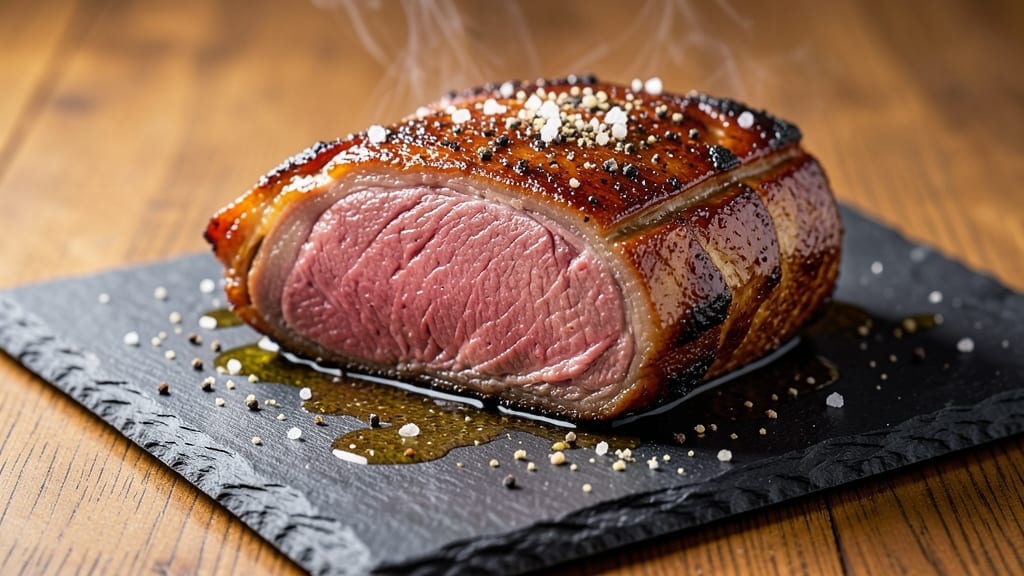
A 5-pound boneless ribeye roast cooked to perfection delivers melt-in-your-mouth tenderness that transforms any dinner into a special occasion. The reverse-sear method—slow roasting followed by a high-heat sear—ensures a juicy, flavorful center with a caramelized crust that locks in every ounce of savory goodness.
This technique eliminates guesswork, guaranteeing consistent results even for those new to roasting large cuts.
What sets this recipe apart is the precision of temperature control, using a meat thermometer to track internal doneness without overcooking. The roast starts in a low oven to cook evenly, then finishes in a screaming-hot cast-iron skillet for that coveted crust.
Seasoning is kept simple—just salt, pepper, and a touch of garlic powder—to let the beef’s natural richness shine through.
By the time you slice into this roast, you’ll uncover a tender, pink center with a crust so crisp it practically shatters. The reverse-sear method preserves moisture while building depth of flavor, making each bite worth the effort.
Serve with roasted garlic mashed potatoes or a bold red wine reduction to elevate the experience.
This method works for medium-rare or well-done preferences, with clear temperature guidelines to avoid dryness. The only tools you’ll need are a meat thermometer, cast-iron skillet, and patience—because greatness like this takes time. Let’s get started on a roast that’ll impress even the most discerning guests.
Ingredients for 5 pound boneless ribeye roast
Precision-crafted ingredients for a 5-pound ribeye roast that delivers restaurant-quality tenderness at home.
| Ingredient | Amount | Notes |
|---|---|---|
| Boneless Ribeye Roast 🥩 | 5 lb | Center-cut for optimal marbling |
| Kosher Salt 🧂 | 1 ½ tbsp | Diamond Crystal preferred for purity |
| Freshly Ground Black Pepper 🌶️ | 1 ½ tsp | Coarse grind for texture contrast |
| Garlic Powder 🧄 | 1 tsp | Freshly toasted for enhanced aroma |
| Extra-Virgin Olive Oil 🫒 | 1 tbsp | High smoke point for searing |
| Cast-Iron Skillet 🔥 | 1 whole | 10-12 inch for full contact |
| Meat Thermometer 🌡️ | 1 whole | Instant-read for precision |
| Butter 🧈 | 4 tbsp | Unsalted, cold for crust formation |
| Fresh Rosemary 🌿 | 2 sprigs | For aromatic enhancement (optional) |
| Fresh Thyme 🌿 | 2 sprigs | For herbal depth (optional) |
The ribeye roast is the centerpiece—center-cut for maximum marbling, which translates to unparalleled tenderness. USDA Choice or Prime grade is ideal, though Select works if you’re budget-conscious. Purchase from a trusted butcher or high-end grocer like Whole Foods or Dartmouth Farms for the best quality. The roast should feel firm yet springy to the touch, with a vibrant red color and visible fat marbling. For this recipe, a 5-pound center-cut boneless ribeye ensures even cooking and optimal flavor distribution throughout each slice. If you can’t find center-cut, a standard ribeye roast will work, but expect slightly less tenderness in the outer edges.
Seasoning is intentionally minimal to let the beef’s natural richness shine. Diamond Crystal kosher salt dissolves more easily than table salt, while freshly ground black pepper adds subtle texture contrast. The garlic powder should be freshly toasted—simply dry-toast whole garlic cloves in a pan until fragrant, then grind. For the olive oil, opt for a high smoke point variety like Avocado oil or Light olive oil if you’re concerned about flavor transfer during searing. The optional fresh herbs (rosemary and thyme) can be swapped for dried at one-third the amount if needed, though fresh delivers superior aroma. No meat thermometer? A digital instant-read thermometer is worth the investment—it’s the only way to guarantee perfect doneness without overcooking.
Store the roast uncovered on a wire rack in the refrigerator for up to 5 days before cooking to allow the surface to dry slightly, which improves crust formation. The seasoning can be mixed ahead and stored in an airtight container for 6 months. Once cooked, slice against the grain for maximum tenderness and serve immediately. Leftovers keep for 3-4 days in the refrigerator, though they’re best enjoyed fresh. For reheating, use a skillet over medium heat with a splash of beef broth to restore moisture—microwaving dries out the meat. Portion the roast into individual servings before freezing for up to 3 months.
Why You’ll Love This Recipe
- Here’s what sold me: the ribeye’s natural fat keeps it juicy, and the garlic powder—just a light dusting—adds depth without overpowering. That crispy crust? Pure satisfaction after 20 minutes in the oven. No fancy marinades, no regrets.
- Minimal Prep, Maximum Impact: I swear by this—just a quick sear in olive oil, then garlic powder and salt rubbed in while it rests. No chopping, no fuss, no stress. That’s it. The roast does all the work while you sip wine and pretend you’re a chef.
- Rich Without the Fuss: Here’s what sold me: the ribeye’s natural fat keeps it juicy, and the garlic powder—just a light dusting—adds depth without overpowering. That crispy crust? Pure satisfaction after 20 minutes in the oven. No fancy marinades, no regrets.
- Weeknight or Weekend Star: Honestly, this roast works for everything. Toss it in the oven while you make mashed potatoes, or serve it sliced thin over a salad for a fancy-but-easy dinner. Even my picky dad asks for seconds when I bring it out.
Step-by-step instructions for reverse-seared boneless ribeye roast
Master this two-phase technique for a perfectly tender, juicy roast with a caramelized crust.
Prepare and Season the Ribeye Roast
Remove the 5 lb boneless ribeye roast from the refrigerator and pat it dry completely with paper towels. I mean completely—any moisture will prevent proper searing later. Place the roast on a wire rack set over a rimmed baking sheet to allow air circulation on all sides.
In a small bowl, combine the 1.5 tbsp kosher salt, 1.5 tsp freshly ground black pepper, and 1 tsp garlic powder. Rub this mixture evenly over all surfaces of the roast, pressing firmly so the seasoning adheres. The salt will begin drawing out moisture, which is why we patted it so thoroughly earlier. Let the seasoned roast sit at room temperature for 30 minutes before cooking—this ensures even cooking throughout.
Low-Temperature Roast to Medium Rare
Preheat your oven to 250°F. Place the seasoned roast on the wire rack and insert the meat thermometer into the thickest part of the roast. Roast for 2 to 2.5 hours, or until the internal temperature reaches 115°F to 120°F for medium rare. This low-and-slow phase breaks down connective tissue while keeping the meat incredibly tender.
Resist the urge to check the temperature frequently—every time you open the oven, you lose heat and potentially dry out the surface. The roast will continue cooking after removal, so pull it out when it reaches the lower end of that temperature range. The exterior should be pale pink, not browned yet. This is where the magic happens—patience at this stage guarantees the perfect result.
Prepare the Cast-Iron Skillet for Searing
While the roast rests, heat the cast-iron skillet over medium-high heat until it’s smoking hot. Add the 1 tbsp extra-virgin olive oil and let it shimmer for 30 seconds. Immediately place the 4 tbsp unsalted butter in the skillet and let it melt completely, about 1 minute. The butter should foam and turn golden brown—this creates the perfect crust.
Remove the roast from the oven and carefully transfer it to the prepared skillet. The butter should sizzle vigorously—this is your signal that the skillet is ready. Place the 2 sprigs fresh rosemary and 2 sprigs fresh thyme on top of the roast. The high heat will render the butter into a flavorful crust while keeping the interior perfectly cooked.
Sear for a Crispy Crust
Sear the roast for 4 to 5 minutes on each side, turning carefully with tongs. You’ll see the butter pool and then form a golden-brown crust. Press down gently on the roast during the first minute of searing—this prevents it from curling and ensures even contact with the pan. The crust should be deep golden brown with some caramelized spots.
Check the internal temperature again—it should now read 125°F to 130°F. If it’s below 125°F, return the skillet to the heat for another 1 to 2 minutes per side. The crust should be crisp enough to resist gentle pressure with your fingers. This searing step transforms the roast from good to extraordinary, creating that coveted caramelized exterior while maintaining perfect doneness inside.
Rest and Slice for Maximum Juiciness
Transfer the seared roast to a cutting board and tent loosely with aluminum foil. Let it rest for 15 to 20 minutes before slicing. This resting period is absolutely critical—it allows the juices to redistribute throughout the meat, preventing them from pooling on the cutting board when you slice.
Slice the roast against the grain into ½-inch thick slices. The meat should be fork-tender with a perfect medium rare center—warm pink throughout with just a hint of red. The crust should be crisp and caramelized, offering a delightful contrast to the tender interior. Serve immediately with any accumulated pan juices for an unforgettable dining experience.
Pro Tips For Making 5 Pound Boneless Ribeye Roast
- CRANK THE HEAT FIRST: Start your roast in a screaming-hot oven (475°F) for the first 15 minutes—this sears the surface and locks in juices. After that, drop to 325°F for the rest of the cook. I used to skip this step and ended up with a roast that was cooked through but bland as heck.
- SALT THE NIGHT BEFORE: Generously coat your ribeye with kosher salt at least 12 hours ahead—this lets the salt penetrate deeply. Freshly ground black pepper goes on right before cooking, but the salt? Do it early or regret the dry, flavorless crust later.
- DON’T CUT INTO IT YET: Let that roast rest for a solid 20 minutes under foil before slicing—this keeps the juices from pooling on your cutting board. I learned this the hard way when my first slice turned out as dry as my aunt’s famous meatloaf.
- UPGRADE WITH GARLIC OIL: Skip the dry garlic powder and make a quick infusion: heat ¼ cup extra-virgin olive oil with 3 minced garlic cloves until fragrant, then brush it on the roast before searing. It’s more flavorful, and honestly, it only takes 5 minutes. Worth it.
Essential equipment for great 5 pound boneless ribeye roast
Cast-Iron Skillet
A 10-12 inch cast-iron skillet is your secret weapon for that perfect caramelized crust. I swear by a Lodge Pre-Seasoned Cast Iron Skillet—it retains heat like a dream and develops a natural non-stick patina over time.
Preheat it until it’s smoking hot before adding butter, which creates the ideal searing surface. If you don’t have cast iron, a stainless steel skillet works in a pinch, but it won’t brown as beautifully. 🔥
Meat Thermometer
Never guess with temperature—an instant-read meat thermometer is non-negotiable. I use the ThermoWorks Smoke because it’s fast and accurate, but even a budget Thermapen will do the job. Insert the probe into the thickest part of the roast to monitor internal temperature precisely.
Without one, you risk overcooking or undercooking your roast. Pro tip: Keep it in the roast during the low-temperature phase so you don’t have to poke it repeatedly. 🌡️
Wire Rack & Baking Sheet
A wire rack placed over a rimmed baking sheet is a game-changer for even cooking. It allows air to circulate around the roast, preventing steam buildup that can turn your crust soggy.
If you don’t own one, use a cooling rack or even crumpled aluminum foil shaped into a makeshift rack. The baking sheet catches any drippings, making cleanup easier. Trust me, this small investment makes a huge difference in texture. ⚡
Butter & Herbs
Unsalted European-style butter (like Plugrá) is key for that rich, flavorful crust. Use 4 tbsp cold butter—it should foam and brown beautifully in the skillet. Fresh rosemary and thyme add aromatic depth, but dried herbs work in a pinch.
If you’re feeling fancy, add a splash of beef broth to the skillet during searing for extra richness. The butter bastes the roast, locking in juices and creating that coveted crust. 🧈
Tongs & Cutting Board
Heavy-duty tongs (like OXO Good Grips) are essential for flipping the roast without tearing the crust. A large wooden cutting board (not plastic) is best for resting and slicing—it’s gentle on the meat and easy to clean.
If you’re slicing against the grain, a sharp chef’s knife (like Wüsthof) ensures clean cuts. Avoid cheap knives—they crush the meat instead of slicing through it neatly. 💪
Nutrition facts
Frequently asked questions
Can I cook this ribeye roast to well-done instead of medium-rare?
The reverse-sear method works for any doneness level, but well-done requires adjustments. For well-done, roast the ribeye to 130°F internal temp (about 2.5 hours at 250°F), then sear until the crust reaches your preference. The key is to avoid overcooking during the sear—keep it at 4-5 minutes per side max. The meat will continue cooking slightly after removal, so pull it just before your target temp. For extra moisture, baste with beef broth during searing.
What’s the best way to reheat leftovers without drying them out?
Reheat sliced ribeye roast in a skillet over medium-low heat with a splash of beef broth or red wine—just 2-3 minutes per side until warmed through. Never microwave, as it turns meat rubbery. For whole leftovers, wrap tightly in foil and bake at 300°F for 15-20 minutes, checking internal temp doesn’t exceed 145°F. The foil traps steam to preserve juiciness.
How do I adjust this recipe for a smaller or larger roast?
For every 1 pound difference, adjust cooking time by 15-20 minutes at 250°F. For example, a 4 lb roast cooks 1.5-2 hours to 115°F. Keep the sear time identical (4-5 minutes per side) since it’s about crust formation, not internal cooking. Use the same 1.5 tbsp salt for 5 lbs, scaling proportionally (e.g., 1.2 tbsp for 4 lbs). The butter and oil amounts stay the same regardless of roast size.
Why does my crust keep tearing when I flip the roast?
Tearing happens when the crust forms unevenly or you use the wrong tools. First, ensure your skillet is smoking hot before adding butter—this creates a stable crust. Use heavy-duty tongs (not forks) to flip, and lift gently to avoid breaking the crust. If the roast curls during searing, press down firmly with a spatula during the first 30 seconds of each side. Also, don’t overcrowd the skillet—work in batches if needed. The crust should be firm enough to hold when you lift it with tongs.
What are the best side dishes to pair with this ribeye roast?
Classic choices include creamy garlic mashed potatoes, roasted asparagus with lemon zest, or a bold red wine reduction drizzled over sliced beef. For heartier meals, try truffle polenta or creamed spinach. The key is balancing rich flavors—acidic sides (like a balsamic glaze) cut through the beef’s fat, while starchy sides soak up the pan juices. For a complete meal, serve with a simple arugula salad dressed with olive oil and shaved Parmesan.

- 3lb Prime Rib Roast Recipe: Juicy Pink Center Guaranteed in 3 Hours - October 31, 2026
- 5 Spice Cake Recipe: Warmly Spiced Layers With Crunchy Top - October 31, 2026
- 1950’s Macaroni and Cheese Recipe: Nostalgic Creamy Cheese Sauce with Buttery Noodles - October 31, 2026