
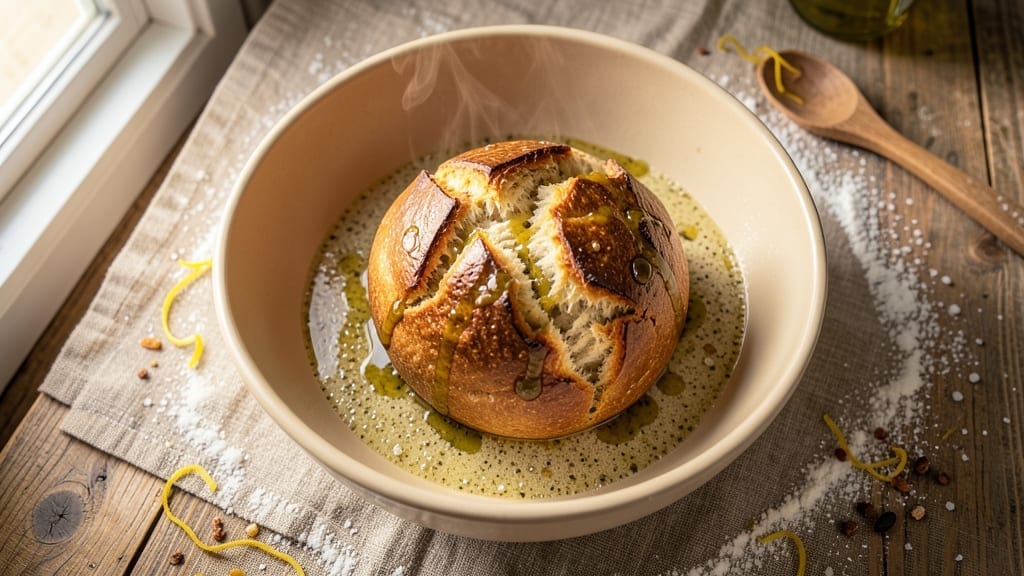
A 60-minute bread recipe that delivers restaurant-worthy crust and tender crumb without the hours of waiting is exactly what you need for busy weeknights. This no-knead method eliminates the guesswork—just mix, let it rise while you prep dinner, and bake.
The secret lies in a quick yeast activation trick and precise oven timing that guarantees a loaf with a crispy golden crust and airy interior every time. No experience required.
The beauty of this recipe is its simplicity: three core ingredients (flour, yeast, water) plus salt create the foundation, while a touch of olive oil and honey enhances flavor and texture.
The dough rests for just 20 minutes before shaping, and the oven does the heavy lifting with a steam trick that ensures that signature bakery-style crust. Perfect for sandwiches, toast, or serving alongside soups, this bread proves that great results don’t require hours in the kitchen.
What you’ll end up with is a fully baked loaf in under an hour—no kneading, no waiting all day, and no sad, dense results. The crust will be crisp and caramelized, while the crumb remains soft and even.
This method works equally well for sandwich bread, dinner rolls, or even a small artisan-style loaf, making it incredibly versatile for any meal.
For those who love customization, try adding garlic powder and herbs to the dough or swapping half the flour for whole wheat. The recipe scales easily too—double the batch for a crowd or halve it for a single serving. Ready to bake bread that impresses without the commitment?
Ingredients for 60 minute bread
Nine simple ingredients transform into a restaurant-worthy loaf in just 60 minutes.
| Ingredient | Amount | Notes |
|---|---|---|
| All-Purpose Flour 🌾 | 4 cups | Sifted for even texture |
| Active Dry Yeast 🍞 | 2 ¼ tsp | Freshly opened for potency |
| Granulated Sugar 🍬 | 1 tbsp | For yeast activation |
| Warm Water 💧 | 1 ¼ cups | 110°F for optimal yeast |
| Extra-Virgin Olive Oil 🫒 | 2 tbsp | High quality for flavor |
| Honey 🍯 | 1 tbsp | For subtle sweetness |
| Kosher Salt 🧂 | 1 ½ tsp | Diamond Crystal preferred |
| Ice Water ❄️ | ¼ cup | For dough elasticity |
| Cornmeal 🌽 | 2 tbsp | For dusting baking sheet |
The flour is the foundation—King Arthur or Gold Medal brands work best for consistent results. Yeast is non-negotiable here; Bob’s Red Mill active dry yeast is my go-to, but check the expiration date. The water temperature matters more than you’d think—too hot kills the yeast, too cold slows it down. 110°F is perfect, which is why I use warm water straight from the tap after running it for 30 seconds. For the honey, local raw honey adds subtle floral notes, but any variety works. The olive oil should be fruity and peppery—California brands like Corto are ideal.
No yeast? Instant yeast at the same amount works fine. Running short on honey? Maple syrup at half the quantity gives similar sweetness. The ice water might seem odd, but it’s what creates that perfect elastic dough. No cornmeal? Semolina or rice flour works just as well for dusting. For a whole wheat twist, swap half the all-purpose flour for whole wheat pastry flour—just know the crust will be slightly denser. The salt is crucial; Diamond Crystal measures differently than Morton, so if you switch, use 1 tsp instead of 1.5.
Store-bought yeast? Test it first—mix 1 tsp with warm water and 1 tsp sugar; if it foams in 5 minutes, it’s good. The dough keeps 24 hours in the fridge if wrapped tightly, but it’s best baked fresh. For leftovers, slice and toast—the crust gets even crisper. This recipe scales perfectly: double for a family loaf, halve for a single serving. The secret to that bakery-style crust? Steam in the oven—place a metal tray with boiling water on the bottom rack when baking.
Why You’ll Love This Recipe
- No Yeast Nightmares: I’ve ruined bread dough before—this recipe forgives me. The yeast blooms fast with just warm water and sugar, no waiting around. Honestly, even if I forget to proof it, the olive oil keeps it tender enough to salvage.
- Golden Crust Magic: That crispy exterior? All the olive oil. It’s not just flavor—it’s texture. The bread turns golden and shatterable on the outside while staying soft inside. (Yes, even on a Tuesday night.)
- Weeknight Hero: I make this when I’m too tired for fancy dinner. Toss it with garlic butter for toast, tear it into salads, or freeze slices for quick sandwiches later. Between us, it’s my secret weapon for busy evenings.
- Pantry Staple Power: Five ingredients, zero specialty items. You’re probably already using them. The flour and yeast are cheap, the sugar balances the dough, and the olive oil makes it taste like you put in effort—without the fuss.
Step-by-step instructions for 60-Minute bread recipe
Here’s the straightforward method for achieving artisanal-style bread without the long rise time.
Activate the Yeast and Mix the Dough
In a large mixing bowl, combine the 1.25 cups warm water (tested at 110°F—should feel warm to touch but not hot), 1 tbsp granulated sugar, and 2.25 tsp active dry yeast. Let this sit for 5-10 minutes until foamy on top. This confirms your yeast is active and ready to work.
Once foamy, add the 4 cups all-purpose flour, 1.5 tsp kosher salt, and 1 tbsp honey to the bowl. Mix with a wooden spoon until a shaggy dough forms. Then stir in the 2 tbsp extra-virgin olive oil and 0.25 cup ice water. The ice water helps develop gluten without overworking the dough.
Develop the Dough with Minimal Effort
Using your hands, gently fold the dough over itself 8-10 times for about 2 minutes. This creates surface tension without kneading. The dough should become smoother but still slightly sticky. If it’s too wet, add 1 tablespoon flour at a time until it holds together when pressed.
Cover the bowl with a damp kitchen towel and let the dough rest at room temperature for 30 minutes. This initial rest allows the gluten to relax and develop naturally, which is crucial for the no-knead technique. Don’t skip this step—it’s what makes this bread rise properly in just 60 minutes.
Shape and Prepare for Baking
After resting, turn the dough onto a lightly floured surface and shape it into a round loaf. Gently press the edges toward the center to create a smooth, taut surface. The dough should be firm enough to hold its shape but still slightly soft. If it cracks when shaping, simply press it back together.
Line a baking sheet with parchment paper and dust it lightly with 2 tbsp cornmeal. Place the shaped dough on the prepared sheet, seam-side up. Cover loosely with the damp towel again and let it rise for 20-25 minutes at room temperature. You’ll know it’s ready when it’s puffed about 50% larger and springs back slowly when gently pressed.
Bake for a Crusty Exterior
Preheat your oven to 425°F for 15 minutes to ensure it’s fully heated. While it preheats, use a sharp knife or razor to score the top of the dough in a simple crosshatch pattern. This prevents cracking and helps steam escape, creating that coveted crusty exterior.
Bake the bread for 25-30 minutes until it’s deep golden brown on top and sounds hollow when tapped on the bottom. The internal temperature should reach 190-200°F when measured with an instant-read thermometer. If the top browns too quickly, tent the bread with aluminum foil for the last 5-10 minutes of baking.
Cool and Enjoy Immediately
Remove the bread from the oven and transfer it to a wire rack to cool for at least 15 minutes before slicing. This resting period allows the steam inside to redistribute, preventing a gummy texture. The bread will be warm, fragrant, and perfect for serving.
For best results, serve the bread while still warm. The crust should be crisp and shatterable, while the interior remains soft and airy. Store any leftovers wrapped in a clean kitchen towel to maintain freshness for up to 3 days at room temperature.
Pro Tips For Making 60 Minute Bread
- Test Your Yeast First: I learned this the hard way—skipping this step means wasted time and dough. Drop that yeast in a small bowl with ¼ cup warm water and 1 teaspoon sugar. If it doesn’t bubble within 5-10 minutes, your yeast is dead, and you’re starting over. Trust me, 10 minutes now saves an hour of frustration later.
- Measure Flour Right: That “cup of flour” in your recipe isn’t the same as a scooped cup from the bag. Spoon it into the measuring cup, then level it off with a knife—don’t pack it down. I used to overfill, and my bread turned out dense and heavy. A little less flour = lighter bread.
- Don’t Rush the First Rise: The dough needs time to relax, not just proof. After mixing, let it sit covered for 10 minutes before shaping—this prevents a tough crumb. I was skeptical until I tried it: the texture changed from chewy to airy overnight. (Yes, even if you’re impatient like me.)
- Oil the Bowl Properly: A drizzle of olive oil in your mixing bowl isn’t enough—your dough will stick like glue. Use about 2 tablespoons, then toss the dough around to coat it thoroughly. I skip this sometimes, and my dough ends up tearing when I try to shape it. Worth the extra 30 seconds.
Essential equipment for this dish
Mixing Essentials
Your first tool is a large mixing bowl—I recommend a stainless steel one like OXO Good Grips (it’s non-reactive and easy to clean). A wooden spoon is perfect for mixing the initial dough, but a dough whisk (like West Bend) speeds things up.
For measuring, a digital kitchen scale (I use OXO Good Grips) ensures precision, but standard measuring cups work too. 🌾
Dough Development Tools
Skip the stand mixer—this dough only needs hand-folding for 2 minutes. Use floured hands to gently shape the dough; no extra tools needed. A lightly floured surface (I use King Arthur Unbleached Flour) prevents sticking.
For shaping, a bench scraper (like OXO) helps divide and transfer dough cleanly.
Baking Setup
A parchment-lined baking sheet (I love Kirkland Signature) is non-negotiable—it prevents sticking and makes cleanup effortless. For scoring, a sharp chef’s knife or bread lame (like Jamie Geller) works best.
A steam tray (a metal bowl with boiling water) creates that bakery-style crust. Preheat your oven with a thermometer (I use Thermoworks Oven Thermometer) to confirm 425°F.
Cooling and Storage
Transfer baked bread to a wire cooling rack (like OXO Good Grips) to prevent sogginess. For storage, a bread box (I use OXO Good Grips) keeps it fresh longer, but a clean kitchen towel works too.
A digital instant-read thermometer (like Thermoworks Thermapen) ensures 190-200°F internal temp for perfect doneness. 💫
Budget-Friendly Swaps
No parchment paper? Use cornmeal or rice flour on the baking sheet. Skip the thermometer? Bake until the bread sounds hollow when tapped. A wooden spoon replaces a dough whisk in a pinch.
For scoring, a serrated knife works if you don’t have a lame. Even a basic mixing bowl (like Pyrex) works for yeast activation.
Nutrition facts
Frequently asked questions
Why does this bread only take 60 minutes when most recipes require hours?
This recipe uses a quick yeast activation trick and skips traditional kneading. The dough rests for just 30 minutes before shaping, then rises another 20-25 minutes—both at room temperature. The high oven temp (425°F) with steam creates that bakery-style crust in 25-30 minutes. No waiting all day!
Can I make this bread without a stand mixer or food processor?
This dough only needs hand-folding for 2 minutes—no mixer required. Use floured hands to gently shape it on a lightly floured surface. The recipe is designed for simplicity, so basic tools work perfectly.
What if my dough doesn’t rise properly?
Check your yeast first—it should foam within 5-10 minutes when mixed with warm water and sugar. If not, your yeast may be dead. Also ensure your kitchen is 70°F or warmer (yeast works best in warm environments). If the dough rises but collapses, it may have overproofed—bake immediately if this happens.
How do I get that perfect crusty exterior like bakery bread?
The secret is steam in the oven. Place a metal tray with boiling water on the bottom rack when baking. Also, score the dough with a sharp knife before baking to control cracking. Bake at 425°F for 25-30 minutes until deep golden brown. For extra crunch, broil for 1-2 minutes at the end.
Can I make dinner rolls instead of a loaf with this recipe?
Yes! Divide the dough into 8 equal pieces (about 1.5 oz each) and shape into balls. Place them on a baking sheet, cover, and let rise for 20 minutes. Bake at 425°F for 12-15 minutes until golden. For extra flavor, add 1 tsp garlic powder or 1 tbsp dried herbs to the dough.

- 3lb Prime Rib Roast Recipe: Juicy Pink Center Guaranteed in 3 Hours - October 31, 2026
- 5 Spice Cake Recipe: Warmly Spiced Layers With Crunchy Top - October 31, 2026
- 1950’s Macaroni and Cheese Recipe: Nostalgic Creamy Cheese Sauce with Buttery Noodles - October 31, 2026