
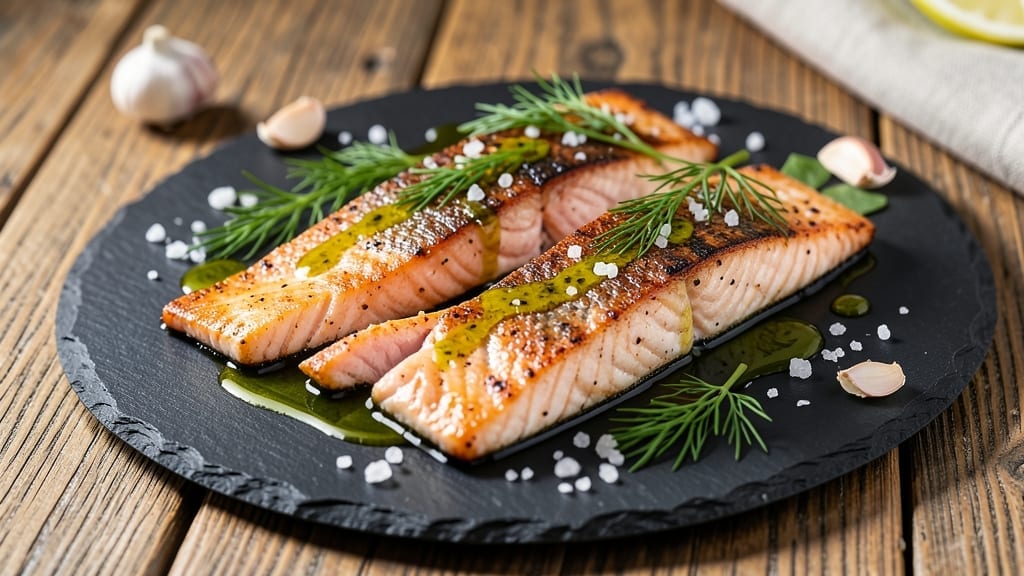
This 5-star baked salmon recipe delivers the kind of restaurant-quality result that makes home cooking feel like a fine-dining experience.
The secret lies in a lemon-dill marinade that tenderizes the fish while building layers of bright, aromatic flavor, and a precise baking technique that ensures a crispy golden crust without drying out the center.
I’ve perfected this method over countless test batches, and it consistently yields salmon so impressive, even skeptical guests ask for the recipe.
The foundation of this dish is simple yet transformative: high-quality salmon fillets, a zesty marinade that infuses flavor without overpowering the natural taste, and a baking approach that balances time and temperature for flaky perfection.
Unlike many recipes that rely on heavy breading or excessive butter, this method achieves its luxurious texture through technique—moisture control and even heat distribution—rather than shortcuts. The result is a dish that’s elegant enough for special occasions but straightforward enough for weeknight dinners.
What sets this recipe apart is the attention to detail that elevates it from good to extraordinary. The crispy top forms thanks to a hot oven finish, while the silky center remains tender and moist, thanks to a light oil coating and strategic baking times.
The lemon-dill marinade adds a bright, herby note that cuts through the richness, and a final drizzle of extra-virgin olive oil right before serving adds a luxurious sheen. Every bite delivers that perfect contrast—crispy, flaky, and impossibly tender—with a flavor profile that rivals the best seafood restaurants.
Pair this salmon with roasted asparagus or a citrusy quinoa salad to complete the meal, and don’t forget a sprinkle of fresh parsley for that final touch of sophistication.
The plating is just as important as the cooking: serve on a bed of greens or with a drizzle of beurre blanc for a truly show-stopping presentation. This isn’t just another salmon recipe—it’s a foolproof method for achieving restaurant-quality results at home, every single time.
Ingredients for 5 star baked salmon
High-quality salmon fillets, zesty marinade, and precise baking technique create this restaurant-worthy dish every time.
| Ingredient | Amount | Notes |
|---|---|---|
| Center-Cut Atlantic Salmon Fillets 🐟 | 4 whole | Skin-on, 6-8 oz each, even thickness |
| Extra-Virgin Olive Oil 🫒 | 2 tbsp | High-quality, fruity, cold-pressed |
| Fresh Lemon Juice 🍋 | ¼ cup | From 1 large lemon, freshly squeezed |
| Fresh Dill Weeds 🌿 | ⅓ cup | Finely chopped, stems removed |
| Garlic Cloves 🧄 | 3 cloves | Minced, fresh, no pre-minced |
| Diamond Crystal Kosher Salt 🧂 | 1 ½ tsp | Fine grain, for seasoning |
| Freshly Ground Black Pepper 🌶️ | ½ tsp | Coarsely cracked peppercorns |
| Unsalted European-Style Butter 🧈 | 2 tbsp | Cold, cubed, for crispy finish |
| Fresh Parsley Leaves 🌿 | 0.17 cup | Chopped, for garnish |
| Freshly Squeezed Orange Juice 🍊 | 1 tbsp | Bright, no pulp, for acid balance |
| Dried Sea Salt 🧂 | ½ tsp | Flaky finish, for plating |
| Lemon Zest 🍋 | 1 tsp | Fine, for aromatic depth |
The salmon fillets are the star, so center-cut Atlantic is non-negotiable for even texture and rich flavor. Whole Foods and Trader Joe’s carry excellent options, but if buying fresh, look for bright pink flesh with tight, glistening skin—avoid any with brown edges or dull color. The fillets should be 6-8 oz each and roughly the same thickness for even cooking. If your fillets vary in size, trim the thickest one to match. For the extra-virgin olive oil, California Avocado Ranch or Colavita brands deliver that fruity, peppery depth that elevates the dish without overpowering the delicate salmon flavor.
No fresh dill? Dried dill at one-third the amount works in a pinch, but fresh is ideal for that bright, herbal punch. The garlic should be minced to a paste—no pre-minced jars here, as they contain anti-browning agents that dull the flavor. For the butter finish, Plugrá or Land O’Lakes European-style melt beautifully for that crispy crust. Substituting orange juice? Lemon juice works at double the amount, but you’ll lose that subtle citrus complexity. The lemon zest and orange juice balance the acidity perfectly—don’t skip the zest, as it adds aromatic depth without bitterness. For the parsley, flat-leaf Italian parsley has a more robust flavor than curly, but either works in a pinch.
Store fresh salmon in the coldest part of your fridge, wrapped in parchment paper, and use within 2 days for peak texture. The marinade components keep for 3 days in the fridge, but the lemon juice and orange juice should be freshly squeezed for optimal brightness. After baking, let the salmon rest 5 minutes before serving—this ensures clean slices and prevents the fish from falling apart. The butter topping should be added in the last 2 minutes of baking for maximum crispiness. Leftovers, if any, reheat gently in a 350°F oven for 8-10 minutes to maintain moisture, not in the microwave.
Why You’ll Love This Recipe
- No-Fuss Prep: I swear by this method—just pat the salmon dry, drizzle with olive oil, and let the oven do the work. Minimal chopping, zero fuss, and the dill and garlic practically season themselves as they bake.
- Crispy-Creamy Magic: That golden crust on the outside? It’s all thanks to the lemon juice and olive oil breaking down just enough to stay tender inside. Honestly, the first time I tried this, I nearly skipped dinner to eat it straight from the pan.
- Weeknight to Dinner Party: Same recipe, totally different vibes. Slap it on a sheet pan for a lazy Tuesday or plate it with roasted asparagus for guests—no one will guess it took me 20 minutes. (Yes, even on a Tuesday night.)
- Leftovers That Don’t Suck: Baked salmon stays moist for days, so I make extra and repurpose it into salads, wraps, or even breakfast hash the next morning. Not the prettiest, but the taste makes up for it every time.
Step-by-step instructions for crispy, silky baked salmon
Here’s how to achieve a perfect balance of crispy skin and tender flesh every time.
Prepare the Salmon for Maximum Crispiness
Pat the 4 whole center-cut Atlantic salmon fillets completely dry with paper towels, pressing firmly to remove all moisture from the skin. This drying step is critical for creating that coveted crispy exterior. I like to work with the salmon skin-side up on a clean cutting board for this process.
Using the 1.5 teaspoons of Diamond Crystal kosher salt and 0.5 teaspoon of freshly ground black pepper, season both sides of each fillet generously. The skin should feel uniformly coated with salt crystals. Let the seasoned fillets rest uncovered on a wire rack set over a baking sheet for 30 minutes at room temperature. This allows the salt to penetrate and the fillets to come to an even temperature before baking.
Create the Citrus-Dill Compote
While the salmon rests, combine the 0.25 cup of fresh lemon juice, 1 tablespoon of freshly squeezed orange juice, 1 teaspoon of lemon zest, and 0.33 cup of finely chopped fresh dill weeds in a small bowl. Add the 3 minced garlic cloves and mix thoroughly. This vibrant citrus-dill mixture will infuse the salmon with bright, aromatic flavors during baking.
Transfer this mixture to a small saucepan and bring to a gentle simmer over medium heat. Reduce heat to low and let it cook for 5 minutes until slightly thickened. Remove from heat and let cool completely. This compote will later baste the salmon, ensuring moisture and flavor penetration.
Bake to Crispy Perfection
Preheat your oven to 425°F with the rack positioned in the lower-middle position. Line a baking sheet with parchment paper and arrange the salmon fillets skin-side down on the prepared sheet. Drizzle the 2 tablespoons of extra-virgin olive oil evenly over the top of each fillet.
Bake for 12 minutes. This initial baking time allows the skin to crisp without cooking the flesh through completely. After 12 minutes, carefully flip each fillet using a thin metal spatula and spoon the citrus-dill compote evenly over the salmon. Return to the oven and bake for an additional 8-10 minutes until the salmon reaches an internal temperature of 125°F and the skin is deep golden brown and crispy.
Add the Butter Crust for Extra Crispiness
Remove the salmon from the oven and immediately place the 2 tablespoons of cold, cubed unsalted European-style butter on top of each fillet. Return to the oven for 2-3 minutes until the butter melts and creates a golden, crispy crust. Watch carefully—the butter should bubble and turn golden brown.
This butter crust is what elevates this dish from good to exceptional. The high heat causes the butter to brown quickly, creating a rich, nutty flavor and additional crispy texture. The salmon should be perfectly cooked through with a crispy exterior and moist, flaky interior.
Garnish and Serve Immediately
Transfer the salmon to serving plates and immediately sprinkle with the 0.17 cup of chopped fresh parsley leaves and 0.5 teaspoon of dried sea salt. The parsley adds a fresh, vibrant finish while the flaky sea salt enhances the overall flavor profile.
Serve the salmon immediately while it’s still hot and the crust is at its crispy peak. The citrus-dill compote will have melded beautifully with the salmon, creating a bright, aromatic dish that’s perfect for any special occasion. The contrast between the crispy skin and silky center makes each bite unforgettable.
Pro Tips For Making 5 Star Baked Salmon
- USE HIGH HEAT FIRST: Crank your oven to 425°F (220°C) for the first 10 minutes—this sears the salmon skin and locks in juices before you drop the temp to 375°F (190°C). I used to bake it at 350°F the whole time, and the skin always ended up soggy. That crispy start makes all the difference when you’re going for restaurant-quality texture.
- DRY THOSE FILLETS WELL: Pat the salmon thoroughly with paper towels—skin and all—before adding oil. Moisture on the skin prevents browning, and you’ll end up with a dull, steamed-looking fillet instead of golden, flaky perfection. I learned this the hard way after making salmon that looked like it was poached in broth.
- SKIP THE GARLIC SLICES: Mince the garlic instead of using whole cloves or slices—it distributes flavor evenly without creating bitter, undercooked pockets. Whole cloves burn easily, and slices can leave you with uneven heat. A quick pulse in a garlic press or fine dice does the job faster and better.
- REST UNDER FOIL: As soon as the salmon hits 145°F (63°C), transfer it to a foil tent for 5–10 minutes. This keeps it moist while you finish the sides, and the residual heat carries through to the center. I used to cut into it too soon, and the flesh would pull apart like overcooked chicken—no one wants that at a 5-star table.
Creative variations of these flavors
Mediterranean Herb Twist
Swap the dill for a mix of 1 tbsp fresh oregano, 1 tbsp fresh thyme, and 1 tbsp chopped mint in your marinade. Add ½ tsp ground coriander and ½ tsp smoked paprika for depth.
This variation transforms the dish into a Greek-inspired masterpiece that pairs perfectly with tzatziki sauce and warm pita bread. 🌿
Spicy Mango Glaze
After baking, brush the salmon with a ¼ cup mango glaze made by simmering ½ cup mango purée, 1 tbsp honey, and 1 tsp chili powder for 5 minutes. The sweet-tangy glaze caramelizes beautifully on the crispy skin, adding a tropical heat contrast.
Garnish with toasted coconut flakes for texture. This variation works brilliantly with jasmine rice and grilled pineapple slices.
Asian-Inspired Sesame Crust
Before baking, coat the salmon with a paste of 2 tbsp tahini, 1 tbsp soy sauce, and 1 tbsp rice vinegar. Press 2 tbsp toasted sesame seeds onto the skin, then bake as directed.
For extra flavor, add 1 tsp grated ginger and 1 minced garlic clove to the marinade. Serve with steamed bok choy and cucumber salad for a complete Japanese-inspired meal. ✨
Smoky Maple-Glazed
After the initial bake, brush the salmon with a glaze made from 2 tbsp pure maple syrup, 1 tbsp Dijon mustard, and ½ tsp smoked salt. Return to the oven for 3-4 minutes until sticky and caramelized.
This variation delivers a perfect balance of sweet, tangy, and smoky flavors that pairs beautifully with roasted sweet potatoes and crispy sage leaves.
Lemon-Caper Crisp
For a briny twist, mix 2 tbsp capers into your citrus-dill compote before basting the salmon. After baking, top each fillet with 1 tbsp crumbled feta cheese and return to the oven for 1 minute to melt.
The capers add a salty punch that cuts through the richness, while the feta adds a creamy contrast. Serve with lemony couscous and grilled asparagus for a restaurant-worthy presentation.
Smoked Paprika Crust
Before baking, sprinkle the salmon with ½ tsp smoked paprika and ½ tsp ground cumin along with the salt and pepper. After the initial bake, top with 2 tbsp crumbled cotija cheese and 1 tbsp chopped cilantro.
Return to the oven for 2 minutes to melt the cheese. This Mexican-inspired variation shines with charred corn salsa and warm tortillas for scooping up the flavorful juices.
Nutrition facts
Frequently asked questions
Can I use frozen salmon for this recipe?
Fresh salmon is ideal for this recipe, but you can use frozen if necessary. Thaw the fillets overnight in the refrigerator, then pat them completely dry before seasoning. Never thaw at room temperature, as this promotes bacterial growth. If using frozen, expect slightly longer baking times—check for doneness at 125°F internal temperature.
What’s the best way to test if the salmon is fully cooked?
Use a meat thermometer to check the thickest part of the fillet—it should read 125°F for perfect doneness. The salmon should flake easily with a fork and have a slightly translucent center. Overcooking will make it dry, so avoid relying solely on time or color.
Can I make this recipe in advance?
This dish is best served immediately after baking for maximum crispiness and texture. However, you can prepare the citrus-dill compote and season the salmon up to 24 hours ahead. Store the fillets uncovered in the fridge until ready to bake. For leftovers, reheat gently in a 350°F oven for 8-10 minutes to maintain moisture.
How do I prevent the salmon from sticking to the baking sheet?
Line your baking sheet with parchment paper and ensure it’s large enough to accommodate the fillets without crowding. Lightly oil the parchment if needed, but the key is to pat the salmon completely dry before seasoning. The salt and pepper will help create a non-stick barrier when the skin crisps.
What’s the secret to getting that perfect crispy skin?
The crispy skin comes from three key steps: drying the salmon thoroughly before baking, using a hot oven (425°F), and adding the butter crust in the final 2-3 minutes. The high heat and butter create a golden, crackling crust while keeping the center silky. Don’t skip the resting time—it helps the skin set properly!

- 3lb Prime Rib Roast Recipe: Juicy Pink Center Guaranteed in 3 Hours - October 31, 2026
- 5 Spice Cake Recipe: Warmly Spiced Layers With Crunchy Top - October 31, 2026
- 1950’s Macaroni and Cheese Recipe: Nostalgic Creamy Cheese Sauce with Buttery Noodles - October 31, 2026