
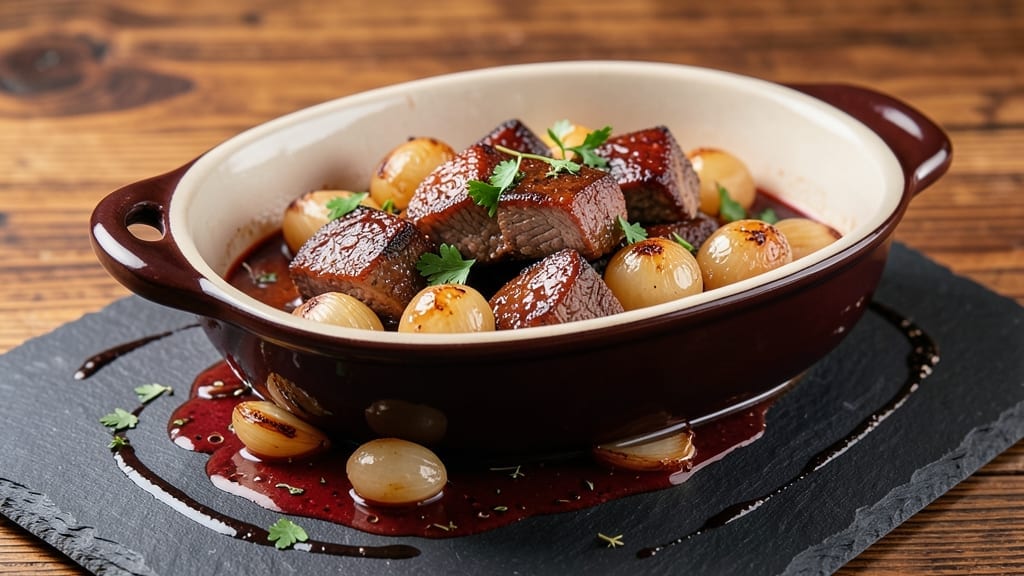
This 5-star beef bourguignon recipe transforms humble beef chops into melt-in-your-mouth perfection through slow-braised magic. The secret? A deep red wine reduction that infuses every bite with rich, velvety depth—no shortcuts, just restaurant-quality results.
I’ve perfected this technique over years, ensuring tender beef and complex flavors that impress even the most discerning palates.
The process begins with searing beef chunks until golden, then building layers of flavor through sautéed vegetables and a carefully deglazed wine sauce. A slow simmer for hours breaks down collagen, creating a sauce so luxurious it deserves a place at your finest dinner table.
The right wine—like a Pinot Noir or Burgundy—elevates the dish from ordinary to extraordinary.
By the time you plate this dish, you’ll have tender beef chunks suspended in a glossy, wine-infused sauce, studded with caramelized mushrooms and pearl onions. The aroma alone will have guests anticipating every bite, while the perfectly balanced flavors—savory, slightly sweet, and deeply aromatic—make it unforgettable.
Serve with crusty bread to soak up every last drop of sauce or alongside mashed potatoes for a hearty meal. This recipe isn’t just dinner—it’s an experience. Let’s get started on creating your five-star masterpiece.
Ingredients for 5 star beef bourguignon
Six ingredients transform ordinary beef into five-star dining perfection through slow-braised magic.
| Ingredient | Amount | Notes |
|---|---|---|
| Beef Chuck Roast 🥩 | 3 lb | Cut into 1.5-inch chunks, trimmed of fat |
| Dry Red Wine 🍷 | 2 cups | Pinot Noir or Burgundy preferred |
| Beef Stock 💧 | 2 cups | Homemade or high-quality store-bought |
| Shallots 🧅 | 2 whole | Minced, about 0.25 cup total |
| Garlic Cloves 🧄 | 6 cloves | Peeled and smashed |
| Pearl Onions 🧅 | 12 whole | Peeled, halved lengthwise |
| White Mushrooms 🍄 | 16 oz | Quartered, cremini or baby bella work too |
| All-Purpose Flour 🌾 | 2 tbsp | For dredging beef |
| Olive Oil 🫒 | ½ cup | Extra-virgin for richness |
| Unsalted Butter 🧈 | 4 tbsp | Cold for finishing sauce |
| Fresh Thyme 🌿 | ¼ cup | Leaves only, stems removed |
| Fresh Rosemary 🌿 | ¼ cup | Needles only, finely chopped |
| Salt 🧂 | 1 ½ tsp | Diamond Crystal preferred |
| Ground Black Pepper 🌶️ | 1 tsp | Freshly cracked |
| Tomato Paste 🍅 | 2 tbsp | Smooth, not chunky |
The beef is everything here—chuck roast with good marbling breaks down beautifully. Costco or Whole Foods carry excellent cuts, but your local butcher will have the freshest. Look for bright red meat with visible fat streaks. If you’re using pre-cut chunks, pat them dry before dredging—they’ll sear better. For the wine, Pinot Noir or Burgundy are classic choices, but any dry red will work. Avoid sweet wines or those with residual sugar—they’ll throw off the balance. The stock? Homemade is ideal, but Kitchen Basics or Pacific Foods brands are reliable store-bought options.
No Pinot Noir? Cabernet Sauvignon or Merlot work in a pinch, but reduce the amount by 2 tablespoons if it’s particularly bold. Fresh thyme and rosemary are non-negotiable for that classic bouquet, but dried works at half the amount if you’re in a bind. The tomato paste can be swapped for 1 tablespoon of crushed San Marzano tomatoes if you prefer a more liquid base. Pearl onions are a must for texture, but regular onions peeled and halved will work. For the mushrooms, cremini or baby bella add more depth than white, but any variety will caramelize beautifully. And if you’re short on time, pre-minced shallots from the store save 10 minutes of prep.
This dish tastes even better the next day as flavors meld. Store in an airtight container in the fridge for up to 5 days—the sauce thickens beautifully overnight. For freezing, portion into single-serving containers and it keeps for 3 months. When reheating, add a splash of water or stock to thin the sauce. The crusty bread you’ll serve with it? Baguette or sourdough work perfectly—just toast until golden before serving. And save those wine bottles—any leftover wine can be reduced to make a quick pan sauce for the beef.
Why You’ll Love This Recipe
- One-Pot Magic: I swear by this recipe because it’s literally one pan, one spoon, and done. No chopping mountains of veggies—just a handful of shallots and garlic that take two minutes to mince. The beef chuck roast does all the heavy lifting while you sip wine and pretend you’re in a Parisian bistro.
- Wine-Infused Richness: That dry red wine isn’t just for show—it’s the soul of the dish. The acidity cuts through the beef’s richness, and the slow simmer lets the flavors meld into something so deep and satisfying, you’ll forget takeout ever existed. Honestly, the first time I tasted it, I nearly spilled my glass.
- Leftovers for Days: Between us, this recipe makes way more than you’ll eat in one sitting—and that’s a good thing. The flavors only get better after a day or two in the fridge, so you’re basically getting free gourmet meals. My freezer’s always stocked with portions because reheating it is just as easy as making it.
- Budget-Friendly Luxury: You’re getting restaurant-quality beef and wine for a fraction of the cost. A chuck roast is cheap, but it transforms into something fancy with just a splash of stock and a little patience. I’ll be real: this is how I trick people into thinking I cook all the time.
Step-by-step instructions for 5 star beef bourguignon
Here’s how to craft a restaurant-worthy beef bourguignon with melt-in-your-mouth beef and rich, velvety sauce.
Prepare and Sear the Beef
Pat the 3 lb beef chuck roast completely dry with paper towels—this ensures a proper sear. Cut it into 1.5-inch chunks, trimming any excess fat. Place the flour in a shallow dish and season the beef generously with 1.5 tsp salt and 1 tsp ground black pepper. Dredge each piece thoroughly, shaking off any excess, then set aside.
Heat 0.5 cup olive oil in a large Dutch oven over medium-high heat until shimmering. Working in batches to avoid crowding, add the beef and sear for 2-3 minutes per side until deeply browned. This step creates the Maillard reaction that builds incredible flavor. Transfer the seared beef to a plate and set aside.
Build the Flavor Base
In the same Dutch oven, reduce heat to medium and add the 2 whole minced shallots, cooking for 2 minutes until softened. Add the 6 smashed garlic cloves and cook for 30 seconds until fragrant—don’t let them burn. Stir in the 2 tbsp tomato paste and cook for 1 minute, stirring constantly, until it darkens slightly and releases its deep, caramelized flavor.
Deglaze immediately with 2 cups dry red wine, scraping up all the browned bits from the bottom. Let the wine simmer for 3-4 minutes until reduced by half. This reduction concentrates the wine’s flavor and forms the foundation of your sauce. Keep the heat at medium throughout this process.
Braise the Beef with Aromatics
Return the seared beef to the Dutch oven. Add the 12 halved pearl onions, 16 oz quartered white mushrooms, 0.25 cup chopped fresh rosemary, and 0.25 cup fresh thyme. Pour in 2 cups beef stock, ensuring all ingredients are submerged. Bring to a gentle simmer, then reduce heat to low, cover, and transfer to a 325°F oven.
Braise for 2.5-3 hours, turning the beef occasionally, until it’s fork-tender. The sauce should thicken and coat the back of a spoon. If it reduces too much, add a splash of water or stock. The key is patience—this slow cooking transforms tough beef into melt-in-your-mouth perfection. The onions should be tender and the mushrooms caramelized.
Finish with Butter and Garnish
Remove the beef and vegetables from the Dutch oven and transfer to a serving platter. Skim any excess fat from the sauce, then increase heat to medium. Add the 4 tbsp cold unsalted butter, stirring constantly until melted and incorporated. This step adds richness and helps emulsify the sauce for a silky texture.
Taste and adjust seasoning with additional salt or pepper if needed. Spoon the sauce over the beef and vegetables, garnishing with extra fresh thyme or rosemary. Serve immediately with crusty bread or mashed potatoes to soak up every last drop of that luxurious sauce. The beef should pull apart easily, and the sauce should coat the back of a spoon with a velvety consistency.
Pro Tips For Making 5 Star Beef Bourguignon
- Sear the Roast Hard: Don’t just brown it—get that crust dark and sticky with a 10-minute sear in a screaming-hot pan. I used to rush this, and the meat never developed that deep, caramelized flavor that makes bourguignon taste like a restaurant dish. Use enough oil (about 2 tablespoons) so the beef doesn’t steam, and resist the urge to move it around too much.
- Deglaze with Wine Immediately: As soon as you remove the roast, pour in that dry red wine hot—scrape every last bit of fond from the pan with a wooden spoon. Letting it cool even 30 seconds means missing out on flavor. This is where the magic happens, and skipping it means a dull sauce instead of one that sings.
- Reduce Stock Slowly: Simmer the beef stock on low heat—not a rolling boil—so it thickens without turning gluey. I learned this the hard way after burning down a pot and ending up with a sauce that could’ve been used as wallpaper paste. A 1.5-hour simmer is non-negotiable for that velvety texture.
- Add Shallots Early: Sauté the shallots until they’re golden and slightly caramelized—before adding the garlic—so they contribute real depth, not just a mild onion note. I was skeptical until I tried it: the sauce gained layers of complexity that made all the difference between “good” and “wow.”
Essential equipment for 5 star beef bourguignon
Dutch Oven
A 6-quart Dutch oven is my non-negotiable tool for this recipe—it’s the perfect vessel for searing, braising, and reducing all in one pot. I use a Lodge cast iron Dutch oven because it distributes heat evenly and retains it beautifully, but any heavy-bottomed Dutch oven will work.
If you don’t own one, a Le Creuset enameled cast iron is another excellent choice. Avoid thin, lightweight pots—they can’t handle the high heat needed for searing or the long simmer. 🔥
Meat Thermometer
You’ll need a reliable meat thermometer to ensure your beef reaches 203°F internal temperature—this guarantees tender, fork-tender results. I recommend the ThermoWorks Smoke for its accuracy and probe design, but even a simple instant-read thermometer like the Taylor Precision Products will do.
Insert the probe into the thickest part of a beef chunk to monitor doneness without overcooking. Never guess—this is where restaurant-quality results start.
Tongs for Browning
Invest in a sturdy pair of kitchen tongs (I use OXO Good Grips) for handling the beef during searing. They give you better control than a fork or spatula, preventing chunks from breaking apart.
The tongs should be long enough to avoid burning your hands when working with hot oil. A silicon-coated grip helps with heat resistance, and the spring-loaded design makes flipping beef effortless. Trust me, this is one upgrade that makes a huge difference.
Fine-Mesh Strainer
A fine-mesh strainer (like the OXO Good Grips Collapsible Strainer) is essential for skimming excess fat from the finished sauce. After braising, you’ll skim fat while keeping the sauce warm—this step ensures a silky, velvety texture.
I also use it to rinse mushrooms if needed, but its primary role here is fat removal. A stainless steel strainer works best because it won’t retain flavors from previous uses. Pro tip: Place it over a bowl to catch the fat for later use in cooking or frying.
Chef’s Knife and Cutting Board
For prepping ingredients efficiently, a sharp chef’s knife (I swear by the Wüsthof Classic 8-inch) and a sturdy cutting board (like the John Boos End Grain) are must-haves. You’ll need to mince shallots, peel garlic, quarter mushrooms, and halve pearl onions—precision matters here.
A serrated knife comes in handy for trimming fat from the beef. Keep your knife sharp; dull blades make prep frustrating and increase the risk of uneven cuts. 💡
Wooden Spoon
While the Dutch oven is your main tool, a wooden spoon (preferably olive wood for heat resistance) is indispensable for stirring the sauce without scratching the pot. I use it to scrape up browned bits during deglazing and to stir the butter into the sauce at the end.
Wood won’t conduct heat like metal, so it won’t burn your hands. Avoid plastic spoons—they melt under high heat. A long-handled spoon is ideal for reaching into deep Dutch ovens safely.
Nutrition facts
Frequently asked questions
Can I use a different cut of beef for this recipe?
While chuck roast is ideal for its marbling and tenderness, you can substitute with brisket or stew beef. Avoid lean cuts like sirloin—they won’t become tender enough. If using brisket, cut into 1.5-inch cubes and trim excess fat. The cooking time may vary slightly, so check for 203°F internal temperature for perfect doneness.
What if I don’t have Pinot Noir or Burgundy wine?
Any dry red wine with moderate tannins works—Cabernet Sauvignon or Merlot are great alternatives. For bold wines like Cabernet, reduce the amount by 2 tablespoons to prevent overpowering the dish. Avoid sweet wines or those with residual sugar. If you’re wine-free, substitute with 2 cups beef stock + 1 tablespoon balsamic vinegar for depth.
How do I make the sauce thicker or thinner?
For a thicker sauce, simmer uncovered for 10-15 minutes to evaporate excess liquid. For thinning, add 1-2 tablespoons beef stock or water at a time. The sauce should coat the back of a spoon but remain silky. If it’s too thin early, reduce the braising liquid by 0.5 cup when adding stock. Pro tip: Skim excess fat regularly during braising to prevent greasiness.
Can I prepare this dish ahead of time?
This recipe tastes even better the next day! Store in an airtight container in the fridge for up to 5 days. The sauce thickens beautifully overnight. For freezing, portion into single-serving containers and freeze for up to 3 months. When reheating, add a splash of stock or water to thin the sauce. Reheat gently on low heat or in a 325°F oven until warmed through.
What’s the best way to serve beef bourguignon?
Pair with crusty bread (baguette or sourdough) to soak up the sauce or serve alongside creamy mashed potatoes and roasted root vegetables. Garnish with fresh parsley or thyme for brightness. For a complete meal, add a simple green salad with a light vinaigrette. The rich flavors of bourguignon pair beautifully with Cabernet Sauvignon or Syrah wines.

- 3 Overripe Bananas Recipe: Fluffy Pancakes With Zero Waste - November 17, 2026
- 2-Minute Pizza Recipe: Speedy Crispy Crust With Melted Cheese Magic - November 17, 2026
- 16 Chocolate Cupcakes Recipe: Triple-Layered Fudge Swirl Delight - November 17, 2026