
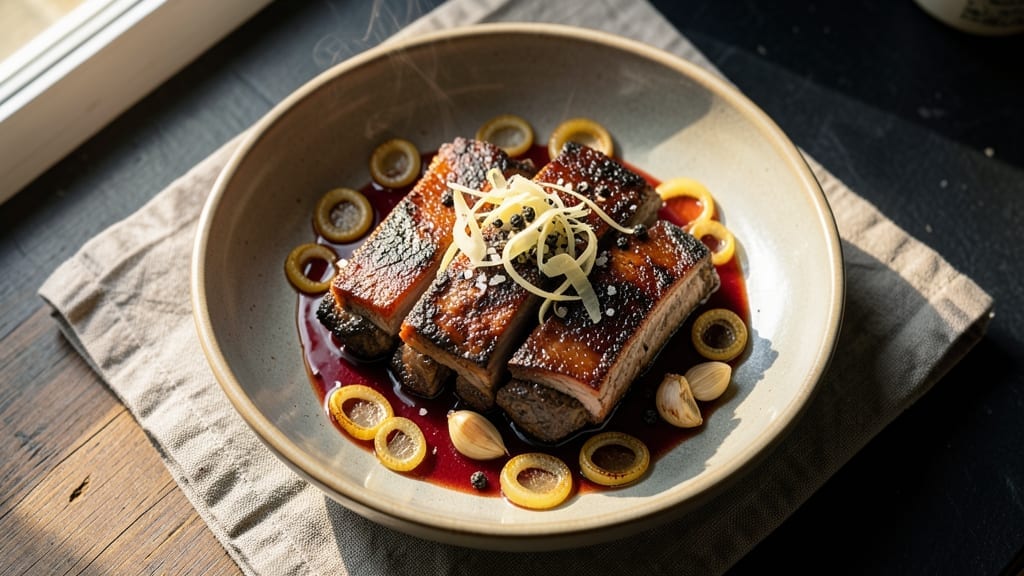
This 5-star beef short ribs recipe delivers melt-in-your-mouth tenderness and deep, caramelized flavor that rivals any high-end steakhouse. The secret lies in a slow-braised technique that transforms tough ribs into fork-tender perfection, with a rich sauce that clings to every bite.
After years of testing, I’ve perfected a method that delivers consistent, restaurant-quality results—no fancy equipment required.
The process starts with a dry brine to enhance flavor and moisture retention, followed by a deep sear to lock in juices. Then, the ribs braise in a flavorful liquid (red wine, broth, and aromatics) until they fall apart effortlessly.
The sauce reduces to a velvety consistency, packed with umami and depth. This isn’t just a recipe—it’s a foolproof technique that guarantees success every time.
By the time you serve these ribs, they’ll be fall-apart tender, with a glossy, caramelized exterior and a sauce so rich it coats every bite. Pair them with creamy mashed potatoes, roasted root vegetables, or crusty bread to soak up every last drop.
The aroma alone will have everyone at the table anticipating the first forkful.
Whether you’re cooking for a special occasion or treating yourself to a weekend indulgence, this recipe delivers restaurant-quality results at home. The key is patience—letting the ribs braise until they’re so tender they practically melt.
Trust the process, and you’ll end up with a dish that’s worth every minute of waiting.
Ingredients for 5 star beef short ribs
Restaurant-quality beef short ribs start with these carefully selected ingredients—each playing a role in the rich, caramelized depth.
| Ingredient | Amount | Notes |
|---|---|---|
| Beef Short Ribs (Bone-In) 🥩 | 4 lb | Thick-cut, 2-3 inches across |
| Kosher Salt 🧂 | 1 ½ tbsp | Diamond Crystal preferred |
| Black Peppercorns 🌶️ | 1 tbsp | Freshly cracked for intensity |
| Dry Red Wine 🍷 | 1 cup | Bold Cabernet Sauvignon |
| Beef Broth 🥫 | 2 cups | Homemade or high-quality store-bought |
| Yellow Onion 🧅 | 1 whole | Chopped, medium size |
| Garlic Cloves 🧄 | 6 cloves | Peeled, smashed slightly |
| Fresh Thyme 🌿 | 2 sprigs | Stems removed, leaves only |
| Fresh Rosemary 🌿 | 1 sprig | Woody stems removed |
| Tomato Paste 🍅 | 2 tbsp | High-quality, no sugar added |
| Olive Oil 🫒 | 2 tbsp | Extra-virgin, for searing |
| Balsamic Vinegar 🍷 | 1 tbsp | Aged, for depth |
| Honey 🍯 | 1 tbsp | Raw, for balancing acidity |
| Fresh Parsley 🌿 | ¼ cup | Chopped, for garnish |
The ribs are the foundation, so prioritize quality. Look for thick-cut, bone-in short ribs with good marbling—Costco or Whole Foods carry excellent options. If buying a whole packer, ask your butcher to trim excess fat. For the wine, bold Cabernet Sauvignon adds depth, but Merlot or Zinfandel work too. The beef broth should be homemade or high-end store-bought—low-quality broth makes a noticeable difference. Fresh herbs like thyme and rosemary should be vibrant green, not wilted. If using dried, reduce to one-third the amount. The tomato paste is non-negotiable—sugar-free ensures a clean, rich flavor.
No red wine? Beef broth with a splash of balsamic delivers similar depth. Swap fresh thyme for dried at one-third the amount, but fresh is ideal. The honey can be omitted if avoiding sugar, though it helps balance the acidity. For a quicker version, pre-minced garlic works, but fresh smashed cloves develop more flavor. If your tomato paste is overly thick, add a splash of broth to thin it. The balsamic vinegar should be aged—cheap versions lack complexity. For extra richness, add a splash of soy sauce (about 1 tbsp) to the braising liquid, though it’s optional.
The ribs can be prepped a day ahead—pat them dry and refrigerate uncovered for 24 hours to enhance tenderness. Store the braising liquid separately if making ahead. Once cooked, ribs reheat beautifully—simmer in their sauce for 10-15 minutes to restore moisture. Sauce keeps for 5-7 days in the fridge, while ribs can be frozen for 3 months. For leftovers, portion with sauce in airtight containers to maintain flavor. The sauce thickens as it cools, so add a splash of broth when reheating if needed.
Why You’ll Love This Recipe
- No-Fuss Oven Magic: I swear by the slow cooker method here—just sear the ribs, dump in wine and broth, and walk away. The bone-in ribs practically melt themselves into tender perfection while you handle the rest of dinner.
- Rich, Deep Umami Bomb: That red wine and beef broth combo? It’s like a flavor time machine. The ribs come out with this caramelized crust and a sauce so rich it makes you want to lick the pan—and I have.
- Weeknight or Weekend Star: Between us, this recipe works for both. Toss it on a Monday for a stress-free dinner, or pull it out for a fancy-ish date night. Same effort, different vibes—just adjust the wine and the side dish.
- Leftovers That Don’t Suck: Honestly, the best part? The second day is even better. Shred those ribs for tacos, sandwiches, or just reheated with a splash of broth. No sad, dry meat here—just pure, budget-friendly satisfaction.
Step-by-step instructions for slow-braised beef short ribs
Master this technique and you’ll transform tough cuts into melt-in-your-mouth perfection.
Season and Sear the Short Ribs
Pat the 4 lb beef short ribs (bone-in) completely dry with paper towels. This drying step is crucial—it ensures maximum browning and crisp edges. In a small bowl, combine 1.5 tbsp kosher salt and 1 tbsp freshly cracked black peppercorns. Rub this mixture all over the ribs, pressing firmly so the seasoning adheres to every crevice.
Heat 2 tbsp extra-virgin olive oil in a heavy Dutch oven over medium-high heat. Place the ribs bone-side down in the pan and sear undisturbed for 5-6 minutes until a deep golden-brown crust forms. You’ll see the fat render out and sizzle—this is your signal that the Maillard reaction is working. Flip the ribs and sear the other side for another 5-6 minutes. Remove them from the pan and set aside on a plate.
Build the Flavor Base
In the same Dutch oven (don’t wipe it clean—those browned bits are pure flavor), add the chopped whole yellow onion and cook for 5-6 minutes until softened and lightly caramelized. Add the 6 peeled and smashed garlic cloves, 2 sprigs fresh thyme, and 1 sprig fresh rosemary (woody stems removed). Cook for another 1-2 minutes until the garlic becomes fragrant and just begins to color.
Stir in the 2 tbsp tomato paste and cook for 1 minute to deepen its flavor. Pour in the 1 cup dry red wine and scrape up all the browned bits from the bottom of the pan with a wooden spoon. This deglazing step captures all the concentrated flavor that would otherwise be lost. Let the wine simmer for 3-4 minutes until reduced by half.
Braise Until Fork-Tender
Return the seared ribs to the Dutch oven, bone-side up. Add 2 cups beef broth, ensuring the ribs are mostly submerged. Bring to a simmer, then reduce heat to low, cover tightly with a lid, and braise for 3 hours. This long, slow cook time is what transforms tough meat into tender perfection.
After 3 hours, check the ribs for tenderness. They should be fork-tender, with the meat easily pulling away from the bone. If they’re not quite there yet, continue braising for another 30-60 minutes. The sauce should have reduced slightly, creating a rich, velvety consistency. If it’s too thin, uncover and simmer for 10-15 minutes to thicken.
Finish with Sweet and Tangy Depth
Stir in the 1 tbsp aged balsamic vinegar and 1 tbsp raw honey, then simmer uncovered for 5-7 minutes until the sauce glistens and thickens slightly. This final step balances the richness of the meat with bright acidity and subtle sweetness. Taste and adjust seasoning with additional kosher salt or black pepper if needed.
The ribs are done when they reach an internal temperature of 203-205°F at their thickest point. Remove the ribs from the braising liquid and transfer them to a serving platter. Skim any excess fat from the sauce, then spoon the remaining liquid over the ribs. Garnish with 0.25 cup chopped fresh parsley for a pop of color and freshness.
Rest and Serve
Let the ribs rest for 10-15 minutes before serving. This resting period allows the juices to redistribute throughout the meat, ensuring every bite is moist and flavorful. The ribs should pull apart easily at the bone, with a rich, caramelized exterior and tender, juicy interior.
Serve the ribs with the braising sauce spooned over the top, accompanied by crusty bread to soak up every last drop. The sauce should coat the back of a spoon with a velvety texture, and the meat should have a deep, complex flavor that balances sweet, tangy, and umami notes. Each bite should be a testament to the power of slow cooking and proper technique.
Pro Tips For Making 5 Star Beef Short Ribs
- SEAR THEM HARD: Don’t be gentle—get those ribs screaming hot in a dry pan for 3-4 minutes per side until deep brown. I used to rush this, and the sauce never tasted as rich. The crust locks in flavor and caramelizes the fond, which dissolves into liquid gold when you add wine.
- SALT THE MEAT FIRST: Generously coat the ribs with kosher salt at least 30 minutes before cooking (or overnight if you’re patient). This seasons the surface deeply and helps render fat, making the final dish juicier. I learned this the hard way—dry, bland ribs are a crime.
- DEGLAZE WITH PATIENCE: After searing, let the pan cool for 30 seconds before adding wine. This prevents a sad, watery sauce. Let the wine reduce by half before adding broth—rushing this step means a thin, weak base. Your future self will notice the difference.
- USE BONE-IN, NOT BONELESS: The bones add depth to the broth and keep the meat moist. If you’re tempted to trim them, don’t—just angle the ribs so the bones don’t touch the pot bottom. The marrow melts into the sauce, making it richer. (Yes, it’s messier, but it’s worth it.)
Regional styles of these flavors
Texas BBQ Style
In Texas, beef short ribs are often cooked with a smoky, sweet, and tangy twist. Start with a dry rub of 2 tbsp brown sugar, 1 tbsp smoked paprika, and 1 tsp cayenne pepper before searing.
After braising, finish with a sauce made from ½ cup apple cider vinegar, ¼ cup molasses, and 1 tbsp chili powder, simmered until thick. Serve with pickled jalapeños and cornbread for the full Texas experience. 🌶️
Italian Osso Buco
For an Italian-inspired approach, use white wine instead of red and add ½ cup crushed tomatoes and 1 sprig bay leaf to the braising liquid. After cooking, finish with 2 tbsp butter and 1 tbsp fresh parsley for a rich, aromatic sauce.
Garnish with lemon zest and serve with polenta or risotto. This method highlights the natural sweetness of the meat.
French Beef Bourguignon
Transform your ribs into a classic bourguignon by using Pinot Noir instead of Cabernet Sauvignon. Add 8 oz mushrooms, 2 carrots, and 2 pearl onions to the braising liquid. After cooking, thicken the sauce with 1 tbsp cornstarch mixed with 2 tbsp cold water.
Serve with crusty baguette and a side of green beans. The earthy mushrooms add depth to this French favorite.
Korean Galbi-Inspired
For a Korean-inspired twist, marinate the ribs in ¼ cup soy sauce, 2 tbsp gochujang, 1 tbsp sesame oil, and 1 tbsp grated ginger for at least 4 hours before cooking.
Use coconut aminos instead of red wine in the braising liquid and add 1 tbsp honey and 1 tsp black pepper for a sweet-spicy flavor. Serve with steamed rice and kimchi for a bold, umami-packed meal. 🍚
Southern Smothered Ribs
In Southern cuisine, ribs are often smothered in a rich, gravy-like sauce. After braising, thicken the sauce with 2 tbsp flour and 1 cup beef broth, then stir in ½ cup ketchup and 1 tbsp Worcestershire sauce.
Serve over mashed potatoes or buttery egg noodles. This style is hearty and comforting, perfect for cold weather.
Modern Fusion Twist
For a contemporary take, blend the braising sauce with 1 tbsp miso paste and 1 tsp fish sauce after cooking. Garnish with microgreens and a drizzle of chili oil for a balance of umami, heat, and freshness.
Pair with roasted sweet potatoes and a crisp white wine. This fusion style keeps the richness while adding vibrant, unexpected flavors. ✨
Nutrition facts
Frequently asked questions
How do I know when beef short ribs are perfectly tender?
The ribs are done when they reach an internal temperature of 203-205°F and the meat pulls apart easily with a fork. Look for a glossy, caramelized exterior and a sauce that coats the back of a spoon. If they’re not tender after 3 hours of braising, add another 30-60 minutes—patience is key!
Can I use bone-in or boneless short ribs for this recipe?
This recipe is designed for bone-in short ribs—they stay more flavorful and tender during braising. Boneless ribs will cook faster but may lack depth. If using boneless, reduce braising time by 30-45 minutes and check for doneness earlier.
What’s the best way to reheat leftover short ribs?
Reheat ribs in their braising sauce over low heat for 10-15 minutes until warmed through. Avoid microwaving—they’ll dry out. For extra richness, add a splash of beef broth or water to the sauce. Store leftovers in airtight containers for up to 5 days.
Why did my ribs turn out tough instead of tender?
Tough ribs usually mean one of three things: not enough braising time, too much liquid (which dilutes flavor), or not searing properly. Double-check your cooking time (3+ hours), ensure ribs are mostly submerged, and always sear until deeply browned for maximum tenderness.
Can I make this recipe in a slow cooker or Instant Pot?
Yes! For a slow cooker, sear the ribs first, then cook on low for 8 hours or high for 5 hours. For an Instant Pot, use the high-pressure setting for 60 minutes after searing. Both methods work, but monitor the sauce—it may need thickening after cooking.

- 3lb Prime Rib Roast Recipe: Juicy Pink Center Guaranteed in 3 Hours - October 31, 2026
- 5 Spice Cake Recipe: Warmly Spiced Layers With Crunchy Top - October 31, 2026
- 1950’s Macaroni and Cheese Recipe: Nostalgic Creamy Cheese Sauce with Buttery Noodles - October 31, 2026