
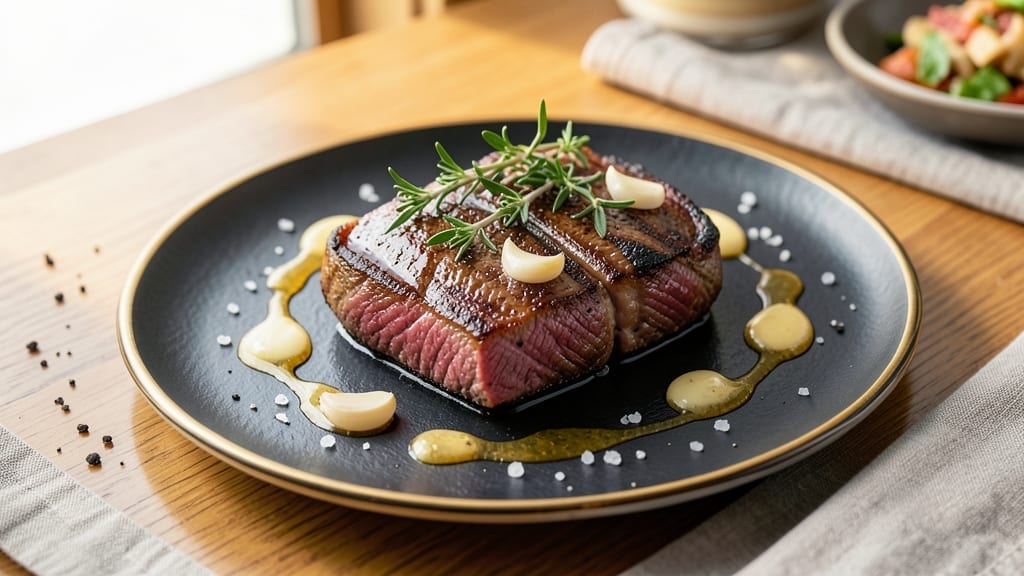
This 5-star flat iron steak recipe delivers the perfect balance of a buttery crust and juicy pink center—just like your favorite steakhouse. I’ve perfected this technique after years of testing, and it’s the one I use when hosting dinner parties or treating myself to a special night in.
The key lies in a precise sear and a rest that keeps the meat tender without overcooking it.
Start with a dry-brined flat iron steak—this step ensures maximum flavor and tenderness by drawing out moisture while locking in seasoning. Once seared in a screaming-hot cast iron skillet, the steak develops that coveted crust while staying perfectly medium-rare inside.
A quick butter baste adds richness, and resting for 5 minutes guarantees a juicy slice every time. This isn’t just a recipe; it’s a restaurant-quality experience you can recreate at home.
Pair it with garlic mashed potatoes and roasted asparagus for a complete meal that feels indulgent yet balanced. The steak’s caramelized edges and tender interior make it the star, while the sides complement without overpowering.
For an extra touch, finish with a drizzle of red wine reduction—it elevates the dish to fine-dining level. This is the kind of steak that leaves guests asking for the recipe.
Whether you’re cooking for two or a crowd, this method scales effortlessly. The secret? Confidence in the technique and patience during the rest. Trust me—once you master this, you’ll never settle for less than 5-star steak again. Let’s get started on creating your next showstopper.
Ingredients for 5 star flat iron steak
Fourteen ingredients. One perfect steakhouse-worthy flat iron steak. Let’s make it shine.
| Ingredient | Amount | Notes |
|---|---|---|
| Flat Iron Steak 🥩 | 1 ½ lb | Center-cut, 1-inch thick |
| Kosher Salt 🧂 | 1 tbsp | Diamond Crystal preferred |
| Freshly Ground Black Pepper 🌶️ | 1 tsp | Coarse grind for texture |
| Unsalted Butter 🧈 | 4 tbsp | Cold, cut into pieces |
| Garlic Cloves 🧄 | 4 cloves | Minced, for butter baste |
| Fresh Thyme Leaves 🌿 | ¼ cup | Chopped, for butter baste |
| Extra-Virgin Olive Oil 🫒 | 2 tbsp | High smoke point preferred |
| Red Wine 🍷 | ½ cup | Dry, like Cabernet Sauvignon |
| Vegetable Oil 🫒 | ¼ cup | For preheating skillet |
| Fresh Rosemary 🌿 | 2 sprigs | For garnish, optional |
The steak makes or breaks this dish—flat iron is the way to go, not ribeye or sirloin. Look for a 1-inch thick cut from the butcher section (or ask them to trim it for you). Costco or Whole Foods often carry prepped center-cut pieces, but if you’re buying whole, check for good marbling and bright red color. A 1.5 lb steak serves four generously, so adjust if you’re feeding more. Pat it dry before brining—this step is non-negotiable for that perfect crust. I always grab extra steaks when they’re on sale and freeze them for special occasions.
No kosher salt? Diamond Crystal works best—it dissolves faster than Morton’s, which means better seasoning. Fresh thyme and rosemary are ideal, but dried at half the amount works in a pinch (just crush the leaves first). The butter needs to be cold and cut into pieces—room temperature butter won’t brown properly. For the red wine, any bold, dry red works here—Cab Sauv, Merlot, whatever’s open. No wine? Beef broth with a splash of balsamic gets you close. And if you’re worried about the steak being too lean, add a thin slice of bacon to the skillet during searing—it renders fat that bastes the steak.
This steak is best served immediately after cooking, but if you must prep ahead, dry-brine the steak overnight and store it uncovered in the fridge. The butter baste keeps for 2 days in the fridge, so you can make it ahead. For leftovers (if there are any), slice against the grain and reheat in a 350°F oven for 10 minutes. I always make extra butter baste—it’s perfect for topping mashed potatoes or drizzling over roasted veggies. Store any unused red wine in a cool, dark place—it’ll thank you later.
Why You’ll Love This Recipe
- Two-Ingredient Magic: I swear by this trick—just salt, pepper, and a hot pan. No fancy marinades, no stressing over herbs. That crust? Pure, buttery perfection from the butter and garlic basting. Honestly, it’s the kind of dish where the steak does all the work.
- Buttery Garlic Crunch: The moment that butter melts into the seared edges? My mouth waters just thinking about it. Fresh garlic cloves sizzling in the pan while the steak rests—simple, but it turns a good steak into something unforgettable. (Yes, even on a Tuesday night.)
- Weeknight or Date Night: Same recipe, different vibes. Toss it on the grill for summer BBQs or sear it in the cast iron for a cozy dinner. My roommate’s a picky eater, but he always clears his plate for this one. That’s my stamp of approval.
- Leftovers? Better Than Day One: Between us, the second day is my favorite. The steak stays tender, and I repurpose slices into sandwiches or stir-fries. No sad, dry meat here—just rich, flavorful bites that taste like you put in effort. (Spoiler: You didn’t have to.)
Step-by-step instructions for buttery crust flat iron steak
Here’s how to transform a simple flat iron steak into a restaurant-worthy masterpiece with crispy edges and tender pink centers.
Season and Sear the Steak to Perfection
Pat the 1.5 lb flat iron steak completely dry with paper towels—this is crucial for that perfect crust. Season both sides generously with 1 tbsp kosher salt and 1 tsp freshly ground black pepper, pressing the seasoning into the meat so it adheres well.
Heat ¼ cup vegetable oil in a heavy skillet over medium-high heat until it shimmers but doesn’t smoke. Place the steak in the pan and let it sear undisturbed for 3 minutes per side—you’ll see beautiful golden-brown crust forming. For a center-cut steak, this ensures even cooking without overcrowding the pan. Flip carefully using a pair of tongs to avoid losing that precious crust.
Build the Garlic-Thyme Butter Baste
Remove the steak from the pan and reduce heat to medium-low. In the same skillet, add the 4 tbsp cold unsalted butter, 4 minced garlic cloves, and ¼ cup chopped fresh thyme leaves. Let the butter melt completely while stirring occasionally—this prevents burning and infuses the butter with aromatic flavors.
Once the butter is fully melted and fragrant (about 2 minutes), return the steak to the pan. Spoon the garlic-thyme butter mixture over the steak, letting it baste for 1 minute per side. This step is what creates that signature buttery crust while keeping the interior juicy. The residual heat will gently cook the steak to medium-rare perfection.
Deglaze with Red Wine for Flavor Depth
Remove the steak again and pour in the ½ cup dry red wine. Scrape up any browned bits from the bottom of the pan with a wooden spoon—these contain concentrated flavor that will elevate your sauce. Let the wine simmer for 2-3 minutes until reduced by half, creating a rich, velvety base.
Here’s the thing—don’t walk away. If the wine reduces too quickly, it can burn. Watch for a glossy sheen that coats the back of a spoon. This reduction process is what transforms simple wine into a complex, flavorful sauce that complements the steak beautifully.
Rest and Serve with Confidence
Transfer the steak to a cutting board and let it rest for 5-10 minutes before slicing. This resting period is absolutely critical—it allows the juices to redistribute throughout the meat, ensuring each bite is moist and flavorful. Tent loosely with foil to keep it warm during this time.
Slice the steak against the grain into ¼-inch thick pieces. The flat iron’s natural grain direction creates beautiful texture when cut properly. Serve immediately with the reduced wine sauce spooned over the top and garnish with the 2 sprigs fresh rosemary for a touch of elegance. Each bite should deliver that perfect balance of crispy crust, buttery richness, and juicy pink center.
Pro Tips For Making 5 Star Flat Iron Steak
- SEAR IN TWO STAGES: Hit the steak with a screaming-hot cast iron for 30 seconds per side first—this locks in juices before you finish at medium-high. I used to rush this and end up with a steak that was gray inside no matter how long I cooked it. The first sear builds that crust and keeps the center tender.
- SALT THE GARLIC: Toss your minced garlic with a pinch of kosher salt before melting it in the butter. The salt draws out moisture, so the garlic doesn’t burn and the butter doesn’t splatter everywhere. (Yes, even if you’re impatient like me—this takes 10 seconds and makes a real difference.)
- DON’T PUNCH THE STEAK: Skip the meat mallet unless you enjoy dense, overworked steak. The flat iron’s natural grain is perfect—just pat it dry and let the high heat do the work. I learned this the hard way after turning a juicy cut into something that needed a fork.
- REST UNDER FOIL: Tent the rested steak with aluminum foil for the first 5 minutes of resting—this traps heat and keeps the butter basting the surface instead of pooling on the plate. (Your future self will thank you when the steak slices like butter.)
Wine and beer pairings for this 5 star flat iron steak
Red Wine Pairings
For this rich, buttery flat iron steak, I always reach for a bold Cabernet Sauvignon—its dark fruit notes and firm tannins stand up beautifully to the dish’s caramelized crust and garlic-thyme butter.
A 2018 Napa Valley Cab from Caymus Vineyards has been my go-to, but any California or Washington State Cab with 12-14% ABV works perfectly. The wine’s acidity cuts through the butter’s richness while its dark berry flavors complement the steak’s natural beefy depth. 🍷
Malbec for Smoky Depth
If you prefer something with a touch of smokiness, a Argentinian Malbec like Catena Zapata brings forward those dark plum and tobacco notes that pair wonderfully with the steak’s crust. The wine’s velvety texture also helps smooth out any potential bitterness from over-searing.
I’ve found that a 14% ABV Malbec holds up best to the dish’s intensity without overpowering it. The key is to serve it slightly chilled—around 60-62°F—to highlight its fruit forward character.
Beer Pairings
For beer lovers, a dark amber ale with caramel and toasted malt notes works surprisingly well. I recommend Deschutes Brewery’s Mirror Pond—its balanced bitterness and malty sweetness complement the steak’s buttery richness without competing.
The beer’s slight hoppiness also helps cleanse the palate between bites. If you prefer something lighter, a Belgian Dubbel like Westmalle Tripel offers fruity complexity that pairs beautifully with the garlic-thyme butter. 🍺
Budget-Friendly Options
Don’t worry if you don’t have expensive wines on hand. A Chianti Classico from Italy (around $15-$20) delivers the same acidity and cherry notes that elevate the dish. For beer, Guinness or Samuel Smith’s Nut Brown Ale provide that malty depth without breaking the bank.
The secret is matching the drink’s structure to the steak’s intensity—bold flavors with the steak, refreshing options with the sides.
Serving Temperature
Wine should be served 15-20 minutes before eating to allow it to breathe and open up its aromas. For reds, I pull them from the fridge 30 minutes before serving to reach that perfect 60-65°F temperature.
Beer should be served cellar temperature (around 45-50°F)—never straight from the fridge, as this dulls its flavors. Pro tip: Use an ice bucket with water to chill beer quickly without over-diluting it.
Nutrition facts
Frequently asked questions
What’s the secret to getting that perfect crust on flat iron steak?
The key is a dry surface and high heat. Pat the steak completely dry with paper towels before seasoning, and use a screaming-hot cast iron skillet with vegetable oil (not butter). Let it sear undisturbed for 3 minutes per side—this creates that coveted crust while keeping the inside juicy. Never move the steak until you see deep golden-brown crust forming!
Can I cook this flat iron steak on a grill instead of a stovetop?
Preheat your grill to medium-high heat (400-450°F) and clean the grates thoroughly. Sear the steak for 3-4 minutes per side with the lid closed, then finish with the garlic-thyme butter baste indoors. For extra smoky flavor, add wood chips (hickory or oak) 10 minutes before cooking. Just watch the temperature closely—grill flames can make it cook faster than a stovetop.
How do I know when the steak is done without a meat thermometer?
For medium-rare, press the center with your finger—it should feel slightly soft like pressing your palm (about 130°F). A quick test: Tap the steak gently with a knife—it should give slightly but not feel mushy. The crust should be deep golden-brown, and you should see a thin pink line appear in the center when you cut a small test slice. If it’s still purple inside, return it to the pan for 30 seconds per side.
What if my steak is too tough after cooking?
This usually happens from overcooking or not resting properly. First, check your internal temperature—anything above 145°F risks toughness. If it’s overdone, slice it thinly against the grain and serve with extra sauce. For future attempts, rest the steak for 5-10 minutes before slicing, and always cook to medium-rare (130-135°F). The flat iron’s natural tenderness should shine through with proper technique!
Can I make this ahead of time for a dinner party?
Yes! Prep the steak by dry-brining overnight (season it and refrigerate uncovered). Store it in the fridge until ready to cook. The garlic-thyme butter baste can be made 2 days ahead and reheated gently. For presentation, slice the steak just before serving and keep it warm in a 200°F oven while you plate. The sides (like mashed potatoes) can be reheated separately—just add a splash of milk to keep them creamy.

- 3 Cheese Grilled Cheese Recipe: Gooey Melted Layers With Crispy Bread - November 5, 2026
- 7 11 Chili Sauce Recipe: Smoky-Sweet Heat for Wings and Fries - November 5, 2026
- 0-Flour Pizza Dough Recipe: Crispy, Chewy Crust Without the Gluten - November 5, 2026