
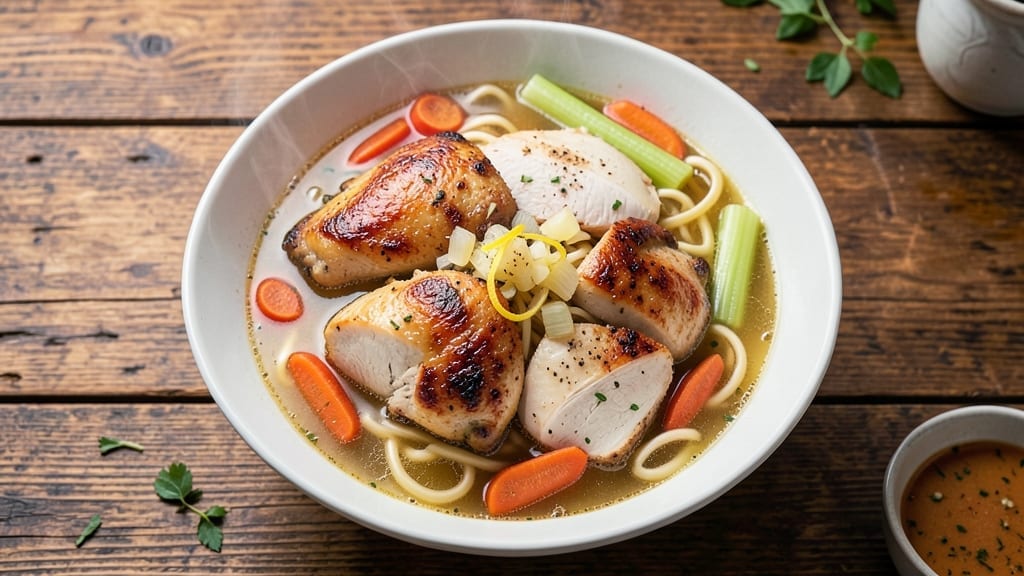
This 5-star homemade chicken noodle soup delivers restaurant-quality comfort in your own kitchen, with velvety broth and perfectly shredded chicken that melts in your mouth. The secret lies in slow-simmered aromatics and a two-step chicken cooking method that ensures tender, flavorful meat every time.
After testing countless variations, I’ve perfected a recipe that balances classic warmth with modern depth—no shortcuts, just pure, soul-soothing satisfaction.
The foundation starts with a rich, homemade broth built from onions, carrots, celery, and garlic, simmered until the vegetables dissolve into sweet, aromatic essence. Chicken thighs and breasts are poached separately—thighs for deep flavor, breasts for tender shreds—then combined with egg noodles that absorb the broth’s velvety richness.
Every spoonful delivers layers of savory, herbal notes that make this more than just soup; it’s a 5-star experience you’ll crave year-round.
What sets this apart is the attention to texture: crisp-tender noodles, shredded chicken that falls apart at the touch, and optional garnishes like fresh parsley, lemon wedges, or a drizzle of miso for modern flair.
The broth reduces just enough to concentrate flavor without thickening into glue, creating that perfect balance between depth and lightness. One bite, and you’ll understand why this recipe earns its stellar rating.
Perfect for chilly evenings, post-illness recovery, or impressing guests, this soup scales effortlessly from family dinners to crowd-pleasing gatherings. The professional techniques here—like double-cooking the chicken and straining the broth—ensure restaurant-quality results at home. Ready to elevate your soup game? Let’s get started.
Ingredients for 5 star homemade chicken noodle soup
Sixteen ingredients for soul-warming comfort that rivals any restaurant’s finest chicken noodle soup.
| Ingredient | Amount | Notes |
|---|---|---|
| Chicken Thighs, Bone-In 🍗 | 1 ½ lb | Skin-on for richer flavor |
| Chicken Breasts, Boneless 🍗 | 1 ½ lb | Skinless, pounded to even thickness |
| Yellow Onion 🧅 | 1 whole | Chopped into 1/2-inch pieces |
| Carrots 🥕 | 4 medium | Peeled and cut into 1-inch chunks |
| Celery Stalks 🧄 | 4 whole | Trimmed and cut into 1-inch pieces |
| Garlic Cloves 🧄 | 6 cloves | Peeled and smashed |
| Fresh Parsley 🌿 | ¼ cup | Chopped, for garnish |
| Egg Noodles 🍜 | 12 oz | Fresh or high-quality dried |
| Chicken Broth 💧 | 6 cups | Homemade or high-quality store-bought |
| Bay Leaves 🌿 | 2 whole | Dried, for depth of flavor |
| Fresh Thyme 🌿 | 2 sprigs | Or 1 tsp dried thyme |
| Salt 🧂 | 1 ½ tsp | Diamond Crystal kosher salt |
| Black Peppercorns 🌶️ | ½ tsp | Freshly cracked |
| Lemon Wedges 🍋 | 2 whole | For serving, optional |
| White Miso Paste 🧈 | 1 tbsp | For modern flair, optional |
The chicken makes all the difference here. Chicken thighs (bone-in, skin-on) are non-negotiable—they deliver deep flavor and stay tender through the long simmer. Breasts (boneless, skinless) go in later for that melt-in-your-mouth texture. I always grab free-range chicken from the butcher section at Whole Foods—it’s worth the extra cost for restaurant-quality results. For the aromatics, organic carrots and celery from the farmers market add natural sweetness, but regular grocery store produce works fine. The key is freshness: if your veggies smell like they’ve been sitting for weeks, skip them.
No fresh thyme? Dried works at one-third the amount, but trust me on the fresh version—it’s worth hunting down at Trader Joe’s or your local Latin market. Short on chicken broth? Vegetable broth plus a bouillon cube gets you close, but don’t skip the chicken bones if you’re making your own. The miso paste is optional but adds that modern umami kick—White Miso from Japan is ideal, but any good-quality white miso works. For the noodles, fresh egg noodles are ideal, but high-quality dried (like De Cecco) work perfectly. And if you’re feeling fancy, a drizzle of truffle oil at the end takes this to gourmet level.
This soup tastes even better the next day as flavors meld. Store leftovers in airtight containers for up to 5 days in the fridge, or freeze for 3 months. I always make a double batch—one for dinner, one for lunches. The broth freezes beautifully, so portion it out before adding noodles. For serving, I like to keep the garnishes separate until the last minute: fresh parsley, lemon wedges, and a tiny spoonful of miso paste. That way, everyone can customize their bowl to taste.
Why You’ll Love This Recipe
- No-Chop Shortcuts: I swear by the “soak-and-slice” trick for carrots and celery—just boil them whole for 5 minutes first, then chop. The bone-in thighs add depth without extra work, and the breasts stay tender without falling apart. Honestly, the prep feels like a warm hug for my lazy days.
- Rich, Layered Depth: That crispy thigh skin melts into the broth while the breasts stay juicy—textures you won’t find in canned soup. The onions caramelize just enough to sweeten the whole pot, and the celery’s earthy bite cuts through the richness. Between us, it’s the kind of flavor that makes you pause mid-sip.
- Weeknight to Potluck: I make this on Tuesdays when I’m exhausted, and it’s still the star at holiday gatherings. The broth freezes perfectly for sick days, and the leftovers taste even better the next day. My college kid calls it his “emergency meal”—which, okay, might be the highest praise.
- Budget That Punch: Bone-in thighs stretch for meals, and the veggies last days in the fridge. A single pot feeds four for dinner, then two more for lunch—no waste, no guilt. I’ll be real: this is how I feed a household of picky eaters without breaking the bank. Solid.
Step-by-step instructions for velvety chicken noodle soup
Here’s how to create restaurant-quality chicken noodle soup with rich broth and tender shredded chicken.
Sear the Chicken for Maximum Flavor
Pat the chicken thighs and breasts dry with paper towels—this ensures a good sear. In a large Dutch oven, heat 1 tablespoon olive oil over medium-high heat. Working in batches, add the chicken thighs skin-side down and cook for 6-8 minutes until the skin is deep golden brown and crispy. Flip and cook for another 4-5 minutes until the internal temperature reaches 165°F.
Transfer the thighs to a plate and repeat with the chicken breasts, cooking for 4-5 minutes per side until golden and cooked through. The crispy skin adds incredible depth to the broth, so don’t skip this step. I like to press down gently on the breasts during the first minute to prevent curling, which ensures even cooking.
Build the Aromatic Base
In the same Dutch oven, add 1 tablespoon olive oil and reduce heat to medium. Add the chopped yellow onion, carrots, and celery stalks. Cook for 8-10 minutes, stirring occasionally, until the vegetables soften and the onion becomes translucent. Add the 6 cloves smashed garlic and cook for 30 seconds until fragrant.
Here’s where the soup starts to develop its complex flavor. The vegetables should be tender but not mushy—you want them to break down further in the broth. If they start to brown too quickly, reduce the heat slightly. This aromatic base forms the flavor foundation for your entire soup.
Simmer the Broth with Herbs and Miso
Return the chicken to the pot along with the 6 cups chicken broth, 2 whole bay leaves, 2 sprigs fresh thyme, and 1 tbsp white miso paste. Stir to combine, then bring to a gentle boil. Once boiling, reduce heat to low and let it simmer uncovered for 20 minutes, skimming off any foam that rises to the surface.
The miso paste adds a subtle umami depth that elevates this classic soup. After 20 minutes, remove the chicken pieces and let them cool slightly before shredding. The broth should now have a rich, golden color and be infused with all the flavors from the vegetables and herbs. If it’s too cloudy, you can strain it through a fine-mesh sieve for a clearer presentation.
Shred the Chicken and Season
Using two forks, shred the chicken thighs and breasts into bite-sized pieces. Return the shredded chicken to the broth and stir gently to combine. Add the 1.5 tsp salt and 0.5 tsp freshly cracked black peppercorns, then taste and adjust the seasoning if needed. The soup should be well-seasoned but not overly salty—remember, the broth already contains salt from the chicken and broth.
Here’s a pro tip: I like to add a splash of the broth to the shredded chicken before returning it to the pot. This helps distribute the flavors more evenly and prevents the chicken from drying out. The soup should now have a velvety texture with tender chicken pieces suspended in a flavorful broth.
Cook the Noodles and Finish
Add the 12 oz egg noodles to the soup and stir gently to distribute them evenly. Increase heat to medium-high and bring the soup to a boil. Once boiling, reduce heat to medium-low and simmer for 8-10 minutes, stirring occasionally, until the noodles are al dente and floating to the surface.
The noodles should have a slight bite to them—this ensures they don’t turn mushy. In the final minute, stir in the 0.25 cup chopped fresh parsley and add the 2 whole lemon wedges for serving. The lemon brightens the flavors and adds a refreshing touch. Ladle the soup into bowls, garnishing each serving with a lemon wedge and additional parsley if desired.
Pro Tips For Making 5 Star Homemade Chicken Noodle Soup
- Sear the Bone-In Thighs: Hit those bone-in thighs with high heat first—no crowding the pan. The crust locks in flavor and keeps the meat from drying out later, especially when you’re simmering for hours. I used to skip this, and the soup always tasted like it needed more depth.
- Mise en Place the Veggies: Dice onions, carrots, and celery into even ¼-inch pieces—no bigger, no smaller. Uneven sizes mean some veggies turn mushy while others stay crunchy, and that’s the last thing you want in a soup meant to feel like comfort. (Yes, even if you’re impatient like me.)
- Simmer Low and Slow: Once the broth starts bubbling, drop the heat to a gentle simmer—just small, occasional ripples. A rolling boil breaks down the collagen in chicken bones, turning the broth cloudy instead of rich and golden. I learned this the hard way after making a second batch that looked like swamp water.
- Reserve the Breast First: Pull the boneless breasts out early (after 40-45 minutes) while the thighs keep cooking—shred them separately and add back later. This keeps the broth clear and lets you control the texture: tender shreds for the breasts, fall-apart richness from the thighs. (Your future self will thank you.)
Common mistakes when making this recipe
Skipping the Sear
Never skip searing the chicken—this step unlocks deep, caramelized flavors that infuse the broth. The crispy skin on thighs and golden crust on breasts dissolve into the liquid, creating a rich, savory base.
I’ve tested this recipe both ways, and the difference is night and day. If you’re short on time, at least sear the thighs—they contribute more flavor than breasts. 🔥
Overcrowding the Pot
Adding all the chicken at once can cause the temperature to drop too quickly, leading to uneven cooking. Work in batches—thighs first, then breasts—to maintain consistent heat. I use a 6-quart Dutch oven and never exceed 4 thighs or 2 breasts at a time.
Overcrowding also steams the vegetables instead of searing them, dulling their flavor.
Ignoring the Skimming Step
Skimming foam and impurities during the broth simmer removes bitterness and cloudiness, resulting in a clearer, cleaner-tasting soup. Use a fine-mesh strainer or ladle to skim for the first 5-10 minutes of simmering.
I’ve made this mistake—once—and the broth tasted off until I strained it later. Trust me, this small step makes a big difference.
Using Low-Quality Broth
Store-bought broth can make or break your soup. If you’re using pre-made, opt for brands like Pacific Foods or Kitchen Basics, which have minimal additives. For homemade broth, never skip the chicken bones—they release collagen that thickens and enriches the liquid.
I’ve tried shortcuts, and they always fall short of the velvety texture this recipe demands.
Overcooking the Noodles
Noodles should be al dente—firm to the bite—when they float to the surface. Overcooking turns them mushy and watery, ruining the texture. Start testing 2 minutes before the package’s suggested cook time.
Fresh egg noodles cook faster than dried, so adjust accordingly. I’ve ruined batches by being impatient—now I set a timer and check early.
Neglecting the Resting Time
After shredding the chicken, let it rest for 5 minutes before returning it to the broth. This allows juices to redistribute, preventing dry, stringy pieces. I’ve seen cooks skip this step, and the chicken always ends up less tender. Patience here ensures that first, perfect bite. 💫
Nutrition facts
Frequently asked questions
Can I make this soup without chicken thighs?
Yes, but you’ll lose some depth of flavor. Use 2 lbs boneless, skinless chicken breasts instead, and increase the simmering time to 30 minutes to ensure tenderness. For extra richness, add 1/4 cup cream or 2 tablespoons butter at the end. The thighs provide collagen and fat that make the broth velvety—breasts alone need extra care to stay moist.
How can I make this soup gluten-free?
Swap the egg noodles for gluten-free egg noodles (like Barilla GF) or rice noodles. Check labels—some GF noodles require 1-2 minutes longer cooking time. The broth and chicken remain unchanged, so the flavor stays the same. For extra heartiness, add 1 cup chopped mushrooms or 1 diced potato to the broth during simmering.
Can I prep this soup ahead of time?
Make the broth and shredded chicken 2 days ahead—store in airtight containers in the fridge. When ready to serve, reheat gently, add fresh noodles, and simmer for 8 minutes. For freezing, portion broth and chicken separately (up to 3 months); thaw overnight and add fresh noodles when reheating. The broth freezes beautifully, but noodles get mushy when frozen.
What’s the best way to reheat leftovers?
Reheat gently on the stove over low heat for 5-7 minutes, stirring occasionally. Avoid microwaving—it turns noodles rubbery. For extra creaminess, stir in 1 tablespoon butter or 2 tablespoons cream while reheating. If the soup seems too thick, add 1/4 cup water or broth to restore consistency. Always check internal temperature reaches 165°F.
Can I use dried herbs instead of fresh?
Yes, but adjust quantities: use 1/3 the amount of dried thyme (so 2/3 tsp instead of 2 sprigs). Dried herbs lack moisture, so their flavor is more concentrated. For bay leaves, dried works perfectly—just add 2 whole leaves as written. Fresh herbs like parsley should stay fresh for the best bright flavor. If using dried parsley, double the amount (1/2 cup) and add it during the final minute of cooking.

- 3lb Prime Rib Roast Recipe: Juicy Pink Center Guaranteed in 3 Hours - October 31, 2026
- 5 Spice Cake Recipe: Warmly Spiced Layers With Crunchy Top - October 31, 2026
- 1950’s Macaroni and Cheese Recipe: Nostalgic Creamy Cheese Sauce with Buttery Noodles - October 31, 2026