
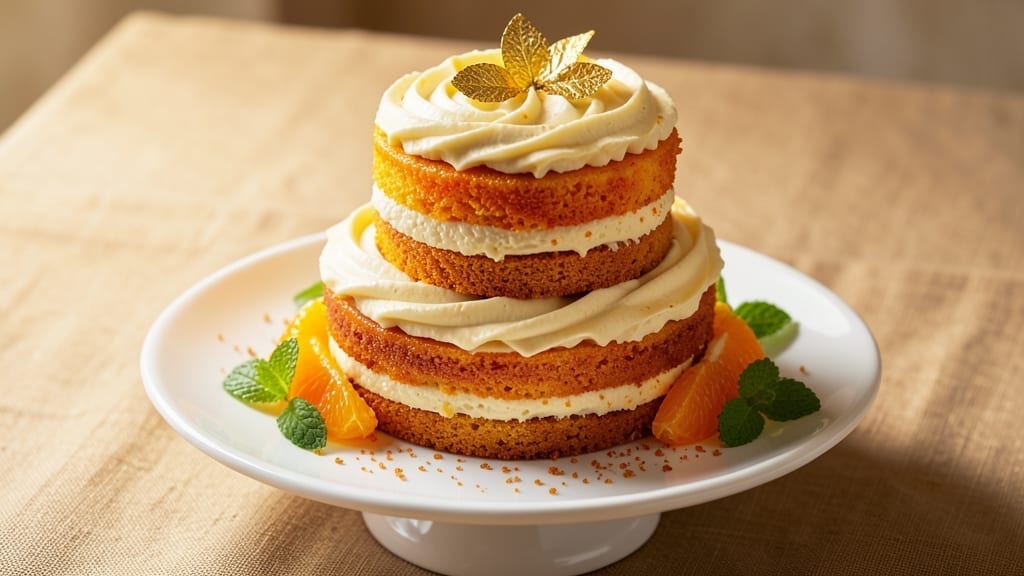
This 5-star orange cake recipe delivers a moist, tender crumb with vibrant citrus notes that make every slice taste like a dessert chef’s secret. 🌟 The key lies in a precise blend of zesty orange zest and juice, balanced with buttermilk for that signature tender texture—no dry cake here.
What sets this apart is the professional-grade orange glaze, which adds a glossy finish and that signature tangy brightness that elevates it from homemade to restaurant-worthy.
The recipe begins with a simple yet foolproof mixing method—creaming butter and sugar until light, then folding in eggs and dry ingredients just until combined. This ensures a fine crumb without overmixing, while the buttermilk keeps the cake impossibly moist.
Baking at the right temperature (350°F) guarantees even rising and a golden top that cracks beautifully when sliced. The glaze, made with powdered sugar and fresh orange juice, is the showstopper—it sets perfectly and adds that professional shine.
What you’ll end up with is a cake that’s as beautiful as it is delicious: a tender, citrus-kissed crumb with a glossy glaze that makes every slice look like it belongs on a dessert menu.
The orange flavor shines through without being overpowering, and the texture is perfectly balanced—moist but not dense, sweet but not cloying. This is the kind of cake that disappears quickly at gatherings and leaves guests asking for the recipe.
Whether you’re celebrating a birthday, holiday, or just treating yourself, this orange cake delivers restaurant-quality results with minimal fuss. The recipe scales easily for crowds, and the glaze can be adjusted for extra shine or a lighter finish. Ready to impress? Let’s bake this showstopper.
Ingredients for 5 star orange cake
Buttery richness meets vibrant citrus in this showstopper cake—just 13 ingredients for restaurant-quality results.
| Ingredient | Amount | Notes |
|---|---|---|
| Unsalted Butter 🧈 | 1 cup | Softened to room temperature |
| Granulated Sugar 🍚 | 2 cups | Superfine preferred for smooth texture |
| Fresh Orange Zest 🍊 | 2 tbsp | From 2 large organic oranges |
| Fresh Orange Juice 🍊 | ¾ cup | From 2 large oranges, strained |
| Large Eggs 🥚 | 4 whole | Room temperature for even mixing |
| All-Purpose Flour 🌾 | 2 ½ cups | Sifted for fine crumb texture |
| Baking Powder 🍞 | 2 tsp | Aluminum-free for tender crumb |
| Salt 🧂 | ½ tsp | Fine sea salt preferred |
| Buttermilk 🥛 | 1 cup | Homemade or store-bought |
| Vanilla Extract 🌿 | 2 tsp | Pure Madagascar bourbon preferred |
| Powdered Sugar 🍚 | 2 cups | For professional glaze finish |
| Fresh Orange Juice 🍊 | ¼ cup | For glaze, freshly squeezed |
| Heavy Cream 🥛 | 2 tbsp | Optional for extra shine |
The oranges are non-negotiable here. Organic Navel or Valencia oranges from the grocery store’s produce section deliver the brightest flavor—look for firm, heavy fruit with no bruising. The zest should be vibrant yellow, not pale or bitter-tasting. For the juice, strain it through a fine-mesh sieve to remove any pulp, which can make the cake gummy. Whole Foods or local markets often carry better-quality citrus than standard supermarkets. If you can’t find fresh oranges, frozen concentrated orange juice works in a pinch, but dilute it properly and add a pinch of cream of tartar to mimic fresh acidity.
No buttermilk? Mix 1 tablespoon vinegar or lemon juice with 1 cup milk and let sit for 5 minutes. Substituting superfine sugar for granulated gives a smoother texture, but if that’s not an option, pulse granulated sugar in a food processor for 30 seconds. The glaze can be made with just powdered sugar and orange juice, but adding 2 tablespoons heavy cream creates a glossier finish. For a lighter glaze, reduce the powdered sugar to 1.5 cups. The vanilla extract matters—imitation vanilla will taste artificial, so splurge on the good stuff. If you’re baking for a crowd, double the recipe but use two 9-inch pans instead of one 10-inch for even baking.
Store the baked cake in an airtight container at room temperature for up to 3 days, or refrigerate for 5 days. The glaze sets best at room temperature, so bring the cake to room temp before glazing. For extra shine, brush the glaze with a pastry brush. This cake freezes beautifully—wrap tightly in plastic wrap and foil, then freeze for up to 3 months. To serve, slice with a warm, damp knife for clean cuts. Leftovers? Reheat slices in the microwave for 10 seconds to restore moisture.
Why You’ll Love This Recipe
- No Fuss Mixing: I swear by this recipe—just cream butter and sugar, fold in eggs, and stir in that bright orange zest and juice. No sifting, no overcomplicating. The batter’s so simple, even my 10-year-old “helps” (read: makes a mess) and it still turns out perfect.
- Zesty Magic: That fresh orange zest and juice? It’s the secret weapon. The cake’s got this perfect balance—sweet, tangy, and just a hint of citrusy brightness that makes every bite feel like a little vacation. Honestly, it’s the kind of flavor that makes you want to bake it twice in one week.
- Leftovers? No Problem: This cake keeps beautifully for days, and honestly, it’s even better the second day. Slice it for breakfast toast, pack it in lunches, or serve it at your next brunch. Between us, I’ve had it cold, room temp, and even reheated—still delicious every time.
- Brightens Any Occasion: Need a showstopper for a dinner party? This cake’s got that polished look with minimal effort. Too fancy for a weekday? Same cake, same magic—just add a cup of coffee and call it a win. It’s my go-to for birthdays, holidays, or just because I’m craving something special.
Step-by-step instructions for orange cake with zesty glaze
Here’s how to create a moist, fragrant cake with a showstopping citrus finish.
👨🍳 Step 1: Cream Butter and Sugars for Light Texture
In a stand mixer fitted with the paddle attachment, beat the 1 cup unsalted butter and 2 cups granulated sugar on medium speed for 3-4 minutes until light and fluffy. You’re looking for a texture that nearly doubles in volume and becomes pale in color—this incorporates air that creates a tender crumb. Scrape down the sides of the bowl with a rubber spatula to ensure even mixing.
Here’s the thing—superfine sugar dissolves faster and creates a smoother batter. If you’re using regular granulated sugar, pulse it in a food processor first for finer grains. The mixture should be smooth with no visible sugar crystals remaining. This step is critical for achieving that perfect cake texture.
👨🍳 Step 2: Add Eggs and Citrus Infusion
Add the 4 whole large eggs, one at a time, mixing on low speed for 30 seconds after each addition. This gradual addition prevents cracking. Stir in the 2 tbsp fresh orange zest and 0.75 cup fresh orange juice, mixing until fully combined. The zest adds bright citrus flavor while the juice keeps the cake moist.
I like to press the orange zest against the sides of the bowl to release its essential oils—this ensures maximum flavor infusion. The mixture will look slightly curdled after adding the eggs, but don’t worry. Once you incorporate the dry ingredients, everything will come together smoothly. This is where the cake gets its signature orange aroma.
👨🍳 Step 3: Combine Dry Ingredients for Perfect Rise
In a separate bowl, whisk together the 2.5 cups all-purpose flour, 2 tsp baking powder, and 0.5 tsp salt. Sift the flour mixture directly into the wet ingredients, mixing on low speed for 30-45 seconds until just combined. Overmixing develops gluten, which can make the cake dense. You should still see some flour streaks when you lift the paddle.
Add the 1 cup buttermilk and 2 tsp vanilla extract, mixing until smooth. The buttermilk adds tanginess that balances the sweetness while keeping the cake moist. Here’s a pro tip: If your batter looks too thick, add 1-2 tablespoons of milk to achieve a smooth consistency that flows easily when poured.
🥘 Step 4: Bake to Golden Perfection
Preheat your oven to 350°F. Grease and flour two 9-inch round cake pans or line them with parchment paper. Divide the batter evenly between the pans and smooth the tops. Bake for 25-30 minutes or until a toothpick inserted in the center comes out clean. The edges should be golden brown while the top springs back when touched lightly.
Don’t open the oven during baking—this causes the cake to sink. If the top browns too quickly, tent loosely with aluminum foil. The cake is done when it pulls away slightly from the sides of the pan and has a springy texture. Let the cakes cool in the pans for 10 minutes before transferring to a wire rack to cool completely.
🍳 Step 5: Create the Signature Orange Glaze
While the cakes cool, make the glaze by whisking together 2 cups powdered sugar, 0.25 cup fresh orange juice, and 2 tbsp heavy cream until smooth. The glaze should be thick enough to coat the back of a spoon but still drizzle easily. If it’s too thick, add 1-2 teaspoons of orange juice to reach your desired consistency.
Once the cakes are completely cool, place one layer on a serving plate. Pour half the glaze over the top and spread it evenly with an offset spatula. Repeat with the second layer. The glaze should create a glossy finish that enhances the cake’s natural beauty. Serve immediately for the freshest flavor and texture combination.
Pro Tips For Making 5 Star Orange Cake
- Whisk Butter & Sugar Longer: I used to mix the butter and sugar for 30 seconds—until I realized this cake’s magic happens when the butter turns pale yellow and looks fluffy, not just combined. Two full minutes with a stand mixer (or 5 minutes by hand) incorporates enough air for a light, tender crumb. Skip this, and you’ll end up with a dense, heavy slice.
- Strain Your Orange Juice: Fresh orange juice is full of pulp, and that’s the fast track to a gummy cake. Strain it through a fine-mesh sieve or cheesecloth into a bowl—no need to press, just let gravity do the work. This keeps the texture silky smooth without altering the flavor.
- Don’t Overmix the Batter: Once you fold in the dry ingredients, stop mixing the second everything is just combined. Overmixing develops gluten, and that turns your delicate orange cake into a chewy loaf. A few lumps? Doesn’t matter—this cake’s about brightness, not perfection.
- Test Doneness with a Toothpick: The cake pulls away from the edges but still jiggles slightly—that’s ideal. If you wait for a completely clean toothpick, you’ll dry out the middle. Remove it when the center springs back slowly (about 5-10 minutes before the recipe’s suggested time). Cover with foil if the top browns too fast.
Creative variations of this 5 star orange cake
Citrus Twist Variations
Swap fresh orange juice for lemon juice to create a bright, tart twist—reduce the powdered sugar in the glaze to 1.5 cups for balance.
For a grapefruit twist, use ½ cup grapefruit juice and 1 tbsp grapefruit zest, then add 1 tsp honey to the glaze for sweetness. 🍋
Spiced Orange Cake
Infuse the batter with 1 tsp ground cinnamon and ½ tsp cardamom for warmth. Boost the glaze with 1 tsp orange liqueur (like Cointreau) and a pinch of cayenne for a subtle kick. This pairs beautifully with whipped cream and candied ginger. 🌶️
Chocolate-Orange Fusion
Add ½ cup cocoa powder to the dry ingredients and 1 tbsp espresso powder for depth. Keep the orange zest and juice but reduce to 1 tbsp each.
Top with a dark chocolate ganache (melt ½ cup dark chocolate with ¼ cup heavy cream) for a decadent twist. 🍫
Seasonal Adaptations
For spring, add 1 tbsp poppy seeds to the batter and garnish with edible flowers. In fall, incorporate ½ tsp nutmeg and top with caramelized apples. Winter calls for candied cranberries on top of the glaze for a festive touch. ❄️
Gluten-Free Version
Replace the all-purpose flour with 2 cups gluten-free 1:1 baking flour (like Bob’s Red Mill) and add ½ cup almond flour for moisture. Use 1 extra egg to bind the batter. The glaze remains the same but may need 1 extra tbsp orange juice for consistency. 🌾
Make-Ahead Magic
Bake the cake 2 days ahead and store wrapped at room temperature. Assemble the glaze 4 hours before serving for perfect set. For freezer prep, wrap layers individually in plastic and freeze for up to 1 month. Thaw overnight before glazing. ⏰
Nutrition facts
Frequently asked questions
Can I substitute bottled orange juice for fresh?
Freshly squeezed orange juice delivers the brightest flavor, but bottled works in a pinch. For the batter, use ¾ cup bottled orange juice and add ½ teaspoon cream of tartar to enhance acidity. For the glaze, bottled juice may need 1 extra teaspoon since it’s often less concentrated. The texture won’t be quite as vibrant, but it’s still delicious!
Why did my cake turn out dry instead of moist?
Dry cake usually means overbaking or underestimating the buttermilk’s role. Always check for doneness with a toothpick at 25 minutes—it should come out with moist crumbs, not clean. If your batter was too thick, reduce flour by 2 tablespoons next time. For extra moisture, brush warm cake layers with 2 tablespoons warm orange juice before glazing.
How do I make this cake gluten-free?
Replace the 2.5 cups all-purpose flour with 2 cups gluten-free 1:1 baking flour (like Bob’s Red Mill) plus ½ cup almond flour for structure. Use 1 extra egg to bind the batter. The glaze stays the same but may need 1 extra tablespoon orange juice for proper consistency. Test batches first—gluten-free flours vary in texture.
Can I bake this in a different pan size?
Yes, but adjust baking time and temperature. For a 10-inch round pan, reduce oven temp to 325°F and bake 35-40 minutes. For 8-inch pans, increase temp to 375°F and bake 20-25 minutes. Always check with a toothpick. The cake should pull away from the pan edges and have a springy top.
What’s the best way to store leftovers?
Keep the cake in an airtight container at room temperature for up to 3 days. For longer storage, refrigerate for 5 days or freeze layers (wrapped tightly) for 3 months. To revive stale slices, warm for 10-15 seconds in the microwave with a damp paper towel. The glaze stays freshest at room temperature.

- 6 Egg Cake Recipe with Oil: Light as Air With Buttery Moisture - October 4, 2026
- 4 Bean Casserole Recipe: One-Pan Heartiness With Smoky Paprika Depth - October 4, 2026
- 3-Ingredient Keto Mug Cake Recipe: Microwave Magic in 2 Minutes - October 4, 2026