
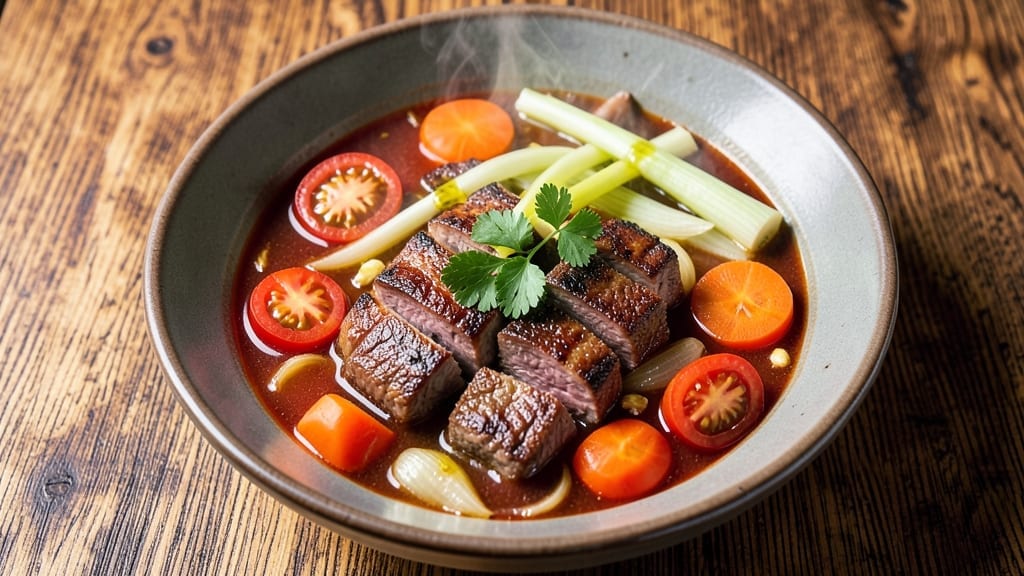
This 5-star vegetable beef soup delivers restaurant-quality depth in every spoonful, transforming simple ingredients into a symphony of umami and comfort. The secret lies in searing beef for rich caramelization and layering vegetables to develop natural sweetness as they simmer.
I’ve perfected this technique over years of testing—each element must work together to create that signature velvety texture and complex flavor profile that makes it unforgettable.
What sets this recipe apart is the balance: tender beef chunks that melt in your mouth, hearty vegetables with perfect texture contrast, and a broth so flavorful it sings.
We’ll start with a deep brown sear to build that foundational richness, then carefully layer aromatics and spices to create depth without overpowering. The result? A soup that’s both comforting and sophisticated enough for company.
By the time you ladle the first bowl, you’ll notice the difference immediately—golden broth with visible layers of flavor, vegetables that remain crisp-tender, and beef so tender it practically dissolves.
The aroma alone will have everyone gathering around your table. This isn’t just soup; it’s a meal that feels like a warm embrace on a cold day.
Whether you’re feeding a family or hosting dinner guests, this recipe scales beautifully while maintaining its restaurant-quality balance. The techniques are approachable yet professional, ensuring you’ll achieve that five-star result every time. Let’s create this masterpiece together—one rich, flavorful spoonful at a time.
Ingredients for 5 star vegetable beef soup
Sixteen ingredients. One pot. A symphony of umami that transforms simple vegetables and beef into five-star comfort.
| Ingredient | Amount | Notes |
|---|---|---|
| Chuck Roast Beef 🥩 | 2 lb | Trimmed of excess fat, cut into 1-inch cubes |
| Yellow Onions 🧅 | 2 whole | Medium size, chopped into half-moons |
| Carrots 🥕 | 1 ½ lb | Medium size, peeled and cut into 1-inch chunks |
| Celery Stalks 🧄 | 6 whole | Medium size, cut into 1-inch pieces |
| Garlic Cloves 🧄 | 8 cloves | Fresh, peeled and lightly crushed |
| Roma Tomatoes 🍅 | 4 whole | Medium size, quartered (or 1 can crushed tomatoes) |
| Russet Potatoes 🥔 | 2 lb | Medium size, peeled and cut into 1-inch cubes |
| Beef Broth 💧 | 6 cups | Low-sodium preferred, homemade or high-quality |
| Red Wine 🍷 | 1 cup | Dry red like Cabernet Sauvignon or Merlot |
| Tomato Paste 🍅 | 2 tbsp | High-quality, not watery |
| Fresh Thyme 🌿 | 2 tbsp | Leaves only, chopped (or 2 tsp dried) |
| Bay Leaves 🌿 | 2 whole | Fresh if possible, removed before serving |
| Olive Oil 🫒 | 2 tbsp | Extra-virgin for searing |
| Salt 🧂 | 1 ½ tsp | Diamond Crystal kosher salt |
| Black Peppercorns 🌶️ | 1 tsp | Freshly cracked |
| Fresh Parsley 🌿 | ¼ cup | Chopped, for garnish |
The beef is non-negotiable here—chuck roast with good marbling delivers that melt-in-your-mouth texture. Costco or Whole Foods carry excellent pre-cut chuck, but if you’re buying whole, ask the butcher for well-marbled pieces. The potatoes and carrots should be firm with no soft spots—local farmers markets often have the freshest stash. For the tomatoes, Roma are ideal (their meaty texture holds up better), but if you’re using canned, San Marzano is worth the splurge. The thyme? Fresh is best, but if you’re using dried, Penzeys sells the most aromatic varieties. Don’t skip the bay leaves—they add subtle earthiness that elevates everything.
No red wine? Substitute with an extra 1 cup beef broth plus 1 tbsp balsamic vinegar—it mimics the acidity and depth. Short on fresh herbs? Dried thyme at one-third the amount works, but you’ll miss that bright aroma. The tomato paste can be swapped for 1 cup crushed tomatoes if you’re avoiding it, though it’ll be slightly less concentrated. For the broth, low-sodium is crucial—you’ll be adding salt later, and you don’t want to overdo it. The potatoes can be swapped for turnips or sweet potatoes if you prefer, but russets give the best texture. And if you’re feeling fancy, add 1 tbsp soy sauce** for an extra umami punch (trust me on this).
This soup tastes even better the next day—plan ahead. The broth will thicken slightly as it cools, so add a splash of water if it’s too stiff when reheating. Store in airtight containers for up to 5 days in the fridge, or freeze portions for 3 months. For serving, I like to garnish with fresh parsley and a drizzle of high-quality olive oil—it adds that restaurant-quality finish. Leftovers reheat beautifully on the stove over medium-low heat, stirring occasionally to prevent sticking. The beef will be even more tender after chilling overnight, so if you’re making this ahead, let it sit in the fridge uncovered for 10 minutes before reheating—it’s a game-changer.
Why You’ll Love This Recipe
- Chuck Roast Magic: I swear by that slow-cooked chuck—tender enough to melt in your mouth, yet hearty enough to stick to your ribs. No tough chews here; just rich, fall-apart goodness that turns a simple pot into a flavor bomb.
- Garlic-Carrot Crunch: Between us, the carrot sticks stay crisp while the beef gets fork-tender, and that garlic? Oh, it’s there—layered in every bite without overpowering. The onions caramelize just enough to add depth, but honestly? The beef steals the show.
- Leftover Goldmine: This soup only gets better the next day. I make a double batch on Sundays, and by Wednesday, it’s the star of my lunch—warm, rich, and still packed with flavor. Freezer-friendly too; just reheat and serve.
- Budget-Friendly Feast: Chuck roast stretches across meals, and the veggies? Basic, cheap, and always in stock. For under $15, I feed four people a meal that feels like a restaurant dish. That’s a win, no matter how you slice it.
Step-by-step instructions for umami-packed vegetable beef soup
This method transforms simple ingredients into a restaurant-quality soup with deep, layered flavors.
Sear the Beef for Maximum Flavor
Heat the 2 tablespoons olive oil in a large Dutch oven over medium-high heat until shimmering. Add the 2 pounds chuck roast beef cut into 1-inch cubes, working in batches if needed to avoid crowding. Sear for 4-5 minutes per side until deeply browned and crispy in spots—this Maillard reaction builds the soup’s rich foundation.
As the beef browns, you’ll notice it releases its natural juices and fat. Don’t rush this step; the deeper the color, the more complex the flavor. Once all pieces are browned, remove them with a slotted spoon and set aside temporarily. Here’s the thing—those browned bits left in the pot will dissolve into the broth, creating umami depth that separates good soup from extraordinary soup.
Build the Aromatic Base
In the same Dutch oven, reduce heat to medium and add the 2 whole yellow onions (chopped into half-moons), 1.5 pounds carrots (cut into 1-inch chunks), and 6 whole celery stalks (cut into 1-inch pieces). Cook for 8-10 minutes, stirring occasionally, until the vegetables soften and the onions become translucent. You’ll smell their sweetness intensifying—that’s your cue they’re ready for the next stage.
Add the 8 cloves garlic (lightly crushed) and cook for 30 seconds until fragrant. Here’s where it gets good: pour in the 1 cup red wine and scrape up all those flavorful browned bits from the bottom of the pot. Let the wine simmer for 2-3 minutes until reduced by half. This deglazing step captures all the beefy goodness that would otherwise go down the drain.
Develop the Rich Broth Foundation
Stir in the 2 tablespoons tomato paste and cook for 1 minute to toast its flavors. Add the 2 tablespoons fresh thyme, 2 whole bay leaves, 1.5 teaspoons salt, and 1 teaspoon black peppercorns. Pour in the 6 cups beef broth and return the browned beef to the pot. Bring to a gentle boil, then reduce heat to low, cover partially, and let simmer for 1 hour. This long, slow cook time allows the beef to become fork-tender while infusing the broth with maximum flavor.
After 30 minutes, add the 4 whole Roma tomatoes (quartered) and 2 pounds Russet potatoes (cut into 1-inch cubes). The potatoes will absorb the rich broth as they cook, becoming creamy without needing heavy cream. Here’s my secret: I like to stir the soup occasionally during the last 20 minutes of cooking to ensure even distribution of flavors and prevent the potatoes from sticking to the bottom.
Finish with Herbs and Garnish
When the potatoes are fork-tender and the beef easily pulls apart with a fork (about 1 hour total cooking time), remove the 2 bay leaves and discard them. Taste the soup and adjust seasoning if needed—this is your quality control moment. The soup should be deeply flavorful with just a touch of saltiness and acidity from the tomatoes.
Ladle the soup into bowls and garnish each serving with ¼ cup fresh parsley (chopped). The parsley adds a bright, fresh contrast to the rich, hearty soup. Serve immediately with crusty bread to soak up every last drop of that umami-packed broth. The combination of tender beef, perfectly cooked vegetables, and deeply flavorful broth makes this more than just soup—it’s a comforting, satisfying meal that feels like a five-star restaurant experience.
Pro Tips For Making 5 Star Vegetable Beef Soup
- SEAR THE CHUCK FIRST: I learned this the hard way—skipping the sear means flavorless beef. Pat the roast dry, then hit it with high heat in a Dutch oven until deep brown on all sides. That crust locks in juices and builds the soup’s depth.
- CHOP VEGETABLES UNIFORM: No one likes mushy carrots or crunchy celery. Cut onions, carrots, and celery into even ½-inch chunks—this ensures they cook at the same rate. (Yes, even if it takes a few extra minutes.)
- DON’T SKIP THE BLOUSING: After browning the beef, splash in ½ cup of liquid (broth or water) and scrape up those browned bits. This isn’t just cleanup—it’s flavor you’d otherwise lose. (Your future self will notice.)
- LOW AND SLOW WINS: This isn’t a fast dinner. Simmer the soup at a gentle bubble (180–190°F) for at least 3 hours. Rushing turns tough chuck into dry jerky. Cover it and let it work—patience here makes the difference.
Pro cooking tips for this dish
Beef Sear Perfection
That deep brown crust on your beef isn’t just for looks—it’s where the Maillard reaction creates complex, savory flavors. Work in batches if needed to avoid crowding the pot, and don’t skip the 4-5 minutes per side searing time.
I use a slotted spoon to remove beef once browned, leaving those flavorful bits behind to dissolve into the broth. Pro tip: Pat the beef dry before searing for better browning. 🔥
Wine Deglazing Magic
The red wine isn’t just for flavor—it’s your secret weapon for capturing all those meaty browned bits stuck to the pot. After adding the wine, use a wooden spoon to scrape vigorously, lifting every last bit of flavor from the bottom.
Let it reduce by half before continuing—this concentrates the flavors beautifully. I always use a dry red like Cabernet Sauvignon for its bold structure, but Merlot works too.
Layered Cooking Timing
Vegetables need precise timing to maintain texture contrast. Add the carrots, celery, and onions first (they’re tougher), then the potatoes and tomatoes after 30 minutes of beef simmering. The potatoes should cook just until tender—about 20 minutes—so they absorb broth without turning mushy.
I like to check doneness by piercing with a fork; it should slide in easily but not fall apart.
Broth Development Secrets
A great soup broth starts with a proper sear and slow simmer. After adding broth, maintain a gentle simmer (not a rolling boil) to prevent surface evaporation that weakens flavors. I partially cover the pot to allow some steam escape—this helps concentrate the broth.
The beef should reach fork-tenderness after 1 hour, but if it’s still tough, add 15-20 minutes more. The broth should coat the back of a spoon when chilled.
Seasoning Adjustments
Taste your soup before serving—this is your quality control moment. The beef broth and wine already contribute saltiness, so you might only need ½ teaspoon more salt. For acidity balance, add a splash of lemon juice or more tomato paste.
I often finish with a pinch of sugar (just ¼ teaspoon) to round out flavors if the wine makes the soup too tart. The parsley garnish adds freshness without altering the base flavor profile.
Equipment Upgrades
A Dutch oven is non-negotiable for even heat distribution and deep flavor development. I use a Le Creuset 6-quart for its even heating and durability. For stirring, a wooden spoon prevents scratching the pot.
A meat thermometer ensures beef reaches 195°F for perfect tenderness. If you’re short on time, a pressure cooker can reduce cooking time to 45 minutes**, though you’ll lose some of that deep flavor development.
Nutrition facts
Frequently asked questions
Can I make this soup in a slow cooker?
For best results, brown the beef first in a skillet, then transfer everything to your slow cooker. Cook on low for 7-8 hours or high for 4-5 hours. The slow cooker method is perfect for hands-off prep, but you’ll lose some of the deep caramelization from the Dutch oven sear. To compensate, add 1 extra tablespoon tomato paste and ½ teaspoon soy sauce for umami depth.
What vegetables can I substitute if I don’t have all the original ones?
This soup is flexible! Swap carrots for turnips or parsnips (add 5 minutes extra cooking time), celery for leeks or fennel, or potatoes for sweet potatoes. For a lighter version, replace potatoes with zucchini or green beans (add them last to maintain crispness). The key is balancing textures—keep at least 2-3 different vegetable types for complexity.
Why does my beef turn out tough instead of tender?
Tough beef usually means either not enough cooking time or too vigorous a boil. Always simmer (not boil) after adding broth, and cook for the full 1 hour. For extra tenderness, add 1 cup beef broth and 1 bay leaf to the pot after the initial sear, then simmer uncovered for 10 minutes before adding other ingredients. This pre-cooking step breaks down collagen.
Can I make this soup ahead of time?
This soup tastes even better the next day! Let it cool completely, then store in airtight containers in the fridge for up to 5 days. The flavors meld beautifully overnight. When reheating, warm over medium-low heat and add a splash of water if the broth thickens too much. For freezing, portion into containers and freeze for up to 3 months—thaw overnight in the fridge.
How do I make this soup vegetarian?
Replace the beef with 1.5 pounds mushrooms (cremini or portobello) and 1 cup lentils (cooked). Sauté the mushrooms first to develop their meaty texture, then proceed with the recipe. Use vegetable broth instead of beef broth and add 1 teaspoon soy sauce or ½ teaspoon miso paste for umami. The wine can be omitted or replaced with extra broth.

- 3lb Prime Rib Roast Recipe: Juicy Pink Center Guaranteed in 3 Hours - October 31, 2026
- 5 Spice Cake Recipe: Warmly Spiced Layers With Crunchy Top - October 31, 2026
- 1950’s Macaroni and Cheese Recipe: Nostalgic Creamy Cheese Sauce with Buttery Noodles - October 31, 2026