
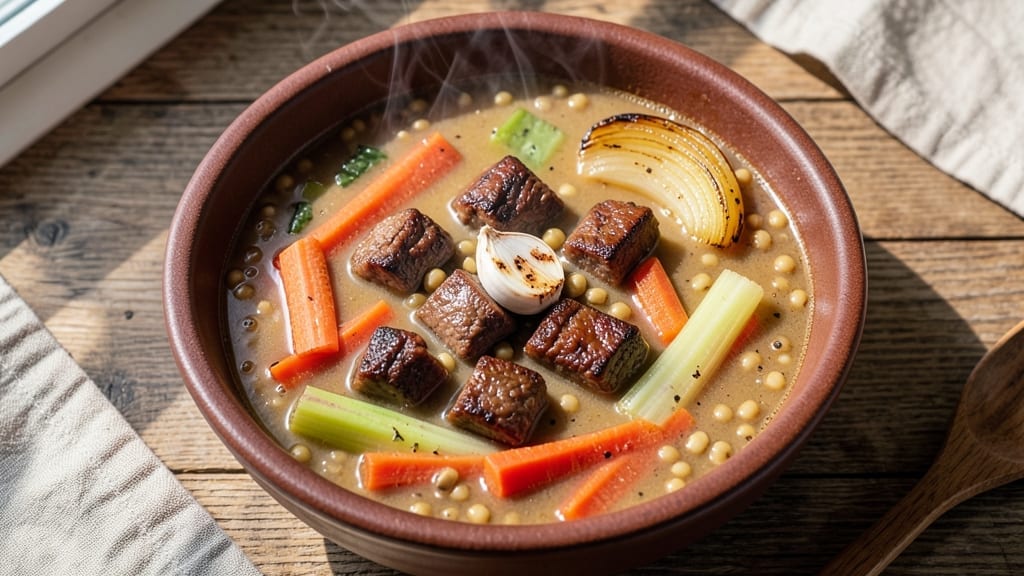
This 54th Street steak soup recipe delivers the kind of soul-warming comfort that turns ordinary weeknights into memorable meals. The rich, savory depth comes from slow-simmered beef and barley, creating a broth so hearty it feels like a hug in a bowl.
I’ve perfected this version to balance tender beef chunks with just the right amount of barley for texture—no mushy bits here.
The magic happens in the one-pot method, where beef and vegetables develop deep flavor while the barley softens just enough to thicken the broth naturally. No fancy techniques required—just patience and a few simple ingredients that transform into something restaurant-worthy.
The result? A steaming bowl of soup that’s perfect for chilly evenings or when you need a meal that feels like coming home.
What makes this recipe special is how it combines classic comfort with simplicity. The beef becomes fork-tender as it simmers, while the barley adds a satisfying bite. Every spoonful delivers layers of flavor—herbaceous from the aromatics, rich from the beef, and just sweet enough from the carrots.
It’s the kind of dish that disappears quickly, leaving everyone asking for seconds.
Whether you’re feeding a family or meal prepping for the week, this soup holds up beautifully. The flavors deepen overnight, making it even more rewarding the next day. Ready to make your kitchen smell like comfort? Let’s get started with the ingredients.
Ingredients for 54th street steak soup
Sixteen ingredients transform into a steaming bowl of restaurant-style steak soup comfort.
| Ingredient | Amount | Notes |
|---|---|---|
| Chuck Roast 🥩 | 2 lb | Cut into 1-inch cubes |
| Yellow Onion 🧅 | 1 whole | Diced, about 1.5 cups |
| Carrots 🥕 | 4 medium | Peeled and sliced into rounds |
| Celery Stalks 🌿 | 4 whole | Diced, about 1.5 cups |
| Garlic Cloves 🧄 | 4 cloves | Minced, for depth of flavor |
| Pearl Barley 🌾 | 1 cup | Uncooked, rinsed well |
| Beef Broth 💧 | 6 cups | Low-sodium preferred |
| Tomato Paste 🍅 | 2 tbsp | Smooth, for richness |
| Dried Thyme 🌿 | 1 tsp | Or 1 tbsp fresh |
| Bay Leaves 🌿 | 2 whole | Removed before serving |
| Black Peppercorns 🌶️ | 1 tsp | Freshly cracked |
| Salt 🧂 | 1 ½ tsp | Kosher or sea salt |
| Olive Oil 🫒 | 2 tbsp | For searing beef |
| Fresh Parsley 🌿 | ¼ cup | Chopped, for garnish |
The chuck roast is the heart of this soup. Look for well-marbled cuts at your local butcher or grocery store meat counter—Costco or Whole Foods often have excellent options. Cutting it into even 1-inch cubes ensures consistent cooking. If you can’t find chuck, beef stew meat works in a pinch, but it won’t be quite as tender. The pearl barley needs rinsing to remove excess starch—skip this step and you’ll end up with a gluey soup. For the broth, low-sodium versions let you control the seasoning better, but don’t stress if you only have regular. The tomato paste adds depth without overpowering—Trader Joe’s sells it in a convenient squeeze tube that lasts months.
No chuck roast? Substitute with beef short ribs—they’ll add even more richness, but trim excess fat first. Fresh thyme unavailable? Dried works at one-third the amount, but toast it in a dry pan for 30 seconds first to wake up the flavor. The carrots can be baby carrots if that’s what’s in your fridge, but regular carrots peeled and sliced give better texture. For extra umami, add 1 tbsp soy sauce or Worcestershire with the tomato paste. The parsley is purely decorative—skip it if you’re prepping ahead since it wilts fast when reheated.
This soup tastes even better the next day as flavors meld. Store in the fridge for up to 5 days or freeze for 3 months—portion into containers for easy lunches. The barley thickens as it cools, so add a splash of broth when reheating. For meal prep, make a double batch and freeze half. The beef and barley reheat beautifully, though adding a little extra broth helps if it’s too thick. Garnish with fresh parsley right before serving—it makes all the difference for that restaurant finish.
Why You’ll Love This Recipe
- One-Pot Magic: I swear by this recipe—just dump everything in a pot, add broth, and walk away. The chuck roast practically melts into tender perfection while you handle the rest of dinner (or, let’s be honest, scroll through your phone).
- Deep Umami Bomb: That slow-cooked chuck roast? It’s the star—rich, beefy, and packed with flavor from the onions, carrots, and celery simmering right alongside. Honestly, the aroma alone makes my kitchen feel like a cozy New York diner.
- Leftovers That Don’t Suck: Between us, most soups turn into sad, watery leftovers. Not this one. The beef stays juicy, the veggies hold their shape, and I’ve reheated it three times without a single complaint. (Yes, even on a Tuesday night.)
- Budget Beef Feast: A chuck roast stretches for days, and the veggies are cheap staples. I feed my whole family for under $15, and no one ever guesses it’s a budget meal—just pure, satisfying comfort.
Step-by-step instructions for 54th Street steak soup
This hearty soup delivers rich beef flavor and chewy barley in one satisfying pot.
Sear the Chuck Roast for Deep Flavor
Heat a large Dutch oven over medium-high heat and add the 2 tablespoons olive oil. Working in batches if needed, add the 2 lb chuck roast cut into 1-inch cubes and sear for 3-4 minutes per side until deep golden brown. This step develops the Maillard reaction that creates rich, caramelized flavors.
Don’t crowd the pan—sear in batches if necessary. The meat should release easily from the bottom when ready. Transfer the seared beef to a plate and set aside. Real talk: skipping this step means a much less flavorful soup, so take your time here.
Sauté the Vegetable Base
In the same Dutch oven, add the diced yellow onion, sliced carrots, and diced celery stalks. Cook over medium heat for 6-8 minutes until the vegetables soften and the onion becomes translucent. Stir occasionally to prevent sticking.
Add the 4 minced garlic cloves and cook for another 30 seconds until fragrant. This aromatic base forms the flavor foundation for your soup. If the vegetables stick, add a splash of beef broth to deglaze and scrape up any browned bits from the bottom.
Build the Rich Soup Base
Stir in the 2 tablespoons tomato paste, 1 teaspoon dried thyme, 2 whole bay leaves, 1 teaspoon cracked black peppercorns, and 1.5 teaspoons salt. Cook for 1 minute to toast the spices and deepen their flavors.
Pour in the 6 cups beef broth and bring to a gentle boil. Return the seared beef to the pot and reduce heat to low. Let it simmer uncovered for 45 minutes, skimming any foam that rises to the surface. This initial simmering time is crucial for extracting maximum flavor from the beef.
Cook the Barley and Finish
Add the 1 cup rinsed pearl barley to the soup and stir well. Return to a gentle simmer and cook uncovered for 45-50 minutes until the barley is tender and the beef is fork-tender. The barley should have absorbed most of the liquid but still maintain a slight bite.
Remove the 2 whole bay leaves before serving. Taste and adjust seasoning if needed—this is where you can really make the soup your own. The soup should be rich, hearty, and comforting with a perfect balance of beef, barley, and vegetable flavors.
Garnish and Serve
Ladle the hot soup into bowls and garnish each serving with 1 tablespoon chopped fresh parsley. The bright green parsley provides a beautiful contrast and fresh finish to the rich beef flavors. Serve immediately with crusty bread to soak up every last drop of that hearty broth.
This soup tastes even better the next day as the flavors continue to meld. Store leftovers in an airtight container in the refrigerator for up to 4 days. When reheating, add a splash of water or broth to prevent the soup from becoming too thick.
Pro Tips For Making 54th Street Steak Soup
- Sear the Chuck Roast: Don’t just toss that raw chuck roast into the pot—get it screaming hot in a dry skillet first. Two minutes per side with a little oil will build a crust that keeps the meat tender and adds depth the slow simmer can’t match. (Yes, it’ll look messy, but that crust is worth it.)
- Cut Celery and Onions Uniformly: I used to chop these haphazardly, and the soup ended up with a few giant chunks that never softened. Aim for ¼-inch dice—small enough to melt into the broth but not so fine they turn into mush. A sharp knife and a steady hand make this take less than 5 minutes.
- Don’t Rush the Soup: The first 30 minutes at a rolling boil are non-negotiable—this breaks down the collagen in the chuck roast into gelatin, which turns your soup from good to rich and velvety. After that, you can drop it to a simmer, but those first minutes? That’s where the magic happens.
- Toast the Garlic: Skip the raw garlic cloves—sauté them in the pot with the onions until they’re golden and fragrant. That extra step adds a nutty depth that raw garlic just can’t compete with. (And no, you won’t burn them if you keep an eye on it.)
Creative variations of this recipe
Slow-Cooker Adaptation
Transform this soup into a hands-off masterpiece using your slow cooker. Brown the beef and vegetables as directed, then transfer everything to a 6-quart slow cooker with the broth. Add the barley and spices, then cook on low for 7-8 hours or high for 4-5 hours.
The slow cooker’s gentle heat ensures tender beef and perfectly cooked barley without watching the pot. I love this method for busy weeknights—just press a button and come home to a steaming pot of comfort. 💫
Spicy Kick Variation
For heat lovers, add 1 teaspoon smoked paprika and ½ teaspoon cayenne pepper with the tomato paste. Stir in 1 diced jalapeño (seeds removed for mild heat) during the vegetable sautéing step.
Top each serving with a sprinkle of crumbled chorizo for extra smokiness. This version turns your soup into a warming, spicy hug—perfect for chilly evenings when you crave a little fire. 🌶️
Creamy Potato Twist
Add 2 diced Yukon Gold potatoes (about 1 cup) when you sauté the vegetables. Their natural starch thickens the broth beautifully, creating a velvety texture. For extra richness, stir in ½ cup heavy cream during the final 10 minutes of cooking.
This variation keeps all the hearty goodness while adding a comforting creaminess that pairs perfectly with the beef. 🥔
Vegetarian Option
Swap the beef for 1 lb portobello mushrooms (sliced) and 1 cup lentils (rinsed). Sauté the mushrooms with the vegetables, then proceed with the recipe using vegetable broth instead of beef broth.
The lentils add protein and texture, while the mushrooms bring deep umami flavor. This version proves how versatile the base recipe truly is—comforting without the meat. 🌱
Herb-Infused Broth
Elevate your soup by infusing the broth with fresh herbs. Add 2 sprigs fresh rosemary and 1 sprig fresh thyme to the broth when you pour it into the pot. Remove them before serving.
The herbs add an aromatic depth that makes this soup taste like it’s been simmering for hours. I find this works especially well with homemade broth—store-bought versions benefit from this infusion too. 🌿
Make-Ahead Freezer Hack
Prepare this soup ahead of time by cooking it completely, then cooling and freezing it in quart-sized freezer bags. When ready to serve, thaw overnight in the fridge, then reheat on the stovetop with ½ cup additional broth to restore moisture.
The flavors actually improve after freezing, making this an ideal meal prep solution. I double the recipe and freeze half—perfect for lazy Sundays or unexpected company. ❄️
Nutrition facts
Frequently asked questions
Why does this steak soup recipe use chuck roast instead of tenderloin?
Chuck roast is ideal because it’s well-marbled and becomes incredibly tender when slow-cooked. Tenderloin would turn mushy in the broth. The marbling in chuck releases flavor as it simmers, creating that rich, hearty taste that defines this soup. For extra tenderness, cut the meat into even 1-inch cubes.
Can I make this soup in a regular pot instead of a Dutch oven?
Yes, but use a heavy-bottomed pot with a lid. The Dutch oven’s thickness helps distribute heat evenly, but any large pot will work. Just monitor the temperature more closely to prevent scorching. If your pot isn’t deep enough, reduce the broth slightly to avoid overflowing.
How do I know when the barley is perfectly cooked?
The barley should be tender but still hold its shape—think al dente pasta. Press a piece with a fork: it should break slightly but not turn to mush. If it’s still firm after 50 minutes, add ½ cup water and cook another 10 minutes. Overcooked barley makes the soup gluey.
What if I don’t have pearl barley? Can I substitute?
Use wild rice blend (1:1 ratio) or orzo pasta (cook separately). For a gluten-free option, try quinoa (rinse well first). Avoid instant rice—it absorbs too much liquid and makes the soup watery. Each substitute will change the texture slightly, but the flavor remains delicious.
Can I make this soup ahead of time for meal prep?
This soup tastes even better the next day! Store in an airtight container for up to 5 days in the fridge. For freezing, cool completely first, then freeze in portions. Reheat with ½ cup extra broth to restore thickness. The flavors deepen overnight, making it perfect for busy weeknights.

- 3lb Prime Rib Roast Recipe: Juicy Pink Center Guaranteed in 3 Hours - October 31, 2026
- 5 Spice Cake Recipe: Warmly Spiced Layers With Crunchy Top - October 31, 2026
- 1950’s Macaroni and Cheese Recipe: Nostalgic Creamy Cheese Sauce with Buttery Noodles - October 31, 2026