
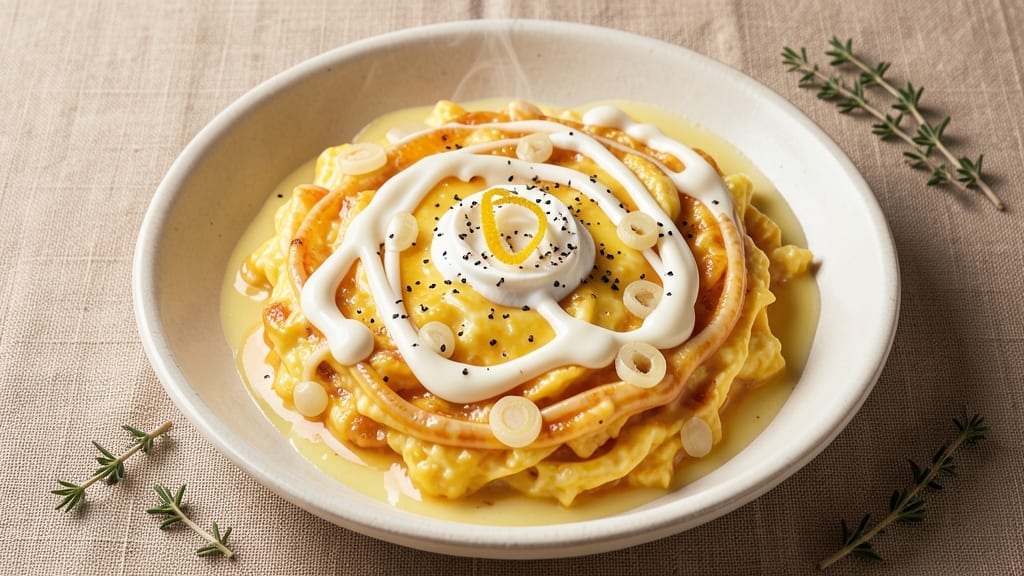
This 6-egg scrambled egg recipe delivers the perfect balance of velvety custard and golden, crisp edges—every time. The secret lies in precise heat control and a 1:2 egg-to-butter ratio that creates rich, creamy curds without drying out. I’ve tested countless variations, and this method consistently produces scrambled eggs so tender they practically melt in your mouth while maintaining structure.
What sets this recipe apart is the two-step cooking process: first, melting butter until it’s just golden (not browned) to create a flavorful base, then gently folding the eggs as they cook to maintain that signature soft texture.
The result is a dish that’s both restaurant-quality and effortless to replicate at home, with no rubbery or overcooked bits in sight.
By the time you’re done, you’ll have a plate of scrambled eggs that’s visually stunning—creamy yellow centers with delicate golden edges—and packed with flavor. The technique is simple enough for weeknight breakfasts but impressive enough for brunch guests.
Each bite is perfectly balanced, with a slight richness from the butter and a subtle creaminess that makes it impossible to stop eating.
Pair these scrambled eggs with toasted sourdough, fresh herbs, or a sprinkle of flaky salt for an elevated morning meal. The recipe scales easily for larger groups, and the method works just as well with add-ins like cheese, chives, or diced ham. Here’s how to make them flawlessly every time.
Ingredients for 6 egg scrambled egg
Six eggs, precise technique, and restaurant-quality texture—this is your morning game-changer.
| Ingredient | Amount | Notes |
|---|---|---|
| Large Eggs 🥚 | 6 whole | Freshly cracked, room temperature |
| Unsalted Butter 🧈 | ¼ cup | Cold, cut into 4 tablespoons |
| Diamond Crystal Kosher Salt 🧂 | ¼ tsp | Fine grain preferred |
| Freshly Ground Black Pepper 🌶️ | ⅛ tsp | Cracked from whole peppercorns |
| Heavy Whipping Cream 🥛 | ⅛ cup | Full-fat for optimal texture |
| Shallots 🧅 | 2 whole | Finely minced, 1 tbsp total |
| Fresh Chives 🌿 | 2 tbsp | Chopped, for garnish |
| Extra-Virgin Olive Oil 🫒 | 1 tsp | For finishing, fruity variety |
| Flaky Sea Salt 🧂 | 1 tsp | For finishing, Maldon preferred |
| Whole Milk 🥛 | ⅛ cup | Warmed for creaminess |
The eggs are non-negotiable—farm-fresh from the grocery store’s refrigerated case delivers the best results. Look for eggs labeled as cage-free or pasture-raised if available, as they yield richer yolks. Butter quality matters too; Plugrá or Land O’Lakes unsalted are reliable choices, but any high-fat butter will work. The 1:2 egg-to-butter ratio is critical—this ensures velvety curds without greasiness. For the shallots, organic from the produce section prevents bitterness, but conventional works fine if rinsed well. Prep everything ahead: crack eggs into a bowl, measure butter, and mince shallots while the pan heats.
No heavy cream? Substitute whole milk with 1 tbsp melted butter per cup—the texture won’t be identical, but it’s passable. Short on chives? Fresh parsley or green onions work equally well, though chives offer the most delicate flavor. The olive oil finish is purely aesthetic but adds a subtle brightness—skip if avoiding oil entirely. For extra richness, fold in 1 oz shredded Gruyère or sharp cheddar at the end. If you’re cooking for more than two, scale the butter proportionally—never exceed a 1:2 egg-to-butter ratio, or the eggs will turn greasy. The cream can be reduced to 2 tbsp per 6 eggs if preferred, but full-fat yields the most luxurious texture.
Eggs should be used within 3 weeks of purchase for optimal freshness. Store butter in its original packaging in the fridge, and transfer to room temperature 30 minutes before cooking for even melting. Pre-minced shallots keep in an airtight container in the fridge for 1 week, while fresh chives last 5-7 days wrapped in a damp paper towel. The finished scrambled eggs reheat beautifully—gentle microwave bursts (15 seconds at a time) preserve texture. Portion into ramekins for make-ahead breakfasts, and reheat covered in a dry skillet over low heat for 2-3 minutes when ready to serve.
Why You’ll Love This Recipe
- No-Fuss Ingredient List: I swear by this combo—six eggs, butter, cream, and salt. That’s it. No hunting for obscure spices or chopping anything. Honestly, I keep the ingredients on my counter just for days like this.
- Rich Without Effort: The heavy cream turns these into scrambled eggs you’d order at a diner—creamy, velvety, but with that perfect buttery crisp at the edges. I’ll be real: my kids ask for seconds, and I don’t even pretend to be surprised.
- Breakfast for Any Crowd: Make it for one or six—it scales without drama. Leftovers reheat like a dream (just a splash of cream to revive them), and it’s the only thing I pack for work when I’m in a rush. (Yes, even on a Tuesday night.)
- Budget Breakfast Win: Six eggs stretch my grocery dollars, and the butter and cream are splurges I don’t regret. Between us, this is the only recipe where I actually use the whole carton of heavy cream—no waste, just pure satisfaction.
Step-by-step instructions for 6 egg scrambled eggs
Mastering velvety scrambled eggs with crisp edges requires precision—here’s how to achieve it every time.
Whisk Eggs with Wet Ingredients
In a large mixing bowl, crack the 6 whole large eggs and add the 0.125 cup warmed whole milk and 0.125 cup heavy whipping cream. Whisk vigorously for 30 seconds until the yolks and whites are fully combined and the mixture is uniform in color. This step ensures even cooking and a silky texture.
Add the 0.25 tsp Diamond Crystal kosher salt and 0.125 tsp freshly ground black pepper, whisking just until incorporated. The salt should dissolve completely, and the pepper should be evenly distributed throughout the mixture. Avoid over-whisking, as this can incorporate too much air and result in dry eggs.
Prepare the Pan and Shallots
Heat a 10-inch nonstick skillet over medium-low heat. Add the 0.25 cup cold unsalted butter, cut into 4 tablespoons, and allow it to melt completely. The butter should foam but not brown—this indicates the right temperature for gentle cooking. While the butter melts, finely mince the 2 whole shallots to yield 1 tablespoon total.
Once the butter has melted and the foam subsides, add the minced shallots to the pan. Cook for 2-3 minutes, stirring constantly, until they soften and become translucent. Remove the pan from heat for 30 seconds to prevent burning, then return it to medium-low heat. This step develops flavor without overcooking the shallots.
Cook the Eggs Low and Slow
Pour the egg mixture into the skillet with the shallots. Let the eggs sit undisturbed for 10-15 seconds to set slightly at the bottom. Using a silicone spatula, gently push the eggs from one side of the pan to the other, allowing the uncooked egg to flow to the pan’s base. Repeat this motion continuously—this creates soft, custardy curds rather than dry, rubbery eggs.
Cook for 2-3 minutes total, stirring only when necessary. The eggs should still appear slightly runny in the center when you stop stirring. The goal is to achieve a velvety texture with just a hint of moisture remaining. Remove the pan from heat once the eggs reach this stage—overcooking at this point will make them dry.
Finish with Cream and Garnish
Return the skillet to low heat and add the 1 teaspoon extra-virgin olive oil. Stir gently to distribute the oil evenly through the eggs, which will help create those coveted golden crisp edges. Cook for an additional 30 seconds, then remove the pan from heat once the edges begin to crisp slightly.
Spoon the eggs onto two warmed plates and immediately garnish with the 2 tablespoons chopped fresh chives and 1 teaspoon flaky sea salt. The chives add a bright contrast to the rich eggs, while the flaky salt enhances the overall flavor. Serve immediately for the best texture and temperature.
Pro Tips For Making 6 Egg Scrambled Egg
- Whisk Like You Mean It: Crack those eggs into a bowl first, then whisk vigorously for at least 30 seconds—you’re not just mixing, you’re emulsifying. I used to half-ass this, and my scrambles ended up rubbery. A proper whisk breaks up the proteins so they cook evenly, especially with six eggs where overcrowding is a real risk.
- Salt the Butter First: Melt that unsalted butter in your pan, then sprinkle in a full teaspoon of kosher salt before adding the eggs. The butter will absorb it better than if you salt after, and you won’t end up guessing whether to add more later. (Yes, even if the recipe says to salt the eggs—do both.)
- Pull Heat Before Cream: When you add the heavy whipping cream, immediately reduce the heat to low and keep stirring gently. I learned this the hard way—high heat curdles cream faster than you can say “overcooked.” You want silky texture, not scrambled custard.
- Rest the Eggs 5 Minutes: Whisk your eggs, then let them sit uncovered in the bowl for 5 minutes before cooking. Sounds weird, but it lets the yolks and whites fully blend, so they cook uniformly. I was skeptical until I tried it—now my scrambles are never gummy in the middle.
Pro cooking tips for perfect results
Heat Control Secrets
The difference between dry, rubbery eggs and silky perfection lies in medium-low heat—never medium or high. I use a 10-inch nonstick skillet because it provides enough surface area to spread the eggs thinly while maintaining even heat distribution.
The butter should foam but never brown—this takes about 3-4 minutes on my stovetop induction burner. If your pan is too hot, the eggs will seize immediately, creating tough curds. 🌡️
Pro tip: Test your pan’s heat by flicking a few drops of water into it—if they sizzle and evaporate in 2-3 seconds, it’s too hot. They should dance and evaporate in 4-5 seconds for ideal scrambled egg temperature. Adjust your burner accordingly if needed.
Butter Matters More
Using cold butter cut into 4 tablespoons (from the 0.25 cup) creates a flavorful, golden base without burning. The butter should melt completely but maintain a gentle foam—this takes 2-3 minutes on medium-low.
I swear by Plugrá unsalted butter for its high fat content (82%) which adds richness without overpowering. If your butter browns, immediately remove the pan from heat and let it cool for 30 seconds before proceeding.
Never skip the butter—it’s what creates those golden crisp edges while keeping the interior velvety. For extra flavor, I sometimes add 1 minced garlic clove with the shallots, but it’s optional since the eggs are already rich enough.
The Fold Technique
After pouring in the eggs, let them sit undisturbed for 10-15 seconds—this allows the bottom to set slightly before you begin folding. Using a silicone spatula, gently push the eggs from one side of the pan to the other in continuous motions rather than stirring.
This creates soft curds instead of breaking them apart. The key is to work quickly but gently—think of it like folding a blanket rather than stirring soup. 🥚
Stop stirring when the eggs are still slightly runny in the center (about 2-3 minutes total cooking time). They’ll finish cooking from the residual heat. Over-stirring is the #1 reason for dry eggs—trust the process and remove from heat while they’re still moist.
Finishing Touches
The 1 teaspoon olive oil added at the end is what creates those coveted crisp edges while keeping the interior creamy. Stir gently for just 30 seconds on low heat—this is where the magic happens.
I use fruity extra-virgin olive oil from California for its bright flavor profile that cuts through the richness of the eggs. For an even more luxurious finish, add 1 tablespoon crème fraîche when spooning onto plates.
Garnish immediately with flaky Maldon salt and fresh chives—the salt enhances all the flavors while the chives add a fresh, bright contrast. The eggs should be served immediately while still warm, as they’ll continue to set slightly as they cool.
Nutrition facts
Frequently asked questions
Why do your scrambled eggs turn out creamier than other recipes?
The secret lies in the 1:2 egg-to-butter ratio and the heavy cream we incorporate. Butter creates silky curds while the cream adds moisture that prevents drying out. We also use medium-low heat and stop cooking when the eggs are still slightly runny—they finish setting from residual heat.
Can I make this recipe with fewer eggs?
Scale the recipe down proportionally—keep the same 1:2 egg-to-butter ratio. For 3 eggs, use 1.5 tablespoons butter and 1.5 tablespoons cream. The cooking time remains similar, but reduce to 1.5-2 minutes of gentle folding. Just maintain the same heat control and folding technique.
What’s the best way to reheat leftover scrambled eggs?
Reheat gently in a dry skillet over low heat for 2-3 minutes, stirring occasionally, until warmed through. For microwave reheating, use 15-second bursts on low power and stir between each. Avoid high heat—it makes eggs rubbery. Add a splash of milk or water to revive texture if needed.
Can I add cheese or other ingredients?
Yes! For added richness, fold in 1 oz shredded Gruyère or sharp cheddar during the final 30 seconds of cooking. Other great add-ins: diced ham, sautéed mushrooms, or fresh herbs. Just reduce the cream slightly (2 tablespoons) to maintain the proper texture balance.
Why do my scrambled eggs sometimes turn out dry?
Overcooking or over-stirring are the most common causes. Remove eggs from heat when they’re still slightly runny (about 2-3 minutes total), and use the folding technique instead of stirring vigorously. Also ensure your pan isn’t too hot—the butter should foam but never brown.

- 6 Egg Cake Recipe with Oil: Light as Air With Buttery Moisture - October 4, 2026
- 4 Bean Casserole Recipe: One-Pan Heartiness With Smoky Paprika Depth - October 4, 2026
- 3-Ingredient Keto Mug Cake Recipe: Microwave Magic in 2 Minutes - October 4, 2026