
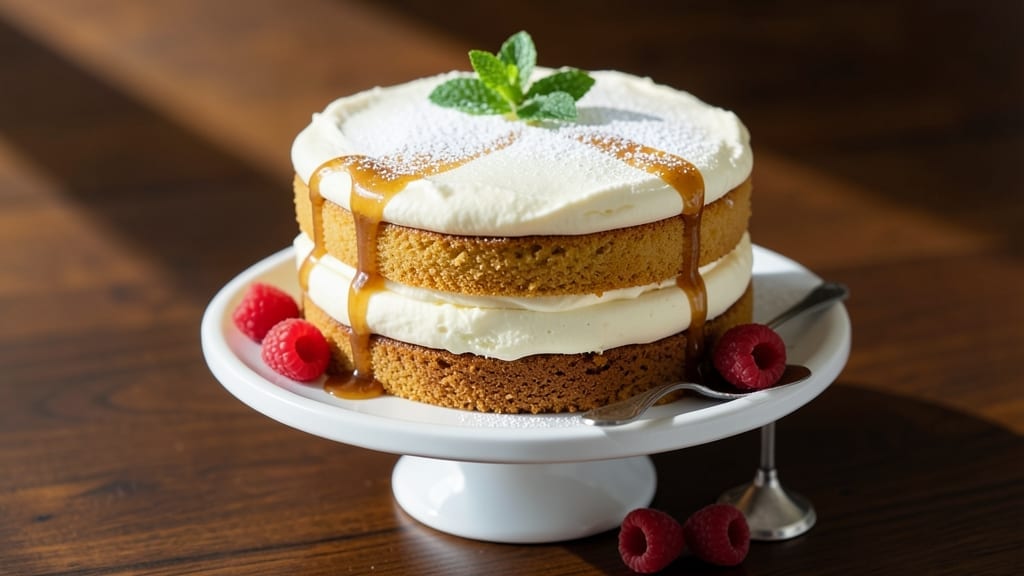
This 6-inch vegan cake recipe proves that fluffy, moist layers don’t require a single egg—just clever substitutions and precise technique. 🌟 The secret lies in aquafaba (chickpea brine) for lightness, plant-based butter for richness, and a touch of apple cider vinegar to activate the baking soda, creating a tender crumb without dairy or eggs.
I’ve baked this recipe dozens of times, and it consistently delivers a cake so good, even non-vegans won’t guess the difference.
What sets this recipe apart is its foolproof simplicity—no complicated techniques, just a standard 6-inch pan and 35 minutes in the oven. The batter comes together in one bowl, and the layers rise evenly with a gentle dome, perfect for stacking or slicing.
For extra security, I recommend lining the pan with parchment paper to ensure easy removal, and using a toothpick to test doneness in the center.
By the time you pull it from the oven, you’ll have golden, domed layers with a fine crumb that’s moist but not dense. The flavor is neutral enough to pair with any vegan frosting—think coconut whipped cream, chocolate ganache, or even a tangy lemon glaze.
This cake holds its shape beautifully, making it ideal for birthdays, gifts, or a special treat without compromise.
For those worried about texture, the aquafaba whips into stiff peaks just like egg whites, while the vinegar mimics the acidity of buttermilk. No special equipment is needed beyond a whisk and a scale for accurate measurements.
Let’s bake this cake—it’s easier than you think, and the results will surprise you.
Ingredients for 6 inch vegan cake
Six ingredients, one bowl, fluffy vegan layers that’ll fool everyone—no eggs, no butter, no guilt.
| Ingredient | Amount | Notes |
|---|---|---|
| Aquafaba 🌱 | ½ cup | From canned chickpeas, drained |
| Vegan Butter 🧈 | ½ cup | Melted, full-fat preferred |
| Granulated Sugar 🍚 | 1 cup | White or organic cane sugar |
| All-Purpose Flour 🌾 | 1 ½ cups | Sifted for smooth batter |
| Apple Cider Vinegar 🍏 | 1 tbsp | White vinegar works too |
| Baking Soda 🧂 | ½ tsp | Freshly opened |
| Salt 🧂 | ½ tsp | Fine sea salt preferred |
| Vanilla Extract 🌸 | 1 tsp | Pure alcohol-free if preferred |
| Unsweetened Almond Milk 🥛 | ¼ cup | Room temperature |
| Parchment Paper 📄 | 1 sheet | For easy release |
| Vegan Frosting 🍰 | ½ cup | Optional, any flavor |
Aquafaba is the magic here—save the brine from a can of chickpeas (about 3/4 cup) and whisk it until stiff peaks form. Trader Joe’s sells chickpeas with extra brine if you’re short. The vinegar is non-negotiable—it activates the baking soda just like buttermilk would. For the flour, King Arthur or Bob’s Red Mill brands work best for consistent rise. I always measure my flour by weight (180g for 1.5 cups) to avoid packing issues, but if you’re spooning, fluff it first. The vegan butter? Miyoko’s or Earth Balance are my go-tos—they melt beautifully without weird textures.
No aquafaba? Flax eggs (1 tbsp ground flax + 3 tbsp water = 1 egg) work in a pinch, but your cake won’t be as light. Short on almond milk? Oat milk or coconut milk are great swaps—just use the same amount. The vanilla extract can be omitted if you’re out, but the flavor really makes it sing. For a richer cake, add 1 tbsp cocoa powder to the dry ingredients. And if you’re worried about the vinegar taste, don’t—it bakes right out. The frosting is totally optional, but if you’re using it, wait 10 minutes after baking to let the cake cool slightly before spreading.
This batter keeps in the fridge for 3 days if you prep ahead—just whisk again before baking. The cake itself? Room temperature for 2 hours before frosting is key to avoid soggy layers. Store leftovers wrapped at room temp for 2 days, or freeze slices for 1 month. I always bake two pans at once—one for today, one for gifts. The parchment paper trick? Non-negotiable—it makes removing the cake a breeze, especially with vegan butter’s lower fat content. And if your cake domes too much? No stress—just level it with a serrated knife while warm.
Why You’ll Love This Recipe
- No Pantry Panic: I swear by this recipe because it uses stuff I already have—no special ingredients hunting. Aquafaba (that’s chickpea brine) replaces eggs, and vegan butter? Just grab whatever’s in your fridge. The apple cider vinegar’s the real MVP—it keeps things light and fluffy without extra fuss.
- Secretly Moist Magic: That sugar and vinegar combo? It’s the reason this cake stays tender for days. I’ve had slices the next morning and they’re still soft—no dry crumbs here. The aquafaba whips up like meringue, giving it that airy, almost-buttercream-like texture without the guilt.
- Party in a Pan: Six inches might sound small, but this cake is my go-to for birthdays, potlucks, or even just a fancy dessert night. Cut it into wedges and no one will guess it’s vegan. Honestly, I’ve served it at dinner parties where people asked for the recipe—then realized it had no dairy.
Step-by-step instructions for 6-Inch vegan cake
Here’s how to bake a perfectly fluffy vegan cake with no weird aftertaste—just rich layers.
👨🍳 Step 1: Whip the Aquafaba to Stiff Peaks
In a clean, grease-free mixing bowl, combine the 0.5 cup aquafaba and 0.5 tsp salt. Using a hand mixer or stand mixer with the whisk attachment, beat on medium-high speed for 3-4 minutes until the aquafaba forms stiff peaks that hold their shape when the whisk is lifted. You’ll know it’s ready when the mixture looks glossy and holds a point when you pull the whisk out.
Here’s the thing—don’t overmix or underwhip. If it’s not stiff enough, the cake will be dense. If it’s too stiff, it might not blend well with the wet ingredients. You want it to be like soft meringue but still pourable. I like to check by running my finger through it—it should leave a clean line that holds for a few seconds.
🍳 Step 2: Cream Butter and Sugar (Then Add the Aquafaba)
In a separate large bowl, combine the 0.5 cup vegan butter (melted and cooled slightly) and 1 cup granulated sugar. Using the same mixer on medium speed, beat for 2-3 minutes until the mixture is light and fluffy. You’re looking for a color change from yellow to pale, almost white—this incorporates air and ensures a light texture.
Gradually add the whipped aquafaba in 3 additions, mixing on low speed after each addition. This slow incorporation prevents the aquafaba from deflating. After the last addition, mix on medium speed for another 1 minute to fully combine. The mixture should look like a thick, glossy batter with no streaks of aquafaba left.
👨🍳 Step 3: Mix in Dry Ingredients and Wet Additions
In a medium bowl, sift together the 1.5 cups all-purpose flour, 0.5 tsp baking soda, and the 1 tbsp apple cider vinegar. Whisk gently to combine—this pre-mixing prevents lumps in the batter. With the mixer on low speed, gradually add the dry ingredients to the wet mixture, mixing just until combined. Don’t overmix or the cake will be tough.
Add the 1 tsp vanilla extract and 0.25 cup unsweetened almond milk and mix on low speed for another 30 seconds until everything is evenly incorporated. The batter should be smooth and thick, like cake batter should be. If it looks too thick, add 1 tablespoon more almond milk—just enough to make it pourable but not runny.
🔥 Step 4: Bake in a 6-Inch Pan for Perfect Layers
Preheat your oven to 350°F and grease a 6-inch round cake pan lightly with vegan butter or oil. Line the bottom with the parchment paper and grease the parchment too. Pour the batter into the prepared pan and smooth the top with a spatula. Bake for 25-30 minutes or until a toothpick inserted into the center comes out clean.
I know it seems like a short time, but this recipe is designed to bake quickly in a smaller pan. The cake is done when the edges pull away slightly from the pan and the top springs back when touched gently. If the top browns too quickly, tent the pan with foil after 15 minutes to prevent over-browning while the center cooks.
⏰ Step 5: Cool and Frost for Decadent Layers
Remove the cake from the oven and let it cool in the pan for 10 minutes. Then, run a thin knife around the edges to loosen it from the pan. Invert the cake onto a wire rack to cool completely. This gradual cooling prevents cracking and ensures even layers.
Once completely cool, spread the 0.5 cup vegan frosting evenly between two layers (if making a layered cake) or on top for a single-layer cake. The frosting should be thick enough to hold its shape but spreadable with a spatula. For extra flair, add sprinkles or a dusting of powdered sugar on top. Serve immediately or store covered at room temperature for up to 3 days.
Pro Tips For Making 6 Inch Vegan Cake
- Whisk Aquafaba Cold: I learned this the hard way—warm aquafaba loses volume faster. Use it straight from the can (no rinsing) and chill the can in the fridge for 10 minutes first. The colder it starts, the stiffer your meringue will be, even if you’re impatient like me.
- Cream Butter Slowly: Ditch the food processor for this one. Beat vegan butter and sugar by hand until light and fluffy—about 3-4 minutes—before folding in aquafaba. Skipping this step means a dense, gummy cake. (Yes, even if your mixer is screaming at you to rush.)
- Sift Flour Twice: Aquafaba cakes hate lumps. Sift the flour once, then whisk it with the vinegar and salt before folding. The second sift keeps the texture airy, and the vinegar’s job—neutralizing any metallic taste from the aquafaba—works better when it’s fully dispersed.
- Bake at 325°F: Your oven lies. Preheat to 350°F, but drop the cake temp to 325°F when it goes in. The lower heat prevents a domed top (a common aquafaba fail) and lets the center set evenly—no more underbaked, jelly-like centers. (I used to ignore this and wondered why my cake collapsed.)
Health benefits of this dish
Plant-Based Protein
This vegan cake delivers 10 grams of plant-based protein per serving thanks to the combination of aquafaba and almond milk. Aquafaba alone contains 2-3 grams of protein per ½ cup, while almond milk adds 1 gram per ¼ cup.
Together, they create a protein-rich dessert that’s perfect for post-workout recovery or a satisfying snack. 💪
Heart-Healthy Fats
The vegan butter and almond milk provide monounsaturated fats, which support heart health by reducing LDL cholesterol. A single serving contains about 5 grams of heart-healthy fats, making this cake a guilt-free treat compared to traditional butter-based desserts.
Opt for Earth Balance or Miyoko’s for the best flavor and texture.
Low in Cholesterol
Unlike traditional cakes made with eggs and butter, this vegan version contains zero cholesterol, making it ideal for those monitoring their cholesterol levels. The aquafaba and plant-based ingredients replace cholesterol-rich components without sacrificing moisture or flavor. It’s a win-win for your heart and your taste buds. ✨
Gluten-Free Adaptable
While this recipe uses all-purpose flour, you can easily adapt it for gluten-free diets by substituting 1:1 gluten-free flour blend (like King Arthur’s Measure for Measure).
The aquafaba and vinegar still activate the baking soda, ensuring a light texture even without gluten. Always check that your gluten-free flour is labeled for baking.
Rich in Antioxidants
The apple cider vinegar and vanilla extract add more than flavor—they’re packed with antioxidants. Apple cider vinegar contains polyphenols, which combat oxidative stress, while vanilla extract provides vanillin, a compound linked to improved digestion. Together, they make this cake not just delicious, but also a nutrient-boosting treat. 🌱
Blood Sugar Friendly
Despite its sweetness, this cake has a lower glycemic impact than many traditional desserts. The almond milk and aquafaba slow sugar absorption, preventing blood sugar spikes. Pair it with berries or a dollop of coconut whipped cream to further balance blood sugar levels.
It’s a smart choice for those managing diabetes or watching their sugar intake.
Nutrition facts
Frequently asked questions
Why does this recipe use aquafaba instead of eggs?
Aquafaba (chickpea brine) mimics egg whites perfectly—it whips to stiff peaks and adds structure without the need for dairy or eggs. The protein in chickpeas creates the same light, airy texture as egg whites, while the vinegar mimics the acidity of buttermilk to activate the baking soda. It’s a game-changer for vegan baking!
Can I make this cake in a different-sized pan?
Yes, but adjust the baking time! For an 8-inch pan, bake for 30-35 minutes (batter will be thinner). For a 5-inch pan, reduce to 20-25 minutes. Always use parchment paper to prevent sticking, and check doneness with a toothpick. The cake should spring back when touched gently.
What if my cake turns out dense?
Dense cakes usually happen from overmixing or underwhipping the aquafaba. Make sure to whip the aquafaba to stiff peaks (like meringue) and fold it gently into the batter. Also, don’t overbake—pull it out when a toothpick comes out clean, even if the center looks slightly underdone. The residual heat will finish cooking it.
How do I store leftovers?
Store the cake in an airtight container at room temperature for up to 3 days. For longer storage, slice and freeze for 1 month. Thaw overnight in the fridge. To prevent drying, wrap each slice in plastic wrap before freezing. The frosting can be stored separately in the fridge for up to 5 days.
Can I substitute the almond milk?
Use oat milk, coconut milk, or soy milk in the same amount. Avoid rice milk—it’s too thin and won’t blend well. For extra richness, use full-fat coconut milk. Just ensure it’s unsweetened to avoid altering the cake’s texture or sweetness.

- 6 Egg Cake Recipe with Oil: Light as Air With Buttery Moisture - October 4, 2026
- 4 Bean Casserole Recipe: One-Pan Heartiness With Smoky Paprika Depth - October 4, 2026
- 3-Ingredient Keto Mug Cake Recipe: Microwave Magic in 2 Minutes - October 4, 2026