
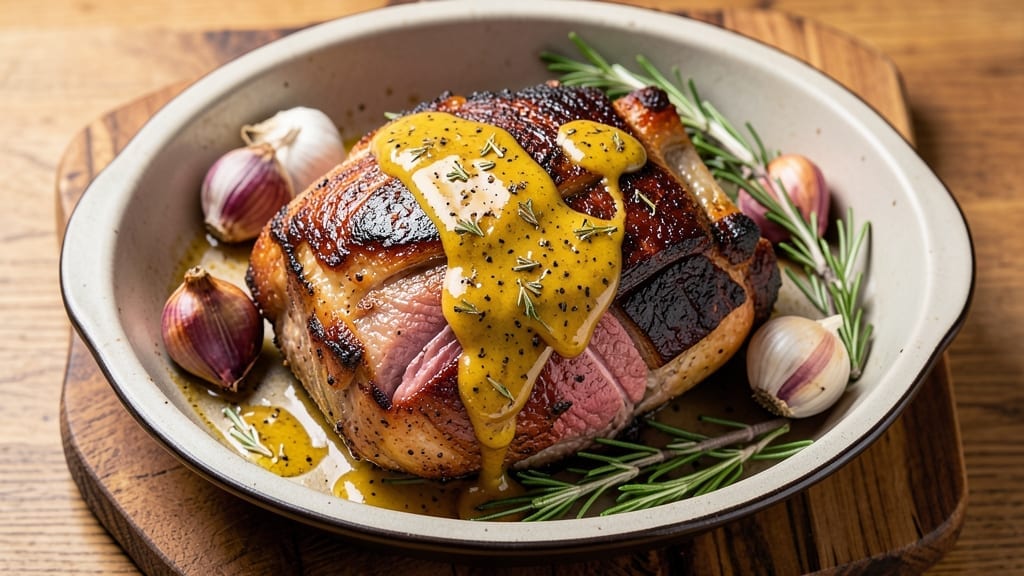
A 6-pound rib roast cooked to perfection delivers restaurant-quality results with a crispy herb crust and tender pink center—something I’ve perfected after years of experimenting with different techniques. The secret lies in precise temperature control and a well-seasoned crust that locks in juices while creating that coveted caramelized exterior.
My father used to say good roasts are about patience, and he wasn’t wrong—this method ensures every slice is juicy, flavorful, and ready to impress.
This recipe focuses on achieving that ideal doneness: a medium-rare center with a deep brown crust that adds texture and depth. We’ll use a combination of fresh herbs, garlic, and mustard for the crust, which not only enhances flavor but also helps create that perfect sear.
The reverse searing technique—starting low and finishing high—ensures even cooking without drying out the meat, a lesson I learned the hard way after my first attempt left me with an overcooked roast.
By the time you’re done, you’ll have a beautifully browned roast with a pink center that’s juicy and tender, not dry or overcooked. The aroma alone will have everyone gathering at the table, and the first slice will reveal layers of flavor from the herb crust.
This is the kind of roast that makes weeknight dinners feel special, and it’s easier than you think to achieve with the right approach.
Serve with classic sides like roasted potatoes, glazed carrots, or a simple green salad to round out the meal. The leftovers reheat beautifully, making this a great recipe for feeding a crowd or prepping ahead for busy nights. Let’s get started on creating the perfect roast for your table.
Ingredients for 6 pound rib roast
Six pounds of prime rib, fresh herbs, and a crispy crust—everything you need for showstopping results.
| Ingredient | Amount | Notes |
|---|---|---|
| Rib Roast (Bone-In) 🥩 | 6 lb | Prime grade, room temperature before cooking |
| Fresh Rosemary 🌿 | ½ cup | Finely chopped, stems removed |
| Fresh Thyme 🌿 | ¼ cup | Leaves only, finely chopped |
| Garlic Cloves 🧄 | 8 cloves | Minced, skin on for extra flavor |
| Yellow Mustard 🍯 | ¼ cup | Dijon preferred for depth |
| Extra-Virgin Olive Oil 🫒 | ¼ cup | High quality, fruity |
| Kosher Salt 🧂 | 2 tbsp | Diamond Crystal preferred |
| Freshly Ground Black Pepper 🌶️ | 1 tbsp | Freshly cracked for best flavor |
| Unsalted Butter 🧈 | ½ cup | Cold, cubed for basting |
| Fresh Parsley 🌿 | ¼ cup | Chopped, for garnish |
| Beef Tallow or Duck Fat 🧈 | ¼ cup | Optional, for extra richness |
The rib roast is the star here, so prime grade is non-negotiable. Look for good marbling—those white fat streaks are what keep the meat juicy. Costco or high-end butchers usually have the best selection, but any quality grocery store with a good meat counter will work. Pat it dry with paper towels before seasoning—this helps the crust form better. Room temperature is key: take it out of the fridge 1-2 hours before cooking. The herbs? Fresh is a must—dried just won’t cut it for that vibrant flavor. I usually grab mine from the grocery store’s produce section, but if you’re feeling fancy, a farmers market has even better quality.
No fresh rosemary? Dried works at half the amount, but it won’t have the same impact. Mustard powder can replace the Dijon, but you’ll lose some of that tangy depth. Running short on butter? Olive oil works in a pinch, though it won’t give the same richness. The tallow or duck fat is optional but worth it if you’ve got it—just melt it first. For the garlic, peeled and minced ahead of time saves you from chopping while the roast cooks. The crust mixture should be thick but spreadable—like a paste. If it’s too dry, add a splash of olive oil or water. Too wet? Add a pinch more kosher salt to help it bind.
This roast reheats like a dream—better the next day once all those flavors meld together. Wrap tightly in foil and refrigerate for up to 4 days, or freeze for 3 months. For serving, let it sit at room temperature for 15-20 minutes before slicing—this keeps it juicy. The crust will be crispy, but the inside stays tender. Slice against the grain for the most tender bites. Leftovers make amazing sandwiches or tacos—just don’t skip the crust!
Why You’ll Love This Recipe
- Foolproof Timing: I swear by this method—just season the roast with rosemary, thyme, and crushed garlic, then let the oven do the work. No hovering, no stress, and the bone-in version bastes itself in flavor while it rests.
- Herb-Crusted Magic: That yellow mustard glaze? It’s the secret—tenderizes the meat and caramelizes into a sticky, aromatic crust. Between us, the first bite makes you want to skip dinner and just eat the roast straight from the pan.
- Weekend Feast, Weeknight Leftovers: Big enough for Sunday dinner but perfect for Monday sandwiches. Honestly, I’ll slice half the roast thin for wraps the next day, and the rest? It reheats like a dream in the oven or air fryer.
- Budget Bulk Buys: A six-pound roast feels fancy but costs less per pound than pre-sliced steaks. I’ll be real: the first time I made this, I bought extra just to freeze half—because nothing beats this roast for feeding a crowd without breaking the bank.
Step-by-step instructions for herb-crusted rib roast
Here’s the foolproof method for a showstopping roast with tender pink centers and aromatic herb crust.
Prepare the Herb Crust Mixture
In a medium bowl, combine the 0.5 cup fresh rosemary, 0.25 cup fresh thyme, 8 cloves minced garlic, 0.25 cup yellow mustard, 0.25 cup extra-virgin olive oil, 2 tbsp kosher salt, and 1 tbsp freshly ground black pepper. Mix thoroughly with your hands until the herbs are evenly coated and the mustard is fully incorporated. This aromatic paste will create that signature herb crust we’re after.
I like to press the mixture firmly against the roast later, so make sure it’s well combined now. The mustard acts as a binder while adding depth of flavor. Set this mixture aside while you prepare the roast itself.
Season and Crust the Rib Roast
Pat the 6 lb rib roast completely dry with paper towels—this is absolutely critical for that perfect crust. I can’t stress this enough: moisture is the enemy of crispy skin. Using your hands, rub the herb mixture all over the roast, pressing firmly so it adheres well. Pay special attention to the fat cap and any crevices where the herbs might not make contact.
Next, roll the roast in the 0.25 cup beef tallow or duck fat (if using) to add extra richness. This step isn’t mandatory but creates a beautiful sheen and adds incredible flavor. Place the roasted on a rack in a roasting pan to allow air circulation on all sides.
Roast to Perfect Medium-Rare
Preheat your oven to 450°F for 20 minutes to get it screaming hot. Then reduce heat to 325°F and place the roast in the oven. Roast for 2 hours for a medium-rare center (about 125°F internal temperature). This low-and-slow approach ensures the roast cooks evenly without drying out.
Here’s the thing—I like to baste the roast every 30 minutes with melted butter. Melt the 0.5 cup unsalted butter in a small saucepan over low heat, then spoon it over the roast while it’s cooking. This basting creates a glossy finish and keeps the meat moist. The roast should have a deep golden crust by the end, with the internal temperature reaching 125°F at its thickest point.
Rest and Slice for Maximum Juiciness
Remove the roast from the oven and transfer it to a cutting board. Let it rest for 20-30 minutes before slicing—this is where the magic happens. During this time, the juices redistribute throughout the meat, ensuring each slice is moist and flavorful. I know it’s tempting to cut into it immediately, but trust me on this step.
While the roast rests, preheat your serving platter in the oven for 5 minutes to keep everything warm. Then slice the roast against the grain into ½-inch thick portions. Garnish with the 0.25 cup fresh parsley just before serving for a pop of color and freshness. The finished roast should have a beautiful herb crust, tender pink centers, and rich, beefy flavor in every bite.
Pro Tips For Making 6 Pound Rib Roast
- Sear First, Then Roast: Get that meat screaming hot on all sides before you pop it in the oven—bone-in ribs need that crust to lock in flavor. I used to skip this step, thinking it was unnecessary, but now I swear by it: 3-4 minutes per side on high heat, even if it looks uneven at first.
- Smash Those Garlic Cloves: Don’t just toss whole garlic cloves on top—crush them with the flat side of your knife first. This releases more flavor into the mustard and herbs, and it actually sticks to the meat instead of rolling away. (Yes, I’ve lost garlic to roasts before.)
- Don’t Open the Oven: Resist the urge to peek or baste—every time you crack that door, you’re letting heat escape and making the roast take longer. If you’re worried about doneness, use a meat thermometer (135°F for medium-rare is where you want to be).
- Mustard as Glue: Mix that yellow mustard with a little olive oil before slathering it on—it helps the herbs stick to the meat instead of just sliding off. I learned this after watching a roast’s rosemary and thyme clump in a sad pile on the cutting board.
Storing and reheating this recipe
Refrigerator Storage
Let your rib roast cool to room temperature for 1-2 hours after cooking before storing. Wrap it tightly in plastic wrap followed by a layer of foil to preserve moisture and prevent drying. Store in the refrigerator for up to 4 days—the flavors actually deepen as the meat rests.
I like to slice it into individual portions before storing so I can reheat just what I need. 💫
Freezer Preservation
For longer storage, divide the roast into 1-inch thick slices and wrap each tightly in plastic wrap, then place in a freezer bag. Label with the date—this roast stays excellent for 3 months in the freezer.
When ready to use, thaw overnight in the fridge for best results. I’ve found that freezing individual slices prevents freezer burn and makes reheating more convenient.
Reheating Methods
My preferred method is oven reheating: place slices on a baking sheet at 300°F for 10-15 minutes until reaching 165°F internally. For quick meals, use the stovetop with a splash of beef broth to keep it moist—about 3-5 minutes per side on medium heat.
Microwave reheating works in a pinch but can make the crust soggy, so cover loosely with a damp paper towel. 🔥
Leftovers Reinvention
Transform leftover roast into beef sandwiches with caramelized onions and horseradish cream, or make beef tacos with corn tortillas and pickled red onions. For a hearty breakfast, slice thinly and use in breakfast burritos with scrambled eggs and cheese.
The herb crust adds incredible flavor to these new dishes—don’t waste that delicious seasoning!
Serving Temperature
Always bring the roast to room temperature before serving—about 15-20 minutes out of the fridge. This helps maintain juiciness and makes slicing easier. I like to place the platter in a 200°F oven for 5 minutes before adding the roast to keep everything warm.
The contrast between the crispy crust and tender meat is what makes this dish truly special. ✨
Nutrition facts
Frequently asked questions
How long should I let the rib roast sit at room temperature before cooking?
Take it out of the fridge 1-2 hours before roasting to ensure even cooking. This allows the meat to reach room temperature, which helps it cook more uniformly and prevents a cold center. Pro tip: Place it on a plate or cutting board to catch any juices that might drip.
What’s the best way to check if the roast is done?
Use a meat thermometer to check the thickest part—it should read 125°F for medium-rare (about 130°F for medium). Insert the probe sideways to avoid hitting bone. The internal temperature is the only reliable way to judge doneness, not time alone.
Can I cook this roast in a different oven?
Yes, but you may need to adjust timing slightly. If your oven runs hot, reduce the temperature by 25°F and check at 1 hour 45 minutes. For older ovens, increase by 25°F and monitor closely. Always use a thermometer to confirm doneness.
Why does my roast look dry after slicing?
This usually happens if you skipped the 20-30 minute rest or overcooked it. The resting time lets juices redistribute—cutting too soon forces them out. If it’s slightly dry, slice thinner and serve with extra pan juices or a red wine reduction.
What’s the best way to reheat sliced roast?
For crispy crusts, reheat slices on a baking sheet at 300°F for 10-15 minutes until 165°F internally. For quick meals, use a skillet with beef broth to keep moisture. Microwave reheating works but can make crusts soggy—cover loosely with a damp paper towel if using.

- 3lb Prime Rib Roast Recipe: Juicy Pink Center Guaranteed in 3 Hours - October 31, 2026
- 5 Spice Cake Recipe: Warmly Spiced Layers With Crunchy Top - October 31, 2026
- 1950’s Macaroni and Cheese Recipe: Nostalgic Creamy Cheese Sauce with Buttery Noodles - October 31, 2026