
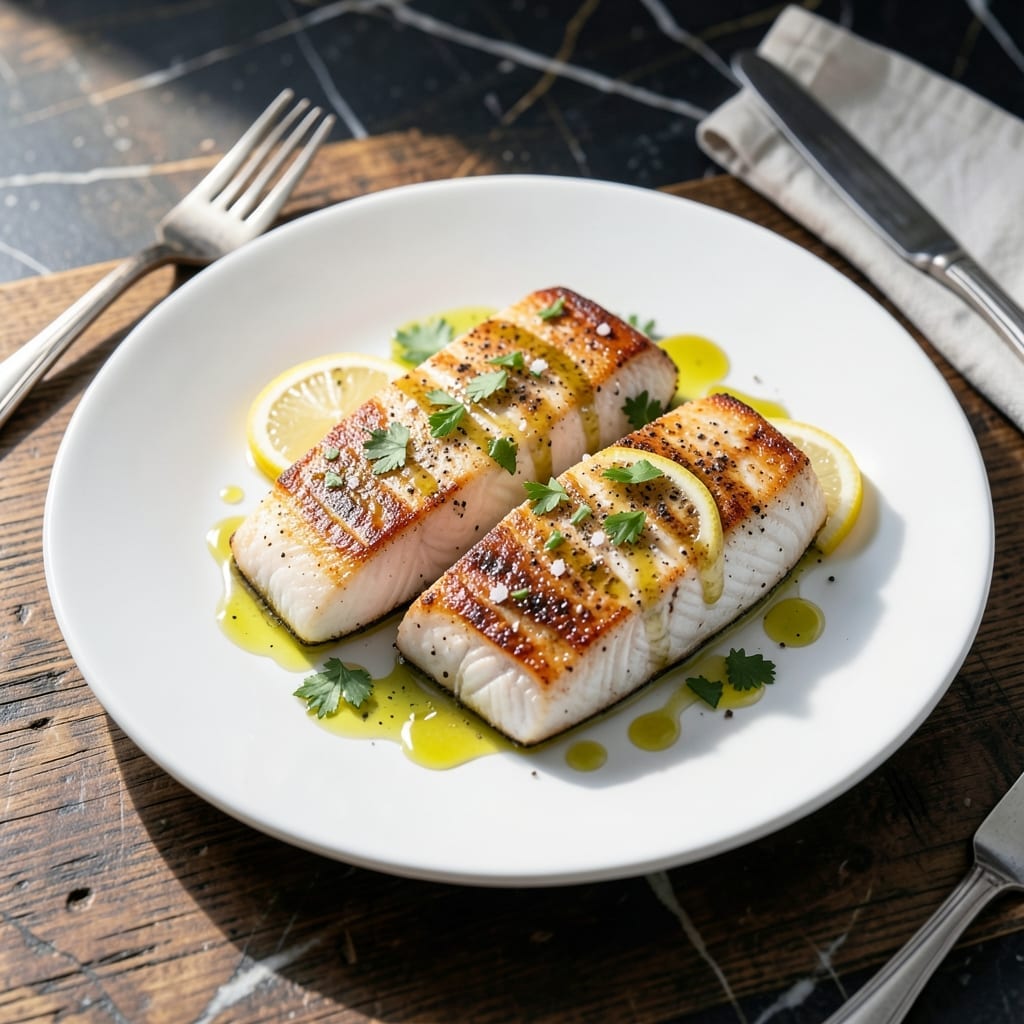
Alaska pollock is the unsung hero of white fish—mild, versatile, and always flaky when cooked properly. This preparation highlights its natural sweetness without overpowering it.
The secret lies in precise timing and temperature control. A hot pan, quick sear, and 15 minutes in the oven ensures perfect texture every time. The lemon butter finish adds brightness without masking the fish’s delicate flavor.
You’ll achieve restaurant-quality results with minimal effort. The fish emerges tender and moist, with a golden crust and a buttery, citrus-infused sauce that pools beautifully on the plate.
Serve with roasted vegetables or rice to soak up every drop of that lemon butter sauce. This method works for any white fish you have on hand.
Ingredients for Alaska Pollock
Eleven ingredients for restaurant-quality white fish with bright, buttery sauce that shines.
| Ingredient | Amount | Notes |
|---|---|---|
| Alaska Pollock Fillets 🐟 | 1 ½ lb | Skinless, boneless, about 1-inch thick |
| Unsalted Butter 🧈 | ½ cup | Divided for cooking and sauce |
| Extra-Virgin Olive Oil 🫒 | 2 tbsp | For high-heat searing |
| All-Purpose Flour 🌾 | ¼ cup | For light dredging |
| Kosher Salt 🧂 | 1 tsp | Plus more to taste |
| Freshly Ground Black Pepper 🌶️ | ½ tsp | Divided for seasoning |
| Garlic Cloves 🧄 | 3 cloves | Minced for lemon butter |
| Fresh Lemon 🍋 | 1 whole | Zested and juiced |
| Fresh Parsley 🌿 | ¼ cup | Chopped, for garnish |
| Dry White Wine 🍷 | ¼ cup | For deglazing pan |
| Shallot 🧅 | 1 whole | Finely diced for sauce |
| Capers 🌿 | 1 tbsp | Drained, optional for briny note |
The pollock is non-negotiable for flakiness—sourced fresh from seafood counters at Whole Foods or local fishmongers beats frozen every time. Look for fillets with translucent, pearlescent flesh and zero fishy odor (a sign of freshness). The thickness matters: aim for 1-inch so the fish cooks through without drying. For the butter, Plugrá or Kerrygold unsalted gives the cleanest flavor.
No white wine? Substitute chicken or vegetable broth with a squeeze of lemon—it’ll lack complexity but works. Shallots can be red onion at half the amount, though the flavor shifts subtly. Skip the capers if you dislike briny notes, but don’t omit the lemon zest—it’s the signature brightness in this dish. For a richer sauce, swap half the butter for ghee (clarified butter has a higher smoke point).
Cook the fish immediately after purchasing for peak freshness. Leftovers? Rare, but they’ll keep for 1-2 days in the fridge. Reheat gently in a low oven to preserve moisture. The lemon butter sauce can be made ahead—store in an airtight container for up to 3 days.
Why You’ll Love This Recipe
- One Pan Wonder: I just coat the pollock in flour, sear it in butter and olive oil, and dinner’s ready in 15 minutes flat.
- Crispy & Buttery: That light flour crust fries up golden, and the butter gives it a rich, melt-in-your-mouth finish.
- Feeds a Crowd: I can stretch four fillets to serve six with sides, and it’s light enough for lunch or a simple weeknight dinner.
- Budget Friendly: Honestly, it’s one of the cheapest fish at the counter, yet it tastes like a million bucks with this method.
Step-by-Step Instructions for Alaska Pollock
Master the technique for achieving delicate, flaky fish with a bright, buttery finish.
Step 1: Prepare and Season the Pollock Fillets
Pat the 1.5 lb Alaska Pollock Fillets completely dry with paper towels. This step is non-negotiable—moisture prevents proper searing. Lightly season both sides with 1 tsp Kosher Salt and half the 0.5 tsp Freshly Ground Black Pepper.
Set up a dredging station: spread the 0.25 cup All-Purpose Flour on a plate. Lightly coat each fillet in flour, shaking off any excess. The flour creates a subtle crust that locks in moisture while adding texture contrast to the finished dish.
Step 2: Sear the Fillets to Golden Perfection
Heat 2 tbsp Extra-Virgin Olive Oil in a large skillet over medium-high heat until it shimmers but doesn’t smoke. Carefully add the dredged fillets, working in batches if necessary to avoid crowding the pan. Cook undisturbed for 3-4 minutes per side until the exterior turns golden brown.
The fillets will release easily from the pan when properly seared. Avoid moving them prematurely—this ensures an even, crisp crust. The internal temperature should reach 145°F when tested with an instant-read thermometer. Transfer the cooked fish to a warm plate and tent loosely with foil.
Step 3: Build the Lemon Butter Sauce
Reduce heat to medium and add 1 tbsp Unsalted Butter from the 0.5 cup Unsalted Butter to the same skillet. Add the finely diced 1 whole Shallot and cook for 2 minutes until translucent. Stir in the minced 3 cloves Garlic Cloves and cook for 30 seconds until fragrant.
Pour in the 0.25 cup Dry White Wine and scrape up any browned bits from the pan bottom with a wooden spoon. Simmer for 2-3 minutes until the liquid reduces by half. This deglazing step captures all the concentrated flavor from searing the fish.
Step 4: Finish with Butter, Lemon, and Capers
Reduce heat to low and whisk in the remaining 0.5 cup Unsalted Butter in small pieces until fully melted and emulsified. Stir in the zest and juice from the 1 whole Fresh Lemon, the drained 1 tbsp Capers, and the remaining 0.5 tsp Freshly Ground Black Pepper.
Taste and adjust seasoning with additional Kosher Salt if needed. The sauce should be creamy, bright, and slightly tangy from the lemon and capers. Remove from heat immediately to prevent the butter from separating.
Step 5: Plate and Garnish
Spoon the lemon butter sauce over the seared pollock fillets, ensuring each portion is generously coated. Garnish with the chopped 0.25 cup Fresh Parsley for a pop of color and freshness. The parsley adds a clean, herbal note that balances the richness of the butter sauce.
Serve immediately while the fish is hot and the sauce is still glossy. The fillets should flake easily with a fork, revealing moist, tender layers beneath the lightly crisped exterior. Pair with steamed vegetables or crusty bread to soak up every bit of the sauce.
Pro Tips For Making Alaska Pollock
- Pat Fillets Dry: I learned this the hard way—moisture on the pollock prevents a good sear. Use a paper towel to dry the fillets thoroughly before dredging in flour.
- Hot Pan, Quick Flip: Crank the heat to medium-high and cook each side for just 3-4 minutes. Pollock flakes apart fast if you overthink it.
- Season the Flour: Mix a teaspoon of kosher salt into the flour before dredging. Sounds simple, but it makes the crust actually taste like something.
- Use Both Fats: Start with olive oil to prevent butter from burning, then add a tablespoon of butter at the end for richness. I was skeptical until I tried it.
Best Sauces and Condiments for This alaska pollock
Classic Lemon Butter
The recipe’s built-in sauce is already a winner, but I often double the batch to have extra for drizzling. The combination of fresh lemon juice, zest, and capers creates a bright, tangy finish that perfectly complements the mild pollock. 🍋
Herb-Infused Variations
Add 1 tbsp fresh dill or tarragon to the lemon butter sauce for a French-inspired twist. These herbs pair beautifully with white fish. I also love stirring in 1 tsp Dijon mustard for a subtle kick that doesn’t overpower the fish.
Creamy Dill Sauce
Mix ½ cup sour cream with 1 tbsp chopped dill, 1 tsp lemon juice, and a pinch of salt. This cooling sauce balances the dish’s richness. For extra depth, add 1 tsp prepared horseradish to give it a gentle heat.
Spicy Aioli
Combine ½ cup mayonnaise with 1 minced garlic clove, 1 tsp sriracha, and 1 tbsp lemon juice. The creamy spice adds contrast to the flaky fish. I use Duke’s mayonnaise for the best texture. 🌶️
Asian-Inspired Ginger
Whisk together 3 tbsp soy sauce, 1 tbsp rice vinegar, 1 tsp grated ginger, and 1 tsp honey. This umami-packed sauce offers a delightful contrast to the buttery fish, with a perfect sweet-savory balance.
Nutrition Facts
Frequently Asked Questions
Can I use frozen fillets instead?
Thaw frozen fillets overnight in the refrigerator before cooking. Pat them extra dry to remove moisture, as frozen fish releases more liquid that can interfere with searing.
What if my sauce breaks?
If the butter separates, remove from heat and whisk vigorously. For stubborn breaks, add 1 tsp cold water while whisking to re-emulsify. Keep heat low to prevent separation.
How do I know when it’s done?
The fish is ready when it reaches 145°F internally and flakes easily with a fork. The flesh should appear opaque and pull apart with slight resistance.
What sides pair well?
Serve with roasted asparagus or steamed green beans to complement the buttery sauce. Crusty bread or jasmine rice soaks up the lemon butter beautifully.

- 6 Egg Cake Recipe with Oil: Light as Air With Buttery Moisture - October 4, 2026
- 4 Bean Casserole Recipe: One-Pan Heartiness With Smoky Paprika Depth - October 4, 2026
- 3-Ingredient Keto Mug Cake Recipe: Microwave Magic in 2 Minutes - October 4, 2026