
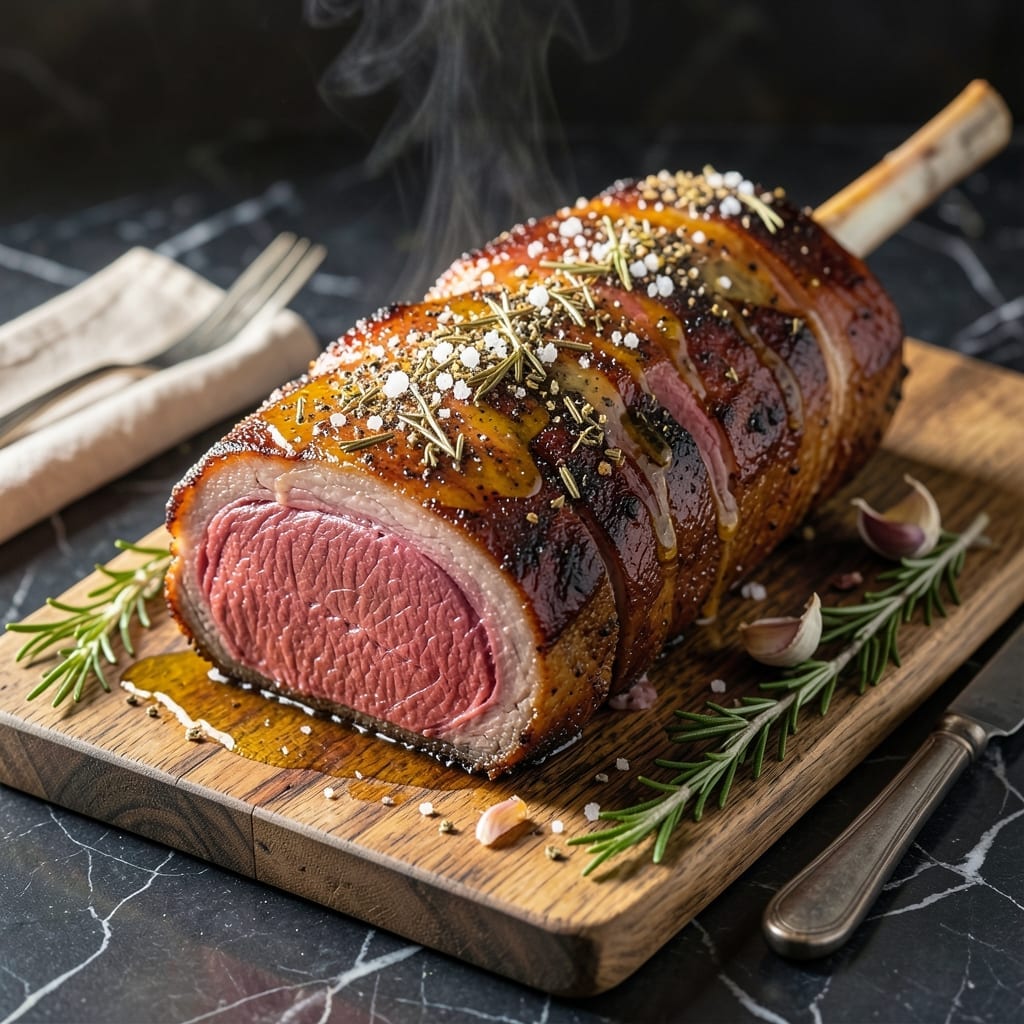
This prime rib method delivers restaurant-quality results at home with a technique I’ve relied on for years. The reverse sear ensures perfectly even doneness from edge to edge, eliminating the guesswork of traditional roasting.
Starting with a low oven temperature allows the meat to cook gently before a final high-heat sear creates a deeply browned crust. This approach guarantees tender, juicy slices every time, whether you’re serving a crowd or a small family gathering.
What sets this apart is the precision—no overcooked edges or underdone centers. The process is straightforward, but the results taste like they came from a steakhouse kitchen. The aroma alone will have everyone gathered around the table.
With a few simple steps and patience, you’ll achieve prime rib perfection that’s worth the wait.
Ingredients for Alton Brown Prime Rib Roast
Quality beef and a handful of pantry spices. That’s the foundation for perfection.
| Ingredient | Amount | Notes |
|---|---|---|
| Bone-In Prime Rib Roast 🥩 | 4 lb | First three ribs, well-marbled |
| Kosher Salt 🧂 | 1 tbsp | Diamond Crystal preferred for even seasoning |
| Freshly Ground Black Pepper 🌶️ | 1 tsp | Coarse grind for texture |
| Garlic Powder 🧄 | 1 tsp | Not garlic salt |
| Onion Powder 🧅 | 1 tsp | Balances the garlic |
| Dried Thyme 🌿 | 1 tsp | Crushed between fingers |
| Dried Rosemary 🍃 | 1 tsp | Crushed to release oils |
| Olive Oil 🫒 | 2 tbsp | High smoke point for searing |
| Unsalted Butter 🧈 | 2 tbsp | For final basting |
| Fresh Rosemary Sprigs 🌿 | 2 whole | For aromatic basting |
| Fresh Thyme Sprigs 🍃 | 2 whole | For aromatic basting |
The roast is non-negotiable—USDA Prime or Choice with good marbling. Bone-in gives more flavor and even cooking. I get mine from ButcherBox or a trusted local butcher. Ask for the first three ribs if you want the classic cut. For the salt, Diamond Crystal is my go-to because it adheres better than Morton’s. Don’t skip the fresh herbs for the final sear—they add that restaurant-level aroma.
No prime rib? Ribeye roast is your backup (same cut, just boneless). Swap dried herbs for fresh at one-third the amount. Garlic and onion powder can be replaced with 1 tbsp each of minced fresh garlic and onion, but the powders give more even coverage. If you only have table salt, use half the amount—it’s much denser.
The roast can rest in the fridge uncovered for 12-24 hours after seasoning for deeper flavor. Cooked leftovers? Slice thin for sandwiches, store in an airtight container for 4-5 days. Freezes beautifully too—wrap tight to prevent freezer burn.
Why You’ll Love This Recipe
- I’ll be real: after the initial seasoning, it’s just waiting for the oven to do all the work.
- Five-Ingredient Magic: Honestly, it’s just salt, pepper, garlic powder, onion powder, and the roast—no fancy prep or hard-to-find spices.
- Weekend Showstopper: That bone-in cut with the dry rub creates a crust so flavorful, it’s my go-to for holiday dinners.
- Feeds a Crew: One roast serves eight easily, with leftovers that make killer sandwiches the next day.
Step-by-Step Instructions for Reverse Seared Prime Rib Roast
This reverse sear method delivers perfectly even doneness from edge to edge every single time.
Step 1: Season and Prep the Roast
Pat the 4 lb bone-in prime rib roast dry with paper towels—this is non-negotiable for good browning. I crush the 1 tsp dried thyme and 1 tsp dried rosemary between my fingers to release their oils before mixing them with 1 tbsp kosher salt, 1 tsp freshly ground black pepper, 1 tsp garlic powder, and 1 tsp onion powder.
Rub this mixture all over the roast, pressing it in so it adheres. The Diamond Crystal salt distributes evenly and won’t over-salt the meat. Let the seasoned roast sit uncovered in the fridge for 1 hour or up to 24 hours—this dries the surface for better browning.
Step 2: Low and Slow in the Oven
Preheat your oven to 250°F—low and steady wins the race here. Place the roast bone-side down on a wire rack set over a baking sheet. The rack ensures air circulates all around for even cooking.
Roast until the internal temperature reaches 110°F for medium-rare (about 1.5 to 2 hours for a 4 lb roast). Use a reliable instant-read thermometer and check the temp in the thickest part, avoiding the bone. The meat should look dull and feel slightly soft when pressed—this means it’s ready for the sear.
Step 3: High-Heat Sear for the Crust
Remove the roast from the oven and increase the temperature to 500°F. While the oven heats, brush the roast all over with 2 tbsp olive oil. This high-smoke-point oil will help create a deep, flavorful crust.
Once the oven hits 500°F, return the roast and sear for 10-12 minutes until deeply browned and the internal temperature reaches 125°F for medium-rare. Watch closely—you want a dark, caramelized crust, not burnt. The aroma will be incredible at this stage.
Step 4: Baste with Herb Butter and Rest
Transfer the roast to a cutting board and immediately top with 2 tbsp unsalted butter, 2 whole fresh rosemary sprigs, and 2 whole fresh thyme sprigs. The residual heat will melt the butter and infuse it with the herbs’ aroma.
Tent loosely with foil and let it rest for 15-20 minutes. This is crucial—the juices redistribute, and the temperature will rise another 5-10°F (carryover cooking). Slice against the grain and serve with the herbed pan juices spooned over the top. The crust should crackle when cut, and the inside will be rosy and tender.
Pro Tips For Making Alton Brown Prime Rib Roast
- Salt the Night Before: Coat that prime rib with kosher salt at least 12 hours ahead—this draws out moisture then reabsorbs it, seasoning deep into the meat. I learned this the hard way after my first dry, bland roast.
- Start High, Finish Low: Sear the roast at 500°F for 15 minutes to get that crust, then drop to 225°F to slow-cook it evenly. After burning the outside of my first attempt, I finally figured out this is the only way.
- Skip the Pre-Cut: Buy a whole bone-in roast and cut it yourself if needed—pre-cut pieces dry out faster. Sounds weird, but it works: the bone acts as an insulator.
- Rest Under Foil: Tent the cooked roast with foil and let it rest 30 minutes before slicing. My grandmother swore by this, and she was right: the juices redistribute, or you’ll be serving them on the cutting board instead.
Troubleshooting This Dish
Uneven Cooking
If you notice one end cooking faster, rotate the roast 180 degrees halfway through the low-temperature phase. This ensures even heat distribution, especially in ovens with hot spots. I always use the middle rack for the most consistent results.
Over-Browning Crust
When searing at 500°F, watch closely after 8 minutes. If the crust darkens too quickly, tent with foil and finish in the oven. The goal is a deep mahogany color, not blackened. A ThermoWorks thermometer helps track the rise to 125°F precisely. 🌡️
Stalled Temperature
If the internal temp plateaus during low cooking, don’t panic. This is normal—just be patient. The stall usually lasts 30-45 minutes as moisture evaporates. Resist the urge to crank the heat; trust the process.
Dry Meat
Overcooking is the main culprit. Pull the roast at 110°F for medium-rare before searing. Always rest for 15-20 minutes after cooking—the juices redistribute, preventing a dry final product.
Weak Crust
For a better sear, ensure the roast is completely dry before the high-heat phase. Pat it again with paper towels if needed. Brush with 2 tbsp olive oil right before searing to guarantee a crisp, flavorful crust every time.
Resting Issues
Never skip resting—it’s non-negotiable. If you slice too soon, juices will spill onto the cutting board. Tent loosely with foil to keep it warm while resting. The internal temp will climb 5-10°F during this time. 💡
Nutrition Facts
Frequently Asked Questions
Why use reverse sear for prime rib?
Reverse searing ensures even doneness from edge to edge by cooking low and slow first. This method prevents overcooked edges while allowing a perfect crust to form during the final high-heat sear.
Can I use a boneless roast?
Yes, but bone-in adds more flavor and helps with even cooking. For boneless, reduce cooking time slightly and monitor the internal temperature closely to avoid overcooking.
How do I know when it’s done?
Use an instant-read thermometer to check for 125°F internal temperature for medium-rare. The meat will continue cooking while resting, rising another 5-10°F.
What if my crust isn’t brown enough?
Ensure the roast is completely dry before searing and brush with 2 tbsp olive oil. If needed, extend the sear time by 2-3 minutes at 500°F.

- 6 Egg Cake Recipe with Oil: Light as Air With Buttery Moisture - October 4, 2026
- 4 Bean Casserole Recipe: One-Pan Heartiness With Smoky Paprika Depth - October 4, 2026
- 3-Ingredient Keto Mug Cake Recipe: Microwave Magic in 2 Minutes - October 4, 2026