
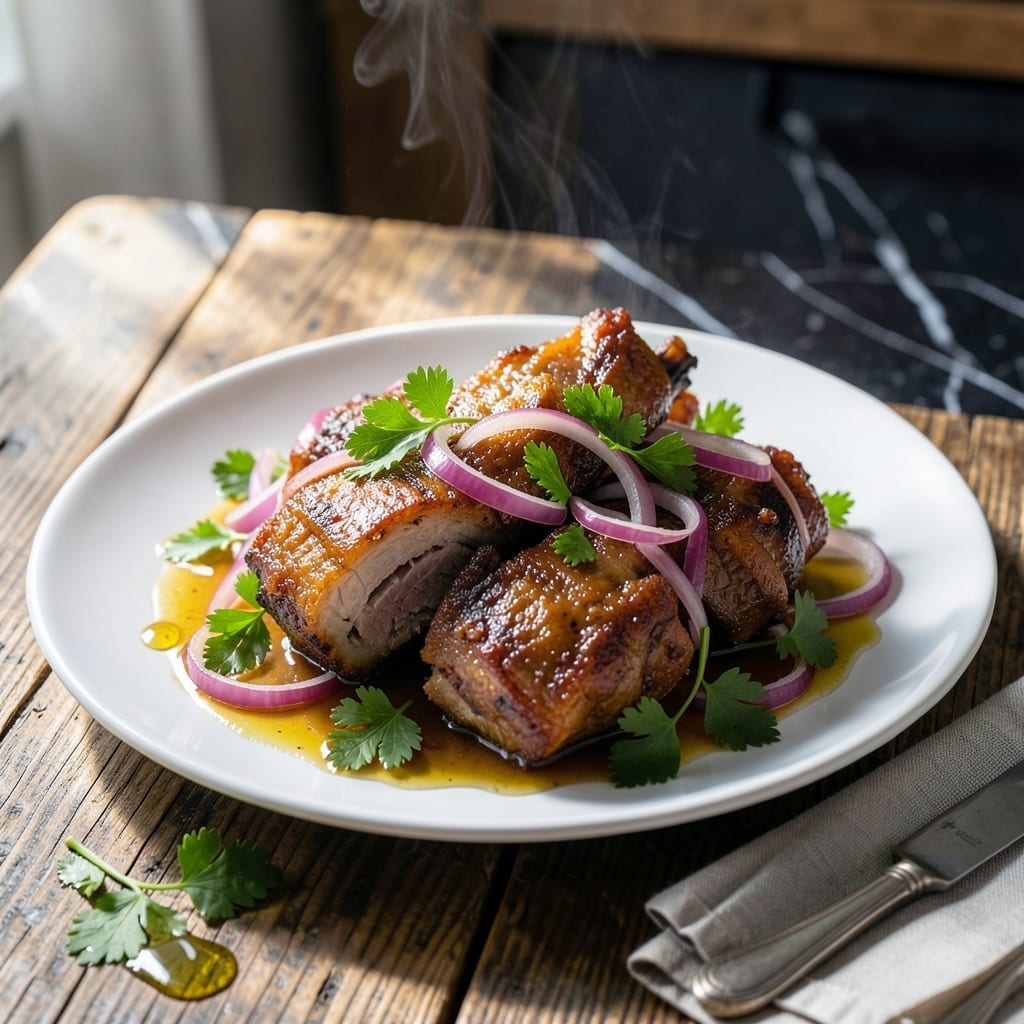
This recipe transforms tough pork hocks into tender, flavor-packed morsels through a slow vinegar braise. The process softens the meat while infusing it with bold spice notes that cut through the richness.
The brine is the foundation, balancing tangy vinegar with aromatic spices and a touch of sweetness. Proper cooking time ensures the connective tissue breaks down completely, delivering fall-off-the-bone results.
What emerges is meat that’s both succulent and sharply seasoned, with a texture that’s impossible to achieve through other methods. The vinegar preserves the pork while enhancing its natural depth.
Serve chilled for the best texture. This technique guarantees consistent quality every time.
Ingredients for Pickled Pork Hocks
Bold spices and tangy vinegar transform pork hocks into something extraordinary. Nothing else like it.
| Ingredient | Amount | Notes |
|---|---|---|
| Pork Hocks 🐖 | 4 whole | Smoked or fresh, about 1.5 lb each |
| White Vinegar 💧 | 4 cups | 5% acidity preferred |
| Apple Cider Vinegar 🍏 | 2 cups | For balanced fruitiness |
| Water 💧 | 2 cups | Filtered for clarity |
| Brown Sugar 🍚 | ½ cup | Light or dark variety |
| Kosher Salt 🧂 | ½ cup | Diamond Crystal brand preferred |
| Black Peppercorns 🌶️ | 2 tbsp | Whole, lightly crushed |
| Mustard Seeds 🌿 | 1 tbsp | Yellow or brown variety |
| Bay Leaves 🍃 | 4 whole | Dried, whole leaves |
| Garlic Cloves 🧄 | 8 cloves | Peeled, smashed |
| Red Pepper Flakes 🔥 | 1 tsp | Adjust for heat preference |
| Juniper Berries 🌿 | 10 whole | Lightly crushed |
| Cloves 🌰 | 6 whole | Whole, not ground |
| Yellow Onion 🧅 | 1 whole | Peeled, quartered |
The pork hocks are non-negotiable here. Smoked hocks from a quality butcher add depth that fresh can’t match, though fresh works in a pinch. Look for 1.5 lb specimens—smaller ones dry out, larger take forever. The vinegar balance is key: 5% acidity white vinegar is standard, but don’t skip the apple cider for that subtle fruit note. Whole Foods or a specialty grocer will have the spices in bulk.
No juniper berries? Add 1 tsp of gin—same botanical base. Missing mustard seeds? Dijon mustard at 1 tbsp works, though texture differs. The brown sugar can be swapped for honey or maple syrup, but sugar’s neutrality lets the vinegar shine. For heat, fresh jalapeños can replace red pepper flakes. Always use whole spices—their oils release slowly during the long braise.
The brine keeps in the fridge for 1 week before cooking. Once pickled, hocks stay good for 10 days refrigerated or 3 months frozen. Store in their liquid to maintain moisture. The flavor intensifies over time, so resist eating immediately—wait at least 24 hours for optimal results.
Why You’ll Love This Recipe
- Set It and Forget: It’s just pork hocks, vinegar, sugar, and water—mix, wait, done. Honestly, the hardest part is remembering where I put the jars.
- Tangy Sweet Bite: The apple cider vinegar and brown sugar create this ridculously good balance that hits both savory and sweet in one bite.
- Weekend Meal Prep: I make a big batch Sunday evening and it’s ready for sandwiches, salads, or straight from the jar by Tuesday.
- Pantry Stretch: Pork hocks are cheap, and the rest is stuff I already have. Feeds us for days without breaking the budget.
Step-by-Step Instructions for Pickled Pork Hocks
This method ensures the pork hocks emerge tender with complex, well-balanced vinegar and spice flavors.
Step 1: Prepare the Brine with Aromatic Spices
In a large stockpot, combine the 4 cups white vinegar, 2 cups apple cider vinegar, and 2 cups water. This vinegar blend provides both sharpness and subtle fruitiness. Add the 0.5 cup brown sugar and 0.5 cup kosher salt, stirring until fully dissolved.
The sugar balances the acidity while the salt begins the curing process. This ratio of liquids to solids ensures proper penetration without overpowering the meat.
Step 2: Toast and Bloom the Whole Spices
Lightly crush the 2 tbsp black peppercorns, 10 whole juniper berries, and 6 whole cloves to release their essential oils. Add these to the pot along with the 1 tbsp mustard seeds, 4 whole bay leaves, and 1 tsp red pepper flakes.
Toast the spices in the liquid over medium heat for 3-4 minutes until fragrant. This step deepens their flavors before they infuse into the pork hocks during brining.
Step 3: Incorporate Aromatics and Pork Hocks
Add the 8 cloves garlic cloves (smashed) and 1 whole yellow onion (quartered) to the brine. The garlic will mellow into sweetness while the onion adds subtle depth. Submerge all 4 whole pork hocks in the liquid, ensuring they are fully covered.
If the pork hocks float, use a plate or weight to keep them submerged. This complete immersion guarantees even flavor distribution throughout the meat during the brining process.
Step 4: Simmer Until Fork-Tender
Bring the mixture to a boil, then reduce heat to low. Cover and simmer for 2.5-3 hours, turning the pork hocks occasionally. The low and slow cooking method breaks down the collagen in the hocks, transforming tough connective tissue into silky tenderness.
You’ll know they’re ready when a fork slides in with minimal resistance and the meat begins to pull away from the bone. The vinegar solution will have taken on a rich, meaty depth while maintaining its tangy character.
Step 5: Cool and Store for Optimal Flavor Development
Remove the pot from heat and let the pork hocks cool in the liquid to room temperature. This gradual cooling allows the meat to reabsorb some of the brining liquid, enhancing both moisture and flavor.
Transfer the pork hocks and brine to airtight containers and refrigerate for at least 24 hours before serving. The flavors will deepen and meld during this resting period, with the vinegar’s sharpness mellowing into a complex, well-rounded tang.
Pro Tips For Making Pickled Pork Hocks
- Parboil First: I learned this the hard way—always parboil the hocks for 10-15 minutes before pickling to remove impurities and keep the brine clean.
- Balance Your Vinegars: Use a 1:1 ratio of white vinegar to apple cider vinegar for sharpness with depth—any more white vinegar and the flavor gets harsh.
- Skip Raw Sugar: Dissolve the brown sugar in the warm brine first or it’ll sink and caramelize unevenly at the bottom of the jar.
- Rest 24 Hours: Sounds weird, but it works: the hocks need a full day in the fridge to soak up the pickling liquid—taste them after 12 hours and you’ll see the difference.
Pro Cooking Tips for pickled pork hocks
Brine Penetration
For maximum flavor, I ensure the pork hocks are fully submerged in the brine. Use a plate or food-safe weight to keep them under the liquid during the entire 2.5-3 hour simmer. This guarantees even flavor distribution throughout the meat. 💡
Spice Toasting
Lightly crushing the peppercorns, juniper berries, and cloves releases their oils. Toast them in the vinegar mixture for 3-4 minutes to bloom their flavors before adding the pork hocks.
Low and Slow Cooking
Simmer the hocks gently over low heat—this slow process breaks down collagen into gelatin, giving that signature fall-off-the-bone texture. Turning them occasionally ensures even cooking.
Resting Time
After cooking, let the hocks cool in their brine to room temperature. This step allows the meat to reabsorb liquid, keeping it moist and flavorful. Refrigerate for at least 24 hours before serving.
Flavor Development
The vinegar’s sharpness mellows during the resting period, creating a balanced, tangy profile. I always wait the full 24 hours—the flavors improve noticeably with time. ✨
Storage Tips
Store the hocks in their brine in airtight containers. They’ll keep in the fridge for up to 10 days or can be frozen for 3 months without losing quality.
Nutrition Facts
Frequently Asked Questions
What’s the best vinegar ratio for the brine?
Use 4 cups white vinegar to 2 cups apple cider vinegar for balanced tang. The white vinegar provides sharpness while the cider adds subtle fruitiness. This ratio ensures proper acidity without overpowering the meat.
How long should the hocks rest before eating?
Refrigerate for at least 24 hours in the brine after cooking. This resting period lets flavors meld and the vinegar’s sharpness mellow into a complex tang. The texture improves significantly with time.
Can I use fresh pork hocks instead of smoked?
Yes, but smoked hocks add depth that fresh can’t match. If using fresh, consider adding 1 tsp liquid smoke to the brine for similar complexity. Fresh hocks may need slightly less simmering time.
What if my brine isn’t fully covering the hocks?
Use a plate or food-safe weight to keep them submerged. Full immersion is crucial for even flavor distribution and proper pickling. Check periodically during the 2.5-3 hour simmer.

- 6 Egg Cake Recipe with Oil: Light as Air With Buttery Moisture - October 4, 2026
- 4 Bean Casserole Recipe: One-Pan Heartiness With Smoky Paprika Depth - October 4, 2026
- 3-Ingredient Keto Mug Cake Recipe: Microwave Magic in 2 Minutes - October 4, 2026