
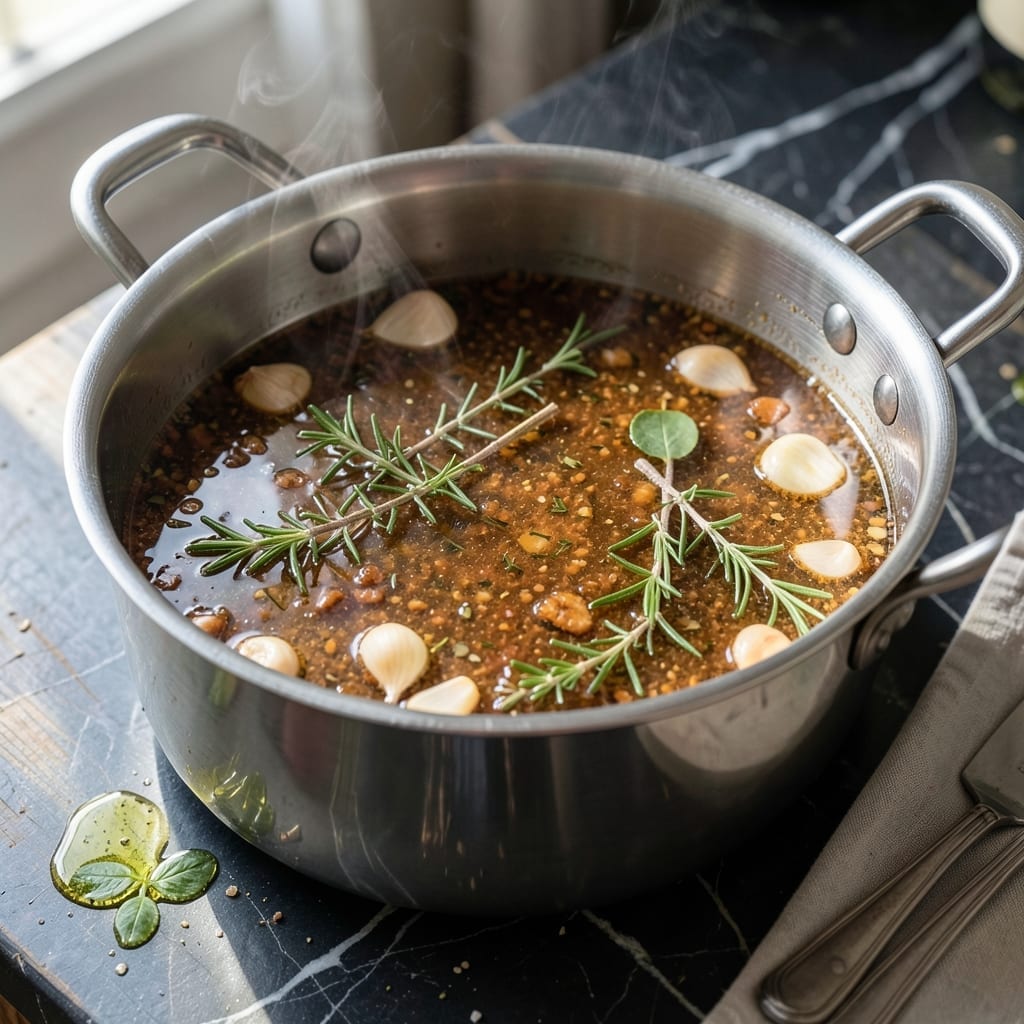
This brine transforms turkey from dry to juicy with a proven salt-sugar balance that locks in moisture and flavor. The method is simple yet precise, ensuring consistent results every time.
With just water, salt, sugar, and aromatics, you’ll create a flavor-packed solution that penetrates deep into the meat. It’s the foundation for perfectly seasoned turkey with minimal effort.
Ingredients for Alton Brown Recipe for Turkey Brine
Simple yet precise ingredients transform turkey from dry to juicy with proven results.
| Ingredient | Amount | Notes |
|---|---|---|
| Water 💧 | 2 cups | Cold, for base solution |
| Kosher Salt 🧂 | ½ cup | Diamond Crystal preferred for consistency |
| Brown Sugar 🍚 | ½ cup | Light or dark variety |
| Fresh Rosemary 🌿 | 2 tbsp | Chopped, stems discarded |
| Fresh Thyme 🍃 | 2 tbsp | Chopped, stems discarded |
| Garlic Cloves 🧄 | 4 cloves | Smashed, skins on |
| Black Peppercorns 🌶️ | 1 tbsp | Whole, lightly crushed |
| Bay Leaves 🍁 | 2 whole | Dried, whole leaves |
| Juniper Berries 🫒 | 1 tsp | Optional, for depth |
| Orange Peel 🍊 | 1 piece | Dried, no pith |
The salt is the workhorse here. Diamond Crystal kosher salt is the gold standard for brining—its coarse texture dissolves evenly without over-salting. Brown sugar balances the salt; light or dark both work, but dark adds a hint of molasses depth. Fresh herbs are non-negotiable for aroma—Whole Foods or a local farmers market will have the most vibrant sprigs. Look for rosemary and thyme with firm stems and bright green leaves.
No fresh herbs? Dried at one-third the amount works, but the flavor won’t penetrate as deeply. Juniper berries are a pro move (find them at Penzeys or specialty spice shops), but skip them if you can’t source them. Bay leaves can be substituted with an extra sprig of thyme. The orange peel adds brightness—use a microplane if you have fresh oranges instead of dried.
This brine keeps for 1 week refrigerated in a sealed container. The aromatics lose potency after 24 hours, so use it fresh for best results. Label it clearly—this isn’t a drink. For large turkeys, scale up proportionally but keep the ratio of salt to sugar to water the same.
Why You’ll Love This Recipe
- Five-Minute Mix: I dump everything in a pot, stir until the salt and sugar dissolve, and boom—brine’s ready.
- Herb-Kissed Juiciness: That rosemary and thyme combo works magic, leaving every bite of turkey crazy moist and fragrant.
- Holiday Lifesaver: I brine the bird the night before, so Thanksgiving morning is just roast and relax.
- Budget Stretch: One cheap bag of salt, a little sugar, and fresh herbs I already have—feeds a crowd without breaking the bank.
Step-by-Step Instructions for Turkey Brine
This method ensures maximum flavor penetration and moisture retention for perfectly juicy results.
Step 1: Bloom the Aromatics
In a medium saucepan, combine the 2 cups Water, 0.5 cup Kosher Salt, and 0.5 cup Brown Sugar. Heat over medium-high heat until the salt and sugar fully dissolve, stirring occasionally.
Add the 1 tbsp Black Peppercorns, 2 whole Bay Leaves, 1 tsp Juniper Berries, and 1 piece Orange Peel. Bring to a gentle simmer and cook for 3-4 minutes to release their essential oils and infuse the brine base.
This step extracts the maximum flavor from the spices and citrus, ensuring they permeate the turkey during the brining process. The mixture should become fragrant and slightly syrupy as the sugar caramelizes slightly.
Step 2: Incorporate Fresh Herbs and Garlic
Remove the saucepan from heat and stir in the 2 tbsp Fresh Rosemary and 2 tbsp Fresh Thyme. The residual heat will gently wilt the herbs without destroying their delicate flavors.
Add the 4 cloves Garlic Cloves (smashed with skins on) to the mixture. The skins will protect the cloves from becoming bitter while still infusing the brine with their pungent aroma. Let this mixture steep for 10 minutes.
The herbs should turn a vibrant green and release their aromatic oils into the liquid. You’ll notice the brine takes on a rich, earthy fragrance that signals it’s ready for use.
Step 3: Cool the Brine Completely
Transfer the hot brine mixture to a large container or bowl. Add enough ice or cold water to bring the total volume to what you need for your turkey (typically 1 gallon for a 12-14 pound bird).
Stir well to combine and ensure the temperature drops to 40°F or below before adding your turkey. This cooling step is critical—adding meat to warm brine will start cooking it unevenly and can promote bacterial growth.
The brine should feel cold to the touch and look slightly cloudy from the dissolved salt and sugar. The herbs and spices will settle at the bottom, but their flavors will be fully distributed throughout the liquid.
Step 4: Submerge and Brine the Turkey
Place your turkey in a brining bag or large container and pour the cooled brine over it. Make sure the bird is completely submerged—add more cold water if needed to cover it entirely.
Refrigerate and brine for 12-24 hours, turning the turkey once or twice during this period to ensure even flavor distribution. The meat will absorb the brine, becoming noticeably plumper and more moist.
For best results, brine in the coldest part of your refrigerator. The turkey should feel firm but yielding when pressed, and the skin may take on a slightly translucent appearance as it absorbs the liquid.
Pro Tips For Making Alton Brown Recipe For Turkey Brine
- Chill the Brine: Bring the brine to room temperature before adding the turkey, or you’ll end up with a cold bird that won’t absorb the flavors properly—I learned this the hard way after my first dry turkey.
- Use Fine Kosher Salt: Not all kosher salts are the same; Diamond Crystal dissolves faster than Morton, and since this brine relies on even distribution, stick with the finer grain to avoid undissolved bits clinging to the bird.
- Bruise the Herbs: Roll the rosemary and thyme sprigs under your palm or give them a light smash with a knife handle—it releases the oils and actually changes the outcome of the brine’s aroma.
- Submerge Completely: If part of the turkey floats above the brine, it won’t get seasoned evenly; use a plate or a weighted bag to keep it fully submerged—yes, even if you’re impatient like me.
Regional Styles of This Recipe
🍖 Texas Style
In Texas, turkey brine often leans into bold, smoky flavors. A dry brine with coarse salt and black pepper is common, sometimes enhanced with garlic and onion powders. For wet brines, apple cider vinegar and brown sugar add tang and sweetness. Smoking with pecan or hickory wood at a steady 225°F to 250°F ensures tender, flavorful meat.
🍯 Carolina Style
Carolina’s take on turkey brine highlights its love for vinegar-based profiles. A wet brine might include apple cider vinegar, salt, and a touch of cayenne for heat. After brining, the turkey is often slow-roasted or smoked, then served with a tangy, mustard-based sauce. This style reflects the region’s historical ties to pit-cooked meats and bold, sharp flavors.
🥘 Kansas City Style
Kansas City’s approach is all about balance—sweet, smoky, and savory. A brine here may feature molasses or maple syrup alongside salt and spices. The turkey is typically smoked low and slow with cherry or oak wood, then glazed with a thick, sweet barbecue sauce. This style mirrors the city’s famous barbecue culture, where sauce is king.
🔥 Memphis Style
Memphis favors a dry rub-heavy brine, with salt, paprika, and celery seed taking center stage. The turkey is often grilled or smoked for a crispy skin, and served with a tomato-based sauce that’s slightly sweeter than Carolina’s. This method pays homage to the city’s dry-rubbed rib tradition, emphasizing bold, spicy flavors.
Nutrition Facts

- 303 Sauce Recipe: Smoky Chipotle and Tomato Base for Bold Flavors - October 4, 2026
- 00 Flour Pasta Recipe No Egg: Al Dente in 10 Minutes Without Gluten - October 4, 2026
- 2 Ingredient Funnel Cake Recipe: Crispy Bites With Zero Fuss - October 4, 2026