
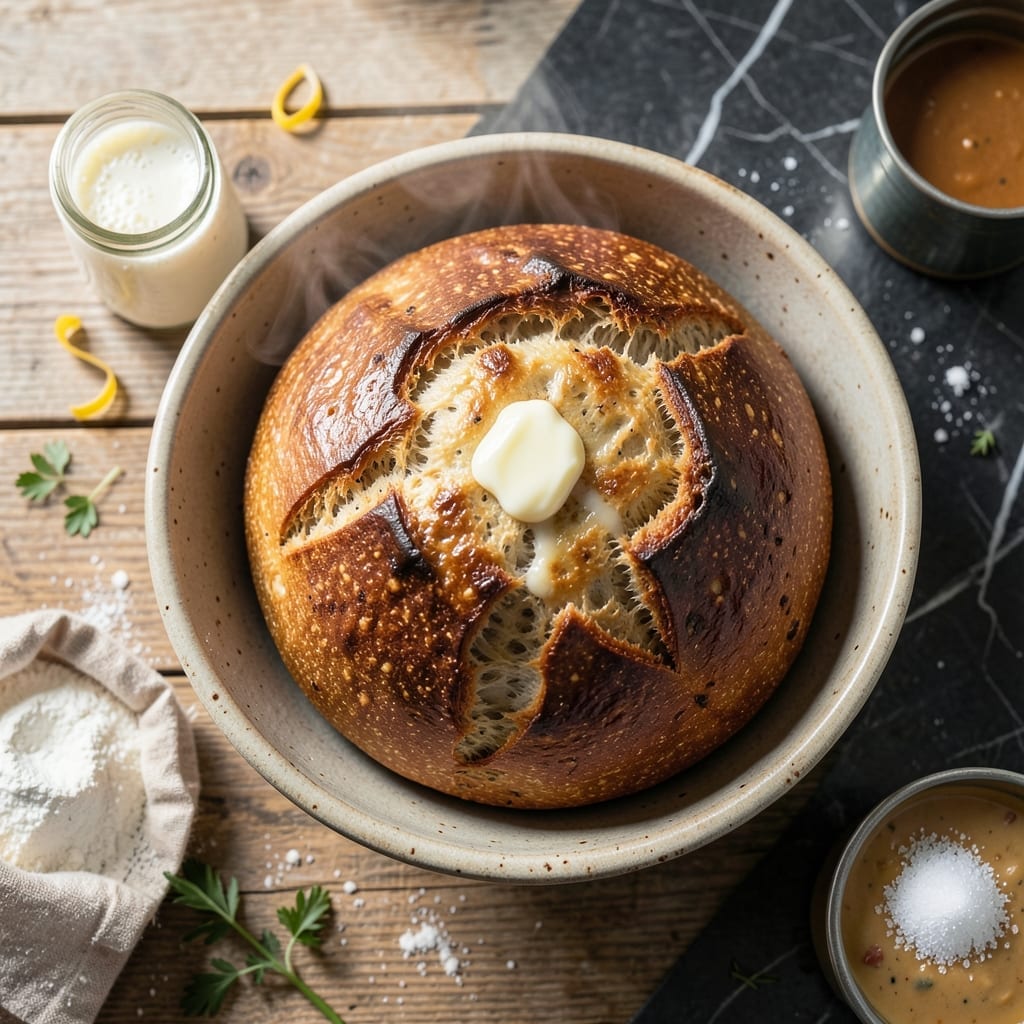
There’s something special about baking bread the traditional Amish way—simple ingredients, a live starter, and a method passed down through generations.
This recipe produces a soft, slightly sweet loaf with a golden crust, all thanks to a natural starter that develops depth of flavor over time. The process is straightforward, yet the results taste like they came from a country kitchen.
You’ll use basic pantry staples, but the starter does the heavy lifting, creating a texture that’s tender and light. The aroma alone makes the effort worthwhile.
Perfect for sandwiches, toast, or serving warm with butter. The starter can be maintained for years, making this a recipe to cherish.
Ingredients for Amish Bread Recipe with Starter
Basic pantry ingredients plus a live starter create this tender, sweet homemade loaf.
| Ingredient | Amount | Notes |
|---|---|---|
| Amish Starter 🍞 | 1 cup | Active and bubbly |
| All-Purpose Flour 🌾 | 3 cups | Plus extra for dusting |
| Granulated Sugar 🍚 | ½ cup | For slight sweetness |
| Salt 🧂 | 1 tsp | Kosher or fine sea salt |
| Unsalted Butter 🧈 | ¼ cup | Melted and cooled |
| Large Eggs 🥚 | 2 whole | Room temperature preferred |
| Warm Milk 🥛 | 1 cup | Whole milk recommended |
| Baking Soda 🧂 | 1 tsp | For leavening |
| Baking Powder 🧂 | 1 tsp | Double-acting preferred |
| Vanilla Extract 💧 | 1 tsp | Pure extract for best flavor |
| Cinnamon 🌿 | 1 tsp | Ground for warmth |
| Nutmeg 🌰 | ¼ tsp | Freshly grated if possible |
The starter is the soul of this bread. Source it from a trusted friend or make your own with flour, sugar, and time—expect 5-7 days for a robust culture. Use King Arthur Flour for the all-purpose; it’s consistent and reliable. The sugar adds subtle sweetness, but don’t overdo it—this isn’t dessert. Butter should be unsalted so you control the salt content (and flavor) yourself.
No starter yet? Sourdough discard works as a substitute, though the flavor will differ slightly. Out of whole milk? 2% or oat milk are fine, but whole milk gives the richest texture. Skip the cinnamon and nutmeg if you prefer a plainer loaf. For extra richness, swap vanilla for almond extract—it pairs beautifully with the sweetness.
Store the starter in the fridge between uses—feed it weekly to keep it alive. Baked loaves stay fresh wrapped in cloth for 2-3 days, or freeze slices for up to 3 months. Always bring cold starter to room temperature before baking.
Why You’ll Love This Recipe
- Mix & Forget: I toss the starter, flour, sugar, and butter together the night before and let it rise overnight—no kneading, no fuss.
- Buttery Sweetness: The melted butter and sugar in the starter give it that rich, caramelized taste that’s hard to resist.
- Feeds a Crowd: One batch makes two loaves, so I always have one to share and one to stash in the freezer.
Step-by-Step Instructions for Amish Bread With Starter
This method ensures a soft, sweet loaf with the perfect crust every time.
Step 1: Activate and Combine the Wet Ingredients
In a large mixing bowl, I start with the 1 cup Amish Starter—make sure it’s active and bubbly. To this, I add the 0.5 cup Granulated Sugar, 0.25 cup Unsalted Butter (already melted and cooled), 2 whole Large Eggs, and 1 cup Warm Milk.
Using a whisk or wooden spoon, I mix these until the sugar begins to dissolve and the mixture looks smooth. This step ensures the fats and sugars are evenly distributed, which creates a uniform texture in the final loaf.
Step 2: Incorporate Dry Ingredients Gently
In a separate bowl, I combine the 3 cups All-Purpose Flour, 1 tsp Salt, 1 tsp Baking Soda, 1 tsp Baking Powder, 1 tsp Cinnamon, and 0.25 tsp Nutmeg. I whisk them together to break up any lumps and ensure the leavening agents are evenly dispersed.
Next, I gradually add the dry mixture to the wet ingredients, stirring just until the flour is incorporated. I avoid overmixing—this prevents the bread from becoming dense. A few small lumps are fine; they’ll dissolve during the rest period.
Step 3: Let the Dough Rest and Rise
I cover the bowl with a clean kitchen towel and let the dough rest at room temperature for 2 hours. During this time, the Amish starter and leavening agents work together to help the dough rise and develop flavor.
I look for the dough to nearly double in size and become slightly puffy. If my kitchen is cool, I might extend the rest time by 30 minutes to ensure proper fermentation. This step is crucial for a light, airy texture.
Step 4: Shape and Prepare for Baking
After the dough has risen, I gently stir it down to release any air bubbles. I then transfer it to a greased 9×5-inch loaf pan, smoothing the top with a spatula. The dough will be sticky, so I use a lightly floured spatula to help shape it without overworking.
I let the dough rest in the pan for another 30 minutes while I preheat the oven to 350°F. This final rise helps the loaf achieve a good height and even texture.
Step 5: Bake to Golden Perfection
I bake the loaf in the preheated oven for 45-50 minutes, or until the top is deep golden brown and a toothpick inserted into the center comes out clean. If the top starts browning too quickly, I tent the pan loosely with aluminum foil.
Once done, I remove the bread from the oven and let it cool in the pan for 10 minutes before transferring it to a wire rack. I allow it to cool completely before slicing to ensure it holds its shape and texture. The result is a soft, slightly sweet loaf with a tender crumb and warm spice notes.
Pro Tips For Making Amish Bread Recipe With Starter
- Feed Your Starter: I learned this the hard way—your Amish starter needs 3 feedings (every 12 hours) before using, or the bread will taste sour and flat.
- Soften That Butter: Pull your unsalted butter out 1 hour before mixing—cold butter tears the dough, while room temp blends smooth as can be.
- Skip the Overmixing: After adding flour, mix just until combined—overworking the dough makes the bread tough, and nobody wants that.
- Use a Light Pan: My grandmother swore by this, and she was right: a light-colored metal pan prevents the bottom from burning before the center cooks through.
Flavor Customization for This Recipe
Sweet Enhancements
For a sweeter loaf, I increase the granulated sugar to ¾ cup and add ½ cup raisins or chopped dried apricots soaked in warm water. This gives the bread a fruit-studded richness that pairs wonderfully with the cinnamon and nutmeg. 💛
Savory Twist
If you prefer a less sweet version, reduce the sugar to ¼ cup and add ½ cup shredded cheddar cheese and 2 tbsp chopped fresh chives. The cheese melts into the dough, creating a delightful savory depth. I love this for breakfast toast.
Spiced Variations
For extra warmth, I add ½ tsp ground cardamom or ¼ tsp ground cloves alongside the cinnamon. These spices complement the existing flavors without overpowering them. Cardamom adds a citrusy note that brightens the loaf. ✨
Nutty Additions
Stir in ½ cup chopped walnuts or pecans for a hearty crunch. Toast the nuts first in a dry pan over medium heat for 5 minutes to enhance their flavor. They add texture and a rich, buttery taste.
Citrus Zest Boost
Add 1 tbsp orange or lemon zest to the wet ingredients for a fresh, citrusy lift. The zest brightens the sweetness and adds a subtle tang. This works especially well if you’re serving the bread with honey butter.
Herb-Infused
For a unique twist, mix in 1 tbsp fresh rosemary or thyme leaves. The herbs add an earthy aroma that pairs surprisingly well with the sweet and spiced notes in this traditional Amish creation.
Nutrition Facts
Frequently Asked Questions
How do I know my starter is ready to use?
Your starter should be active and bubbly, with a slightly tangy aroma. Look for it to double in size within 4-6 hours after feeding. If it’s sluggish, feed it again and wait another day.
Can I use a different pan size?
A 8×4-inch pan works but may require 5-10 extra minutes of baking. For even results, fill the pan no more than 2/3 full. Always check for doneness with a toothpick.
Why did my bread turn out dense?
Overmixing the dough or using expired leavening agents are common culprits. Ensure your baking soda and powder are fresh, and stir just until combined. Let the dough rise fully before baking.
How long can I keep the starter unused?
Store it in the fridge and feed weekly. Without feeding, it can last 1-2 weeks but may develop off-flavors. For best results, maintain a regular feeding schedule.

- 6 Egg Cake Recipe with Oil: Light as Air With Buttery Moisture - October 4, 2026
- 4 Bean Casserole Recipe: One-Pan Heartiness With Smoky Paprika Depth - October 4, 2026
- 3-Ingredient Keto Mug Cake Recipe: Microwave Magic in 2 Minutes - October 4, 2026