
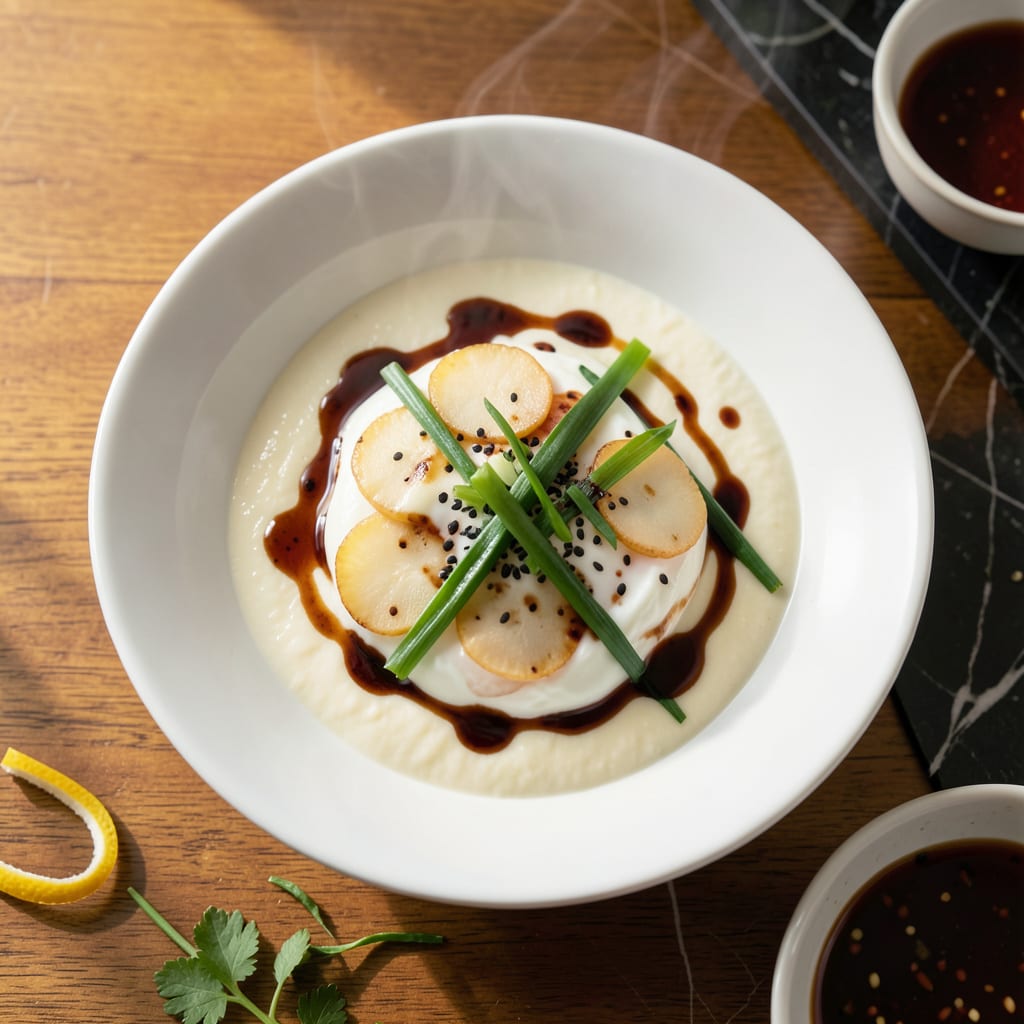
This steaming technique transforms simple eggs into a silky smooth dish with delicate texture. Traditional Asian methods ensure perfect results every time.
Ginger adds aromatic warmth while maintaining the eggs’ natural richness. The process is straightforward yet yields restaurant-quality custard in minutes.
Ingredients for Asian Steamed Egg
Transform eggs with ginger and steam into silky, restaurant-quality perfection in minutes.
| Ingredient | Amount | Notes |
|---|---|---|
| Large Eggs 🥚 | 6 whole | Room temperature preferred |
| Water 💧 | 2 cups | For steaming base |
| Fresh Ginger 🌿 | 1 whole | Peeled, thinly sliced |
| Green Onions 🧅 | 2 whole | Thinly sliced for garnish |
| Soy Sauce 🫒 | 2 tbsp | Light or all-purpose |
| Sesame Oil 🫒 | 1 tsp | Toasted variety preferred |
| Salt 🧂 | ½ tsp | Kosher or sea salt |
| White Pepper 🌶️ | ¼ tsp | Ground for subtle flavor |
| Chicken Stock 🍲 | ½ cup | Low-sodium preferred |
| Shaoxing Wine 🍶 | 1 tbsp | Optional for depth |
| Vegetable Oil 🫒 | ½ tsp | For greasing ramekins |
The eggs are the foundation, so fresh, high-quality eggs are essential. Room temperature ensures even steaming—cold eggs can cause texture inconsistencies. Asian markets often carry the best ginger, but any grocery store with fresh produce will work. Look for firm, smooth ginger roots with a vibrant tan color. The green onions should be crisp and bright green for the best flavor profile.
No Shaoxing wine? Dry sherry at equal parts works as a substitute. Green onions can be swapped with chives for a milder flavor. If avoiding alcohol, a pinch of sugar mimics the wine’s depth. Chicken stock can be replaced with vegetable stock for a lighter taste. The sesame oil is non-negotiable for authentic flavor—toasted sesame oil adds the necessary aromatic warmth.
Leftovers keep for 2 days in the fridge, but this dish is best served fresh. Reheating can alter the silky texture, so avoid microwaving. Store ginger in the freezer for 6 months—it grates easily when frozen (no need to thaw). Prep all ingredients before steaming to ensure a smooth process.
Why You’ll Love This Recipe
- 5-Minute Prep: I just whisk eggs with water, let the ginger infuse, and steam—done before the rice even finishes cooking.
- Umami Bomb: The soy sauce and ginger turn simple eggs into a silky, savory cloud that’s honestly hard to stop eating.
- Breakfast or Dinner: Between us, this works for a quick solo breakfast or a light dinner with a side of pickled veggies.
- Stretches a Dollar: Four eggs, a splash of soy, and pantry staples feed two for less than the cost of takeout.
Step-by-Step Instructions for Asian Steamed Egg
Master this technique for custard so smooth it glides like silk across your palate.
Step 1: Prepare the Ginger and Green Onions
Peel the fresh ginger and slice it into thin rounds. Thinly slice the green onions on a diagonal, keeping the white and green parts separate. The ginger will infuse the custard with aromatic warmth, while the green onions add a fresh, crisp finish.
I always slice the ginger paper-thin to ensure it releases its flavor efficiently during steaming. Set both aside—you’ll use the ginger in the custard and the green onions as a garnish at the end.
Step 2: Create the Silky Egg Custard Base
In a large bowl, crack the 6 whole large eggs and whisk them gently until no streaks remain. Avoid over-whisking, which can introduce too many air bubbles and disrupt the custard’s signature smooth texture.
Gradually whisk in the 0.5 cup chicken stock, 1 tbsp Shaoxing wine, 0.5 tsp salt, and 0.25 tsp white pepper until fully combined. Strain the mixture through a fine-mesh sieve into a steaming dish or ramekins lightly greased with the 0.5 tsp vegetable oil. This step removes any lumps, guaranteeing a velvety finish.
Step 3: Steam to Perfection
Place the 2 cups water in a wok or large pot and bring to a rolling boil. Position a steamer rack or bamboo steamer inside, ensuring the water doesn’t touch the custard dish. The water level should be high enough to generate steady steam but low enough to avoid splashing into the eggs.
Carefully place the dish with the egg mixture on the rack. Cover and steam over medium-low heat for 15-18 minutes, or until the custard is just set with a slight jiggle in the center. Avoid high heat—it can cause the custard to puff up and crack or curdle.
Step 4: Finish with Aromatic Toppings
Once the custard is set, carefully remove the dish from the steamer. Drizzle the 2 tbsp soy sauce and 1 tsp sesame oil evenly over the surface. The heat from the custard will gently warm the oils, allowing their flavors to meld beautifully.
Sprinkle the sliced ginger and green onions on top, pressing them lightly into the custard so they adhere. Let it rest for 2-3 minutes before serving—this allows the flavors to harmonize and the custard to firm up slightly. Serve warm in the steaming dish for a rustic presentation.
Pro Tips For Making Asian Steamed Egg
- Strain the Eggs: Sounds weird, but it works: whisk your eggs through a fine-mesh sieve before steaming to remove any stringy bits for that silky-smooth texture everyone loves.
- Low and Slow Heat: I learned this the hard way—keep the water at a gentle simmer, not a rolling boil, or you’ll end up with tough, rubbery egg instead of tender custard.
- Prep Ginger Fine: Grate or finely mince the ginger—big chunks sink to the bottom and leave uneven flavor, while fine bits distribute evenly through the egg mixture.
- Steam with Lid On: Skip the peeking urge—every time you lift the lid, you lose precious heat and risk collapsing the egg, so keep it covered for the full 10-12 minutes.
Pro Cooking Tips for Perfect Results
Steam Control
Use a bamboo steamer for even heat distribution. I place a kitchen towel under the lid to catch condensation drips that could ruin the texture. Keep water at a gentle simmer, not a rolling boil, to prevent cracking. 🌡️
Water Ratio
The 2 cups water in the pot should never touch the custard dish. If steaming longer than 20 minutes, check water levels and add hot water as needed to maintain consistent steam.
Straining Matters
Straining the egg mixture through a fine-mesh sieve removes bubbles and lumps for that signature silky texture. I use a OXO Good Grips sieve—it’s durable and fine enough for custards.
Heat Management
Steam over medium-low heat only. High heat causes the custard to puff and crack. If your burner runs hot, use a diffuser to distribute heat evenly across the pot.
Resting Time
Let the custard rest for 2-3 minutes after steaming. This allows the proteins to set fully and the flavors to meld. Skipping this step risks a runny center. 💡
Garnish Timing
Add soy sauce and sesame oil immediately after steaming. The residual heat gently warms the oils, enhancing their aroma without cooking them.
Nutrition Facts
Frequently Asked Questions
Why strain the egg mixture?
Straining removes lumps and air bubbles for a silky texture. This step is crucial for achieving that restaurant-quality smoothness. Skipping it may result in a grainy custard.
Can I use a metal steamer?
A bamboo steamer is ideal, but metal works if you add a towel under the lid to catch condensation. Avoid direct contact with boiling water to prevent curdling.
What if my custard cracks?
Cracks happen with high heat or uneven steaming. Next time, use medium-low heat and ensure steady steam. A cracked custard still tastes great!
How do I store leftovers?
Keep in an airtight container for up to 2 days. Reheat gently in a steamer to preserve texture—microwaving can make it rubbery.

- 6 Egg Cake Recipe with Oil: Light as Air With Buttery Moisture - October 4, 2026
- 4 Bean Casserole Recipe: One-Pan Heartiness With Smoky Paprika Depth - October 4, 2026
- 3-Ingredient Keto Mug Cake Recipe: Microwave Magic in 2 Minutes - October 4, 2026