
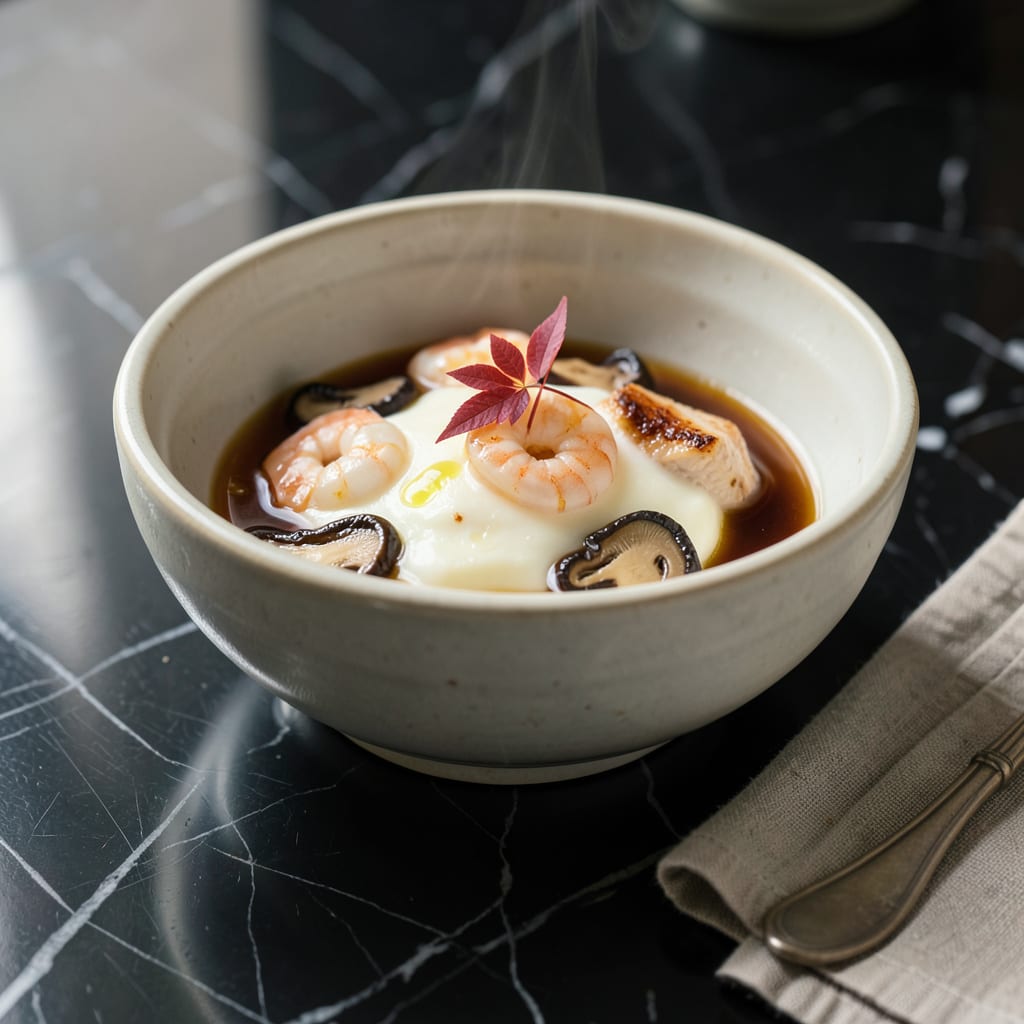
This traditional Japanese steamed egg custard delivers a silk-smooth texture with umami depth from dashi. The technique requires precision but yields a dish that’s both delicate and deeply flavorful.
I’ve refined this method over years to achieve the perfect balance of custardy softness and savory richness. The secret lies in straining the egg mixture and steaming it gently to maintain that signature velvety consistency.
Ingredients for Japanese Steamed Egg
Eleven ingredients create this delicate custard with rich umami depth from traditional dashi.
| Ingredient | Amount | Notes |
|---|---|---|
| Large Eggs 🥚 | 6 whole | Room temperature, fresh |
| Dashi Stock 🍲 | 2 ½ cups | Homemade or high-quality instant |
| Soy Sauce 🥢 | 1 ½ tbsp | Low-sodium preferred |
| Mirin 🍶 | 1 tbsp | Sweet rice wine |
| Sake 🍶 | 1 tbsp | Dry Japanese rice wine |
| Granulated Sugar 🍚 | 1 tsp | Dissolved in dashi |
| Bonito Flakes 🐟 | ¼ cup | For garnish, optional |
| Green Onions 🧅 | 2 whole | Thinly sliced for garnish |
| Fresh Ginger 🌿 | ½ tsp | Grated, for depth |
| Neutral Oil 💧 | 1 tsp | For greasing ramekins |
| Salt 🧂 | ½ tsp | Fine sea salt |
The dashi stock is non-negotiable for authentic flavor. Kombu and bonito-based dashi gives the cleanest umami, but high-quality instant dashi like Hondashi works in a pinch. Whole Foods or Asian markets carry both. Use fresh eggs—older eggs lose their ability to form that signature silky texture. Room temperature eggs incorporate air better, so take them out 30 minutes before starting.
No dashi? Light chicken or vegetable broth with a splash of soy sauce and a pinch of MSG gets you close. Mirin can be swapped with half the amount of sugar plus a splash of rice vinegar. Sake is less critical—dry white wine or even water works if needed. The bonito flakes are purely for garnish, so skip them if unavailable (or use toasted nori strips).
This custard is best served immediately but holds for 2 days refrigerated. Re-steam to revive the texture. Dashi keeps 1 week in the fridge or 3 months frozen. Always strain the egg mixture—worth the extra minute for that ultra-smooth finish.
Why You’ll Love This Recipe
- 5-Minute Prep: I crack the eggs, mix in dashi, and steam—no chopping, no fuss.
- Silky Umami Bomb: The soy, mirin, and sake turn simple eggs into a custard so rich I sneak bites straight from the pot.
- Breakfast to Dinner: Honestly, it’s my go-to for lazy mornings, packed lunches, or a light supper with rice.
- Pennywise Protein: A handful of eggs and pantry staples stretch into a meal that feeds four for less than a fiver.
Step-by-Step Instructions for Japanese Steamed Egg
Master the technique behind this delicate custard with precise temperature control and gentle handling.
Step 1: Prepare the Flavorful Broth Base
In a medium saucepan, combine the 2.5 cups Dashi Stock, 1.5 tbsp Soy Sauce, 1 tbsp Mirin, 1 tbsp Sake, 1 tsp Granulated Sugar, and 0.5 tsp Salt. Heat over medium-low heat until the sugar dissolves completely and the mixture is just warm to the touch, about 3-4 minutes.
Remove from heat and stir in the 0.5 tsp Fresh Ginger. This aromatized dashi will form the liquid base for your custard. Strain the mixture through a fine-mesh sieve to remove the ginger fibers, ensuring a silky-smooth texture in your final dish.
Step 2: Temper the Eggs for a Smooth Mixture
Crack the 6 whole Large Eggs into a large heatproof bowl. Slowly pour the warm dashi mixture into the eggs while whisking constantly with a fine-mesh whisk or chopsticks. This tempering process prevents the eggs from curdling when exposed to heat.
Continue whisking until the mixture is completely homogeneous and slightly frothy on top. The liquid should have a consistent pale yellow color with no visible egg streaks. Avoid creating large bubbles, as they may affect the final texture of your custard.
Step 3: Strain and Divide the Custard Mixture
Pour the egg mixture through a fine-mesh sieve into a large liquid measuring cup or bowl with a spout. This second straining removes any remaining bits of egg or ginger, guaranteeing the signature silky texture this dish is known for.
Lightly grease four 6-ounce ramekins with the 1 tsp Neutral Oil, using a pastry brush to ensure even coverage. Divide the strained custard mixture evenly among the prepared ramekins, filling each about ¾ full.
Step 4: Steam Gently for Perfect Texture
Place a steamer basket or bamboo steamer in a large pot with 1-2 inches of water. Bring the water to a boil over high heat, then reduce to medium-low to maintain a gentle simmer. The water should not touch the bottom of the steamer.
Carefully place the ramekins in the steamer, cover tightly with a lid, and steam for 15-18 minutes. Check for doneness by gently shaking a ramekin—the center should wobble slightly like gelatin but not be liquid. Avoid opening the lid during steaming to prevent temperature fluctuations.
Step 5: Garnish and Serve Immediately
Carefully remove the ramekins from the steamer using a kitchen towel (they’ll be hot). The custard should have a smooth, jiggly texture with a pale, translucent appearance. If any water has collected on top, gently blot with a paper towel.
Garnish each serving with a sprinkle of 0.25 cup Bonito Flakes and thinly sliced 2 whole Green Onions. Serve immediately while still warm—the texture changes as it cools. The bonito flakes will dance slightly from the residual heat, adding visual appeal to your dish.
Pro Tips For Making Japanese Steamed Egg
- Strain the Eggs: Whisk your eggs through a fine-mesh sieve before mixing with dashi—this removes any stringy bits and guarantees that silky-smooth texture Japanese steamed eggs are known for.
- Low and Slow Heat: Keep your steaming water at the barest simmer, not a rolling boil, or the eggs will curdle and turn rubbery. I learned this the hard way after ruining two batches with aggressive heat.
- Warm the Dashi First: Mix your dashi with the eggs while it’s still warm (not boiling) to help everything blend evenly and cook more uniformly. Cold liquid makes the eggs seize up in clumps.
- Cover with a Towel: Drape a clean kitchen towel over the pot lid to catch condensation drips—otherwise, water will fall back into the egg mixture and leave unsightly dimples. Sounds weird, but it works.
Creative Variations of This Recipe
Seafood Upgrade
Add ¼ cup cooked shrimp or scallops to each ramekin before steaming for a luxurious twist. The seafood absorbs the dashi flavors beautifully. I use wild-caught shrimp for the best texture and taste.
Mushroom Delight
Sauté ½ cup shiitake mushrooms (thinly sliced) in 1 tsp soy sauce until tender, then divide among ramekins before adding the egg mixture. The mushrooms add an earthy depth that pairs perfectly with the umami broth.
Vegetable Medley
For a lighter version, add ¼ cup diced zucchini and 2 tbsp grated carrot to each ramekin. The vegetables soften during steaming and add a subtle sweetness that balances the savory custard. 🌱
Spicy Kick
Stir ½ tsp sriracha or 1 tsp chili oil into the egg mixture before steaming for a spicy variation. Garnish with extra chili threads for a beautiful presentation. I love the contrast of heat with the cool custard.
Cheesy Twist
Sprinkle 2 tbsp grated Parmesan or ¼ cup crumbled feta on top of each custard before steaming. The cheese melts into the egg mixture, creating a creamy, rich layer that complements the dashi base.
This works surprisingly well and adds a Western touch to the traditional dish. 💫
Herb-Infused
Mix 1 tbsp chopped cilantro or 1 tsp thyme leaves into the egg mixture for a fresh herbal note. The herbs brighten the dish and add a pop of color to the pale custard.
Nutrition Facts
Frequently Asked Questions
What can I use if I don’t have dashi?
Use light chicken or vegetable broth with 1 tsp soy sauce and a pinch of MSG. It won’t be identical but will still deliver good flavor.
Why do I need to strain the mixture twice?
Straining removes ginger fibers and any egg bits, ensuring the signature silk-smooth texture. Skipping this step can result in a grainy custard.
How do I know when it’s done steaming?
Gently shake a ramekin—the center should wobble like gelatin but not be liquid. Oversteaming makes it rubbery, so check at 15 minutes.
Can I make this ahead of time?
Yes, but serve within 2 days. Re-steam for 5-7 minutes to revive the texture. The custard firms up as it cools.

- 6 Egg Cake Recipe with Oil: Light as Air With Buttery Moisture - October 4, 2026
- 4 Bean Casserole Recipe: One-Pan Heartiness With Smoky Paprika Depth - October 4, 2026
- 3-Ingredient Keto Mug Cake Recipe: Microwave Magic in 2 Minutes - October 4, 2026